
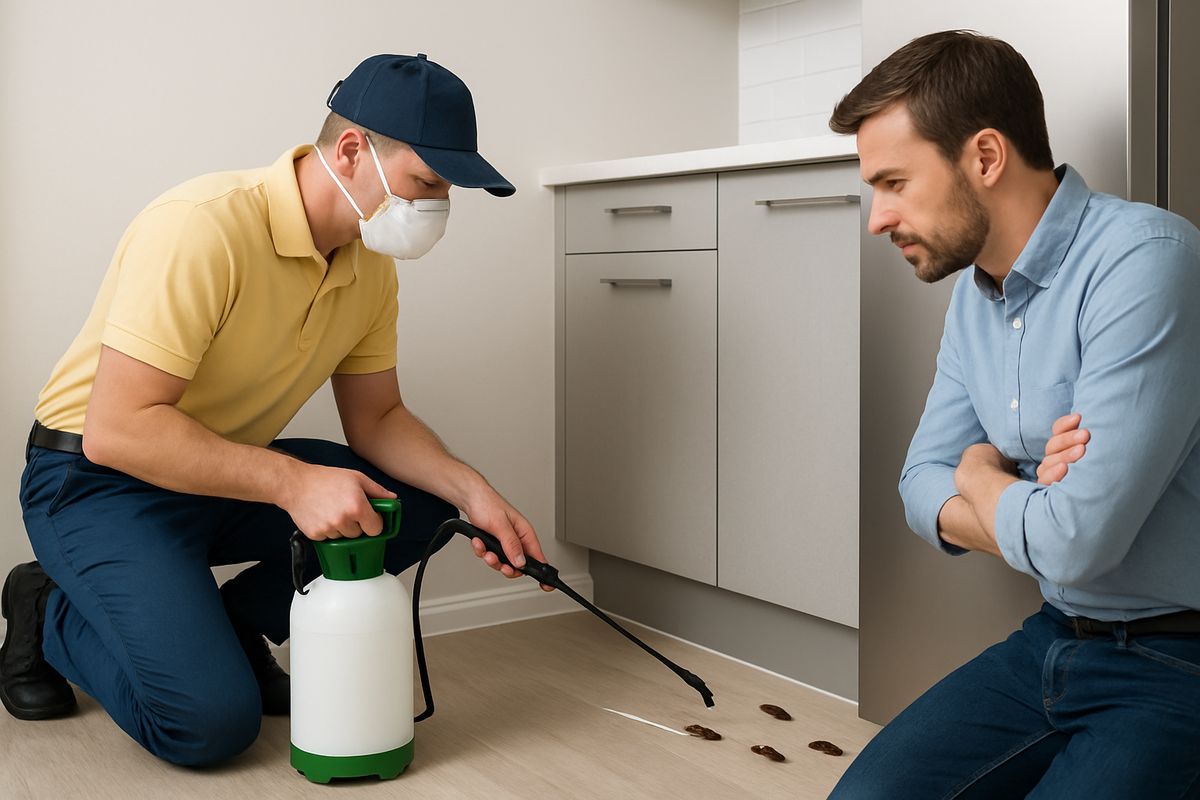
After roach treatment, the hardest part is often not the treatment itself, it’s knowing what to do once the technician leaves. If you’re still seeing activity, don’t panic. Here’s what’s normal, what to avoid, and how to help the treatment actually work.
What to expect after roach treatment
A lot of people expect instant results. Roaches don’t usually cooperate with that timeline.
In many homes and apartments, you may actually see more roaches for a short time after treatment. That happens because they’re being pushed out of cracks, wall voids, cabinet gaps, and the warm spaces behind appliances. In fact, it is common to see a large increase in cockroach activity during the first 2 to 4 weeks after treatment, especially when hidden populations are being flushed out.
That doesn’t mean the treatment failed.
What’s more realistic? Visible cockroach numbers often drop within the first 2 weeks, while full eradication can take up to 6 weeks. Non-repellent products, baits, gels, and residual materials often work over time. Roaches contact them, carry them back, and the population slowly collapses. Slow can still mean effective.
If you’re in a Chicago apartment building or condo, the timeline can stretch a bit. Roaches move through shared walls, pipe chases, and utility lines, which is why shared-wall infestations need a different approach than a stand-alone home.
What you’ll need before you start cleanup and follow-up
Before you clean anything, gather what you need so you’re not making it up as you go.
Use this simple checklist:
- Gloves
- Trash bags
- Paper towels
- Airtight food containers
- Caulk
- Sticky monitors
- Your exterminator’s instructions or service report
That last one matters most. Different products need different aftercare. A sprayed baseboard, a gel bait inside a cabinet hinge, and a dust treatment behind an outlet are not handled the same way.
Step 1: Follow the exterminator’s re-entry and safety instructions
- Read the service report as soon as you get it.
- Check when people can re-enter treated rooms.
- Wait to let kids and pets back in until the stated time has passed.
- Follow label directions over general internet advice.
This is the part people skip because they assume all roach treatments are the same. They aren’t. Some treatments dry quickly and are fine once dry. Others come with more specific restrictions, especially around food-contact areas, pets, or sensitive residents.
If you’ve got pets, be extra careful with treated floors, bait placements, and low cabinets. It helps to review what families should know about pet-safe aftercare if dogs or cats have access to treated rooms.
Check the service report or ask what product was used
- Confirm whether the treatment was a spray, bait, dust, gel, or a mix.
- Ask where each product was applied.
- Keep the paperwork somewhere easy to find.
This matters because aftercare changes by product. A non-repellent residual spray may keep working for weeks. Some long-lasting products are designed to stay active over time, not deliver a dramatic same-day kill. Research on residual insecticides shows residual insecticidal effects can persist well beyond the initial treatment period, even though performance gradually declines.
Ventilate only if you were told to
- Open windows only if your pest pro recommended it.
- Use fans if ventilation was part of the instructions.
- Skip unnecessary airing out if weather makes it impractical.
In Chicago, “just open the windows” sounds easy until it’s freezing, windy, or muggy enough to make the apartment miserable. Honestly, many modern treatments don’t require heavy ventilation once they’ve been applied correctly. If your provider didn’t tell you to air out the place, don’t assume you need to.
Step 2: Leave treated areas alone for the recommended time
- Identify the exact treated areas.
- Avoid touching those areas until your provider says it’s okay.
- Keep routine cleaning focused elsewhere.
The biggest mistake after roach treatment is cleaning too aggressively, too soon. Baseboards, cabinet cracks, kick plates, appliance gaps, and hinge areas are common treatment zones because that’s where roaches travel and hide.
Do not mop, scrub, or wash treated baseboards right away
- Leave baseboards and edges alone.
- Mop the center of floors only if needed.
- Wait the full recommended period before deep cleaning treated edges.
Heavy cleaning can remove the residue that’s supposed to keep working. One post-treatment guide notes that avoiding mopping around skirting boards and kick boards for several weeks helps perimeter treatments stay active, and those materials may remain effective for 30 to 90 days.
Checkpoint: If you’re cleaning, you should be working around treated edges, not through them.
Avoid using over-the-counter sprays on top of professional treatment
- Put away store-bought bug sprays.
- Don’t spray over bait placements.
- Call the pest company if activity isn’t dropping instead of layering products.
Here’s the catch: more spray does not mean better control. A University of Kentucky and Auburn study found common consumer residual sprays are of little to no value against German cockroach infestations. Some products can even interfere with professional baiting by repelling roaches away from the areas where they need to feed.
If you’ve been wondering why store products seem useless, this guide on why a spray program can stop delivering results breaks down the resistance problem in plain English.
Step 3: Clean the right places without disturbing the treatment
- Wipe non-treated surfaces.
- Remove food residue and grease.
- Leave treated cracks, seams, and bait placements alone.
You do want a cleaner space after treatment. You just want the right kind of cleaning.
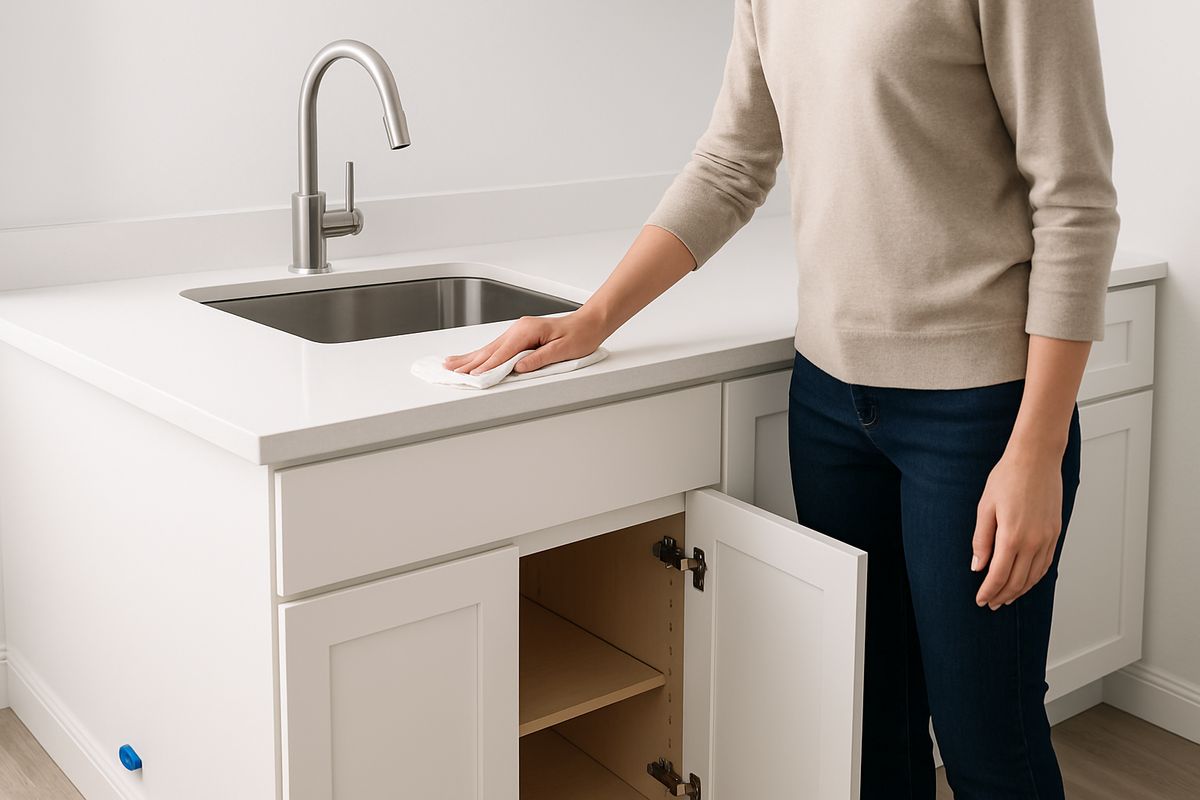
Clean countertops, sinks, and food prep areas
- Wipe counters with your usual cleaner.
- Clean sink basins and faucet areas.
- Dry surfaces before putting items back.
- Return dishes and utensils only when surfaces are ready for use.
This is especially smart in kitchens because cockroaches can carry more than 30 kinds of bacteria, including E. coli and Salmonella. Clean food-contact surfaces reduce contamination risk and make the kitchen less attractive to surviving roaches.
Empty trash and remove cardboard clutter
- Take out kitchen trash daily for the first week or two.
- Recycle or toss cardboard boxes.
- Remove paper grocery bags and stackable clutter from floors and cabinets.
Cardboard is basically a roach hotel. It gives them harborage, warmth, and cover. That’s especially true in basements, utility rooms, and apartment kitchens where deliveries pile up fast.
Clean inside cabinets only if your provider says it’s okay
- Confirm whether cabinet interiors were treated.
- Wipe only the areas your provider cleared.
- Leave bait dots, gel placements, and crack treatments untouched.
A lot of people want to wash every shelf immediately. Resist that urge unless you know what was applied and where.
Step 4: Cut off food and water sources
- Fix moisture problems.
- Seal up food.
- Keep kitchen cleanup consistent every night.
Treatment works better when roaches can’t easily find what they need to survive. Even a small drip under the sink can keep a population going.
Fix leaks and dry out wet spots
- Repair dripping faucets and leaking pipes.
- Dry under sinks and behind toilets.
- Empty pet water bowls overnight if your vet routine allows.
- Check behind the fridge and dishwasher for moisture.
Older Chicago buildings, garden units, and bathrooms with weak ventilation often have persistent damp spots. That moisture matters more than most people think.
Store food in sealed containers
- Move cereal, rice, flour, snacks, and pet food into hard containers.
- Close pantry items tightly after each use.
- Don’t leave fruit or baked goods out overnight.
Paper boxes and loosely folded snack bags won’t stop roaches. Airtight plastic or glass will.
Don’t leave dishes, crumbs, or grease overnight
- Wash dishes before bed.
- Wipe the stovetop and backsplash.
- Sweep or vacuum crumbs from the kitchen floor.
- Clean greasy splatter near the range and microwave.
Simple routine, big payoff. If you need longer-term habits after the initial cleanup, this article on keeping the pressure off after the infestation drops is worth bookmarking.
Step 5: Monitor activity and track what you’re seeing
- Watch where roaches show up.
- Note whether sightings are increasing or decreasing.
- Place sticky monitors in the right spots.
- Report patterns, not guesses, to your pest pro.
Monitoring keeps you from spiraling every time you see one bug. It turns “I think it’s worse” into something useful.
Expect some roaches to come out before they die
- Don’t panic if you see daytime activity at first.
- Watch for sluggish movement or roaches out in the open.
- Keep track of how often it happens.
A roach wandering around in daylight is often bad news for the roach, not for you. One post-treatment source notes that a cockroach found out in the open during the day is often a sign it has contacted the treatment and is starting to die.
Watch for egg cases, droppings, and baby roaches
- Check cabinet corners and drawer tracks for droppings.
- Look for egg cases near appliances and hidden seams.
- Note sightings of tiny nymphs.
Baby roaches can still appear after treatment, especially if egg cases hatch after the initial visit. That’s frustrating, but not unusual in heavier infestations. If you’re not sure what species you’re dealing with, it helps to compare what you’re seeing with the common roaches found in Chicago homes.
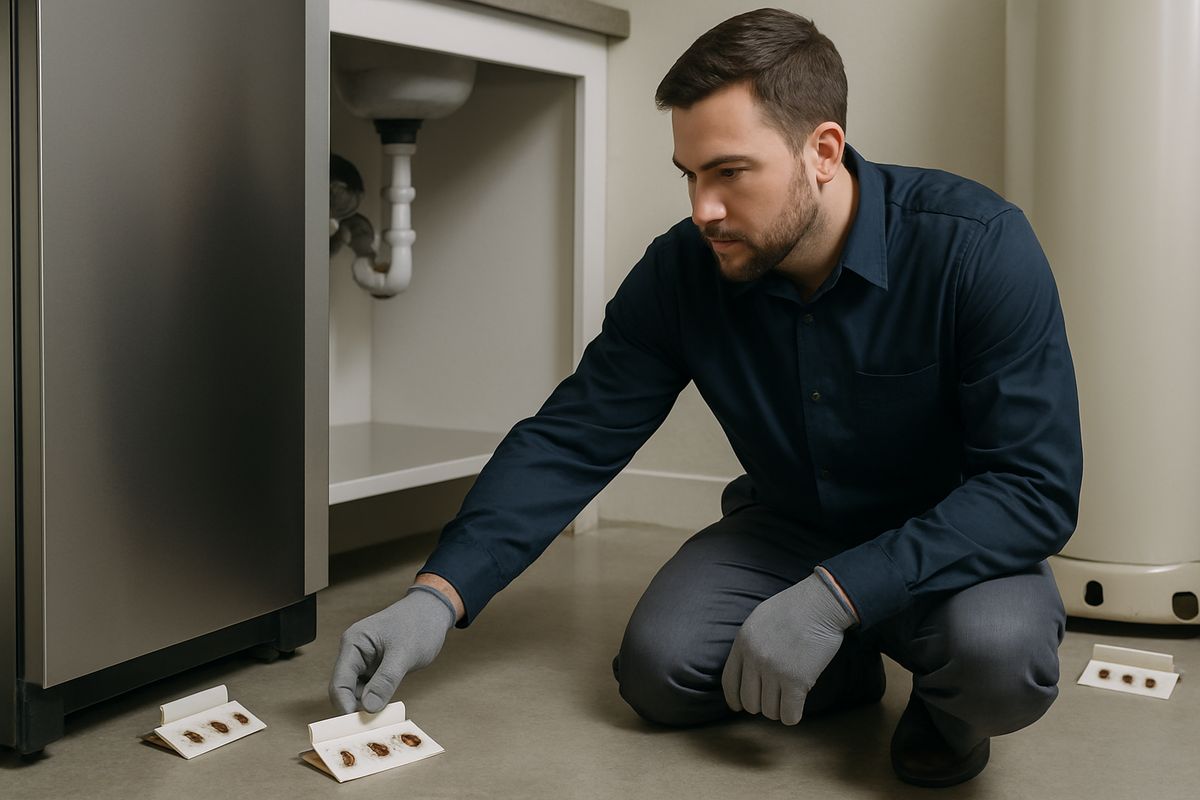
Use sticky monitors in key hotspots
- Place monitors behind the refrigerator.
- Put them under sinks.
- Set them near dishwashers.
- Add them by utility closets and water heaters.
- Check them every few days.
These traps aren’t just for catching bugs. They show direction of movement and whether activity is trending down. That’s useful for renters, homeowners, and property managers trying to document progress.
Step 6: Seal hiding spots and entry points
- Wait until initial activity starts dropping.
- Seal the gaps roaches use to hide and travel.
- Combine repairs with sanitation and monitoring.
This is classic IPM, or Integrated Pest Management. It works because it doesn’t rely on chemicals alone. In fact, IPM reduced pesticide use by 30 to 50% in U.S. schools, which is a good reminder that prevention does a lot of the heavy lifting.
Caulk cracks, gaps, and pipe openings
- Seal gaps around plumbing penetrations.
- Caulk cabinet seams and wall cracks.
- Close spaces around baseboards and utility lines.
Older apartments and attached homes often have dozens of these little openings. Roaches don’t need much space.
Reduce clutter in kitchens, bathrooms, and storage areas
- Thin out stacked paper and bags.
- Clear crowded cabinet bottoms.
- Organize utility rooms so surfaces stay visible.
Less clutter means fewer hiding spots and easier inspection. It also makes future treatment more precise if another visit is needed.
Step 7: Schedule follow-up if activity doesn’t keep dropping
- Give the treatment time to work.
- Watch for steady improvement.
- Call for follow-up if progress stalls.
A serious infestation often takes more than one visit. That’s normal, especially in apartment buildings or heavily infested single-family homes. If you need a service check, a professional treatment plan with clear follow-up expectations is the right next step.
Know the timeline for improvement
- In the first few days, expect some visible movement.
- Within 2 weeks, look for fewer sightings and more dead roaches.
- By 1 month, the trend should clearly be downward.
- If things aren’t improving, report it.
A good benchmark is simple: if cockroaches are still not improving within a month, or you’re not finding dead pests, a return visit may be needed.
Ask about resistance, bait rotation, and neighboring units
- Ask whether resistance may be affecting results.
- Ask if bait rotation is needed.
- Ask whether nearby units also need service.
Resistance is real. More than 1,000 pest species have developed resistance to at least one pesticide, and German roaches are especially notorious for surviving products that used to work well. In multi-unit properties, untreated neighboring units can also keep the problem alive.
Common mistakes after roach treatment
The usual progress-killers are pretty predictable. Mopping treated edges too soon, spraying store-bought insecticide over professional work, ignoring leaks, leaving pet food out overnight, and skipping follow-up are the big ones.
Another mistake is trying random gadgets. Ultrasonic pest repellers have shown no scientific evidence of efficacy in 80% of independent tests, so they’re not a serious plan after treatment.
And one more: assuming one visit should solve a building-wide issue. In dense housing, especially around Chicago, roaches can move unit to unit like they’re commuting.
Troubleshooting: Why am I still seeing roaches after treatment?
There are a few common reasons: hidden egg cases, untreated next-door units, food and water still available, resistance, or simply not enough time having passed yet.
That last one is the most common. People expect overnight results from a process that usually works in stages.
You’re seeing more roaches than before
A temporary spike can be normal right after treatment. But if numbers keep climbing after the first couple of weeks, or you’re seeing no dead or dying roaches at all, report it. That may point to poor placement, resistance, reintroduction, or neighboring activity.
You’re only seeing baby roaches
Baby roaches, called nymphs, often show up after egg cases hatch. That doesn’t automatically mean failure. It usually means follow-up matters. If nymph sightings continue past the early post-treatment period, tell the technician so they can adjust the plan.
The problem keeps coming back in an apartment or condo
This is where building conditions matter. Shared walls, trash rooms, laundry rooms, and pipe penetrations can keep feeding the issue. Renters should document sightings, trap counts, and locations, then involve the landlord or property manager if nearby units may be contributing. Spring pressure doesn’t help either, and Yelp reported pest extermination requests jumped 66% from February to March, which shows how quickly infestations can ramp up.
What results you should expect, and what to do next
If you follow the aftercare steps, you should see a steady decline, not necessarily an instant disappearance. Fewer sightings, more dead roaches, less daytime activity, and cleaner monitor traps over time are all good signs.
Keep the sticky monitors in place. Stick with the food, moisture, and clutter changes. Seal gaps as activity drops. And if progress stalls, book a follow-up through a local roach treatment service that handles ongoing control. That’s usually what turns “better for a week” into actually fixed.
Frequently Asked Questions
How long should I wait to clean after roach treatment?
Wait exactly as long as your exterminator recommends for treated areas. In many cases, you can clean counters and sinks sooner, but treated baseboards, cracks, and appliance gaps need to stay untouched for longer.
Is it normal to see roaches after treatment?
Yes. Seeing some roaches after treatment is common, and sometimes you’ll see more at first because they’re leaving hiding spots. The pattern should still trend downward over the next couple of weeks.
Can I sleep in my apartment after roach treatment?
Usually yes, once the re-entry time has passed and the product instructions say the area is safe. Always follow the service report, especially if sprays were used in bedrooms or common living spaces.
Why are there baby roaches after treatment?
Egg cases may survive long enough to hatch after the first treatment. That’s why follow-up matters. If baby roaches keep showing up without a drop in activity, report it.
Should I use bug bombs or store-bought spray after professional treatment?
No. They often make professional treatment less effective, especially when bait is part of the plan. Consumer sprays can repel roaches, scatter them deeper into hiding, or do very little against resistant German roaches.
When should I call the exterminator back?
Call if activity is not clearly improving within about 2 to 4 weeks, if you’re seeing lots of live roaches in daylight, or if the issue keeps returning in a multi-unit building.