
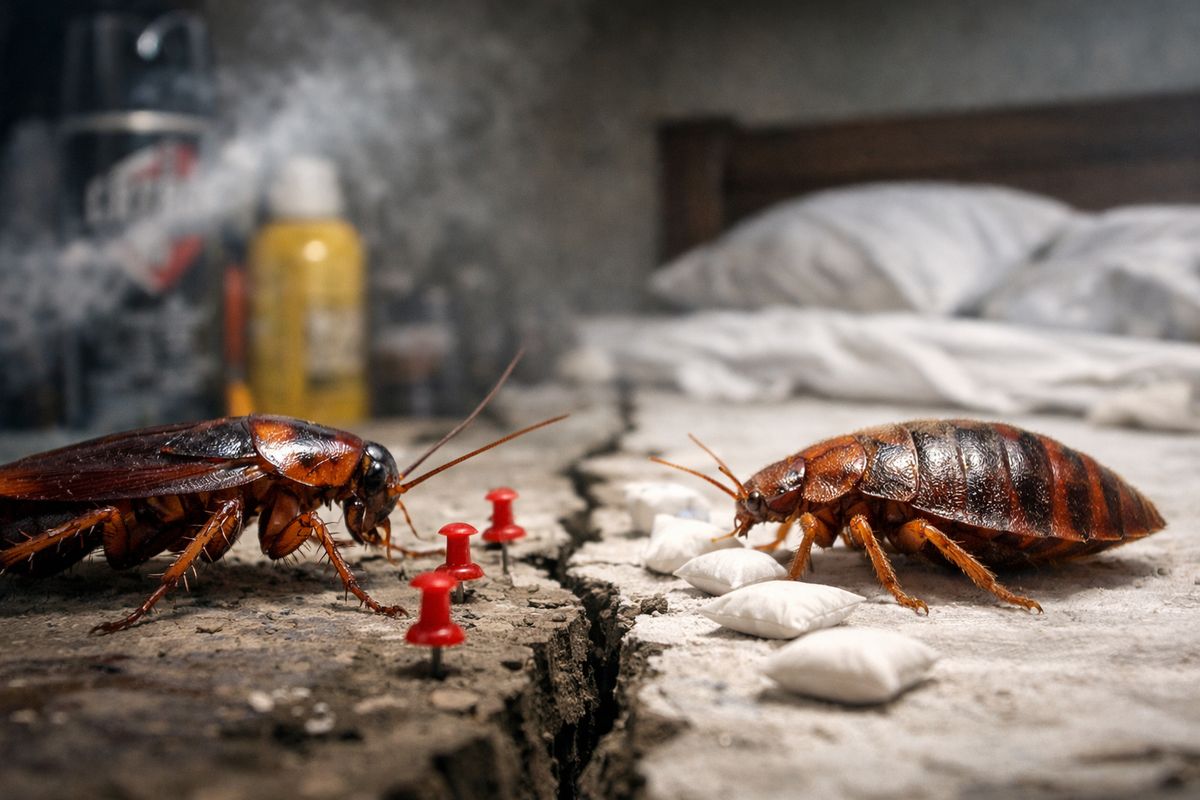
If you’re stuck choosing which pest problem is worse, cockroaches vs bed bugs is not a toss-up. Bed bugs are usually worse to control fast because treatment gets intense, disruptive, and personal in a hurry, while cockroaches are often worse to keep gone for good, especially in kitchens, apartments, and older buildings around Chicago.
Cockroaches vs. bed bugs at a glance
Here’s the short answer: bed bugs usually win the “worse right now” contest. Roaches often win the “worse six months from now” contest.
That difference matters. Bed bugs stay close to where you rest, feed on blood, and turn your bed into the one place you no longer want to be. Roaches spread farther, contaminate food areas, hide in wall voids and appliance gaps, and can keep bouncing back if the building itself helps them survive.
In a Schaumburg condo bedroom, bed bugs can make one room feel unlivable almost overnight. In a Naperville kitchen, roaches can turn into a slow, stubborn fight that keeps resurfacing around the stove, sink, dishwasher, and shared utility lines.
If you want one verdict for most homes and apartments, bed bugs are generally worse to control. If you want the long-game answer for multifamily buildings and chronic kitchen infestations, cockroaches can be the tougher enemy.
What each pest looks like and how to tell which one You’re dealing with
Before treatment starts, you need the right ID. Bed bug fixes and roach fixes are not interchangeable, and random spraying often wastes time.
Cockroach basics
Cockroaches are larger, faster, and more obvious when you actually see one. Most household roaches are brown to dark brown, oval-shaped, and built for sprinting. Baby roaches can look smaller and lighter, which is why a bad infestation sometimes gets mistaken for “just a few little bugs.”
You’ll usually spot roaches in kitchens, bathrooms, basements, laundry rooms, or near trash. If one darts across the floor when you turn on the light at 2 a.m., that’s rarely a solo act. Roaches are nocturnal and good at hiding, so the visible ones are often the tip of the problem. If this sounds familiar, it helps to understand why small sightings can turn into a much bigger kitchen problem.
Bed bug basics
Bed bugs are flatter, rounder, and much slower-looking than roaches. Adults are reddish-brown and about apple-seed sized, though younger ones can be tiny and pale enough to miss unless you’re looking closely.
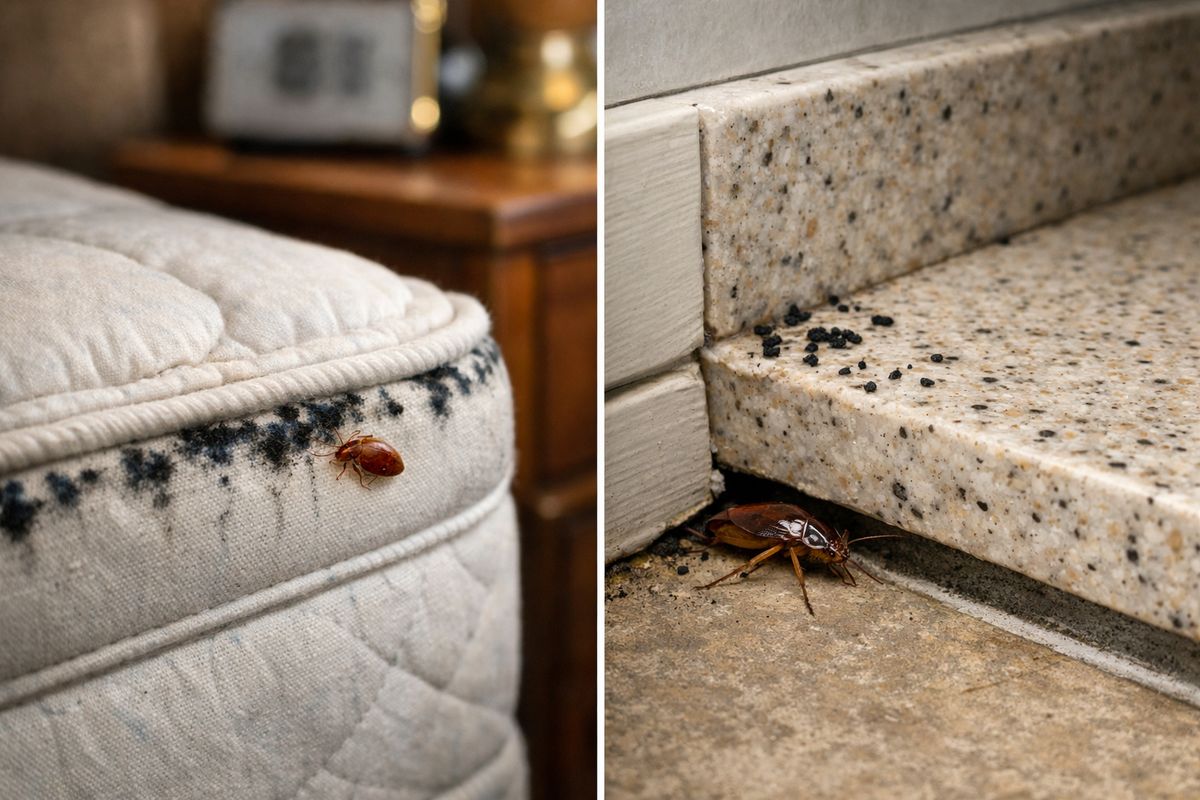
You’ll usually find bed bugs near places where you sleep or sit still for long stretches. Mattress seams, box springs, bed frames, couches, and upholstered chairs are classic hiding spots. The catch is that bed bugs are easy to miss until bites, tiny dark stains, or shed skins start showing up.
Signs that get confused
Both pests leave droppings and shed skins, which confuses a lot of people. Roach droppings often look like pepper, coffee grounds, or dark specks in cabinet corners and along baseboards. Bed bug fecal spots tend to look more like ink-like black dots or smears on bedding, mattress seams, or nearby furniture.
Mystery bites confuse things even more. Bed bugs commonly leave itchy clusters or lines, though skin reactions vary a lot. Roaches are not the pest you think of for repeated nighttime bite patterns. If your clues center on beds, couches, or luggage, bed bugs move higher on the suspect list.
Where they hide and how easy they are to find
Both pests hide well, but in different ways. Bed bugs stay close to you. Roaches spread across the building.
Typical bed bug hiding spots
Bed bugs usually stay within a few feet of where you rest, at least early on. Mattress piping, box spring folds, bed frame joints, headboards, couch seams, outlet covers, curtain folds, and luggage seams all make sense for them because those places give darkness and quick access to a sleeping person.
That sounds limited, but it’s deceptive. Flat bodies let bed bugs slip into cracks that look too thin to matter. Research also shows brief visual checks can catch many infestations, but not all, which is why early bed bug problems are missed so often.
Typical cockroach hiding spots
Roaches are less sentimental. If there’s moisture, food residue, warmth, and a dark gap, that spot is fair game. Cabinets under sinks, behind refrigerators, stove voids, dishwasher insulation, drains, cardboard boxes, wall cracks, and utility penetrations are all classic harborage spots.
In multifamily housing, this gets ugly fast. Roaches can move through pipe chases, shared walls, basement utility areas, and trash rooms. That’s why one spotless unit can still have a roach problem if the rest of the building is feeding it.
How fast they spread and how infestations grow
A small pest issue can stay small for about five minutes. After that, both can snowball.
How bed bugs move from place to place
Bed bugs spread by hitchhiking. Bags, coats, laundry baskets, used furniture, and moving boxes do the heavy lifting. In dense housing, one infested couch or one bad move-in can ripple through neighboring units.
That risk gets worse in buildings with frequent turnover. A Rutgers study found about 12% of apartments in the buildings examined had bed bugs, and turnover was one factor tied to higher infestation rates. In Chicago apartments, that pattern makes sense fast.
How cockroaches expand inside a property
Roaches expand when the property gives them what they need: food, moisture, heat, and cover. Once nesting starts behind appliances or inside walls, populations build quietly. Roaches also move through plumbing lines and structural gaps, which means the infestation you see near your sink may really be rooted two walls away.
This is why DIY often feels like it worked, until it clearly didn’t. If bait hits only the visible zone and misses the nesting zone, the rebound is almost built in. A deeper look at why the problem returns after treatment usually explains the pattern.
Health risks, bites, and sanitation problems
“Worse” depends partly on what kind of damage disrupts your life most.
Bed bug bites and sleep disruption
Bed bugs usually do not rank highest for disease concerns, but that does not make them minor. Bites can leave itchy welts, clusters, and stubborn irritation. More than that, bed bugs wreck sleep. Once you suspect something is feeding on you at night, every speck on the sheet starts to feel loaded.
That emotional hit is real. One survey found 58% of Americans would rather be naked in public than have bed bugs, which honestly says plenty about how invasive the experience feels.
Cockroach contamination and allergy concerns
Roaches bring a different kind of trouble. Kitchens, pantries, counters, utensils, pet food areas, and food prep surfaces all become part of the concern. Roaches are associated with E. coli and salmonella, and roach droppings, shed skins, and odors can aggravate indoor allergy and asthma issues.
If you have kids, shared kitchens, or a property where sanitation complaints matter, roaches can feel more serious day to day. Bed bugs attack peace of mind. Roaches attack cleanliness.
Emotional stress and daily disruption
Bed bugs feel personal. Roaches feel defeating.
That’s the cleanest way to put it. Bed bugs get into the place where you’re supposed to feel safest, and suddenly bedtime becomes a routine of checking seams, washing laundry, and wondering if that itch is real. Even a clean, tidy home can get bed bugs, which is part of why the experience feels so unfair.
Roaches wear you down differently. You clean, wipe, seal cereal, empty trash, and still see one by the dishwasher. In apartments, embarrassment becomes part of the problem because nobody wants to complain twice about a pest that keeps showing up. For bigger context on local pest headaches, which infestations are toughest around Chicago gives a useful wider view.
DIY control: which one is harder to handle on your own?
Both pests beat casual DIY all the time. Bed bugs are harder to eliminate completely. Roaches are harder to suppress permanently if the environment stays favorable.
Why bed bugs beat most DIY attempts
Bed bug DIY fails because the bugs hide well, eggs survive sloppy treatment, and one missed seam can restart the whole cycle. Foggers are a classic mistake. Research found over-the-counter foggers do little to control real bed bug infestations, especially when bugs are tucked into protected hiding spots.
Laundering, vacuuming, steaming, and encasements help, but they work best as part of a bigger plan. Even vacuuming can remove a large share of visible bugs, but not enough to declare victory.
Why cockroaches keep coming back after DIY
Roach DIY usually stumbles on placement and follow-through. Spray gets used where bait should go. Bait gets contaminated with cleaners. The nesting source behind the fridge or in the wall void never gets touched. Moisture stays. Food crumbs stay. Neighboring units stay untreated.
So the result looks good for a week or two, then the sighting count creeps back up. If you’re dealing with shared walls, what tenants can do in a building-wide roach issue becomes much more relevant than one more store spray.
Professional treatment methods and what actually works
Real treatment looks different for each pest. That’s why a generic “bug spray” mindset usually falls flat.
Bed bug treatment options
Professional bed bug control often combines inspection, vacuuming, steam, encasements, targeted residual products, monitoring, and sometimes whole-room or whole-unit heat treatment. Heat is popular for a reason. Bed bugs die when exposed to 118°F for 90 minutes or 122°F for 20 minutes, including all life stages.
Preparation matters almost as much as treatment. If clothing piles, stuffed furniture, and clutter stay untouched, bed bugs keep extra hiding spots. For help with fast, targeted service, Midwest Pest Solutions handles bed bug and roach problems as separate treatments, which is exactly how it should be.
Cockroach treatment options
Professional roach control usually leans on gel baits, insect growth regulators, dusts in voids, crack-and-crevice treatment, monitoring, and exclusion work such as sealing gaps. Sanitation corrections matter too. Not because a dirty home caused the issue every time, but because food, grease film, water leaks, and cardboard all help sustain it.
Roach work also fits recurring service better than bed bug work. That makes sense in a market where recurring contracts dominate. Ongoing monitoring and follow-up often make the difference between relief and relapse. If you want a clearer sense of what a service visit actually involves, what happens during a full roach treatment breaks it down.
Time, prep work, and how inconvenient treatment feels
This is where bed bugs usually pull ahead as the worse experience.
Bed bug prep checklist reality
Bed bug prep can eat up a full weekend. Laundry gets bagged and run hot. Clean items stay sealed. Furniture gets pulled from walls. Clutter gets reduced. Mattresses and bed frames need access. Sometimes drawers get emptied, outlets checked, and follow-up inspection windows scheduled.
It’s not impossible. It’s just exhausting, especially if the infestation is in multiple bedrooms or you’re trying to manage kids, tenants, or a move at the same time.
Cockroach prep and follow-through
Roach prep is usually less dramatic at the start. You may need to clear under sinks, pull appliances forward, improve trash handling, store food better, clean grease buildup, and fix leaks. The catch is that this work tends to be ongoing instead of one big push.
That means roach treatment often feels easier on treatment day, but more annoying over the next few months.
Pricing and long-term cost
Bed bugs usually cost more upfront. Roaches often cost more over time.
Why bed bug jobs often cost more upfront
Bed bug work is labor-heavy and detail-heavy. Rooms have to be inspected closely, furniture may need special handling, and heat equipment can raise the price further. Multiple visits are common, especially if the infestation spread beyond one sleeping area.
That’s why bed bug jobs often feel like a financial punch all at once. You’re paying for intensity.
Why cockroach control can cost more over time
Roach control often starts cheaper per visit, but chronic infestations can turn into a maintenance expense. In apartment buildings, restaurants, older homes, or properties with recurring moisture, repeat visits are normal. That subscription feel is not your imagination. Much of residential pest revenue now comes from regular service plans, because long-term control is often the real product.
If roaches are entrenched in a building shell, the price of “done forever” is usually unrealistic.
Which pest is worse in apartments, condos, and multifamily buildings?
In shared housing, the answer gets split. Bed bugs are worse for immediate disruption. Roaches are worse for ongoing building management.
Bed bugs move with people, laundry, furniture, and turnover. Roaches move with plumbing lines, wall gaps, trash areas, and kitchen activity. In a condo or apartment, both problems can outgrow one unit fast.
For tenants and managers, that means speed matters with either one. A fast inspection, proper identification, and coordinated treatment beat blame every time. If you’re dealing with a rental or shared property issue, Midwest Pest Solutions offers prompt service that fits that reality.
Which pest is worse in single-family homes?
In houses, bed bugs are often more containable because the spread pattern is tighter and there are no shared walls with neighboring kitchens. But if the bugs get into multiple bedrooms, couches, or travel gear, treatment still becomes a major project.
Roaches gain ground in single-family homes with basements, attached garages, older plumbing, crawl spaces, and chronic moisture. One leaky utility room or cluttered storage area can support a long-term problem that keeps feeding the kitchen.
So in a house, bed bugs are usually the sharper crisis. Roaches are often the slower grind.
When cockroaches are worse to control
Roaches clearly take the crown in older buildings with lots of cracks, multifamily properties with shared utility lines, homes with recurring leaks, and any setting where sanitation and clutter keep helping the infestation.
They’re also worse when suppression matters more than instant elimination. Restaurants, break rooms, apartment trash areas, and chronic kitchen infestations rarely get solved with a one-time mindset. If the structure keeps supporting roaches, treatment has to keep pace.
When bed bugs are worse to control
Bed bugs are worse when the infestation is centered in bedrooms, couches, and personal belongings. They’re also worse when you travel often, bring in used furniture, or need complete elimination quickly instead of gradual suppression.
If you need to sleep in the same room every night while treatment unfolds, bed bugs feel harder because they interfere with daily life more directly. There’s no easy way to mentally ignore your own bed.
Final verdict: which is worse to control?
For most homeowners and renters, bed bugs are worse to control.
That’s the direct answer. Treatment is more intense, prep is heavier, elimination usually has to be more complete, and the stress level is much higher. But roaches deserve a big asterisk: in kitchens, apartment buildings, and properties with moisture or structural access issues, cockroaches can be the tougher long-term battle.
So if you want the short-term winner, pick bed bugs. If you want the long-haul problem pest, roaches make a strong case.
What to do next if You’ve spotted either one
Start by confirming the pest. Don’t jump straight to random sprays, bug bombs, or internet guesswork, because the wrong treatment can delay the right one and make the problem harder to track.
Check the likely zones first: bed seams, couch edges, luggage, kitchen cabinets, under sinks, behind appliances, and along baseboards. Take clear photos if you can. Then get a fast inspection, especially if signs are showing up where you sleep or prepare food. One quick move beats a month of trial and error: contact Midwest Pest Solutions before the problem gets a chance to spread.
Frequently asked questions
Are bed bugs or cockroaches more expensive to get rid of?
Bed bugs are usually more expensive upfront because treatment is more detailed and often involves repeat visits, heat, steam, and heavy prep. Cockroach jobs may start lower, but long-term recurring service can add up.
Can you have both bed bugs and cockroaches at the same time?
Yes. One problem does not cancel out the other. Bed bugs stay close to resting areas, while roaches stay closer to food, moisture, and hidden structural gaps, so both can exist in the same property for different reasons.
Do cockroaches bite like bed bugs?
Not in the way most people mean. Bed bugs are the pest more strongly linked to repeated nighttime bites, clusters, and itchy welts. Roaches are much more associated with contamination, droppings, odor, and food-area problems.
Why do bed bugs feel harder even if roaches are dirtier?
Because bed bugs get into your sleep. That makes the problem feel immediate and personal. Roaches are disgusting and unsanitary, but bed bugs often create more anxiety because your bed stops feeling safe.
Should you use bug bombs for either pest?
Usually no, especially for bed bugs. Bug bombs and foggers often miss the hidden spots that matter most, and they can scatter pests or delay proper treatment. Targeted professional treatment is a much better bet for both.
Which pest needs faster professional help?
Both deserve quick attention, but bed bugs usually need faster action if signs are in your bed, couch, or luggage because spread happens easily through personal belongings. Roaches also need fast action when sightings are increasing in kitchens, bathrooms, or shared-wall buildings.