
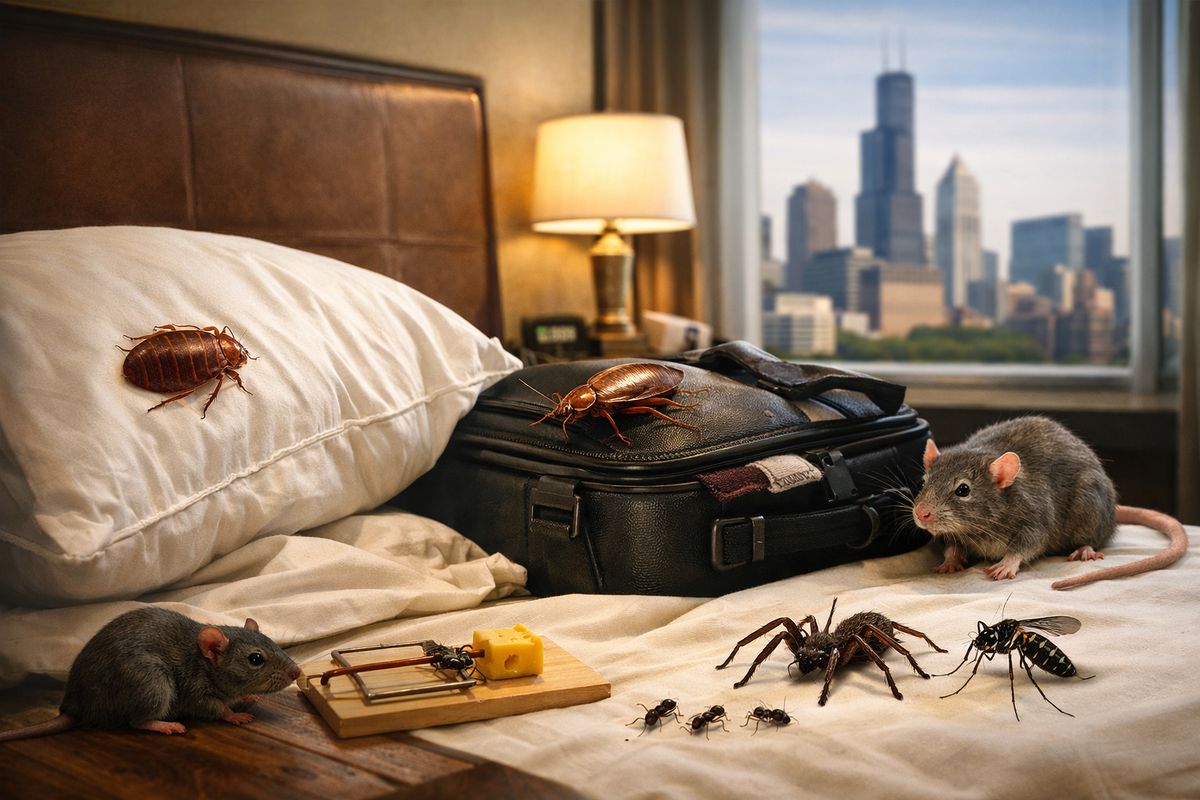
Common hotel pests are the bugs and rodents you’re most likely to run into in hotels, motels, and short-term stays, and in Chicago, bed bugs deserve your full attention. A five-minute room check can save you from dragging a headache back to your apartment in Logan Square, your condo in Schaumburg, or your house in Naperville.
What “Common Hotel Pests” Means in Chicago
In plain English, this phrase covers the pests that show up again and again in places where lots of people come and go: bed bugs, cockroaches, flies, rodents, ants, fleas, spiders, and a few random invaders from outdoors.
Chicago makes this more than a travel annoyance. The city ranked No. 1 on Orkin’s 2025 list and also landed No. 6 on Terminix’s 2025 list, which tells you the same thing from two different angles: bed bug activity is high here. Rankings vary by company, but the pattern is clear. In a dense metro area with constant travel and lots of multi-unit housing, pests get plenty of chances to move around.
Bed Bugs: The Hotel Pest You Need to Take Most Seriously
Bed bugs are the hotel pest to take most seriously because they hitchhike better than almost anything else. A roach might stay near food and moisture. A mouse usually leaves obvious clues. Bed bugs can hide in a suitcase seam, folded hoodie, or backpack pocket and come home with you before you notice a thing.
That’s what makes them expensive. A single female can lay hundreds of eggs over time, and once bed bugs get into a bedroom, they don’t care whether you live in a hotel, a bungalow, or a third-floor walk-up.
Why bed bugs are such a big deal in Chicago
Chicago is built in a way that helps bed bugs spread: heavy travel, shared walls, frequent move-ins and move-outs, and lots of furniture moving through buildings. Add hotels, transit, dorms, condos, and apartment buildings, and you’ve got a perfect setup for hitchhiking pests.
Here’s the thing: bed bugs are not a “dirty place” problem. They’re a movement problem. The Illinois Department of Public Health notes that they spread through luggage and can move through multi-unit buildings if the issue is not contained.
What bed bugs look like and the signs to watch for
Adult bed bugs are about the size of an apple seed, flat, oval, and reddish-brown. Younger bed bugs, called nymphs, are smaller and paler, which makes them much easier to miss. Eggs are tiny, light-colored, and tucked into cracks.
The signs are often easier to spot than the bugs themselves. Look for dark fecal spots that resemble ink dots, small blood smears on sheets, shed skins, and in heavier infestations, a sweet, musty odor. Bites can happen, but bites alone prove almost nothing. Skin reactions vary too much.
Where bed bugs hide in a hotel room
Before you unpack, think of a hotel room like a used couch listing on Facebook Marketplace. You’re not trusting the photo, you’re checking the seams.
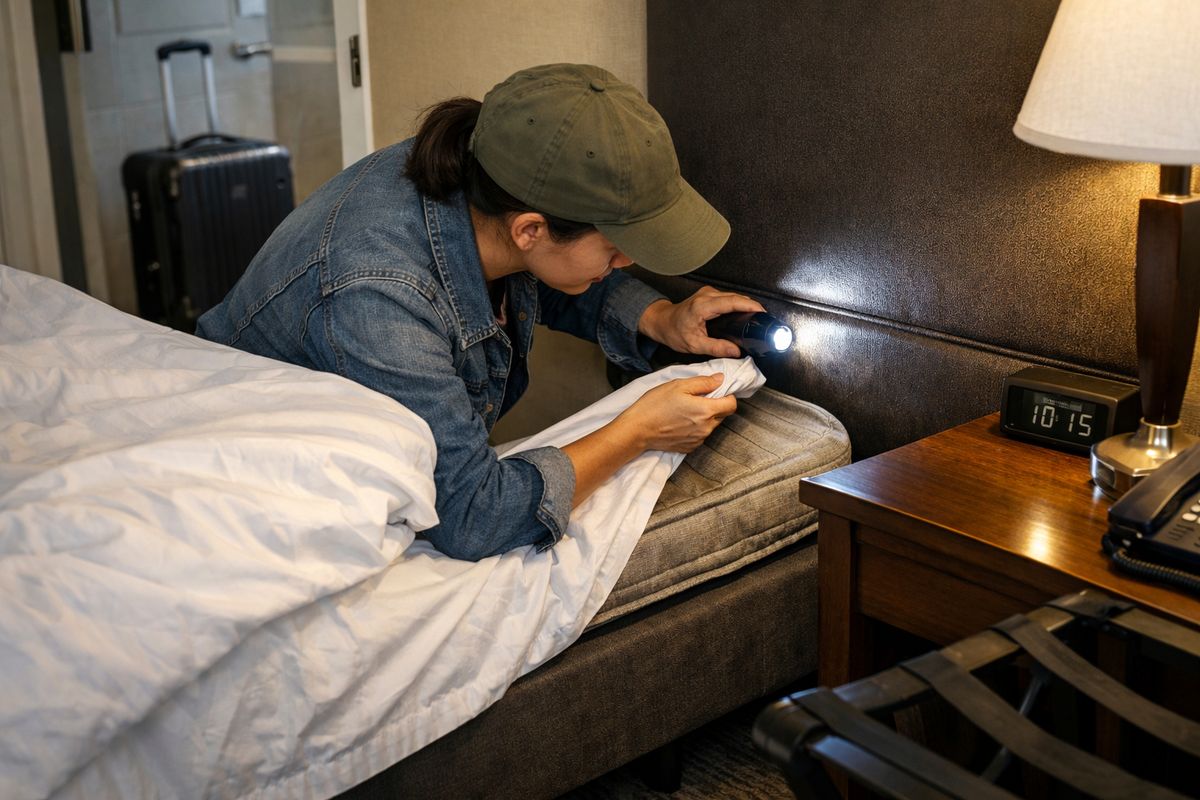
Start with mattress piping and corners, then the box spring, headboard, and bed frame. After that, check upholstered chairs, luggage racks, baseboards, wall cracks, nightstands, and outlets. Bed bugs like tight, dark spaces close to where you rest, and the Illinois health department lists electrical switches and outlets among the places they can hide.
Other Common Hotel Pests You May Run Into
Bed bugs get the spotlight, but they’re not the only pests worth noticing.
Cockroaches
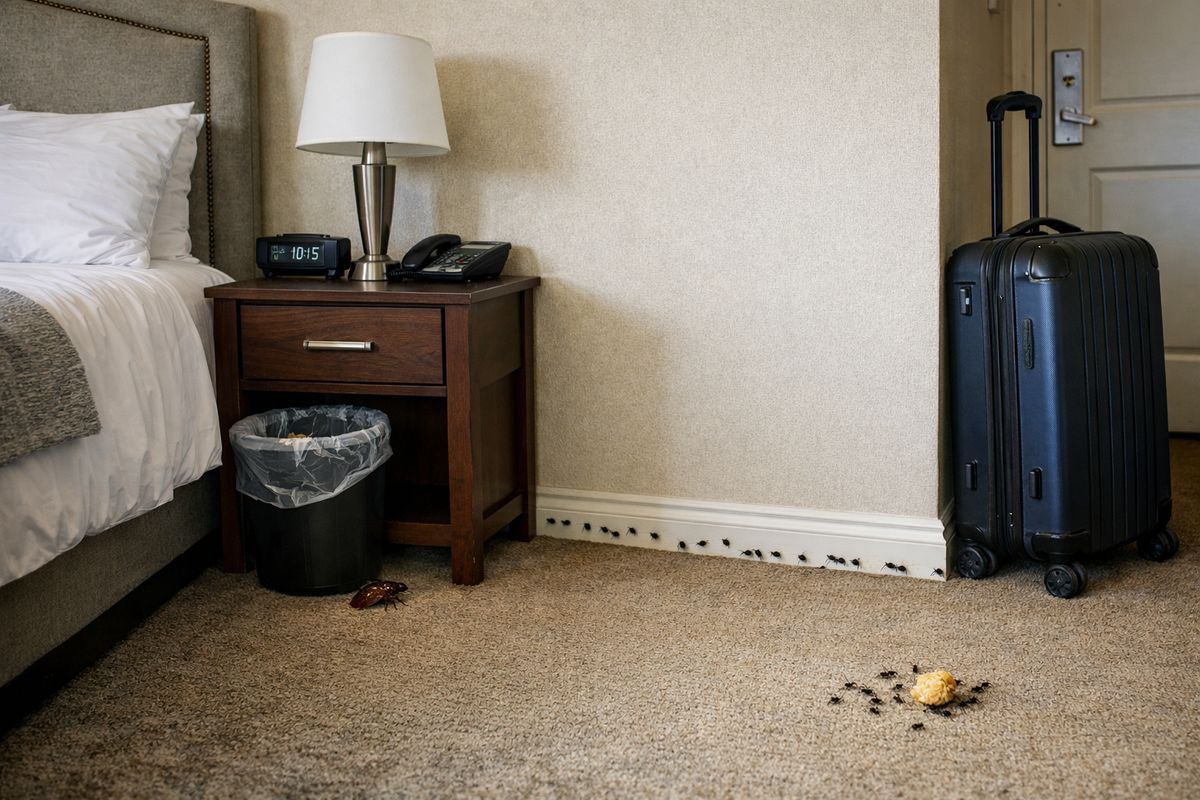
Roaches are one of the most common hotel pests because hotels offer exactly what roaches want: warmth, moisture, crumbs, cardboard, and endless hiding spots. Bathrooms, kitchen areas, vending spaces, and housekeeping storage can all support activity.
If you’re already dealing with roaches at home, this matters even more. A stray roach or egg case can hitch a ride in a bag, box, or toiletry pouch. If that sounds familiar, it helps to know the signs properties often overlook, especially in shared buildings where the source may not be your unit alone.
Flies
Small flies, like fruit flies or drain flies, usually point to moisture and organic buildup. Houseflies suggest trash, food handling issues, or doors opening often enough for pests to wander in. One fly in a lobby is not a crisis. Repeated flies in a room or bathroom tell a different story.
Rodents
Mice and rats tend to leave a trail once activity gets serious. Droppings, gnaw marks, scratching inside walls at night, and greasy rub marks along baseboards are classic signs. In a hotel, rodent activity usually means a larger maintenance or sanitation problem, not just a one-room issue.
Ants, fleas, spiders, and occasional invaders
Ants usually show up because food or water is easy to reach. Fleas can be tied to pets or previous guests. Spiders are often just nuisance pests, though a heavy spider presence can hint at other insects nearby. Then you get the occasional invader, a beetle, stink bug, or centipede that wandered in from outside. Annoying, yes. On the same level as bed bugs or daytime roaches, no.
How to Check a Hotel Room Before You Set Your Bag Down
This part is simple, fast, and worth doing every time. No exceptions.
A quick 5-minute bed bug check
Put your luggage in the bathroom first, or on a hard surface away from fabric. That advice shows up in NPMA travel guidance for a reason. Bathrooms have fewer soft hiding spots.
Then pull back the sheets and inspect mattress seams, corners, and tags. Check behind or around the headboard if you can. Glance at the upholstered chair, luggage rack straps, and nightstand edges. You’re looking for dark spotting, shed skins, eggs, or live bugs. Do this every time you check into a room.
The S.L.E.E.P. method made simple
The S.L.E.E.P. method sounds catchy, but it’s really just a practical routine. Search for signs. Lift sheets and cushions. Elevate luggage off the bed and floor. Examine your suitcase before you leave and again when you get home. Place dryer-safe clothes on high heat for 30 to 45 minutes after travel.
That last step matters because heat kills bed bugs and eggs more reliably than wishful thinking.
Red flags that mean you should ask for another room
Live bugs are enough. So are dark spots, shed skins, blood smears, or obvious sanitation problems like visible roaches in daylight or rodent droppings. If you wake up with suspicious bites and find physical signs, treat that as confirmation to act.
Ask for a new room that is not next door and not directly across the hall. Nearby rooms can share the same problem through walls, furniture movement, or housekeeping routes. For a broader look at how pests move through lodging spaces, see how rooms, kitchens, and trash areas connect.
What to Do if You Spot Pests During Your Stay
Panic is not useful. Containment is.
If you find bed bugs
Tell the front desk right away. Keep your belongings zipped or sealed, and avoid spreading loose clothes around the room. Don’t move items from bed to chair to floor while deciding what to do. That just gives bugs more surfaces to crawl onto.
Bed bugs do not appear to spread disease to humans, but the stress, lost sleep, and cleanup costs are very real. If even one confirmed bug turns up at home later, that’s the moment to stop guessing and start finding the right company for the job.
If you find roaches, flies, or rodents
A room change makes sense when the issue looks active, not random. One spider in a corner is not the same as seeing a roach in daylight, repeated flies around drains, or mouse droppings under the sink. Those signs usually point to a deeper building problem.
How Hotel Pests End Up in Your Home After the Trip
Most hotel pests do not march home with you in plain sight. They hitchhike. Luggage, laundry, shoes, purses, backpacks, cardboard, and folded jackets all make decent hiding spots.
The biggest mistake: unpacking straight onto the bed or floor
Picture getting home late from O’Hare, dropping your suitcase in the bedroom, and peeling clothes out onto the comforter. It feels harmless. It’s not. If something came home with you, that move makes containment much harder.
Safe unpacking steps when you get home
Unpack on a hard surface away from bedrooms if possible. Put dryer-safe clothes straight into the dryer on high heat for 30 to 45 minutes. Inspect seams, pockets, and hems before washing. Vacuum your suitcase carefully, especially around zippers and folds, and store it away from sleeping areas.
If pests keep showing up after trips or treatments, the bigger issue may be ongoing spread in the building. That’s often why roach problems keep returning, too. Hidden sources beat casual sprays almost every time.
When DIY Stops Working and It’s Time to Call a Pro
Store sprays and internet hacks miss the real problem: hidden pests, eggs, and spread beyond the one spot you can see. That is especially true with bed bugs and roaches.
Signs the problem is no longer a one-room issue
Repeat sightings are the big one. So are droppings, bites plus physical evidence, activity in more than one room, and pests showing up during the day. In apartments, condos, and townhomes around Chicago, shared walls make this worse fast.
What professional treatment usually involves
A proper pest job usually starts with inspection and identification, because the fix depends on what you’re actually dealing with. After that comes targeted treatment, follow-up, and IPM, which means integrated pest management. In plain English, that’s a layered approach: cleanup, sealing entry points, monitoring, and treatment working together instead of one spray and a shrug.
Common Questions About Hotel Pests in Chicago
Can bed bugs travel home in luggage?
Yes. That is one of the most common ways bed bugs spread. A suitcase gives bed bugs seams, folds, and fabric edges to hide in while you travel.
Are bed bug bites enough to confirm an infestation?
No. Some bites look like mosquito bites, some look like a rash, and some people barely react at all. Physical evidence matters more than bites.
Do bed bugs spread disease?
Current Illinois public health guidance says bed bugs do not appear to transmit disease to humans. Even so, infestations can still cause stress, poor sleep, and expensive follow-up.
What’s the first thing to try after a risky hotel stay?
Dry your travel clothes on high heat and inspect your suitcase before it comes into the bedroom. That one habit catches a lot of problems early.
Which hotel pest should worry you most in Chicago?
Bed bugs, without question. Roaches and rodents matter, but bed bugs are the easiest to carry home without noticing.
A simple rule to remember
If you see physical signs, act like the problem is real until proven otherwise. Check the room before unpacking, keep bags off beds and floors, and treat post-travel unpacking like a quick quarantine. That one small routine is the easiest thing to try, and it can save you a very expensive mess.