

A roach problem is usually less about one dramatic sighting and more about the pattern around it. If you’re searching for how to know if you have roaches, the good news is that your home usually gives you clues long before a full-blown infestation becomes impossible to ignore.
What counts as a roach problem in your home
One random bug near an open back door is different from repeated signs in the same parts of your home. But here’s the thing: seeing a roach indoors is never something to shrug off, especially in a kitchen, bathroom, basement, laundry room, or utility area.
Roaches are built to stay hidden. Think of them like bad wiring behind a wall. The visible problem is often smaller than the real one. If you notice droppings, strange odor, shed skins, dead bugs, or live activity at night, that usually points to active roach traffic nearby, not a harmless one-off visit.
The clearest signs you have roaches
The clearest signs are usually the ones roaches leave behind when you are not looking. A lot of infestations stay hidden behind appliances, under sinks, and inside wall gaps, so the evidence matters more than waiting to see dozens crawling around.
Roach droppings, smear marks, and tiny dark specks
Roach droppings are often the first real clue. Small roaches, especially German roaches, leave tiny dark specks that look a lot like black pepper, coffee grounds, or gritty crumbs. Larger roaches leave more solid, pellet-like droppings.
You’ll usually spot this evidence in cabinet corners, drawer tracks, under the sink, behind the fridge, near baseboards, or along the edge where the wall meets the counter. In damp areas, roaches can also leave brownish smear marks along surfaces and around pipe openings. Ordinary dirt tends to scatter randomly. Roach droppings usually show up in clusters, in tucked-away spots, and keep coming back after you wipe them away.
Egg cases, shed skins, and dead roaches
Roach egg cases are called oothecae, which sounds technical but just means a capsule that holds a batch of eggs. They’re usually small, brown, and ridged, almost like a tiny dried bean pod. If you find one under a sink, behind an appliance, or inside a cabinet, that is a strong sign roaches are breeding indoors.
Shed skins matter too. Roaches grow by molting, so those papery, light-brown cast skins often collect near hiding spots. Dead roaches can also fool you into thinking the problem is over. Usually, it means the opposite. If you’re finding bodies in the same general area, active nesting is often close by. For a closer look at how these clues add up, these common warning signs help separate a stray bug from a real infestation.
A musty, oily smell that doesn’t seem to go away
Heavy roach activity can create a distinct smell. It’s often described as musty, oily, stale, or sour. In real life, it tends to hit you when you open a closed cabinet under the sink or pull out a drawer near the stove and think, “What is that smell?”
This odor usually builds in enclosed spaces where roaches are clustering, especially behind appliances, under sinks, and inside crowded cabinets. If a weird smell keeps returning after cleaning, don’t ignore it.
Seeing roaches at night or after you turn on a light
Roaches are nocturnal, so nighttime sightings matter. If you walk into the kitchen at 11 p.m., flip on the light, and see one dart behind the toaster or under the fridge, that means something. If you see more than one, it means more.
A daytime sighting is even more serious. That is a direct red flag. If you spot multiple roaches during the day, the infestation is already advanced enough that hiding spots are likely overcrowded.
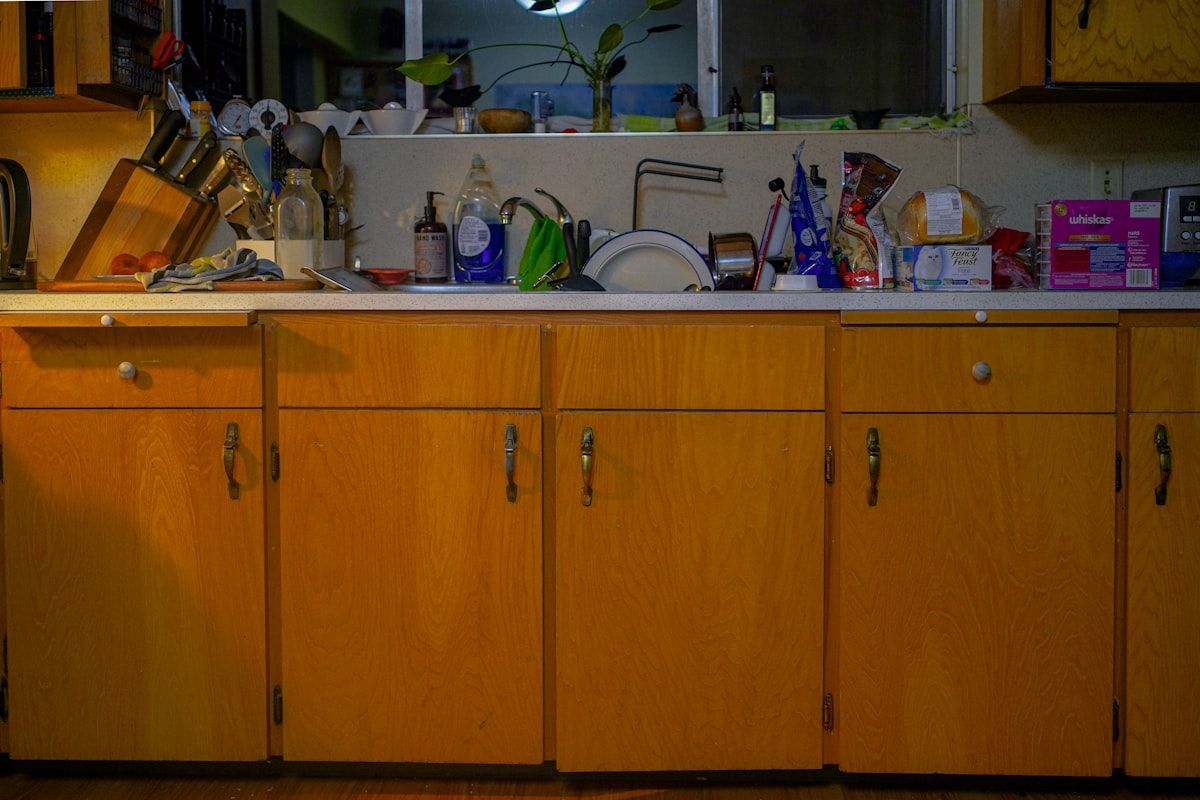
Where roaches usually hide in Chicago-area homes and apartments
Roaches go where food, water, warmth, and shelter come together. In Chicago-area houses, condos, and apartments, that often means the same handful of places over and over again.
Kitchen hot spots: behind the fridge, under the sink, inside cabinets
Kitchens are the biggest trouble zone because they combine crumbs, grease, moisture, and dark hiding places. Kitchens and bathrooms are the first rooms to check for exactly that reason.
Start behind the refrigerator, especially near the motor area where warmth builds up. Then check under the sink, inside cabinet corners, around plumbing gaps, under the stove, and along the kick plate under lower cabinets. Even a thin layer of grease beside the stove or crumbs trapped under an appliance can keep roaches happy for a long time.
Bathrooms, laundry rooms, basements, and utility spaces
Moisture keeps roaches alive. Leaky supply lines, sweating pipes, damp vanity cabinets, floor drains, and basement corners all attract activity. Older homes, garden units, and lower levels often deal with this more because the spaces stay cooler, darker, and damper.
Laundry rooms count too. A slow drip behind the washer or a floor drain with organic buildup can create a perfect little hiding zone that never gets much attention.
Shared walls, pipe chases, and clutter in apartments and condos
In apartments and condos, the problem may not start inside your unit. Roaches can move through wall voids, plumbing lines, shared utility chases, hallway gaps, and even around outlet boxes. That’s why repeated activity in one unit can be tied to the building as a whole, especially in older multiunit properties.
If your place looks clean and you still keep seeing roaches, that doesn’t mean you missed something obvious. Dense housing creates easy travel routes. If that sounds familiar, it helps to understand why apartment infestations keep restarting.
The roaches you’re most likely to notice
You do not need to become a bug expert to tell what matters. But knowing the likely type helps explain where the roaches came from and how urgent the problem is.
German roaches: small, fast, and usually the bigger indoor problem
German roaches are the classic indoor infestation roach. They’re small, tan to light brown, fast, and usually found in kitchens and bathrooms. They reproduce quickly and often establish colonies inside cabinets, appliances, and wall gaps.
If you’re seeing tiny roaches and pepper-like droppings in food prep areas, German roaches are a likely culprit. They are usually the bigger problem because they settle in and multiply fast. If you want a clearer comparison of behavior and risk, the difference between the two common types can make sightings easier to interpret.
American and Oriental roaches: larger and often tied to basements, drains, and sewers
American and Oriental roaches are larger, darker, and more often connected to basements, drains, crawl spaces, and sewer-related entry points. After heavy rain or muggy weather, these are the ones more likely to show up in lower levels or near floor drains.
Because they are bigger, a lot of people assume they are the only kind worth worrying about. Not true. Large roaches still matter, even if you only see a few.
How to confirm roaches instead of guessing
Guessing keeps people stuck. A simple check usually tells you a lot within a day or two.
Do a nighttime flashlight check
Wait until the house is quiet, then inspect likely hiding spots after dark. Under the sink around 11 p.m. is a good place to start. Check behind the fridge, along baseboards, around pipe openings, inside lower cabinets, and behind the stove with a flashlight. Roaches often scatter fast when disturbed, so be ready for quick movement.
Set glue traps to measure activity
Glue traps are one of the easiest ways to confirm a problem. Glue traps left overnight can show both whether roaches are present and how active the infestation is.
Place them under sinks, behind toilets, behind the fridge, near baseboards, and in cabinet corners. Leave them out at least one night, and honestly, two or three nights gives you a better picture. Use more than one room. A trap in only one spot can miss the pattern.
Pay attention to patterns, not just one sighting
One sighting tells you to pay attention. Repeated signs tell you the story. If you keep noticing droppings under the same sink, trap catches in the same corner, and a smell coming from the same cabinet, that points to active infestation.
In multiunit buildings, that pattern may stretch beyond one apartment. Testing more than one unit matters because the source can be building-wide.
Why roaches show up in the first place
A lot of people ask the same thing: how do you get roaches if you keep a decent home? The short answer is that roaches are opportunists, not judges.
Food, water, and hiding spots
Open pantry items, dirty dishes left overnight, pet bowls, grease near the stove, leaky pipes, cardboard boxes, paper bags, and clutter all help roaches settle in. Moisture is a big one. Roaches can go longer without food than without water, so a damp cabinet under the sink can matter more than a few crumbs on the counter.
That said, spotless homes can still get roaches. Cleanliness helps, but it does not block shared walls, drain lines, or hitchhiking pests inside a delivered box.
Entry points and building conditions
Roaches get in through cracks, gaps around pipes, drains, utility penetrations, used appliances, secondhand furniture, and delivery packaging. In older Chicago buildings and busy suburban multifamily properties, aging infrastructure makes this worse. Shared plumbing and wall voids are basically pest highways.
When roaches become more than just a nuisance
Roaches are disgusting, yes. But the bigger issue is what they leave behind.
Allergens, asthma triggers, and indoor air concerns
Roach debris includes droppings, shed skins, body parts, and saliva, and those materials can trigger asthma in sensitive people. Bigger infestations mean more contamination in cabinets, dust, and the air around active areas.
That matters even more in homes with kids, older adults, or anyone already dealing with asthma or allergies. Quick action is not about panic. It’s about keeping the problem from getting worse.
Why daytime sightings usually mean a larger infestation
Daytime roach activity usually means hiding spots are crowded enough that roaches are being pushed out into the open. That is not a minor phase. It is a strong sign the infestation has grown.
If you are seeing roaches in multiple rooms, during the day, or week after week, this has moved beyond casual DIY territory.
What to do next if you find signs of roaches
Once you see the signs, speed matters. Roaches do not sit still and wait for a convenient time.
Start with a few immediate steps tonight
Wipe counters and stovetops. Seal food in containers. Don’t leave dishes in the sink overnight. Empty trash, fix any obvious leak, and get cardboard clutter off the floor. Then place monitors in the kitchen, bathroom, and any damp utility area.
That one round of cleanup will not solve an infestation, but it makes the next step more effective and helps you see where activity is strongest.
Skip the foggers and random sprays
Foggers and random sprays usually miss the hidden nest areas that matter most. Worse, they can scatter roaches deeper into walls and leave residues behind. A smarter approach is integrated pest management, or IPM, which means combining inspection, sanitation, moisture control, sealing, monitoring, and targeted treatment.
If you want treatment options that actually line up with how roaches behave, what works fastest in real homes is usually more useful than whatever spray happened to be on the store shelf.
When it’s time to call a professional exterminator
If you keep seeing roaches after basic cleanup and monitoring, if traps fill quickly, if activity shows up in multiple rooms, or if the issue involves an apartment building or tenant complaints, it’s time for professional help. In multifamily properties, coordinated treatment matters more than treating one unit in isolation.
A proper inspection can identify the species, hiding areas, and return points. For Chicago-area homes and apartments, professional roach control is the right move when the signs keep repeating.
Frequently Asked Questions
If you see one roach, does that mean you have an infestation?
Not always, but it is enough to take seriously. One indoor roach can be a stray, but one sighting plus droppings, odor, or nighttime activity usually points to more hidden nearby.
What do roach droppings look like?
Small roach droppings often look like black pepper or coffee grounds. Larger roach droppings look more like tiny dark pellets. You’ll usually find them in corners, under sinks, and behind appliances.
Where should you check first for roaches?
Start in the kitchen and bathroom. Look under sinks, behind the fridge, around pipes, inside lower cabinets, and along baseboards. If you have a basement or laundry room, check those too.
Are roaches only a problem in dirty homes?
No. Roaches are drawn to food, moisture, shelter, and easy entry points. Clean homes can still get roaches through shared walls, plumbing lines, deliveries, used appliances, and building-wide infestations.
How long should you leave glue traps out?
Leave glue traps out for at least one night. Two to three nights gives you a better sense of activity, especially if you place traps in more than one room.
What is the simplest way to tell if the problem is serious?
Look for a pattern: repeated droppings, trap catches, odor, or sightings in the same areas. Daytime sightings, activity in multiple rooms, or roaches in an apartment building usually mean the problem is already serious.
If you notice even two or three of these signs in the same part of your home, trust the pattern and act on it tonight.