
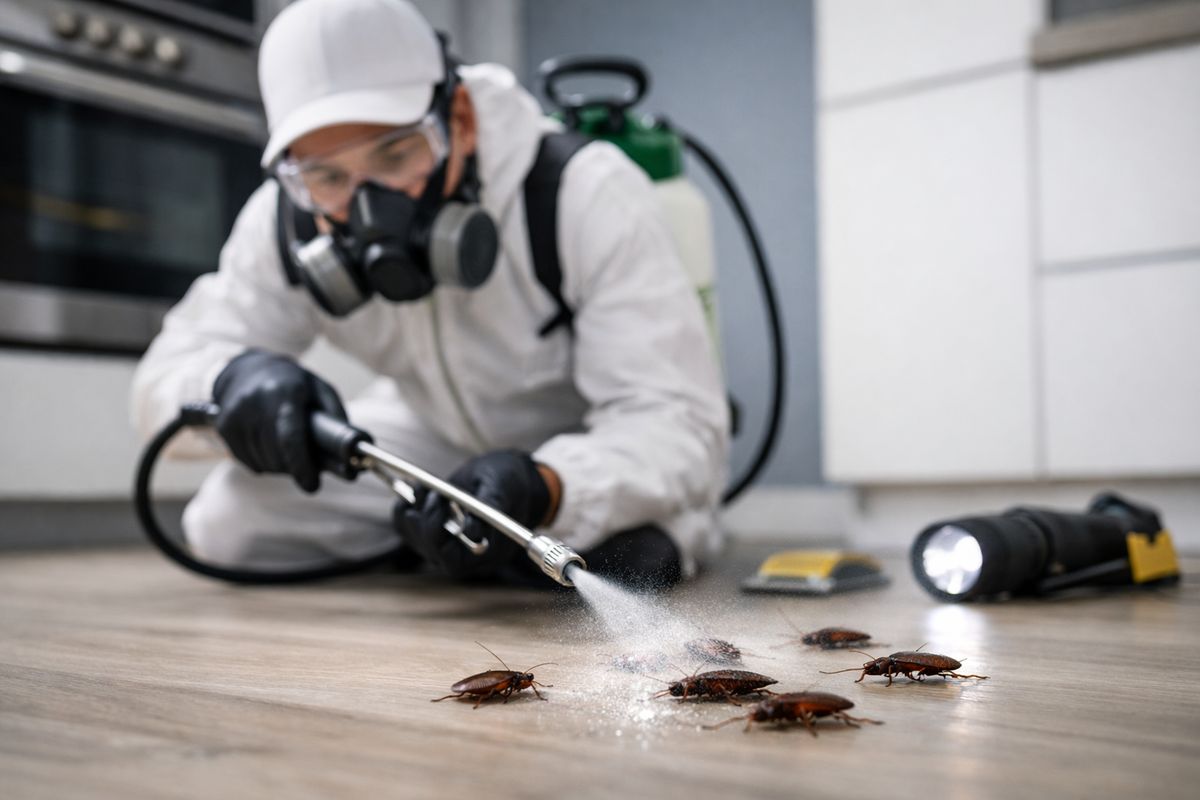
Seeing a roach sprint across the kitchen floor at 11 p.m. can make you want the fastest fix possible. But professional cockroach extermination usually works more like untangling a clogged drain than spraying air freshener, the real fix takes a plan, not a quick blast. Here’s what actually happens, what results look like, and how to tell if the service you’re paying for is built to solve the problem for good.
Why professional cockroach extermination is usually more than one spray visit
A good roach service is almost never a one-and-done spray visit, especially in Chicago apartments, brick two-flats, condos, and older suburban homes with lots of pipe gaps, wall voids, and warm utility spaces. If roaches are showing up near the bathroom sink before sunrise or slipping out from behind the stove after dark, the issue is usually bigger than the handful you can see.
That is why professional cockroach extermination usually includes inspection, species identification, targeted treatment, monitoring, and follow-up. Modern pest control has moved toward layered IPM plans, short for integrated pest management, instead of relying only on broad chemical spraying. In fact, IPM-based service contracts have become a much bigger part of professional pest management because multi-step treatment works better than spray-only approaches.
The catch is simple: roaches hide well, breed fast, and often stay tucked into tight spaces that surface sprays barely reach. German roaches are especially stubborn. A single mated female can help create a huge infestation in less than a year, which is why “I only saw a few” can turn into a cabinet-full problem faster than most people expect.
What happens during the first inspection
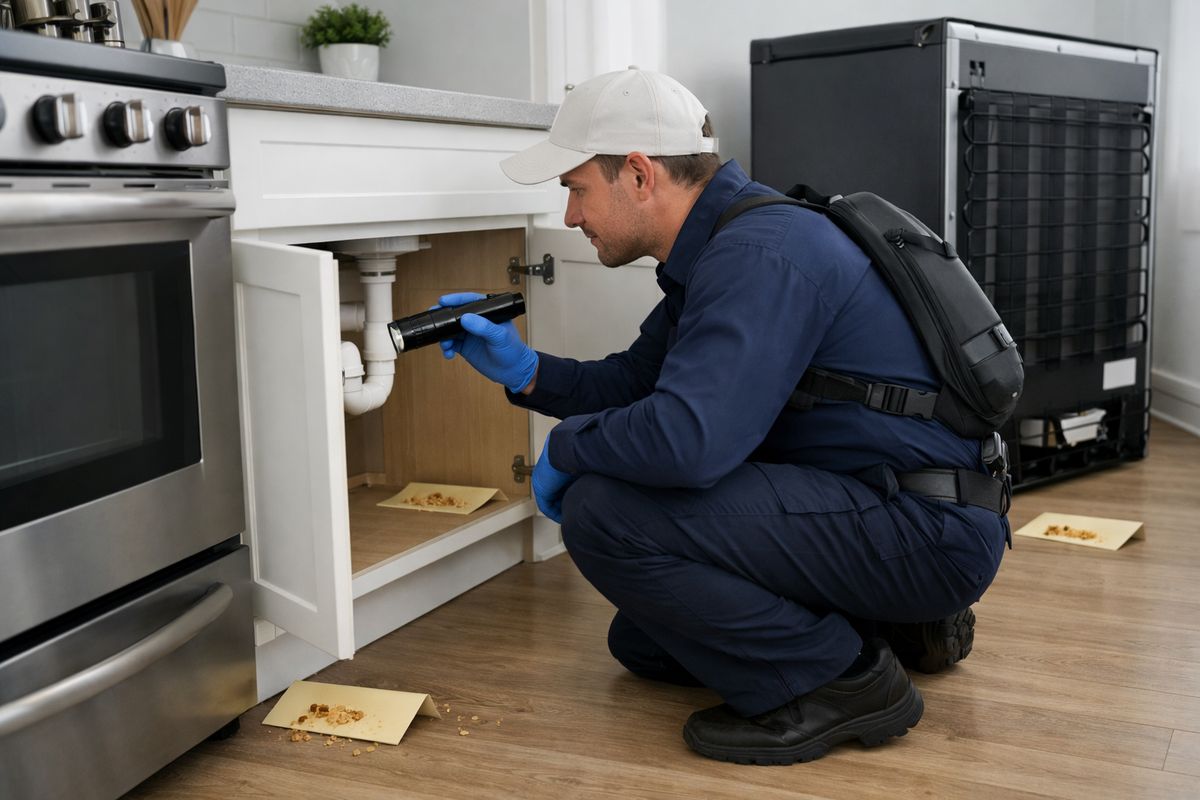
The first visit should feel like detective work, not a rushed sales stop. A solid technician is trying to figure out where roaches are living, what species you’re dealing with, how heavy the infestation is, and what conditions are helping it stick around.
Where the technician checks first
Expect close attention in kitchens and bathrooms first. That usually means under sinks, around plumbing penetrations, behind the stove and refrigerator, inside cabinet hinges and corners, near dishwashers, around trash pull-outs, utility closets, basements, laundry areas, and anywhere warmth, moisture, and crumbs collect.
In multi-unit buildings, shared walls matter a lot. Roaches can move through plumbing lines, pipe chases, wall voids, and gaps around outlets, which is why a spotless unit can still have a roach problem. If you live in a courtyard building in Rogers Park or an apartment near a busy commercial strip, that building-to-building density can make the problem more persistent.
If you want a clearer picture of what gets flagged during an inspection, it helps to review common signs hiding indoors before the appointment.
How species identification changes the plan
Species matters. A lot.
German cockroaches are the small tan or light brown roaches that usually show up in kitchens and bathrooms. These are the toughest common indoor roaches because they breed quickly, hide in tiny cracks, and have a long history of resistance to older insecticides. Research and field guidance consistently point to German roaches as a species that needs inspection, targeted baiting, follow-up, and prevention, not random spraying.
American and Oriental cockroaches are larger and usually point to different moisture and entry issues. You might see those in basements, floor drains, crawl spaces, boiler rooms, or lower-level utility areas. The treatment plan often shifts depending on whether the problem is mostly indoor harborage, outside entry, or both.
This is one reason vague “spray service” descriptions are a bad sign. A real plan starts with knowing exactly what’s in your home.
Signs that help confirm the size of the infestation
A technician is not just looking for live roaches. Droppings, egg cases, shed skins, musty odor, grease smears along edges, and sticky-trap captures all help show how active the population is and where it is concentrated.
Daytime sightings are especially telling. Roaches prefer to stay hidden, so seeing them out in daylight often means harborages are crowded and the infestation is heavier. Widespread droppings in cabinet corners or around appliance motors can point to a long-running problem, not a new one.
The treatment methods you should expect from a good exterminator
Modern treatment should look targeted, not dramatic. The best exterminators combine several tools so the service attacks the infestation from more than one angle. That layered approach is the heart of IPM, which basically means using treatment, cleanup, exclusion, and monitoring together instead of hoping one product does everything.
For a closer look at what actually stops infestations, it helps to think in terms of systems, not sprays.
Gel baits and why professionals use them so often
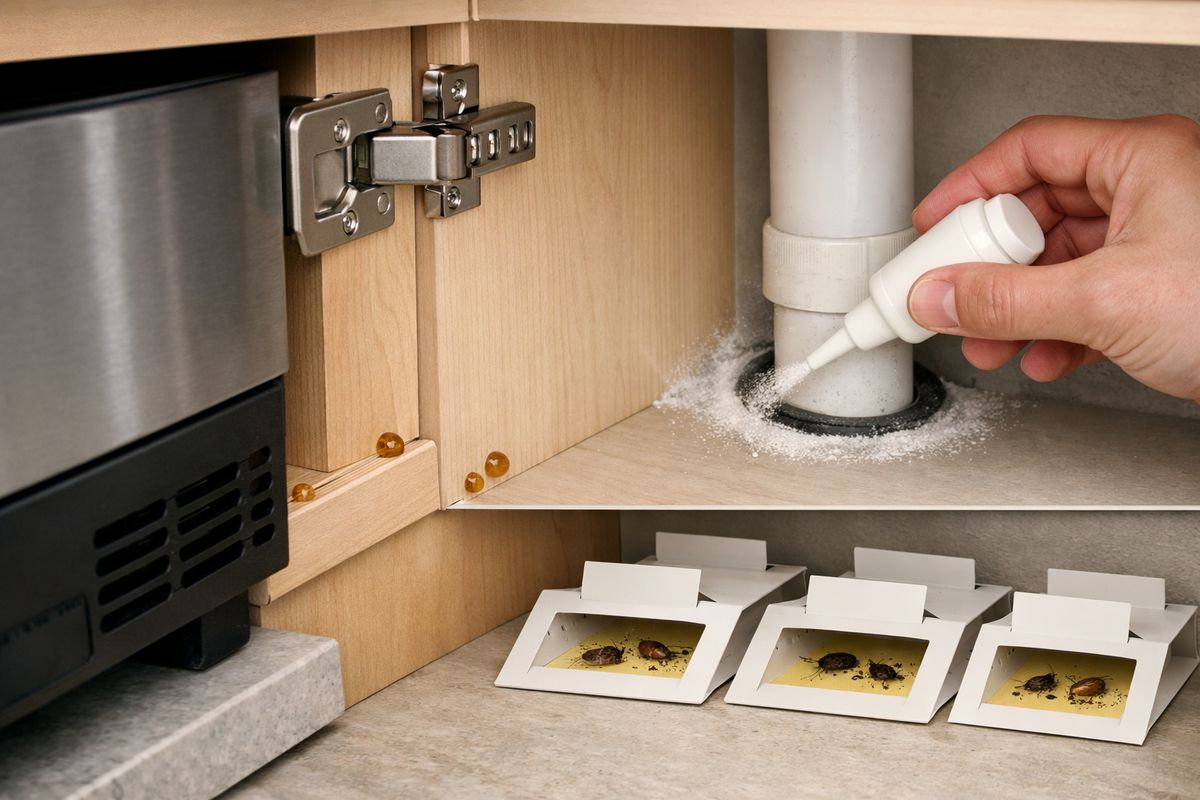
Gel baits are one of the main tools for indoor roach control, especially for German roaches. Tiny placements go into cracks, cabinet joints, hinge areas, void edges, and other spots where roaches travel and feed. Roaches eat the bait, return to hiding areas, and die there, which can affect other roaches too.
There’s a reason gel baits led the market. In real homes and apartment studies, bait-based programs have repeatedly outperformed older spray-heavy approaches. Rutgers research on apartments found trap counts could drop dramatically over time with bait-centered IPM programs, even reaching elimination in many treated units.
Baits work best when roaches are not distracted by easy food and when repellent sprays are not pushed into the same areas. That part matters more than it sounds.
Insect growth regulators, dusts, and crack-and-crevice treatments
Insect growth regulators, usually called IGRs, interrupt the roach life cycle. In plain English, they make it harder for immature roaches to develop normally and help reduce the next wave.
Dusts are useful in hidden voids where gels are not ideal, such as wall cavities, behind cabinet backs, around pipe penetrations, or under certain appliances. Crack-and-crevice treatment means exactly what it sounds like: placing product into the narrow hiding spots roaches actually use instead of blanketing exposed surfaces that do very little.
That targeted style is what separates a real treatment plan from a cosmetic one. Roaches spend most of their time hidden, so treatment has to meet them there.
Sticky traps and monitoring tools
Sticky traps are not just for catching bugs. They tell the technician where activity is strongest, whether the population is dropping, and whether eggs have hatched since the first visit.
This is especially useful after the first round of baiting. If traps behind the refrigerator stay active but the bathroom traps go quiet, the next visit can focus where pressure remains. Some companies also use digital monitoring, though honestly, simple trap checks still do a lot of the heavy lifting.
How to get your home or unit ready before treatment
Prep matters, but not in a perfectionist way. The goal is not to make your place look like a model home. The goal is to make the treatment easier to place, easier for roaches to find, and less likely to compete with crumbs, grease, or water sources.
What to clean, remove, or store before the visit
Start with food and grease. Wipe counters, clean up spills, store pantry items in sealed containers, empty the trash, and clear clutter from under sinks and problem cabinets. If the service asks for access behind the stove or refrigerator, make that possible ahead of time.
Roaches do not need much to keep going. A thin film of grease under a range hood, crumbs under a toaster, or pet food left out overnight can work like a buffet.
If you want a more detailed room-by-room checklist, this guide to getting your home ready makes the process much easier.
What not to do before the exterminator arrives
Do not use over-the-counter sprays, powders, or foggers before the appointment. This is one of the biggest mistakes people make.
Bug bombs rarely reach the cracks and voids where roaches live, and spray residue can push roaches deeper into walls or make them avoid bait placements. University extension guidance specifically warns against foggers for roach control because they do a poor job reaching hidden harborages and can add safety risks too.
DIY products can also muddy the inspection. If every corner already smells like peppermint spray and pyrethroid aerosol, it gets harder to read where the real activity is.
What happens after treatment and how long it takes to work
Good roach control is absolutely possible. But heavy infestations usually take more than one visit, and that is normal, not a sign the service failed.
What you may notice in the first few days
You may see more activity at first. That can happen when roaches leave hiding spots, encounter bait, or get disrupted from crowded harborages. It feels backward, but some short-term increase is common.
What should concern you? If activity stays flat with no change after the first week or two, or if brand-new areas suddenly become heavily active, that is worth reporting. A good company should expect that call and use it to adjust the next visit.
When follow-up visits are usually needed
Light infestations may clear in one or two visits. Heavier infestations often need multiple visits across four to eight weeks because egg cases can hatch after the first service and hidden pockets may survive long enough to need retreatment.
That follow-up is not a sales gimmick. It is part of the cure. Guidance on German roach elimination consistently notes that eggs can hatch a few weeks after initial treatment, which is exactly why strong service plans build in rechecks and trap reviews.
If you have dealt with roaches returning after service, this is usually the missing piece.
How professionals confirm the infestation is actually under control
The real proof is in the trend line. Trap counts should fall. Fresh droppings should decline. Known harborages should look quieter on inspection. Daytime sightings should stop.
Small reductions are not enough. Research from NC State found that small decreases may not meaningfully lower allergen levels because the remaining roaches still leave contamination behind. In other words, “better” is not the same as gone.
Why health concerns are a big reason to call a pro
Roaches are not just gross. That part is obvious. The bigger issue is what they leave behind in kitchens, cabinets, HVAC dust, and food prep areas.
Allergens, asthma triggers, and indoor air concerns
Cockroach waste and body fragments can trigger allergies and worsen asthma symptoms, especially in apartments and homes where infestations linger. Research from NC State found that extermination reduced allergens and endotoxins over follow-up periods, while untreated homes stayed high.
That matters in everyday terms. It means the problem is not just the roach you saw on the backsplash. It is also the residue left in kitchen dust, near baseboards, behind appliances, and in shared indoor air.
Kitchens often carry more contamination than bedrooms because that is where food and moisture are concentrated. So if your child’s room sits right off the kitchen in a small apartment, the health angle gets personal fast.
Food contamination and bacteria risks
Cockroaches are associated with more than 30 bacterial species, including Salmonella and E. coli. Reviews of the science describe roaches as urban disease vectors, not just nuisance pests, especially in food-heavy settings and shared buildings.
That raises the stakes in pantries, kitchen drawers, break rooms, mixed-use buildings with restaurants downstairs, and anywhere food prep happens regularly.
Special expectations for apartments, condos, and multi-unit buildings
Roach control in a detached house is one thing. Roach control in a multi-unit building is another animal entirely.
Why one treated unit may not solve the whole problem
If roaches are moving through walls, pipe chases, utility penetrations, hallways, or trash rooms, treating one apartment may only lower pressure temporarily. Complaint-based service, where only the unit that calls gets sprayed, is one of the biggest reasons roaches keep circulating in buildings.
Apartment research has shown that roach control improves when treatment is coordinated across affected areas and followed up consistently. In one Rutgers community program, trap counts dropped sharply under a building-wide IPM approach with monitoring and repeated visits.
What renters should document and ask about
If you rent, keep notes. Record where roaches show up, what time you see them, and whether sightings are in the kitchen, bathroom, bedroom, or near radiators and plumbing. Photos help. So do notes on droppings, egg cases, and trap captures.
Ask when follow-up is scheduled, whether adjacent units are being checked, and whether common areas or shared utility spaces are part of the plan. If the issue is centered in your building, this guide on what to do next in a rental can help you stay organized.
What property managers should expect from a stronger building-wide plan
A stronger plan usually includes inspections beyond the complaint unit, repeat service in affected areas, sanitation guidance, maintenance repairs, moisture control, sealing entry points, and tracking that goes beyond “sprayed unit 3B.”
For a fuller picture of building-wide roach control planning, the main idea is simple: isolated spray visits often waste time and money. Coordinated work gets results faster and keeps tenants happier.
How to choose a cockroach exterminator without getting sold a vague “spray service”
A good provider should be able to describe the process in plain English. Not in slogans. Not in mystery chemical language. Just clearly.
Questions worth asking before you book
Ask how the company identifies the species, what treatment methods are included, whether baiting and monitoring are part of the service, how follow-ups are scheduled, what prep is required, and how multi-unit situations are handled.
Also ask about licensing and inspection standards. If you want a deeper look at why credentials matter, this page on checking for proper licensing is worth reading before you book.
The best answer is usually specific. “We inspect, place bait where activity is found, use dust in voids if needed, set monitors, return to check progress, and adjust based on traps” is a much better sign than “We spray and see how it goes.”
Red flags to watch for
Be wary of promises that all roaches will be gone instantly after one visit. Be wary of companies that talk only about spraying but not about inspection, baiting, monitoring, or follow-up. Be wary of anyone who gives no prep instructions at all.
Vague service usually means vague results. If you are comparing options, start with a provider that explains how a real roach service works before talking price.
Common mistakes that make professional treatment less effective
Even a good treatment plan can get slowed down by a few common habits. This part is frustrating, because the mistakes are easy to make.
Using store-bought sprays after service
Spraying after professional bait placement can contaminate bait, repel roaches into new hiding spots, and stretch the infestation out longer. That includes the quick aerosol can under the sink.
One apartment study found that once organized IPM service began, resident use of store-bought pesticides dropped sharply. That is not a coincidence. The less interference around bait placements, the better the professional treatment can do its job.
Leaving food, water, and clutter in place
Pet food left out overnight, cardboard stacked under the sink, drips at the shutoff valve, crumbs around the toaster, grease under the stove, all of that keeps feeding the infestation. Treatment and cleanup work together like a lock and key. One without the other is weaker.
The good news is that you do not have to become obsessive. You just need to take away the easy rewards.
Skipping the follow-up appointment
This is the mistake that quietly resets the whole problem. Hatch-outs can happen after the first visit. Hidden harborages can survive. Neighboring activity in a condo or apartment can refill the space if monitoring stops too soon.
If the company schedules a recheck, treat it like part of the original service, because it is.
What lasting roach prevention looks like after extermination
Long-term prevention should feel manageable. Not like a second job.
Moisture control and sealing entry points
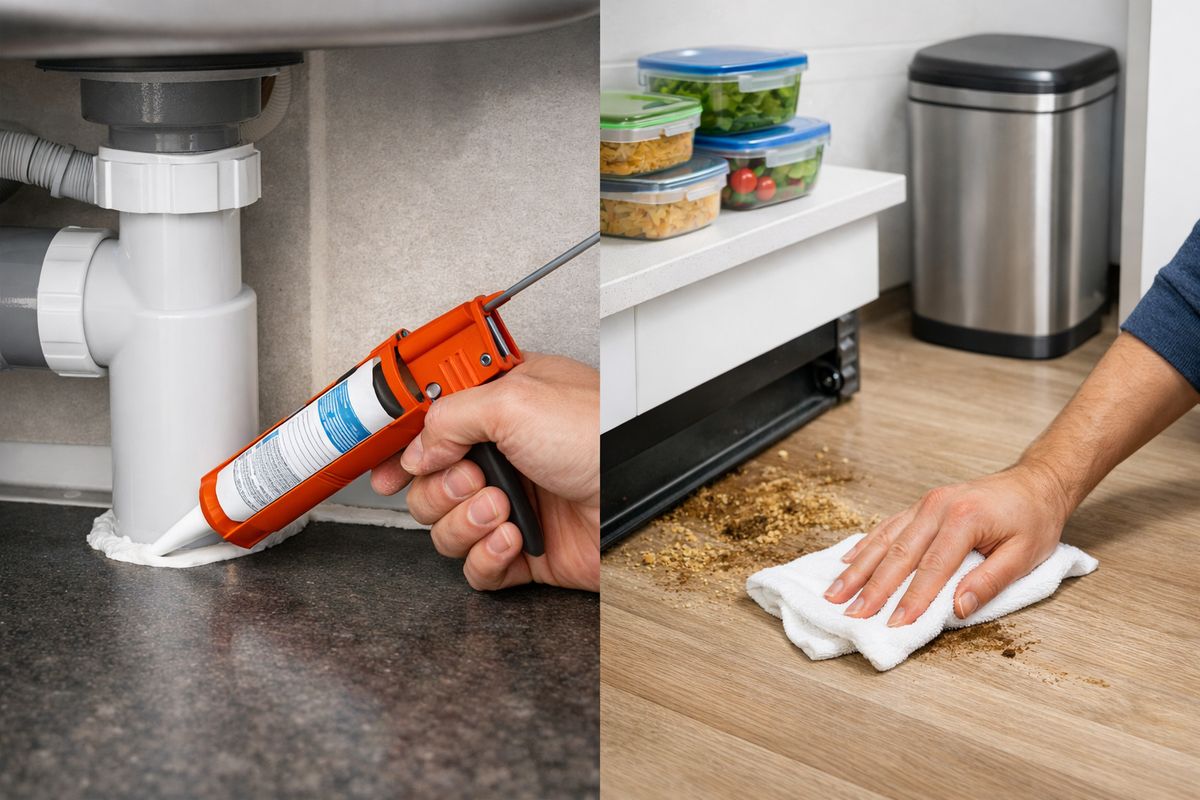
Fix leaks under sinks, dry out splash zones, seal gaps around plumbing, close openings along baseboards and cabinet penetrations, and reduce access to water wherever you can. Roaches can go longer without food than most people expect, but water keeps them anchored.
In older Chicago housing, pipe gaps behind sink cabinets and radiator lines are common weak spots. Sealing those after treatment can make a real difference.
Habits that help keep roaches from coming back
Keep trash moving out regularly, store dry goods in sealed containers, wipe up grease, clean under small appliances, reduce cardboard storage, and check problem spots every so often instead of waiting for a full relapse.
You do not need a perfect house to keep roaches away. You need fewer hiding places, less food, less water, and a faster response when activity starts again. This week, try one simple job: pull the stove out and clean the grease and crumbs sitting behind it since last winter.
Frequently Asked Questions
How long does professional cockroach extermination usually take?
Light infestations may improve in 1 to 2 visits. Heavier infestations often take several visits over 4 to 8 weeks, especially with German roaches or in apartments where eggs hatch after the first treatment.
Will you see more roaches after treatment?
Possibly, yes. A short burst of activity can happen as roaches leave hiding spots and find bait. That is often normal in the first few days. Ongoing heavy activity after the first week or two should be reported.
Is spraying enough to get rid of roaches?
Usually not. The strongest plans combine inspection, baiting, crack-and-crevice treatment, dusts, monitoring, sanitation changes, and follow-up. Spray-only service is often too shallow for established infestations.
Do you need to leave your home during treatment?
That depends on the products and treatment areas, but many modern roach services use targeted methods that do not require long vacancy periods. Your exterminator should give clear instructions before the visit, especially if kids or pets are in the home.
Can a clean apartment still get roaches?
Yes. Roaches can move in through shared walls, plumbing, deliveries, used furniture, grocery bags, and nearby infestations. Cleanliness helps control the problem, but it does not create immunity.
What is the best first step if you keep seeing roaches?
Stop using store-bought sprays, document where and when you see activity, and book a real inspection. The faster you identify the species and hiding areas, the easier the infestation is to shut down.