
A cockroach is a cockroach until you’re the one spotting it under the sink at 11 p.m. The good news is that learning the main types of cockroaches in Chicago gets a lot easier once you know what to look for: where you found it, how big it was, what color it was, and whether it seemed to love moisture, warmth, or both.
Why Quick Cockroach Identification Matters in Chicago
If you see a small tan roach in the kitchen, that points to a very different problem than a large dark roach near a basement drain. Quick identification matters because different species hide in different places, spread in different ways, and respond to different treatment strategies.
That’s especially true in Chicago. Older brick buildings, shared walls, garden units, unfinished basements, boiler rooms, alley trash areas, and humid utility spaces create plenty of hiding spots. The Illinois Department of Public Health notes that five cockroach types are covered in its Illinois guide, including German, Oriental, American, brownbanded, and woods cockroaches, but for most Chicago homes and buildings, four species cause the bulk of indoor concern.
Types of Cockroaches Most Common in Chicago Homes and Buildings
In Chicago-area homes, apartments, condos, restaurants, and mixed-use buildings, the roaches you’re most likely to run into are German, Oriental, American, and brownbanded cockroaches. Each one has a pattern. German roaches love kitchens and bathrooms. Oriental roaches stick close to damp, cool spaces. American roaches are the big reddish-brown ones often tied to drains, sewers, and boiler areas. Brownbanded roaches break the usual rule and show up in warmer, drier, higher-up spots.
That’s the shortcut. Location, size, color, and behavior usually tell you more than people expect.
A Fast Look at the 4 Main Roaches
Here’s the quick cheat sheet:
- German: small tan kitchen roach with two dark stripes
- Oriental: large dark “waterbug” from wet basements or drains
- American: very large reddish-brown roach, often near sewers or boiler spaces
- Brownbanded: small banded roach in warm, dry, elevated areas
If you want a deeper look at the species Chicago residents report most often, this breakdown of the small striped kitchen species is a useful place to compare what you saw.
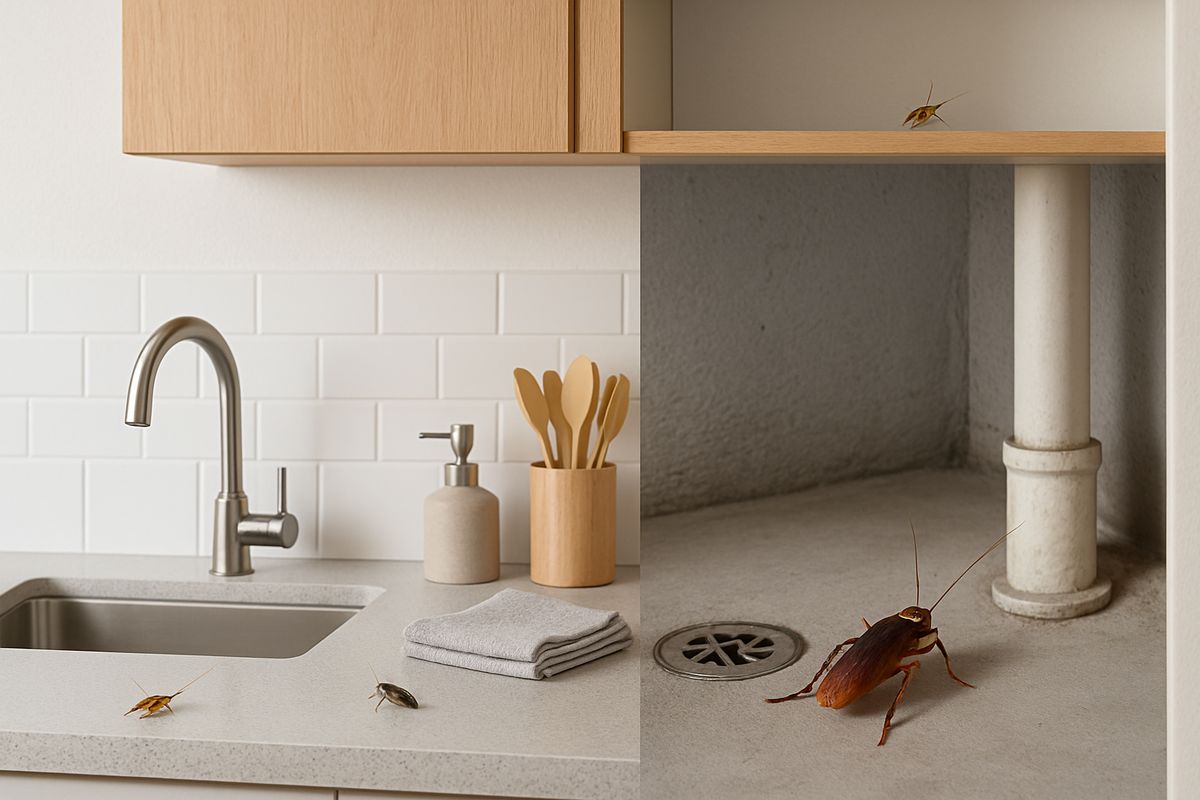
How to Identify a Cockroach Quickly
You do not need to become an insect expert to narrow this down. A simple four-part check works surprisingly well: where you saw it, how big it was, what color or markings it had, and how it moved.
Think of it like identifying a car at night. You may not catch every detail, but size, color, and where it was parked usually give it away.
Start With Where You Saw It
Where you found the roach is often the biggest clue.
A roach in the kitchen, especially around the sink, dishwasher, stove, or inside cabinets, is often German. A roach in a cool basement, crawlspace, floor drain area, or sump pump corner points more toward Oriental. A giant roach coming up from a drain, boiler room, or utility area often suggests American. A smaller roach near a ceiling, closet shelf, TV stand, or bedroom dresser may be brownbanded.
That location-first approach is practical because roaches are creatures of habit. They stay close to the food, water, and shelter each species prefers.
Check Size, Color, and Markings
Next, look at the body.
German cockroaches are small, about a half inch long, and tan to light brown. The giveaway is the pair of dark stripes behind the head. In fact, the German cockroach is about half an inch long, bronze-colored, and has two black stripes behind the head.
Oriental cockroaches are chunkier and darker. They look glossy dark brown or almost black, with no obvious striping.
American cockroaches are the giants. They can reach about two inches and look reddish-brown with a lighter area around the thorax.
Brownbanded cockroaches are small like German roaches, but they have pale bands across the wings or body instead of the two dark stripes behind the head.
Notice How It Moves
Behavior helps when the visual details were a blur.
German roaches scatter fast when lights come on and stay close to food and water. Oriental roaches tend to stay near moisture and are not fliers. American roaches can move quickly and may glide or fly in warm conditions, which is the kind of thing people remember forever. Brownbanded roaches may seem jumpy when disturbed, and males can fly.
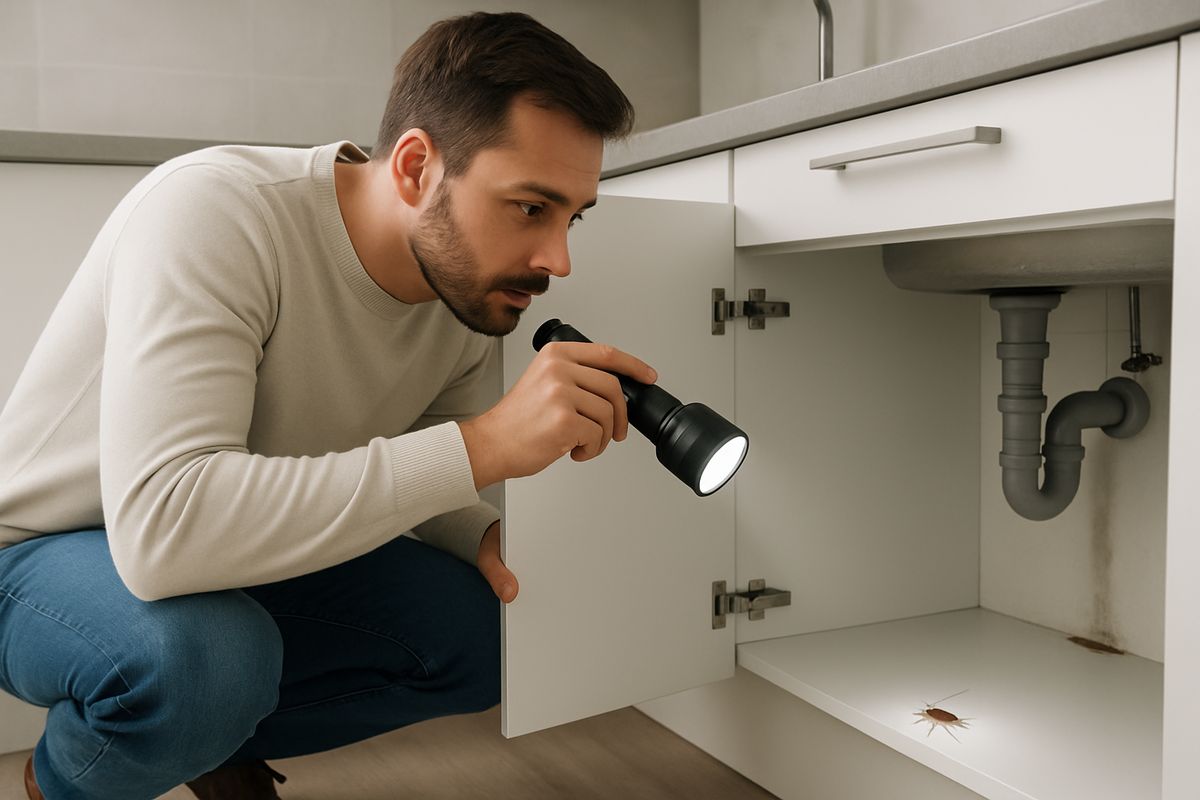
German Cockroach: The Most Common Indoor Roach
If you’re dealing with roaches inside a Chicago kitchen or apartment, German cockroaches are the top suspect. They are widely considered the most common indoor infestation species, and they’re the one that turns a small sighting into a big headache fast.
Among household species in the U.S., the German cockroach is described as the most frequently found household roach. That tracks with what property managers and renters see across the city.
What German Cockroaches Look Like
German cockroaches are small, usually around half an inch long. Adults are tan to light brown, and older nymphs and adults have two dark stripes behind the head. Nymphs are smaller, darker, and wingless, so people often mistake them for a different bug entirely.
That’s a common problem. In active infestations, you may see more babies than adults. Research used by Illinois public health guidance notes that a growing population can be heavily weighted toward immature roaches, which is one reason infestations seem to “appear overnight” when they’ve actually been building behind the scenes.
Where German Cockroaches Hide in Chicago Homes
German roaches want food, water, heat, and tight hiding spots. So they pile into kitchens and bathrooms. Think cabinet hinges, wall voids, appliance gaps, under sinks, behind refrigerators, around dishwashers, and inside the little cracks near plumbing lines.
They’re homebodies, too. German cockroaches are the most common roach found in kitchens and typically hide in cracks and crevices. They also tend to stay within about 10 feet of food and water, which means the area around the sink and stove matters a lot.
If your problem seems centered around shared kitchens, utility chases, and neighboring units, it helps to understand how roaches spread through connected apartment spaces.
Why German Roaches Get Out of Control So Fast
Here’s the real issue: they reproduce quickly and stay hidden well.
Illinois public health guidance explains that German cockroaches develop in about two months and produce egg capsules with 30 to 48 eggs. That is a huge reason they spiral fast in apartments, condos, and multi-unit buildings. One female can kick off a serious infestation, and by the time you see a few adults in daylight, many more may already be inside walls, cabinet voids, and appliance gaps.
This is also why random sprays usually disappoint. If you’re battling this species specifically, this closer look at identifying the common kitchen roach fast helps connect the visual clues to the right response.
Oriental Cockroach: The Dark “Waterbug” in Basements and Wet Areas
A lot of Chicago residents call these waterbugs. The nickname makes sense, but they’re still cockroaches.
Oriental cockroaches are strongly tied to damp, cool, lower-level spaces. If the roach was dark, broad, and hanging around a wet basement corner, this is the species many people are actually seeing.
How to Spot an Oriental Cockroach
Oriental roaches are larger than German roaches, often up to 1 1/4 inches long. They’re dark brown to black, with a broad, somewhat flattened body and no obvious decorative markings.
They also do not fly. The Oriental cockroach, often called the “waterbug” of basements, crawlspaces, and garages, prefers cooler, moisture-rich habitats. Males have short wings that only cover part of the abdomen, and females have very reduced wings, but neither sex is a flier.
Where Oriental Roaches Show Up Around Chicago Properties
This species fits Chicago’s older housing stock almost too well. You’ll find them in basements, crawlspaces, floor drain areas, garages, utility rooms, sump pump pits, and along damp foundation walls. Outside, they can hide in leaf litter, mulch, and around exterior foundations.
Garden-level apartments and homes with chronic moisture issues are especially vulnerable. Oriental roaches can also survive temperate winters outdoors, which means they may move in from around the building rather than starting only from inside.
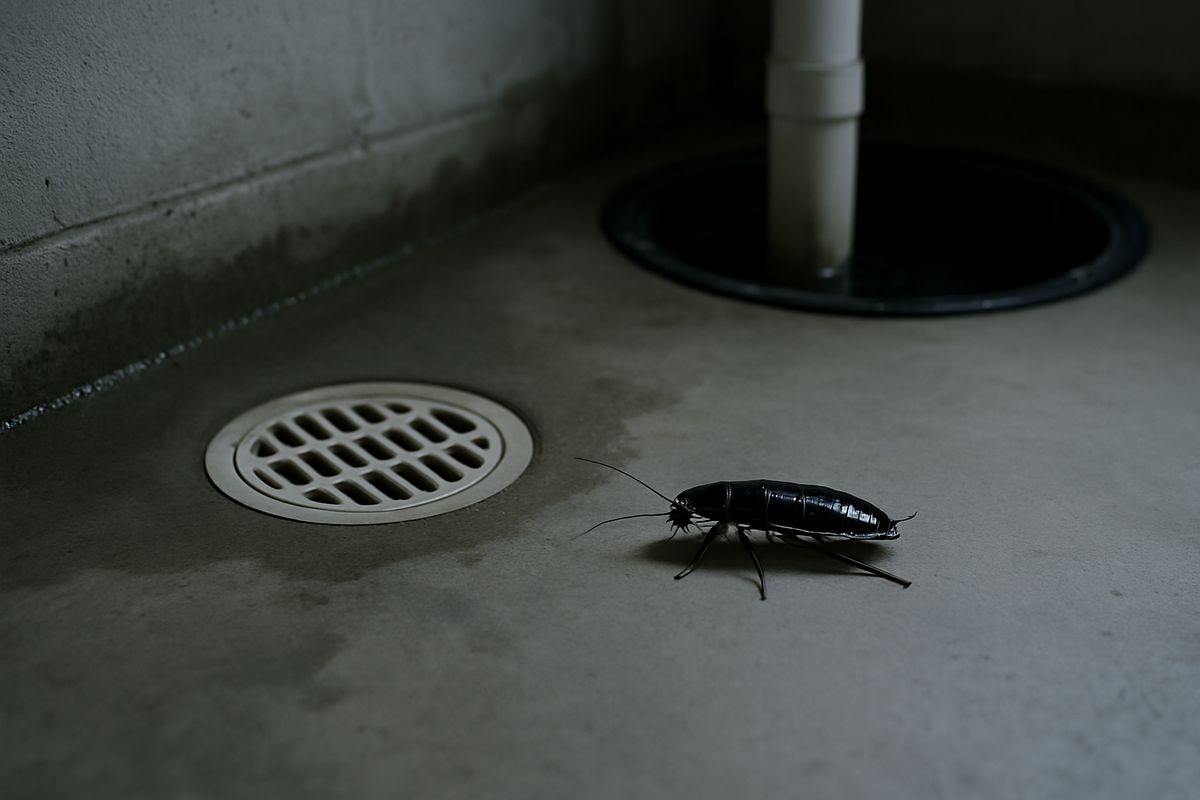
American Cockroach: The Big Reddish-Brown Roach
This is the one that sends people into full alarm mode. And honestly, fair enough.
American cockroaches are the largest common structure-infesting roaches many Chicago residents will ever see. They’re big, fast, and often show up in places that already feel unsettling, like drains, mechanical rooms, or basement utility spaces.
What American Cockroaches Look Like
American roaches are large, up to 2 inches long. They’re reddish-brown and have a lighter edge around the thorax. Adults have long wings that extend to the end of the body.
The surprise for many people is flight. American cockroaches can reach up to 2 inches long, are reddish brown, and can fly above 85°F. In Chicago, that usually means summer heat, overheated mechanical spaces, or warm indoor utility areas.
Where American Roaches Live in Chicago
American roaches are more tied to infrastructure than kitchen crumbs. They’re commonly associated with sewers, boiler rooms, basements, steam tunnels, utility corridors, and drain-connected spaces. In large commercial buildings, schools, older apartment complexes, and some multi-use properties, they can travel through plumbing and utility routes.
They do wander into homes, especially from basement drains or lower-level utility areas. Among U.S. domiciliary species, American cockroaches are generally less important in homes but more common in large commercial buildings and sewer systems.
If the size alone has you ready to skip the DIY aisle, this page on professional roach treatment lays out what targeted service usually involves.
Brownbanded Cockroach: The Roach That Likes Warm, High-Up Spots
Brownbanded cockroaches confuse people because they don’t follow the usual “roach equals kitchen or basement” rule. They like warm, dry, elevated areas, so they show up where many people least expect them.
That different hiding pattern matters. If you’re seeing roaches in bedrooms, living rooms, upper cabinets, or around electronics, brownbanded should be on your list.
How to Recognize Brownbanded Cockroaches
Brownbanded roaches are small, slightly smaller than or similar in size to German cockroaches. Instead of two dark stripes behind the head, they have pale bands across the wings and body.
Males and females look different. Males are more golden-orange, slimmer, and capable of flying. Females are darker, with shorter wings, and they do not fly. Nymphs can seem jumpy when disturbed, which throws people off because they don’t always behave like the flat-out sprinting kitchen roach people expect.
Unusual Places Brownbanded Roaches Hide
This species likes warmth more than moisture. Brownbanded cockroaches prefer warmer indoor areas around 80°F and are commonly found around electronics, motor housings, light fixtures, and ceilings. They also show up behind picture frames, inside clocks, in closets, under furniture, and in upper cabinets.
Unlike German roaches, they often harbor in nonfood areas, including bedrooms. That’s a huge clue. If the activity is high up, dry, and away from the kitchen, brownbanded becomes much more likely.
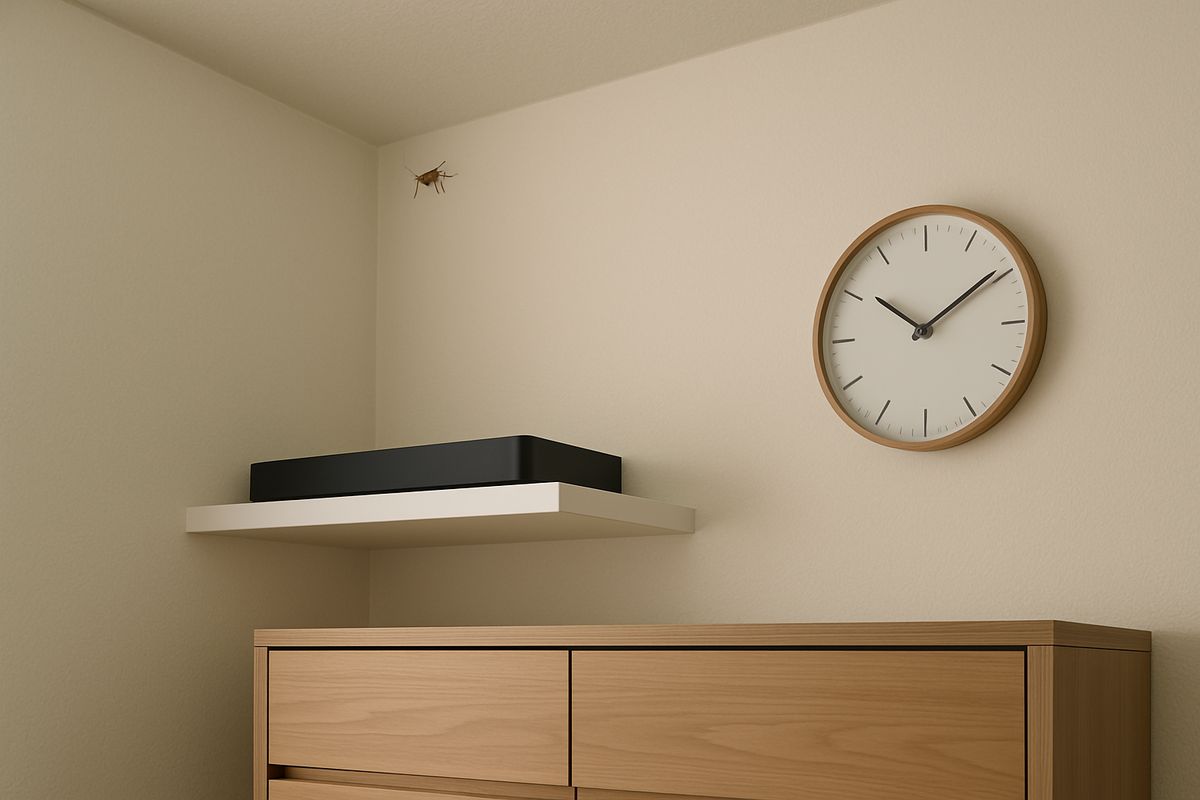
Where You Found the Roach: A Chicago-Friendly ID Guide
Most people don’t capture a perfect specimen and inspect it under bright light. They catch a glimpse, maybe snap a blurry photo, and want a realistic answer. So here’s the practical version.
If You Found It in the Kitchen
German cockroach is the leading suspect. Small size, tan color, fast movement, and sightings near sinks, dishwashers, coffee makers, cabinets, or crumbs all fit.
That said, heavy infestations can spread beyond the kitchen. Once numbers build, German roaches may show up in nearby living rooms, bedrooms, or hallways. If repeated sightings keep happening after sprays or foggers, there’s usually a reason. Many residents run into the same cycle described in why DIY treatments stop solving the problem.
If You Found It in the Basement or Near Drains
Think Oriental or American first.
A large dark roach near a floor drain, sump area, crawlspace, or wet basement corner leans Oriental. A very large reddish-brown roach near a drain line, utility room, or boiler area leans American. Older buildings with moisture issues make both species more likely.
If You Found It Near Electronics, Ceilings, or Bedrooms
That pattern strongly suggests brownbanded cockroaches. Warm electronics, closet shelves, headboards, ceiling edges, and upper wall fixtures match their habits better than German roaches.
Still, there’s one catch. Heavy German infestations can spill into odd places too. So if you’re seeing small roaches in a bedroom but also finding activity in the kitchen, don’t rule German out.
Cockroach Nymphs, Egg Cases, and Other Signs You’re Dealing With More Than One Roach
The roach you saw is often just the visible part of the problem. Cockroaches are nocturnal and spend much of their time hidden, so a single sighting can understate the real population.
That’s why supporting clues matter. Babies, egg cases, droppings, shed skins, and odors all help confirm an active infestation.
What Roach Nymphs Look Like
Roach nymphs are immature cockroaches. They’re smaller, wingless, and usually darker than adults. At first glance, they can look like tiny beetles or just “small dark bugs.”
German nymphs are especially common in indoor infestations. In fact, large populations may be mostly immature roaches, which explains why the problem can feel endless.
Other Clues Around the Home
Look for pepper-like droppings in drawers, under sinks, along cabinet edges, or behind appliances. You may also see smear marks in damp travel routes, cast skins from molting, and egg capsules tucked into cracks or attached to surfaces depending on the species.
A musty, oily odor is another warning sign in heavier infestations. Daytime sightings matter too. Roaches prefer darkness, so seeing them in the open during the day can mean the hiding spots are crowded.
For cleanup, EPA notes that a strong vacuum can remove live cockroaches, egg cases, and droppings. It also advises using a HEPA-filter vacuum during cockroach cleanup to reduce allergens, which is especially helpful in homes with kids, asthma, or allergy concerns.
Why Cockroach Species Matter for Health and Cleanup
Roaches are not just ugly surprises. They’re a health issue.
They move through drains, trash, wall voids, and damp hidden spaces, then cross food prep surfaces, dishes, pantry shelves, and utensils. Illinois public health guidance treats cockroaches as a real indoor health concern because they can contaminate food and contribute to asthma and allergy problems.
Allergy and Asthma Concerns
Cockroach allergens come from droppings, body fragments, and shed skins. These particles can settle into dust and become part of the indoor air problem, especially in tightly occupied apartments, schools, and multi-unit buildings.
One school study found that 69% of 147 dust samples had detectable Bla g 1 cockroach allergen, and food-related areas had higher median allergen levels than classrooms. That matters because cockroach exposure is not just about spotting live bugs. The residue they leave behind can keep affecting indoor air quality after the insects scatter.
Food Contamination and Surface Safety
Roaches don’t stay in clean places. They travel through drain lines, trash rooms, greasy voids, sewer-linked areas, and damp crevices, then move onto counters or into cabinets.
That’s one reason moisture control matters so much. EPA warns that even a slow leak can act like “a watering trough” for rats, mice, and cockroaches. If there’s food, water, and shelter, roaches settle in.
The Best Next Step After Identification
Identifying the species is useful because it points you toward the right response. Kitchen roaches need one approach. Basement roaches need another. Dry-area roaches hiding in electronics need another still.
A one-size-fits-all spray from the hardware store usually misses the real harborages. That’s why species-specific treatment and building-specific corrections matter so much.
What You Can Do Right Away
Start with the basics, and do them thoroughly. Clean up crumbs and grease, empty trash regularly, store food in sealed containers, and fix leaks fast. Reduce clutter so harborage spots disappear. Seal gaps around plumbing, baseboards, cabinets, doors, and utility penetrations.
EPA says sealing gaps and openings in walls, floors, ceilings, plumbing penetrations, doors, and windows helps keep cockroaches from entering or moving through buildings. It also emphasizes keeping food, trash, recycling, and common areas clean so pests cannot find shelter or breeding areas.
Sticky monitors can help confirm where activity is strongest. So can a flashlight and a patient look under sinks and behind appliances.
When to Call a Professional Exterminator
If you’re seeing German roaches, sightings in multiple rooms, recurring basement activity, or a problem in a multi-unit building, professional help is usually the smarter move. The same goes for restaurants, schools, shared laundry spaces, and managed properties where pests move through common infrastructure.
This is where knowing when it’s time to bring in a trained exterminator can save weeks of frustration. And if you’re comparing service providers, these questions to ask before hiring a local roach pro help you avoid vague promises and get clear answers.
You can also see how a targeted service approach works in practice on this Chicago-area roach treatment page.
Why IPM Works Better Than “Just Spray It”
Integrated Pest Management, or IPM, sounds technical, but the idea is simple: make the building less livable for roaches and use targeted products where they actually help.
EPA says IPM is the most effective way to control pests in homes because it removes nesting places, food, water, and access routes instead of relying only on pesticides. In apartments and managed properties, this works best when residents, maintenance staff, property managers, and pest professionals all do their part. EPA even notes that resident involvement helped successful cockroach control efforts in Chicago public housing.
In plain English: if the leak stays, the gaps stay open, and the clutter stays put, the roaches often do too.
Common Questions About Types of Cockroaches in Chicago
These are the questions people usually have right after the first sighting.
What is the most common cockroach in Chicago?
German cockroaches are the most common indoor infestation species in Chicago homes, apartments, and kitchens. If you’re seeing small tan roaches with two dark stripes behind the head, that’s the leading suspect.
Are waterbugs and cockroaches the same thing?
Usually, “waterbug” is a nickname people use for Oriental cockroaches. The term gets used loosely, but in many Chicago basement and drain complaints, the so-called waterbug is an Oriental roach.
Do cockroaches in Chicago fly?
Some do, some don’t. American cockroaches can glide or fly in warm conditions, especially above 85°F. Male brownbanded roaches can also fly. Oriental roaches do not fly, and German roaches are much more likely to run than take off.
Does seeing one roach mean you have an infestation?
Not always. A single outdoor or wandering roach can happen. But if the roach is German, or if you’re seeing more than one, seeing nymphs, finding droppings, or spotting activity in daylight, there’s a good chance more are hidden nearby.
Quick Identification Checklist for Chicago Homeowners and Renters
When you’re trying to identify a roach fast, keep it simple. Ask yourself five things: where was it, how big was it, what color was it, did it have stripes or bands, and was the area damp or dry?
Kitchen plus small tan body with two dark stripes usually means German. Basement or floor drain plus glossy dark body usually means Oriental. Very large reddish-brown roach near utility areas or drains often means American. Small banded roach near ceilings, electronics, or bedrooms often means brownbanded.
If you can, take a photo, note the room, and write down the time of day. That small bit of documentation helps more than people realize, especially if treatment becomes necessary. And if the signs point to an active infestation, getting professional help quickly is usually the fastest way to stop the problem from spreading.
Frequently Asked Questions
What are the 4 main types of cockroaches found in Chicago homes?
The four main ones are German, Oriental, American, and brownbanded cockroaches. German roaches are the usual kitchen pest, Oriental roaches show up in damp basements and drains, American roaches are the large reddish-brown ones tied to utility and sewer spaces, and brownbanded roaches prefer warm, dry, elevated areas.
What type of cockroach is most likely in a Chicago apartment kitchen?
German cockroaches are the most likely culprit in apartment kitchens. They stay close to food, water, and tight hiding spots such as cabinet cracks, appliance gaps, and plumbing openings.
What kind of roach is usually found in basements?
In Chicago, basement sightings often point to Oriental cockroaches, especially if the area is damp or cool. American cockroaches are also possible, particularly near drains, boiler rooms, or utility corridors.
Are small roaches worse than big roaches?
Often, yes. The small ones are frequently German cockroaches, and that species is known for fast reproduction and hard-to-reach indoor hiding spots. The big roaches are alarming, but the small kitchen roaches are often the bigger infestation problem.
Can I identify a cockroach by where I found it?
Often, yes. Location is one of the fastest ways to narrow it down. Kitchens suggest German, wet basements suggest Oriental, sewer-linked or utility spaces suggest American, and ceilings or electronics suggest brownbanded.
What should I do after I identify the roach type?
Start cleaning up food debris, fix leaks, reduce clutter, seal gaps, and monitor activity with traps. If you’re seeing repeated sightings, nymphs, droppings, or roaches in several rooms, move quickly to professional roach control help before the infestation gets harder to contain.
References
- dph.illinois.gov
- entomology.ucr.edu
- epa.gov
- jacionline.org