
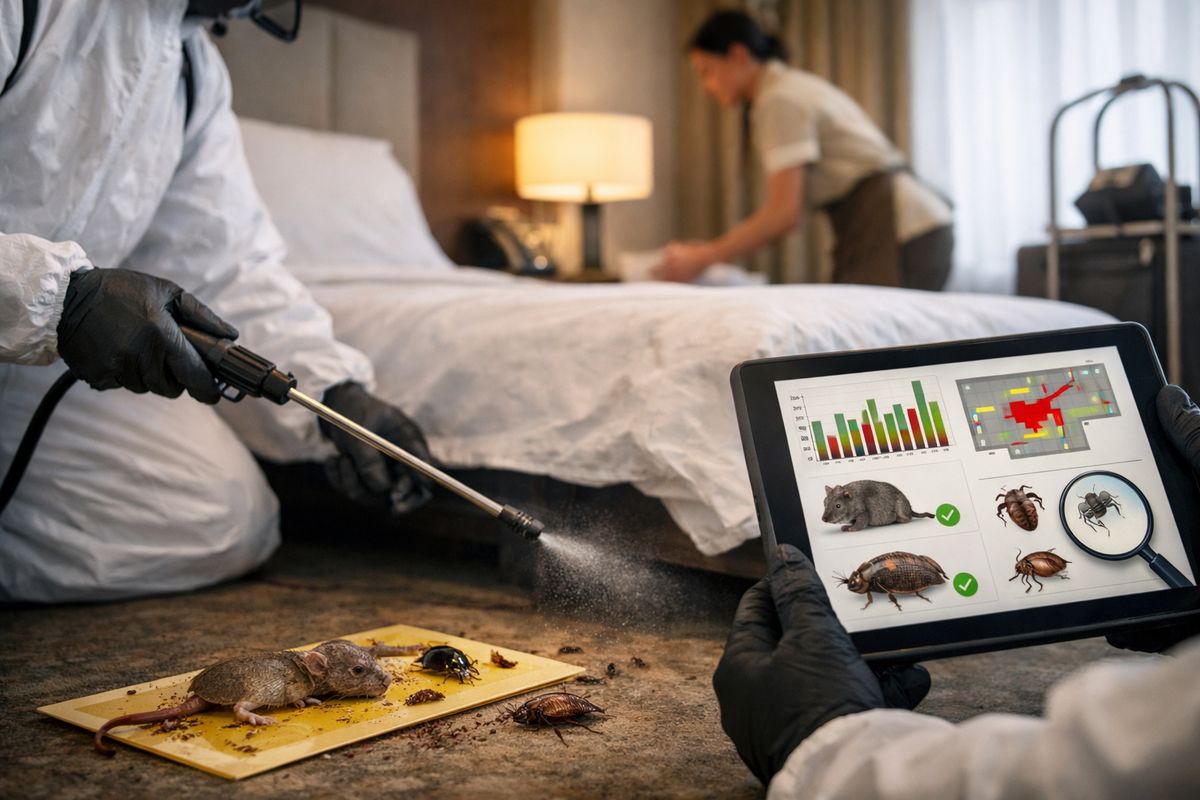
Pest control effectiveness is the difference between a hotel that feels under control and one that is one guest complaint away from a mess. If you only know that service happened last Tuesday, but you do not know whether sightings dropped, repeat issues slowed down, or rooms stayed guest-ready, you are not really measuring pest control effectiveness at all.
What Pest Control Effectiveness Actually Means in a Hotel
Pest control effectiveness in a hotel means your system is reducing pest activity in a way you can prove. Not just fewer visible bugs. Fewer sightings in the same trouble spots, faster response when something is reported, fewer repeat incidents after treatment, fewer guest complaints, less room downtime, and less risk to inspections, reviews, and revenue.
That broader definition matters because hotels are not judged by what happens inside a service log. Your property is judged by what a guest sees at 10:30 p.m. when pulling back a sheet, walking into a bathroom, or grabbing ice near a vending area. A program can be active on paper and still fail in the moments that count.
Here’s the thing: “effective” does not mean zero pest pressure forever. Hotels have constant movement, shared walls, laundry flow, deliveries, trash handling, and hundreds of chances for pests to get in. Effectiveness means the system catches problems early, contains them fast, fixes the conditions behind them, and keeps the same issue from bouncing back again and again.
That is why tracking matters so much. Without tracking, you are left with impressions. With tracking, you can see if response times are slipping, if one floor keeps producing bed bug reports, or if the loading dock is quietly feeding a roach problem upstairs.
Why Hotels Need to Measure Pest Control Instead of Just Scheduling Service
A monthly visit is not a result. It is an appointment.
That sounds blunt, but it is true. Plenty of hotels schedule regular pest service and still deal with recurring roaches in kitchen corners, rodent activity around dumpsters, or bed bug incidents that keep popping up in the same wing. Service frequency matters, but it only tells you that someone came. It does not tell you whether anything improved.
Hotels have more at stake than most buildings because pest issues hit three pressure points at once. They affect guest trust, operations, and compliance. One pest complaint can trigger refunds, room moves, staff time, deep cleaning, treatment coordination, and public review damage all in the same day. And unlike a quiet maintenance issue behind a locked door, a bug sighting feels personal to a guest. Cleanliness stops feeling trustworthy.
That is why many hotels eventually move beyond “Did service happen?” to “What changed after service?” If your records show the same room blocks, the same drains, or the same trash area causing trouble month after month, the system is not solving the problem.
Properties that already focus on prevention instead of waiting for flare-ups usually get ahead faster, because the goal shifts from reacting to visible pests to lowering the conditions that allow pests to settle in.
The Cost of Waiting Until Guests Notice
Reactive pest control fails in hotels because pests move quietly long before the front desk hears about them.
Roaches can spread through wall voids, pipe chases, vending spaces, break rooms, and laundry areas without ever crossing a guest’s path at the right moment. Rodents can feed near dumpsters, then move through exterior gaps into storage rooms and utility spaces. Flies can build around drains or waste handling areas for days before anyone connects the dots. By the time a guest notices, the problem is usually older and wider than it looks.
Hotels are especially vulnerable because so many spaces connect. Housekeeping carts move between rooms. Linens move to laundry. Deliveries come through loading docks. Food and waste move through back-of-house routes. Pests love those connections. They treat a building like a transit system.
That is the real cost of waiting. You are not just delaying treatment. You are giving pests time to spread, establish hiding spots, and turn one isolated incident into a pattern.
Why Bed Bugs Deserve Their Own Level of Attention
Bed bugs deserve special attention because they behave differently from most hotel pests, and the fallout is bigger.
According to the National Pest Management Association, 76% of pest professionals say bed bugs are the most difficult pest to eliminate. That lines up with what hotels already know the hard way: bed bugs hide well, move with luggage and soft goods, and are easy to miss if inspections are rushed or inconsistent.
The biology makes the problem worse. A female bed bug can lay up to five eggs a day and more than 500 in a lifetime. Nymphs can mature in about 21 days. Bed bugs can also survive for months without feeding, and in some cases more than a year. So if your definition of success is “We treated the room once,” you are setting yourself up for false confidence.
Hotels and motels are also a common treatment site. In one University of Florida and NPMA survey, 70% in hotels and motels was part of the treatment pattern reported by pest professionals. Add in the fact that many travelers do not know how to inspect for bed bugs, and one unnoticed introduction can quietly become a bigger issue.
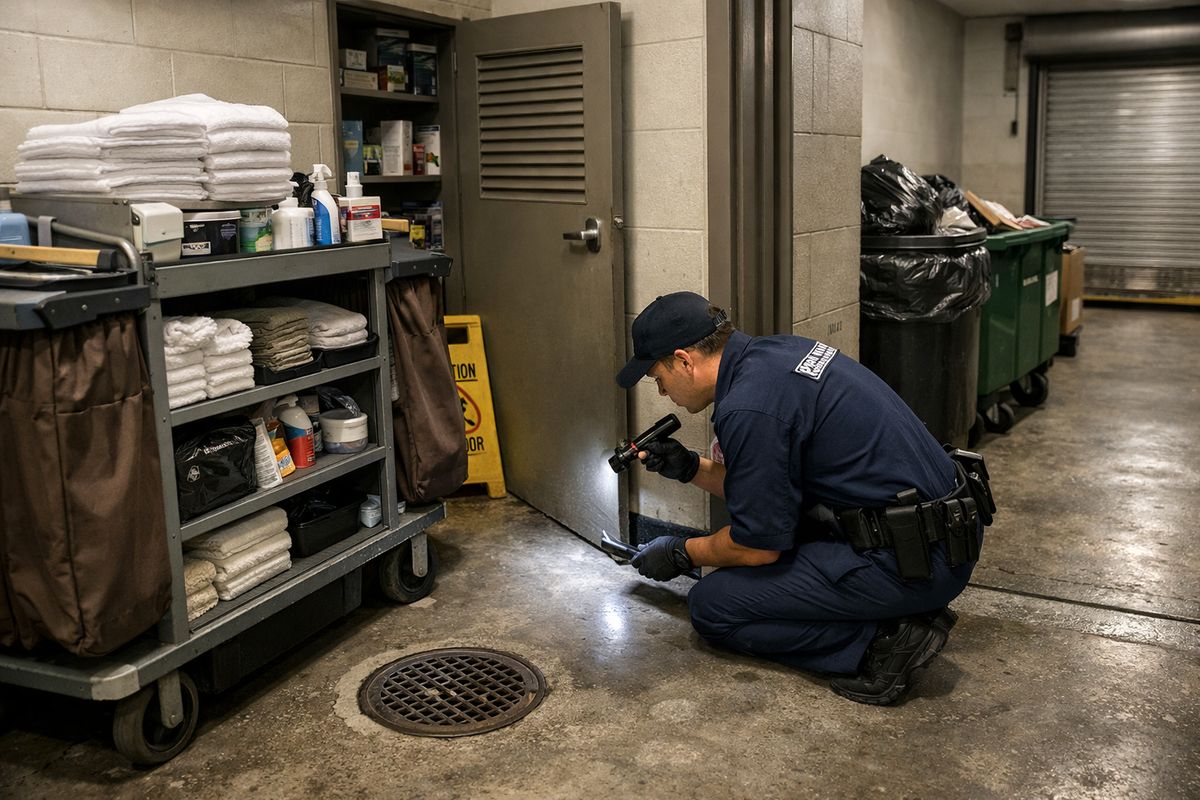
The Main Hotel Pests That Affect What You Should Track
Different pests create different patterns, so your tracking should not lump everything into one generic “pest issue” bucket.
A bed bug report in a guest room is not the same as a cockroach sighting near a floor drain. Rodent activity around a dumpster does not behave like fruit flies around a bar sink. If you track all of it as one count, the signal gets muddy fast.
If you want cleaner decisions, separate the main pest categories and judge success based on how each one behaves. That gives you a much better read on whether you have a room-level issue, a sanitation issue, a building-entry issue, or a process issue.
For a fuller picture of the common pests that show up in hospitality spaces, it helps to think in zones and habits, not just species names.
Bed Bugs
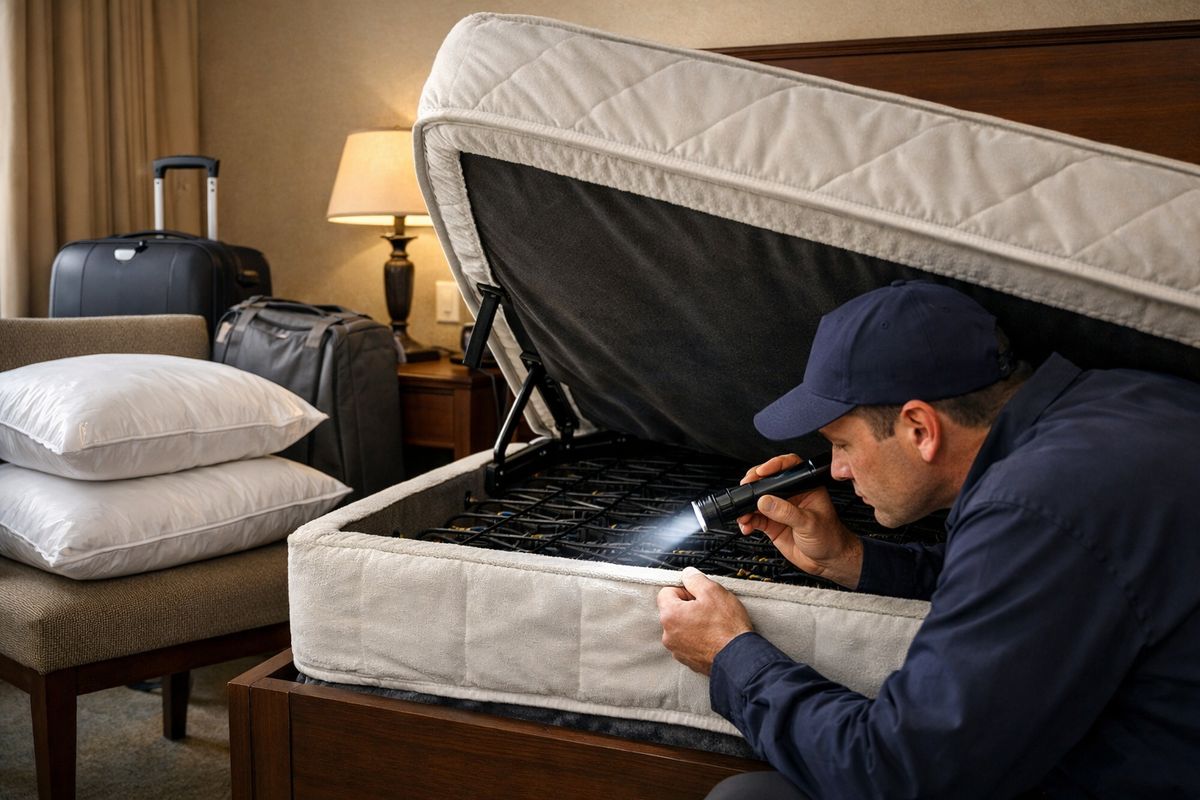
Bed bugs are a guest room risk first, but not only a guest room risk. They move through luggage, upholstered furniture, linens, carts, and nearby rooms. Inspection is difficult because the bugs hide in seams, cracks, headboards, box springs, and other tight spots.
Success with bed bugs is less about counting how many treatments happened and more about whether reports are confirmed quickly, adjacent rooms are inspected, follow-up checks are completed, and recurrence drops after treatment. A room treated once and never checked again is not a good sign. It is just an unfinished story.
Cockroaches
Cockroaches show up where moisture, food residue, warmth, and hiding places come together. In hotels, that often means kitchens, employee break rooms, laundry spaces, vending areas, trash rooms, utility chases, mop closets, and wall voids near plumbing.
Tracking success with roaches means looking beyond sightings alone. You want to know where activity is clustering, what sanitation issues keep showing up, whether leaks are being fixed, and whether the same spaces need retreatment. If roach activity keeps returning after service, the root cause is usually still sitting there.
Rodents
Rodents are often undercounted because direct sightings are only one part of the picture. Droppings, grease marks, gnawing, nesting material, rub marks, and sounds in walls all matter. So does exterior pressure near dumpsters, loading areas, landscaping edges, and gaps around doors and utilities.
A good rodent tracking system picks up those signs before a mouse runs across a hallway. That is the whole point.
Flies and Other Nuisance Pests
Drain flies, fruit flies, phorid flies, and occasional invaders can look minor compared with bed bugs or rodents, but they often point to the kind of daily conditions that support larger pest problems. Dirty drains, standing moisture, broken seals, waste handling problems, and neglected cleaning routines all leave clues through these pests.
So when flies show up, the right question is not just “What do we spray?” It is “What is feeding this?”
The Best Way to Think About Pest Control: Track the Whole System
The best framework for hotel pest control is Integrated Pest Management, usually shortened to IPM. In plain English, that means combining inspection, cleanup, exclusion, monitoring, and targeted treatment so pests lose food, water, shelter, and access.
Pesticides alone are not a pest strategy. They are one tool inside a bigger system.
That matters because many pest problems are really building and process problems wearing a bug costume. A sticky floor drain, missing door sweep, leaky pipe, cluttered storage room, open dumpster lid, or delayed inspection creates the conditions. The pest treatment only handles the symptom unless those conditions change too.
The Illinois Department of Public Health recommends an integrated approach for bed bugs because no single method is enough. That same idea fits hotels broadly. Inspection without repair is incomplete. Treatment without monitoring is guesswork. Cleanup without follow-up is temporary.
If you want metrics that mean something, track the whole system, not just chemical applications.
What “Integrated” Looks Like in a Real Hotel
In a real hotel, “integrated” means pest outcomes are shaped by daily decisions across departments.
Housekeeping notices stains, cast skins, droppings, live insects, and room clutter. Maintenance fixes leaks, seals pipe gaps, replaces door sweeps, and repairs cracked caulk. Food service controls spills, storage, and drain sanitation. Laundry handles linen movement and contaminated items carefully. Front desk captures complaint details and room timelines. Pest professionals inspect, monitor, treat, document, and recommend corrective actions.
Think of it like keeping a kitchen running during a busy brunch. If the cook is great but the fridge fails, the dishwasher clogs, and orders never make it to the line, breakfast still falls apart. Pest control works the same way. One service vendor cannot carry a broken system alone.
If you want a practical breakdown of how different hotel zones create different pest risks, zone-by-zone tracking makes the pattern much easier to see.
The Core Metrics Every Hotel Should Track
This is the heart of pest control effectiveness: a short list of numbers and trends that tell you whether conditions are improving, stalling, or slipping.
You do not need a giant spreadsheet with 70 fields nobody updates. You need a consistent log that captures where the issue happened, what kind of pest was involved, how fast the response happened, what action followed, and whether the issue came back.
Pest Sightings by Location
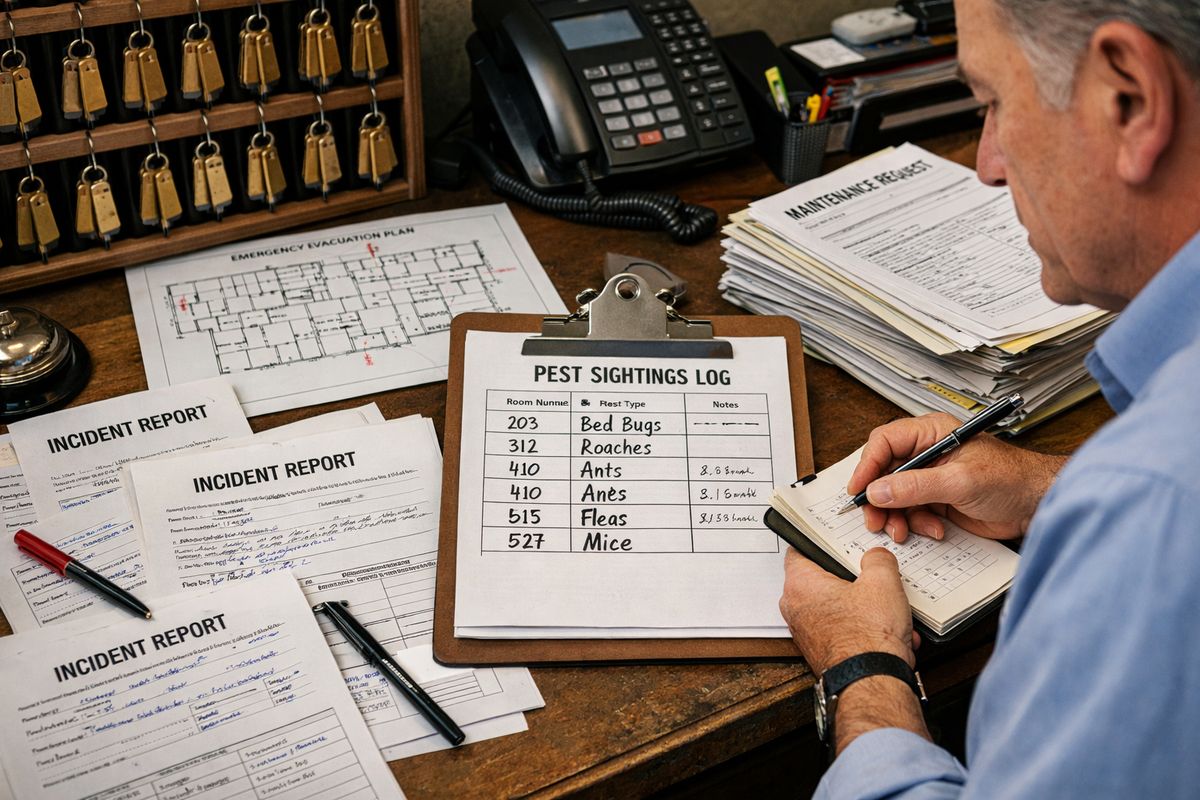
Log every sighting by room number, floor, department, and time. Guest room 418. Laundry room. Third-floor vending nook. Kitchen dry storage. Rear dumpster pad. The more exact the location, the more useful the data becomes.
One isolated sighting might mean very little. Five reports tied to one floor, one wing, or one service area mean a lot. Trends beat anecdotes every time.
Number of Pest Incidents by Type
Track bed bugs, cockroaches, rodents, flies, and other pests separately. That may sound obvious, but plenty of logs still blur everything into one incident count. That makes it harder to see the real problem.
A hotel with two bed bug incidents and ten fruit fly incidents does not have twelve equal pest problems. Those issues carry totally different risk, urgency, and follow-up needs.
Response Time From Report to Inspection
Speed matters because delay gives pests time to spread and gives uncertainty time to grow.
Track how long it takes from a report to the first inspection. Then track how long it takes from inspection to action. If a room is reported at 8:15 a.m., inspected at noon, and not treated until the next day, that timeline should be visible. Fast response protects adjacent spaces and keeps your log honest.
Time to Resolution
Time to resolution is how long it takes to close an incident after treatment and follow-up confirmation. Not after the first spray. Not after the first visit. After the issue is actually cleared.
That distinction matters a lot in hotels. “Treated” is an action. “Resolved” is an outcome. Mixing the two makes mediocre performance look better than it is.
Recurrence Rate
Recurrence rate is one of the strongest indicators of pest control effectiveness. It tells you how often the same room, floor, department, or service area has repeat activity within a set period, often 30, 60, or 90 days.
If the same trash room gets roach activity every month, or the same guest room block keeps producing bed bug reports, your system is not solving the source. It is circling it.
Monitoring Device Activity
Monitoring devices catch what people miss. Glue boards, bed bug monitors, rodent stations, insect light traps, and similar tools give you quiet early warnings before guests or staff see a live pest.
The trend line matters more than the raw count. If monitor captures rise in one kitchen corner after plumbing work, that is a clue. If bed bug monitors stay active after treatment, that is a warning. Monitoring is how you spot motion in the dark before it becomes a complaint.
Treatment Frequency and Retreatment Count
Track how often the same space needs additional service. A retreatment every now and then is normal. A constant retreatment pattern in the same areas means root causes are being missed.
More treatment is not automatically progress. Sometimes it is evidence that the system is doing the same thing over and over without fixing what allowed the pests in.
Guest-Impact Metrics That Matter Just as Much as Pest Counts
A hotel pest program can look busy, responsive, and well-documented while still failing in guest-facing ways.
That happens when management tracks treatments but ignores guest disruption. A single bug sighting in the wrong moment can do more damage than a page of service notes can repair. That is why guest-impact metrics belong right next to your technical pest data.
Guest Complaints and Service Recovery Cases
Track every pest-related complaint that reaches the front desk, housekeeping, management, or guest services. Then track what recovery followed: room moves, refunds, comp nights, deep cleaning, inspections, or escalations.
This gives you a cleaner picture of impact. A minor fly issue in a back corridor is not the same as a bed bug complaint that triggers a room move at midnight and a refund the next morning. Both belong in the log, but not as equal events.
Review Mentions and Reputation Signals
Public review mentions deserve their own line of tracking. Bugs, bites, pest sightings, cleanliness concerns, and even vague comments like “the room didn’t feel clean” can shape future bookings long after the treatment is complete.
The catch is that review damage lingers. A guest does not care that a service report says the issue was handled two days later. The review is already public, searchable, and emotionally sticky.
Room Downtime and Out-of-Order Nights
Every pest issue that takes a room out of service carries an operational cost. Track how many rooms become unavailable during inspection, treatment, heat work, follow-up, or precautionary hold periods.
This is where pest control effectiveness becomes very concrete. Faster resolution and fewer repeat incidents protect revenue. Slow, messy, recurring incidents eat it.
Some providers build programs around licensed support and documented commercial service plans, which matters because downtime decisions, treatment timing, and follow-up all need to line up with real operations.
Operational Metrics That Show Whether Prevention Is Working
Pest counts tell you what surfaced. Operational metrics tell you why it surfaced.
In many hotels, prevention improves before sightings drop. That can feel frustrating if you are only watching bug counts. But if inspection completion rises, leaks get fixed faster, trash handling gets tighter, and housekeeping corrective actions shrink, those are real signs the system is moving in the right direction.
Inspection Completion Rate
Track whether routine inspections happen on schedule in guest rooms, kitchens, laundry, storage, mechanical areas, exteriors, and other high-risk zones.
An incomplete inspection calendar creates blind spots. And blind spots are where pest problems get comfortable.
Sanitation and Housekeeping Corrective Actions
Log sanitation issues that support pest activity: food residue, clutter, standing water, dirty drains, overflowing trash, soiled linen handling problems, missed deep cleaning, and neglected employee areas.
This is not about blaming staff. It is about catching repeat patterns. If the same pantry shelf keeps showing residue or the same cart area keeps collecting debris, your data should show it.
Maintenance and Exclusion Repairs
Track the repairs that close pest access and reduce harborage. Door sweeps, pipe-gap sealing, cracked caulk, torn screens, unsealed wall penetrations, loose thresholds, drain defects, plumbing leaks, and moisture issues all belong here.
This category often tells the real story. A hotel can treat insects repeatedly, but if utility openings stay open or water keeps pooling under a sink, the welcome mat is still out.
Waste Handling and Storage Compliance
Back-of-house waste habits shape front-of-house pest pressure more than many hotels realize. Track dumpster conditions, pickup timing, lid closure, bag handling, grease residue, storage-room cleanliness, and the time trash sits before removal.
Pests do not care whether an area is guest-facing. They care whether it feeds them.
Bed Bug Metrics Hotels Should Track Separately
Bed bugs deserve a separate scorecard because the stakes, workflow, and follow-up are different from almost every other pest issue in a hotel.
A roach trend in a drain area is serious, but it usually stays tied to moisture, sanitation, and structural conditions. Bed bugs move with people and belongings. They trigger stronger guest reaction. They demand tighter documentation. And they can look gone before they are actually gone.
Number of Bed Bug Reports by Room and Floor
Track every bed bug report by exact room and floor, including unconfirmed cases. A housekeeping note, guest complaint, bite report, live bug sighting, cast skin, fecal spotting, or suspicious photo should all enter the log.
Even unconfirmed reports matter because clusters can show up before confirmation does. Three suspicious reports in neighboring rooms are a pattern, not noise.
Confirmation Rate After Inspection
Separate suspected cases from confirmed ones. That gives you a better read on staff recognition and inspection quality.
If every report becomes a confirmed case, you may have a real spread problem. If almost none do, staff may be overcalling every mystery bite. If obvious cases are being missed, underreporting may be the bigger issue. This one metric can reveal a lot.
Adjacent Room Inspection Rate
Bed bug effectiveness depends on checking neighboring rooms, not just the room named in the complaint. That includes side-by-side rooms, rooms above and below, and any space connected by linen handling or furniture movement when relevant.
The Illinois Department of Public Health notes that bed bug infestations spread more easily in shared structures when not addressed quickly, and calls bed bugs the most difficult pest to control. In hotel terms, that means one-room thinking is risky.
Follow-Up Inspection Results
Track whether post-treatment inspections come back clean, whether more action is needed, and how many visits it takes to resolve the issue fully.
This is where false confidence often shows up. One treatment with no follow-up can look efficient on paper. In reality, it may just mean nobody checked again.
Mattress and Box Spring Encasement Coverage
Track where encasements are installed, missing, damaged, or replaced. This is one of the most practical bed bug metrics because it reflects both prevention and readiness.
Illinois specifically notes that mattress encasements are often a better tool than pesticides alone or throwing furniture away, because they block harborages and trap bugs already inside. If encasements are torn or inconsistent across rooms, your prevention system has holes in it.
How to Turn Raw Pest Data Into Trends You Can Actually Use
A pile of service reports is not a strategy. It is just paperwork until you review it in a way that reveals patterns.
The simplest useful rhythm is weekly review for active issues and monthly review for trend lines. Weekly tells you what needs attention now. Monthly tells you whether the same trouble spots keep coming back or whether corrective work is paying off.
Look for Clusters, Not Just Counts
Counts matter, but clusters matter more.
Three scattered fly complaints across a large property may not mean much. Three reports tied to one bar drain, one linen room, or one guest floor in eight days absolutely do. Pest patterns are usually local before they become building-wide. If you catch the local pattern early, you save yourself a larger cleanup later.
Compare Before and After Corrective Actions
Every repair or process change should have a before-and-after check built into your review.
If roach activity drops after sealing loading dock gaps, that tells you something real. If rodent station activity stays flat after dumpster procedures were changed, that tells you the change either was not enough or was not followed consistently. Data gets useful when it can answer one simple question: did that fix actually help?
Separate Seasonal Spikes From Ongoing Failures
Some pest activity rises with weather, travel patterns, or food volume. Summer can bring more flies. Travel-heavy periods can raise bed bug introduction risk. Exterior rodent pressure can change with temperature.
But seasonal pressure should not excuse recurring hot spots. If one kitchen corner, one trash dock, or one room stack stays active across seasons, that points to a fixable building or process issue, not just the calendar.
Common Mistakes That Make Pest Control Look Effective When It Is Not
This is where a lot of hotels fool themselves without meaning to.
The logs are full, the vendor came, invoices were paid, and yet the same problems keep showing up. Usually that happens because the wrong things are being counted, or because activity is being interpreted too generously.
Counting Treatments Instead of Outcomes
More visits do not automatically mean better control. More sprays do not automatically mean more progress.
If anything, rising treatment counts can be a warning sign. The question is not “How much service did you get?” It is “Did repeat issues decline after that service?”
Ignoring Near-Misses and Early Warnings
One monitor catch. One housekeeping note about droppings. One unexplained odor in a utility room. One guest mentioning bites without a confirmed specimen. These early warnings matter because they often show up before visible infestations do.
Near-misses are like a smoke alarm chirp. Annoying, easy to dismiss, and exactly the thing you regret ignoring later.
Treating One Room Without Checking the Bigger Picture
Isolated fixes fail when pests move through walls, drains, hallways, housekeeping carts, linen handling routes, or shared utility lines.
That is why room-level treatment should always connect to area-level thinking. Otherwise you end up solving the symptom in 412 while the source stays active in 414, the laundry route, or the pipe chase behind both rooms.
Using DIY or Unapproved Fixes
DIY products and unapproved indoor applications create two problems at once: poor pest control and potential safety trouble.
Bed bugs are a classic example. Professional guidance consistently warns that basic DIY approaches are rarely effective, especially because they miss hidden harborages and do little to prevent reinfestation. For hotels, unapproved fixes can also create documentation, liability, and compliance headaches that are bigger than the original pest issue.
How Staff Reporting Affects the Accuracy of Your Metrics
Your metrics are only as good as the reporting behind them.
If housekeeping spots signs and says nothing, your data understates the problem. If maintenance fixes entry gaps but never logs the work, your data misses prevention progress. If the front desk records a room move but not the original complaint time, response metrics get distorted.
Good reporting is not about creating more paperwork for the sake of it. It is about making sure the next decision is based on what actually happened.
What Housekeeping Should Log
Housekeeping is often the first line of detection, especially in guest rooms. Log bites reported by guests, spots on linens, cast skins, live insects, droppings, odor concerns, pest debris, clutter that blocks inspection, and room conditions that support activity.
This is especially true for roaches and bed bugs. A trained room attendant may notice subtle signs long before a formal inspection happens. For properties working to sharpen early detection, the signs hotels tend to miss in roach cases are a good example of why frontline notes matter.
What Maintenance Should Log
Maintenance should log leaks, door failures, pipe penetrations, wall gaps, cracked sealant, drain problems, damaged screens, missing sweeps, standing water, and any exterior opening that could support pest entry.
That information often explains why one area keeps producing activity after treatment. Pest control reports without maintenance logs are like weather reports without temperature.
What Front Desk and Managers Should Log
Front desk and management should log guest complaints, room numbers, exact times, photos, room moves, refunds, service recovery actions, and any communication timeline tied to the issue.
Specific timing matters more than people expect. If a guest reports a problem at 9:00 p.m. and inspection does not happen until the next morning, that gap belongs in the record. Without it, response time looks cleaner than reality.
What to Expect From a Professional Pest Control Partner
A professional pest control partner should support your tracking, not just show up to treat and leave.
That means clear service notes, practical recommendations, documented findings, follow-up plans, and honest feedback when a building or process issue is blocking progress. If all you get is a generic service slip, you do not have enough information to judge effectiveness.
Licensed structural pest control is regulated work in many places because inspection, reporting, product use, and application methods matter. That is not red tape for the sake of it. It reflects the fact that indoor pest work affects health, safety, documentation, and property performance.
The Reports You Should Receive After Every Visit
After each service visit, you should receive notes on where activity was found, what pest was involved, how strong the activity looked, what was treated, what corrective actions are needed, what monitors showed, and when follow-up should happen.
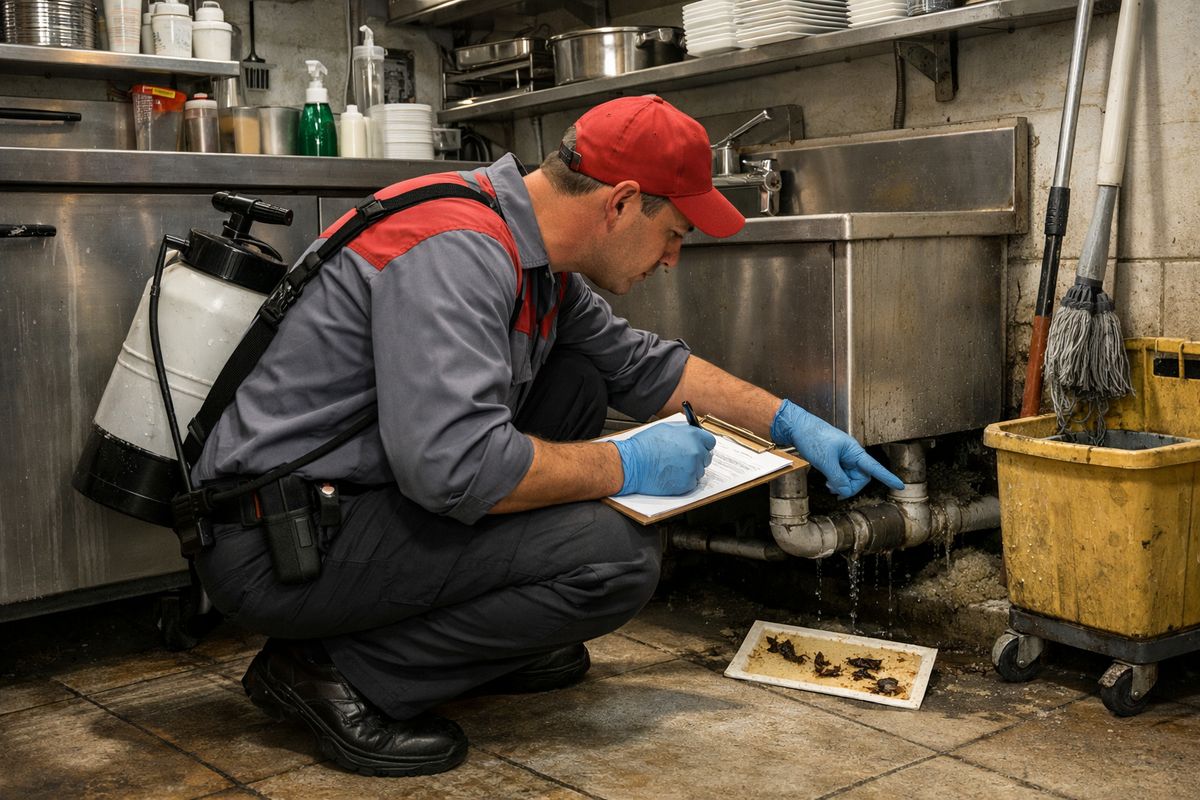
Good reports are specific. “Kitchen roach activity noted near south prep sink, glue board counts increased from 2 to 9, moisture issue observed, sanitation correction recommended” is useful. “Treated kitchen” is not.
Questions to Ask if Results Are Not Improving
If your numbers are not improving, ask direct questions. What areas keep recurring? What conditions are supporting activity? Were exclusion repairs completed? Are monitors placed in the right spots? Is treatment timing too slow? Are staff reports getting missed? Does the current plan still fit the property’s actual risk pattern?
If the answers stay vague, that tells you something too. It may be time to look harder at what a strong service agreement should actually spell out or how to evaluate the right kind of licensed partner for the job.
Building a Simple Pest Control Scorecard for Your Hotel
A scorecard keeps the whole program from dissolving into scattered emails, vendor slips, and hallway conversations.
The best scorecard is short enough to review every month without dread and detailed enough to catch patterns before they turn expensive. If it takes an hour to explain, it is probably too complicated. If it only says “service completed,” it is too thin.
A Monthly Scorecard Example
A practical monthly hotel scorecard can track: total sightings, confirmed incidents by pest type, average response time, average time to resolution, recurrence rate, guest complaints, service recovery cases, room downtime, inspection completion rate, sanitation corrective actions, maintenance repair completion, and open corrective items not yet closed.
That is enough to tell a meaningful story. If sightings are flat but recurrence is down, that can still be progress. If complaints are rising while treatment count is rising too, something is off. If inspections are slipping, expect surprises later.
What “Good” Improvement Usually Looks Like
Good improvement usually looks directional before it looks perfect.
You see fewer repeat cases in the same places. Open corrective actions close faster. Response time gets shorter. Follow-up inspections come back cleaner. Guest complaints fall. Room downtime shrinks. Monitor activity drops in once-active zones. Even before total sightings hit zero, the building starts acting more stable.
That is what real pest control effectiveness looks like. Not dramatic language. Cleaner trend lines.
When the Numbers Say Your Pest Program Needs a Reset
Sometimes the data is not asking for a tweak. It is asking for a reset.
If bed bug cases keep repeating in the same wing, if roach activity stays flat after multiple service cycles, if guest complaints are climbing, or if the same exclusion and sanitation issues stay open month after month, your system is stuck. Repeating the same routine will not fix that.
A reset can mean several things: changing inspection frequency, updating monitor placement, tightening housekeeping and maintenance reporting, shifting treatment methods, focusing on high-risk zones more aggressively, or replacing a vague service plan with a more accountable one.
The direct rule is simple. If the same problems keep showing up in the same places after repeated service, the program is not underperforming by accident. The system needs to change.
The First Thing to Track This Week
Start with one shared log.
Track every sighting or complaint with four basics: exact location, date and time, pest type or suspected pest type, and response time to first inspection. That one move does more than most hotels expect, because it turns scattered stories into comparable data.
Once that log exists, recurrence becomes visible. Hot spots become visible. Slow response becomes visible. Missed follow-up becomes visible. And once you can see the pattern, you can finally judge pest control effectiveness by results instead of hope.
Frequently Asked Questions
How often should a hotel review pest control data?
Active issues should be reviewed weekly, and the full scorecard should be reviewed monthly. Weekly review catches urgent patterns fast. Monthly review shows whether the overall system is improving or repeating itself.
What is the single best metric for pest control effectiveness?
Recurrence rate is one of the strongest single metrics because it shows whether the same problem is actually being solved. A treatment count can look busy. A low recurrence rate shows progress.
Should unconfirmed pest reports be tracked?
Yes. Unconfirmed reports often reveal clusters early, especially with bed bugs. A suspicious report in one room may not mean much by itself, but several close together can point to a real spread pattern.
Why isn’t monthly service enough to prove a program is working?
Because scheduled service only shows that a visit happened. It does not show whether sightings dropped, response got faster, repeat issues slowed down, or guest complaints improved.
What makes bed bug tracking different from general pest tracking?
Bed bugs need tighter room-level documentation, adjacent-room inspections, follow-up checks, and separate resolution tracking. The reputational risk is higher, and one missed case can spread quietly through guest turnover and luggage movement.
Can a hotel rely on pesticides alone if the pest company is treating regularly?
No. Pesticides can help, but they do not replace inspection, sanitation, exclusion, monitoring, and follow-up. If leaks, gaps, clutter, waste issues, or missed inspections stay in place, the pest pressure usually stays in place too.