
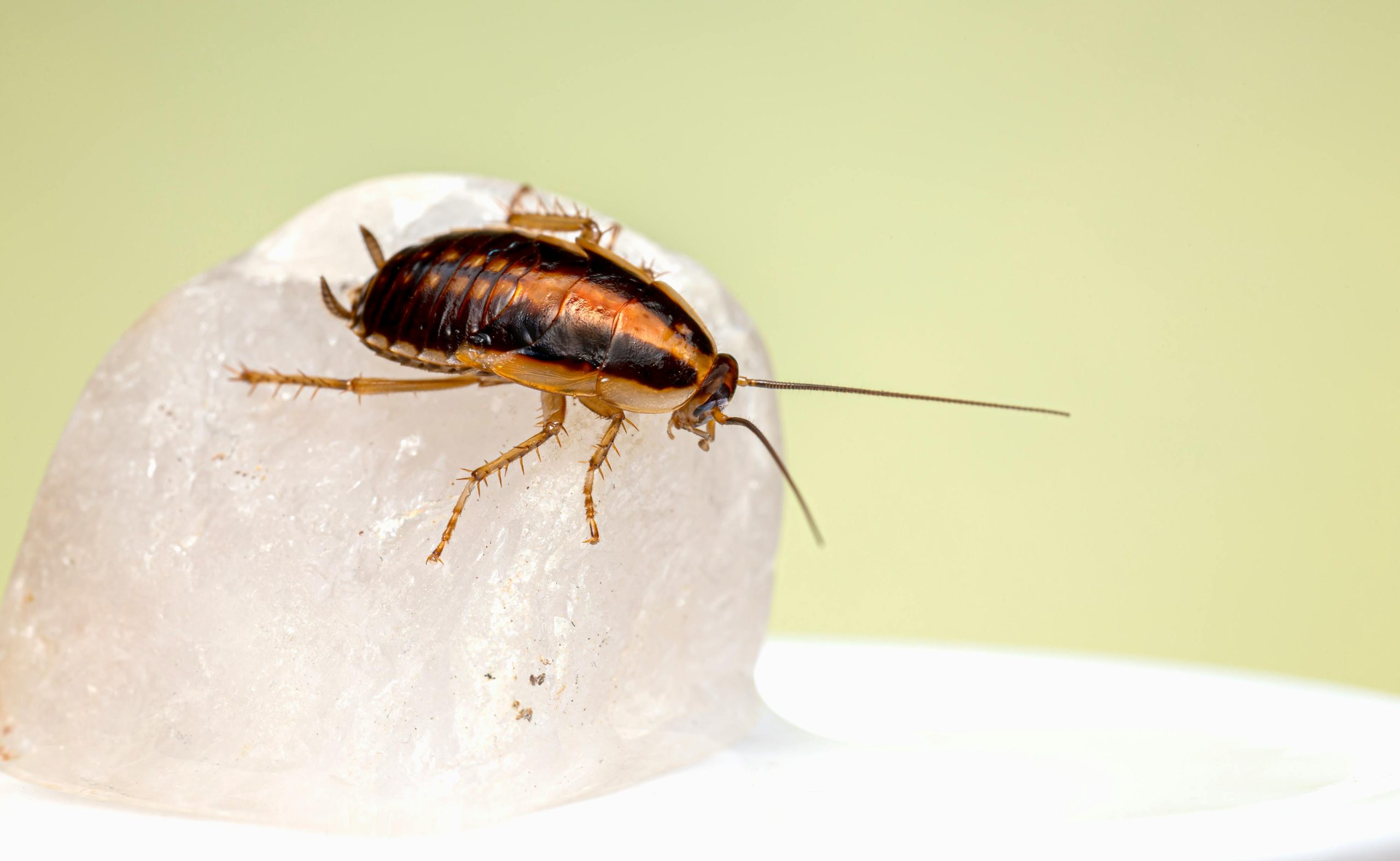
If you’re dealing with german roach vs American roach, the difference is not just about size. It changes what the sighting means, how fast the problem can grow, and whether you’re looking at an indoor breeding infestation or a roach that wandered in from a drain, basement, or sewer line.
Quick Overview of German Roaches vs American Roaches
Picture two very different moments. You switch on the kitchen light at 11 p.m. in a Chicago apartment and see a small tan roach streak behind the stove. Or you spot one huge reddish-brown roach near a basement drain in Schaumburg. Those are not the same problem.
Here’s the direct answer: German roaches are usually the worse indoor pest. American roaches are bigger and more alarming, but German roaches breed faster, hide better, and take more work to eliminate. That’s the part that matters most.
German Roach at a Glance
German roaches are small, usually about half an inch long, light brown or tan, with two dark stripes right behind the head. In Illinois, the most common kitchen roach is the German cockroach, which tells you a lot about where this pest likes to live.
If you see this species indoors, especially in kitchens or bathrooms, assume breeding is already happening somewhere nearby. Common hiding spots include cabinet hinges, under sinks, behind fridges, and inside tiny wall gaps.
American Roach at a Glance
American roaches are much larger, usually 1.5 to 2 inches or more, reddish-brown, with a pale yellow marking behind the head that looks a bit like a figure eight. That marking is one of the fastest ways to separate it from a German roach.
This species often shows up from drains, basements, utility spaces, crawl spaces, or outdoor entry points. A sighting still matters, but it does not always mean the same dense indoor infestation you get with German roaches.
Identification: How to Tell Which Roach You’re Seeing
Getting the ID right changes the whole treatment plan. A small striped roach in your kitchen calls for one response. A giant roach near a floor drain calls for another.
Size, Color, and Markings
German roaches are the smaller ones by a mile, about 1/2 to 5/8 inch long. American roaches are the large ones, often 1.5 to 2 inches long. If it looked big enough to make you jump back, that points toward American.
Color helps too. German roaches are tan to light brown with two dark parallel stripes behind the head. American roaches are reddish-brown with a yellowish figure-eight pattern in the same area. If you need help comparing what you saw to other local pests, it helps to review the common roach species found around Chicago homes.
Nymphs, Adults, and Egg Cases
Baby German roaches are small, dark, and striped. Baby American roaches are larger and more evenly reddish-brown. The big takeaway is simple: small roaches indoors are bad news, especially in kitchens.
German roach egg cases usually hold about 30 to 48 eggs, while American roach egg cases hold about 14 to 16. Even worse, German females often carry the egg case until just before hatching, which helps protect it and speeds population growth.
A Quick “What You Saw” Checklist
A small tan roach with stripes near the stove, dishwasher, or bathroom vanity points toward German. A very large reddish-brown roach near a basement floor drain, utility room, or garage points toward American.
If you saw tiny roaches and larger ones together, lean German until proven otherwise. That usually means active indoor breeding.
Where They Hide and What That Says About the Infestation
Where you find a roach says a lot about where the real problem is hiding. Roaches are like plumbing leaks that move. The visible part is rarely the whole issue.
German Roach Hiding Spots
German roaches stay close to food, water, and warmth. According to Illinois guidance, 75% of their lives hiding is normal, and many stay within about 10 feet of a food source.
That means hot spots tend to be tight, warm, protected spaces: under sinks, behind stoves, under refrigerators, inside cabinets, around dishwashers, and in wall voids. Adults can squeeze into cracks as narrow as 1/16 inch, so the hiding places are often much smaller than you’d expect.
American Roach Hiding Spots
American roaches prefer damp lower-level or structural areas. Think basements, boiler rooms, crawl spaces, utility areas, drains, sewer connections, and damp storage zones. In warm weather, a roach may also move in from outside.
One sighting does not always equal a full kitchen infestation. But it does mean there’s probably a moisture or entry issue that needs attention.
What Apartment vs House Sightings Usually Mean
In apartments and condos, roaches move through shared walls, pipe chases, trash rooms, and utility gaps. That’s why your own cleaning efforts sometimes feel pointless. The source may not be fully inside your unit. If this sounds familiar, it helps to understand why roaches keep showing up in shared buildings.
In a single-family home in Naperville or a townhouse in Schaumburg, the source is often more localized. A basement drain problem, garage entry gap, or kitchen leak is easier to trace to one unit.
Reproduction and How Fast Things Can Get Worse
This is where the comparison stops being academic. German roaches multiply fast enough to turn a small issue into a miserable one.
German Roach Reproduction Speed
German roaches can reach adulthood in about two months under good conditions, and each egg case can carry roughly 30 to 48 eggs. Under ideal conditions, 10,000 cockroaches in one year is possible from one pair and offspring.
That’s why a few sightings can spiral quickly. What looks minor on Monday can feel very different by the end of the month.
American Roach Reproduction Speed
American roaches reproduce more slowly. Egg cases usually carry around 14 to 16 eggs, and development can take about 15 months. That is still a problem, just a very different kind of problem.
The usual pattern is slower buildup, more connection to structure and moisture, and less explosive indoor spread than German roaches.
Why “Just a Few Roaches” Can Be Misleading
Roaches spend most of life hidden. So the number you see is almost never the number you have. Frequent sightings matter. Daytime sightings matter even more.
If you’re seeing small roaches, baby roaches, or activity in multiple rooms, the infestation is already established. That is especially true with German roaches.
Behavior and Daily Patterns
The way each species shows up can make one feel like a kitchen takeover and the other like a basement ambush.
German Roach Behavior Indoors
German roaches are built for indoor living. They stay near food, water, and warm appliances, and usually come out when the home is dark and quiet. Kitchens and bathrooms are prime territory, but the spread often reaches appliance voids, cabinet gaps, and nearby rooms.
A daytime sighting of a German roach is a red flag. It can mean overcrowding has pushed activity into the open.
American Roach Behavior Around Moisture and Heat
American roaches are more tied to damp spaces and warm weather. Drains, sewers, basements, and foundation gaps are common routes indoors. In hot conditions above 85°F, adults can sometimes fly, which is not a detail anybody enjoys learning in the moment.
That dramatic appearance is part of why American roaches feel worse than they often are. Big does not always mean harder.
Health Risks and Household Impact
Both species are more than a gross surprise. Roaches contaminate surfaces and can make indoor air worse, especially in smaller homes and apartments.
Food and Surface Contamination
Roaches can leave droppings and bacteria on counters, cabinet shelves, pantry items, and food prep areas. Public health guidance notes that both species can carry bacteria linked to food poisoning and contaminate utensils and surfaces.
That matters if activity is happening around dishes, snack drawers, or the cabinet where cereal boxes sit half-open for two days.
Allergies, Asthma, and Indoor Air Concerns
Shed skins, droppings, and body fragments can trigger allergy and asthma symptoms. This gets more serious in homes with kids, anyone with asthma, or tighter living spaces where infestations build quietly.
If you’re unsure whether what you’re seeing fits a bigger pattern, checking the common signs the problem is already established can help.
Treatment Difficulty: Which Roach Is Harder to Get Rid Of?
German roaches. No contest.
Why German Roaches Are Usually Harder to Eliminate
German roaches reproduce fast, hide deep, and fit into tiny cracks larger roaches can’t use. On top of that, field populations have shown resistance to multiple insecticides, which is one reason random spray treatments so often disappoint.
Sprays alone usually fail because they miss the nest areas and push activity deeper into walls and cabinets. Targeted baiting and close inspection work far better.
Why American Roaches Need a Different Strategy
American roach control is more about source correction. You need to stop entry, cut moisture, address drains, and treat lower-level structural areas. Killing the one you saw is the easy part. Finding out why it got in is the trick.
That often means focusing on basements, crawl spaces, floor drains, door sweeps, and gaps around plumbing.
Why Foggers and Random Sprays Usually Backfire
Foggers sound convenient, but they’re often a bad trade. State guidance warns that foggers can be counterproductive because they miss hiding places and can scatter roaches deeper into walls.
Targeted bait placements, dust in the right voids, sticky traps, and sealing entry points work better than filling the room with pesticide and hoping for the best.
What Actually Works for Control
The best approach is IPM, or integrated pest management. Plain English version: clean up what attracts roaches, seal what lets them in, monitor where they move, and use targeted products instead of blanket spraying.
Best Approach for German Roaches
For German roaches, place gel bait near hiding spots and travel paths, use sticky traps to track activity, treat cracks and crevices, fix leaks, reduce clutter, and keep food sealed. Improvement can take 7 days or more, so don’t expect overnight magic. For a deeper breakdown, this guide on targeted kitchen roach treatment covers what works best.
Severe infestations usually need professional service, especially in apartments, duplexes, and buildings with repeat activity. For direct help, roach control service makes more sense than cycling through store-bought products.
Best Approach for American Roaches
For American roaches, focus on drains, basement and crawl space treatment, sealing entry points, reducing damp conditions, and clearing outdoor harborage like mulch, leaf piles, or debris against the structure.
Success often comes from fixing the wet, dark access route as much as from treatment itself.
What to Do in Multi-Unit Buildings
If roaches keep showing up in an apartment, cleaning your own unit may not solve the full problem. Shared walls, utility lines, trash areas, and neighboring units all matter.
Coordinated treatment is usually the only real fix when activity crosses unit lines.
Pricing and Professional Treatment Costs
Cost depends less on the bug name and more on what the infestation demands.
Why German Roach Jobs Often Cost More Over Time
German roach work often needs more follow-up visits, more precise bait placement, and tighter monitoring. Indoor breeding infestations spread fast and hide deep, which makes the job more labor-heavy over time.
In apartment buildings, coordination across units can also raise the total cost.
Why American Roach Jobs Can Be More About Source Correction
American roach jobs often involve drain treatment, basement inspection, exclusion work, and moisture correction. The pest itself may be easier to identify, but the structural issue behind it can take time to fix.
That means the final bill often depends on access points, damp conditions, and lower-level problem areas.
What Affects the Final Price Most
The biggest cost drivers are property size, infestation level, number of units, sanitation conditions, moisture problems, access to wall voids, and whether ongoing service is needed. If you want a fuller cost breakdown, this page on what usually drives roach treatment pricing in Chicago lays it out clearly.
When to Choose a DIY Approach vs Call a Pro
DIY has a place. But not every roach problem deserves another can from the hardware store.
When DIY Has a Better Chance
A single American roach near a drain, garage, or basement can be manageable if you act fast. Start with sticky traps, confirm the species, seal obvious gaps, and fix moisture issues right away.
That approach works best when the sightings are isolated and clearly tied to an entry point.
When Professional Help Makes Sense Right Away
Repeated sightings, baby roaches, daytime activity, or roaches in multiple rooms point to a deeper issue. German roaches in kitchens, apartments, condos, and shared buildings deserve professional attention sooner rather than later.
If you keep trying products and the problem keeps coming back, that’s your answer.
Best Fit by Use Case
Once you know what you’re seeing, the next move gets much easier.
Choose the German Roach Playbook If…
You’re seeing small tan roaches with stripes, activity around appliances and cabinets, egg cases indoors, or baby roaches in kitchens or bathrooms. That usually means an active indoor infestation, and it needs aggressive targeted control.
Choose the American Roach Playbook If…
You’re seeing very large reddish-brown roaches, activity near drains or basements, sightings after heavy rain, or isolated appearances on lower levels. That usually points to an entry or moisture problem that needs exclusion and source control.
Verdict: What Matters Most
German roaches are usually the bigger indoor problem. They breed faster, hide better, and take more effort to eliminate. American roaches are larger and more startling, but they’re often easier to trace back to drains, damp areas, or outdoor entry points.
The one thing to do first is simple: identify the species, then match the treatment to the source. Random sprays are how you waste time.
Frequently Asked Questions
Is a German roach worse than an American roach?
Yes, in most homes and apartments. German roaches are usually worse because they breed indoors, multiply quickly, and hide in tiny cracks near kitchens and bathrooms.
Does one American roach mean an infestation?
Not always. One large American roach near a basement, garage, or drain can be a wanderer from outside or a sewer-connected area. Repeated sightings are a different story.
What does it mean if you see baby roaches?
Baby roaches usually mean active breeding nearby. If the babies are small, dark, and showing up indoors around kitchens or bathrooms, German roaches are a strong possibility.
Why do roaches keep showing up in apartments after cleaning?
Because the source may not be inside your unit alone. Roaches can move through shared walls, plumbing gaps, trash areas, and neighboring units, so cleaning helps but often won’t solve the whole problem by itself.
Can bug bombs get rid of German or American roaches?
Usually no. Foggers and bug bombs tend to miss hidden nesting spots, scatter roaches into walls, and reduce the effectiveness of baiting.
What should you try first after seeing a roach?
Try species ID first. Then place sticky traps near likely hiding spots or entry points, reduce food and moisture, and avoid random spraying. That one step gives you a much better shot at choosing the right fix.