
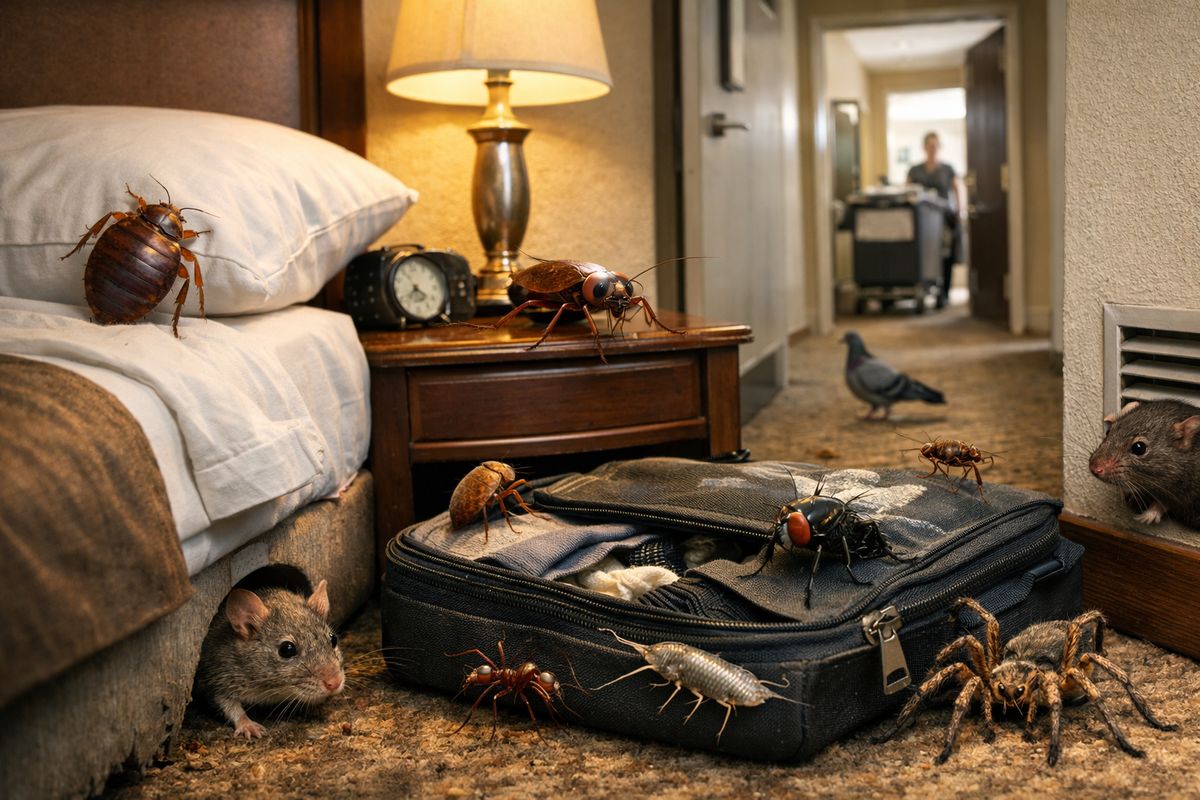
Hotel pests are the insects and rodents that show up where guests sleep, eat, unpack, and move around, and bed bugs usually top the list. If you have ever come home from a weekend near O’Hare or a work stay in Schaumburg, dropped your suitcase on the bedroom floor, and felt a little uneasy about it, that instinct is not overreacting. Here’s the thing: hotels make it easy for pests to get in, and just as easy for a few of them to follow you home.
What “Hotel Pests” Usually Means
In plain English, hotel pests are the bugs and rodents that find food, shelter, moisture, or a ride inside a hotel. That includes bed bugs, cockroaches, flies, mice, rats, ants, spiders, fleas, and in some cases termites.
But when most people say “hotel pests,” bed bugs are usually what comes to mind first. Fair enough. They are the pest most closely tied to travel, luggage, and overnight stays.
Still, a hotel pest issue is not always about bed bugs, and it is definitely not always about dirt. A fancy property can have a problem. So can a spotless one. In fact, 20% of reported sightings in one survey happened in five-star hotels, which tells you a lot. Price point and appearance do not equal immunity.
Why Hotels Are Such Easy Targets
A hotel is basically a revolving door for pests looking for a meal or a free ride. New people arrive every day with suitcases, coats, backpacks, boxes, food, and laundry. Deliveries come in. Trash goes out. Housekeeping moves room to room. Once a pest gets inside, there are plenty of pathways to keep moving.
That same pattern shows up in apartment buildings and mixed-use properties around Chicago. If you want a good picture of how these trouble spots connect, it helps to look at how pest trouble builds by area, because guest rooms are only part of the story.
High Turnover Creates Constant Openings
Every guest change creates another chance for pests to enter. Bed bugs are classic hitchhikers, but roaches and even ants can come in through bags, boxes, carts, and personal items. A hotel never really closes that front door to risk, because there is always another check-in, another suitcase, another delivery.
That is why hotel pest issues can feel random from the outside. One room looks fine, then another has signs a day later. The opening was not the room itself. The opening was movement.
Shared Spaces Help Pests Spread Fast
Once pests get in, shared walls and utility routes do the rest. Hallways, plumbing openings, electrical lines, laundry rooms, housekeeping closets, and neighboring rooms can act like hidden highways. Bed bugs can move surprisingly well through wall voids and nearby furnishings, and roaches love gaps around pipes and drains.
The catch is that you may only notice the room where the problem surfaced, not the routes that helped it spread.
Bed Bugs: The Hotel Pest Everyone Thinks About First
Bed bugs are small, flat insects that feed on blood, usually at night while you sleep. They matter because they spread easily through travel, hide extremely well, and are miserable to deal with once you bring them home.
Hotels deal with them so often because bed bugs are built for this environment. Constant turnover means constant chances to hitchhike in. And no, a dirty room does not create bed bugs. Even the CDC notes that cleanliness does not determine whether a property has them.
How Bed Bugs Get In
Most bed bugs enter on luggage, folded clothing, purses, backpacks, laundry bags, and used furniture. A suitcase works like a city bus seat. If a bug gets on, it can travel a long distance with very little effort.
Housekeeping items can spread them too. A cart or linen bag moved from one room to another can help a problem travel. And one overnight stay really can be enough to bring a few bugs or eggs home if belongings were placed near an infested bed or chair.
Where Bed Bugs Hide in a Room
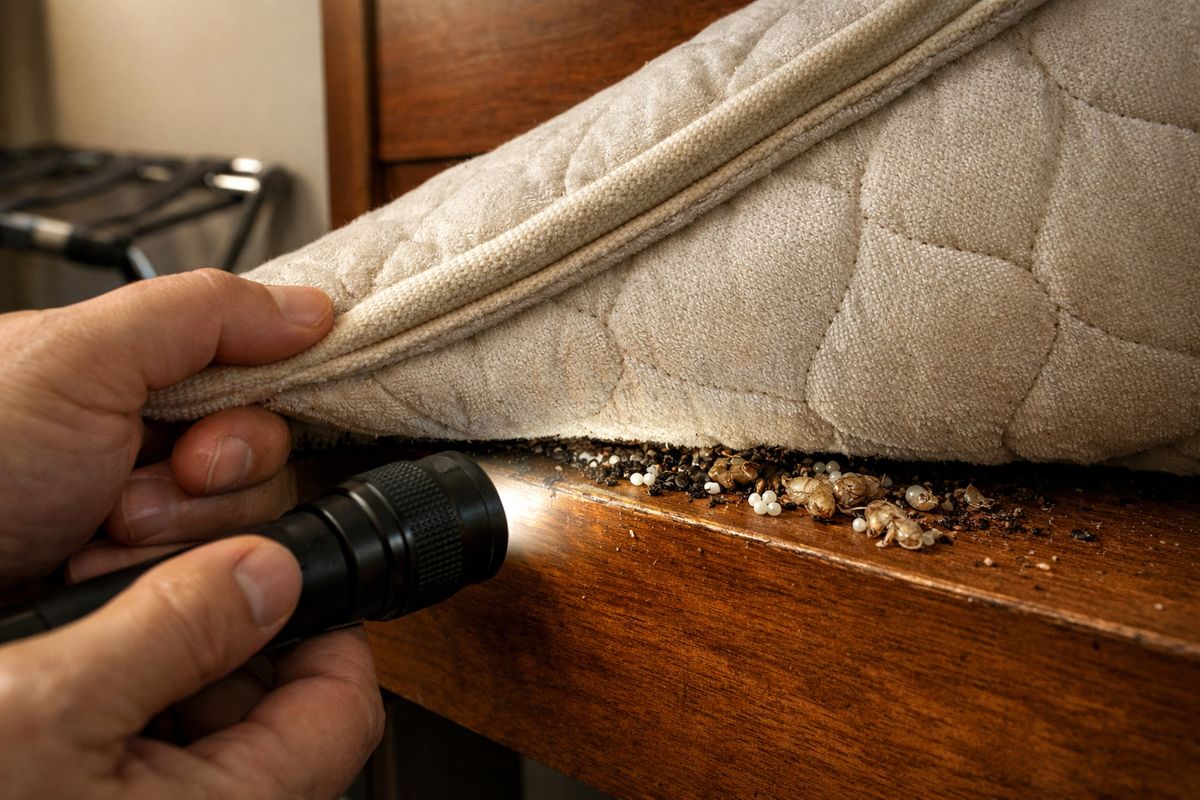
Bed bugs stay close to where people rest. The usual hiding spots include mattress seams, box springs, headboards, bed frames, upholstered chairs, curtains, baseboards, luggage racks, and small cracks near the bed. Most stay within a short distance of the sleeping area, which is why a five-minute room check can tell you a lot.
The signs are usually subtle. Look for dark spotting, shed skins, tiny eggs, rusty smears, live bugs, or itchy bites that show up after sleeping. A quick inspection focus on mattress seams and nearby furniture catches far more than people expect.
Why Bed Bugs Are So Hard to Get Rid Of
Bed bugs are persistent in a way that feels unfair. A single female can lay up to 500 eggs in a lifetime, and bed bugs can survive for months without feeding. Miss a few bugs or a cluster of eggs, and the whole problem can restart.
That is why random DIY sprays often disappoint. Once bed bugs spread past one obvious hiding spot, control gets much harder. The same pattern shows up with roaches too, especially when repeat infestations keep showing up after a treatment that only hit the visible pests.
The Other Usual Suspects in Hotels
Bed bugs get most of the attention, but they are not alone. Hotels also attract pests that want crumbs, grease, moisture, shelter, or access from the outside.
Cockroaches
Roaches get in through deliveries, cardboard boxes, drains, used appliances, wall gaps, and neighboring units. Once inside, kitchens, vending areas, utility rooms, and sink spaces give them exactly what they want.
In Chicago apartments, condos, and mixed-use buildings, a hotel-style roach issue can spread just as fast from one unit to the next. If you are trying to spot trouble early, pay attention to roach warning signs that often get overlooked, especially around sinks, nightstands, and hidden storage areas.
Flies
Small flies and filth flies usually show up around food prep, drains, damp mops, spilled drinks, and trash zones. Doors opening all day help them enter, but breeding inside is often the bigger issue. If moisture and organic buildup stay in place, flies keep returning.
Rodents
Mice and rats squeeze through tiny gaps around doors, pipes, loading areas, and foundations. Food waste, clutter, and quiet storage areas help them settle in fast. Hotels with back-of-house storage, laundry, and trash access give rodents plenty of cover.
Ants, Spiders, Fleas, and Termites
These are less common, but still possible. Ants follow moisture and food. Spiders show up where other insects are available to eat. Fleas can hitchhike from pets or soft items. Termites are more about infested wood and structural access than guest luggage, but they still matter in older buildings.
How Pests Get From a Hotel Into Your Home or Building
The trip home is where hotel pests become your problem. Bed bugs and roaches do not need much. A suitcase seam, a laundry bag, a shoe, a cardboard box, or a secondhand item can be enough.
That matters even more in apartments and managed properties, where one unit’s travel problem can become a building problem. If you manage or own a larger property, knowing what commercial pest support should actually cover helps you respond before one report turns into several.
The Biggest Risk After Travel
The chain reaction is simple. You stay somewhere. A pest hitchhikes into your belongings. Your bag comes home. The pest gets into a bedroom, closet, or soft furniture, then starts spreading.
Honestly, the riskiest moment is often boring: unpacking. That is when bugs leave the bag and enter the home.
Why Apartments and Multi-Unit Buildings Need to Act Fast
In multi-unit buildings, pests can move through walls, hallways, plumbing penetrations, shared laundry areas, and trash rooms. Bed bugs and roaches are especially good at taking advantage of that setup. Early action matters more in an apartment than in an isolated house, because the problem rarely stays isolated for long.
What You Can Check Before a Hotel Pest Problem Follows You Home
A little caution before unpacking goes a long way. You do not need a hazmat routine. You just need a smart one.
Before You Set Your Bag Down
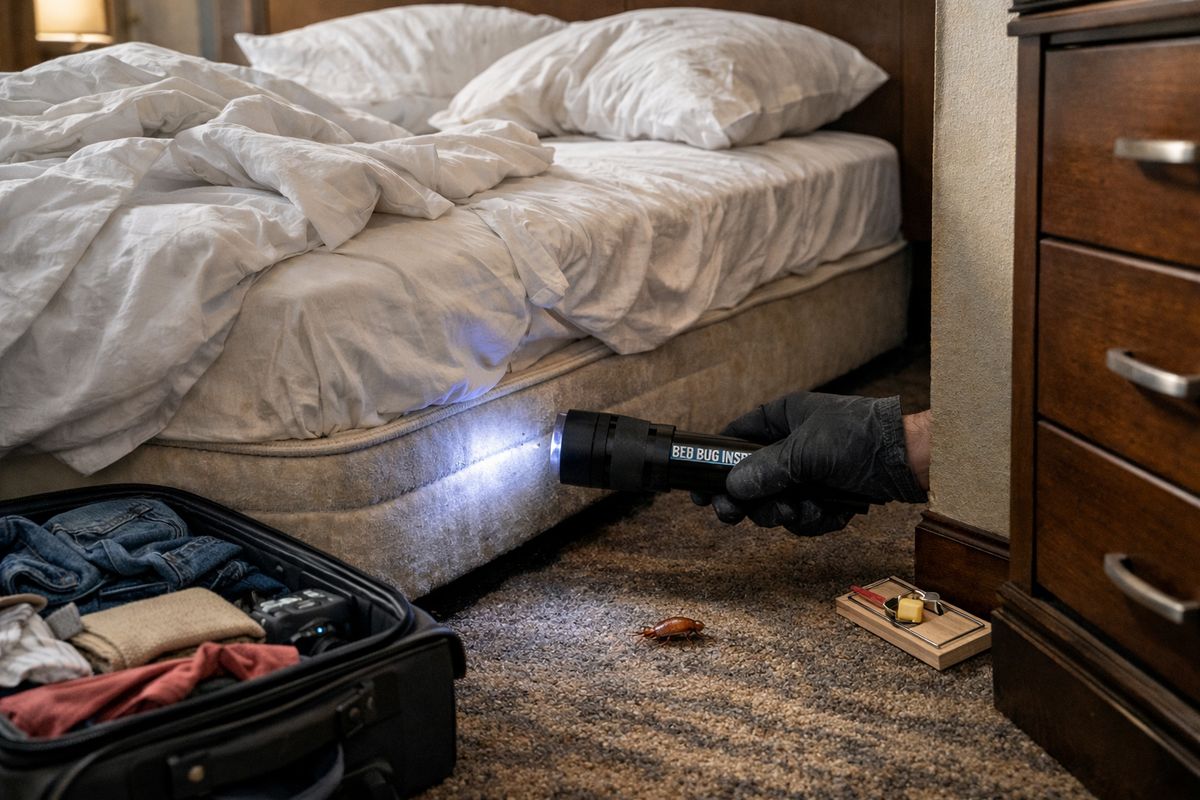
Put luggage in the bathroom first, or on a hard luggage rack away from the bed while you inspect. That advice shows up across travel guidance because bathroom or hard surfaces are less friendly to hiding pests than carpet, bedding, or upholstered chairs.
Before unpacking, check mattress seams, corners, the headboard area, nearby chairs, and the luggage rack.
What Signs to Look For
Look for dark spots, shed skins, eggs, live bugs, musty odors, droppings, gnaw marks, or roach activity near sinks and nightstands. Bed bugs often leave dark staining or tiny skins. Roaches leave droppings that can look like pepper or coffee grounds, depending on the species.
The trick is to look where pests hide, not just where you hope to see them.
What To Do If You Find Something
Do not move to the next room over. Ask for a room far from the original one, not adjacent, above, or below. Keep belongings contained, inspect everything again, and avoid setting your bag on soft surfaces until you are sure the new room is clear.
What To Do After a Stay if You Notice Roaches or Bed Bugs at Home
If something shows up after travel, speed matters. Not panic. Just speed.
Don’t Scatter the Problem
Avoid carrying suspect items from room to room. Do not start sleeping in another room without a plan, and skip the random store-bought sprays for now. Roaches can get pushed deeper into walls, and bed bugs can get scattered into new hiding spots.
Try One Containment Step Right Away
Wash and dry travel clothing on high heat as soon as possible. If that cannot happen immediately, isolate luggage in a garage, bathtub, or sealed area away from bedrooms and upholstered furniture. One contained bag is manageable. A spread-out problem is not.
When Professional Help Makes Sense
Professional help makes sense when sightings repeat, when bites show up with visible signs, when roaches are active during the day, or when the issue involves apartments, condos, or managed buildings. In those settings, quick inspection and targeted treatment beat guessing every time. If you are weighing your options, it helps to know what to look for in a local exterminator before the problem spreads.
Frequently Asked Questions
Are bed bugs the only hotel pests you need to worry about?
No. Bed bugs are the best-known hotel pest, but roaches, flies, rodents, ants, spiders, fleas, and sometimes termites can also show up.
Can a clean hotel still have bed bugs?
Yes. Bed bugs travel on people and belongings, so a clean room can still have them. Cleanliness helps with many pest issues, but it does not block hitchhiking pests.
How fast can bed bugs spread from luggage to your home?
Very fast. If a bug or egg is in a suitcase seam or clothing pile, unpacking on a bed or bedroom floor can give it immediate access to sleeping areas and nearby furniture.
Should you switch rooms if you find bed bugs in a hotel?
Yes, but not to the room next door or one directly above or below. Ask for a room far away from the original one and keep belongings contained during the move.
Do hotel roaches spread the same way bed bugs do?
Not exactly. Roaches are less tied to sleeping areas and more tied to food, moisture, drains, boxes, and wall gaps. But in multi-unit buildings, both can spread room to room surprisingly fast.
One simple rule to remember
Treat anything that traveled with you like it may have picked up an unwanted passenger. Check before unpacking, contain suspicious items, and act quickly if you notice signs at home. That one habit can save you from turning a short hotel stay into a long pest problem.