
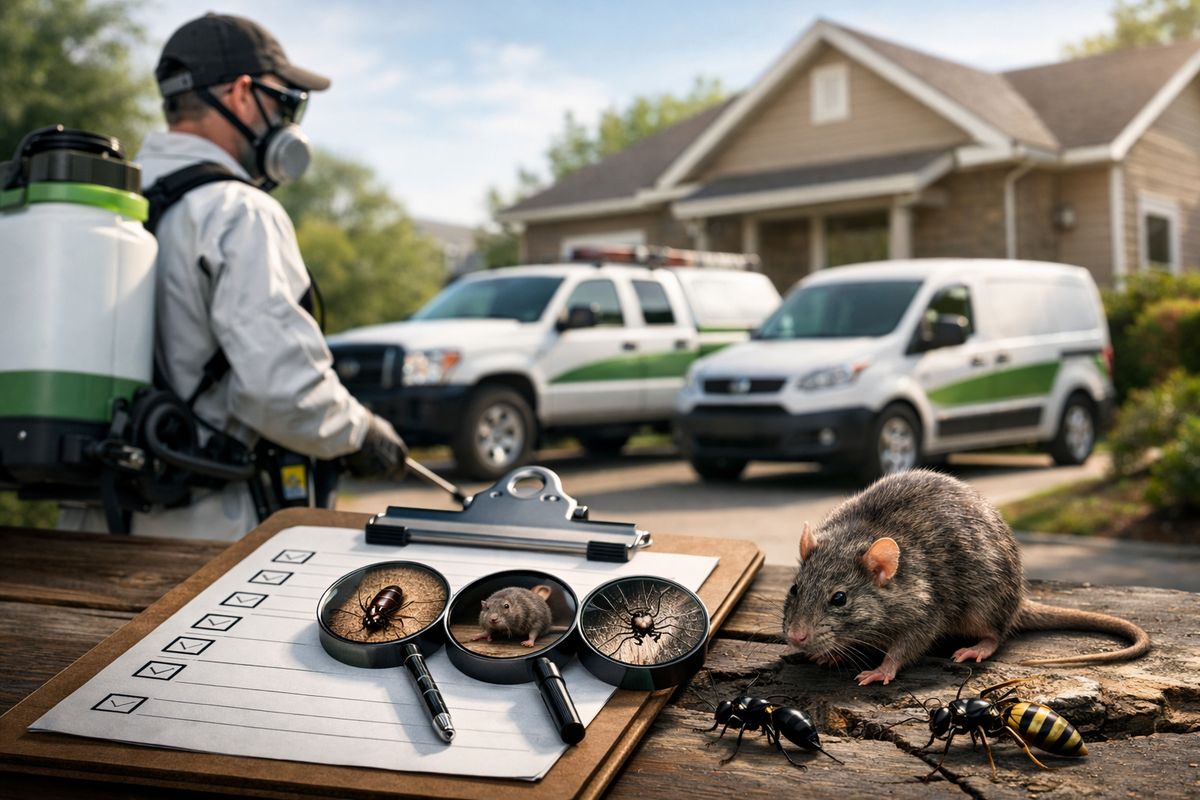
Finding roaches at 10 p.m. under the kitchen light can make any search for a pest control provider feel urgent, random, and a little desperate. The trick is not to call the first cheap ad that pops up. It is to choose a company that can handle your specific infestation, in your specific kind of home, and keep the problem from boomeranging back two weeks later.
Start with the problem you actually have
Roach problems are not all the same, even when they look the same at first glance. A few bugs around a trash pullout in a Naperville townhome call for one kind of plan. Ongoing sightings near shared plumbing in a Logan Square apartment call for another. If you skip that distinction, it gets easy to hire the wrong company for the job.
Here’s the thing: the right pest control provider is rarely the one with the flashiest coupon. Roaches, especially German cockroaches, are stubborn. They hide in tiny cracks, breed fast, and move through walls, pipes, and neighboring units like a city commuter who already knows every shortcut. You need a provider that treats the source, not just the bugs you happen to see.
That means your decision should start with three practical questions: how bad the infestation is, what kind of property you live in, and whether the issue is isolated or recurring. Those answers shape everything else, from treatment method to follow-up schedule.
Know what a good pest control provider should actually do
A pest control provider is simply a licensed company or technician that inspects your space, identifies the pest, treats the problem, checks results, and helps stop it from coming back. That last part matters more than most people expect.
A good provider should not just show up, spray, and leave. In Illinois, pest control decisions are supposed to follow integrated pest management, or IPM. In plain English, that means a layered approach: inspect first, identify where roaches are living, recommend sanitation fixes, seal entry points when possible, use targeted products, and return to monitor progress.
Look for a plan, not just a spray visit
One-and-done service sounds appealing, but roaches often do not cooperate with that fantasy. In apartments, vintage Chicago flats, condos, and multi-unit buildings, bugs can move between units through wall voids, utility lines, and shared trash areas. A single visit may knock activity down fast, but it may not finish the job.
The better approach is a treatment plan with follow-up. That usually includes an initial inspection, targeted treatment, a recheck, and adjustments based on what changed. If you are already dealing with roaches that keep reappearing after treatment, that is usually a sign the original service focused too much on short-term kill and not enough on monitoring and prevention.
Make sure roach experience is front and center
Plenty of companies treat ants, mice, and wasps. That does not automatically mean they are equally strong with roaches. You want clear experience with German cockroaches, which are the most common indoor roach issue in city apartments and many suburban kitchens.
Ask how often the company handles roach infestations, what methods it uses for them, and what timeline it typically expects. If the answers stay vague, move on. Roach control is not a side quest. It should be one of the provider’s core jobs.
Check the basics first: licensing, insurance, and local credibility
Before price, before promos, before same-day promises, check the basics. You are hiring somebody to work inside your home, around your kitchen, cabinets, and food prep areas. Trust is not optional here.
The pest control industry is huge and crowded, with about 20,000 providers competing in the U.S. alone. That is good news for choice, but it also means you need a quick way to filter out weak options.
Verify Illinois licensing and technician training
Licensing tells you the company is allowed to do this work and follows state rules. Training matters just as much. Product labels change. Safety standards change. Treatment methods change. A provider that still treats every roach issue like it is 2008 is not a provider you want in your kitchen.
Ask for the Illinois license number and confirm that technicians receive ongoing training. Extra education through industry groups is a good sign too, especially when it covers pest identification, safety, and IPM methods.
Ask if the company is insured and background-conscious
Insurance protects you if something goes wrong during service. Liability coverage and worker coverage are not glamorous topics, but they matter. If somebody gets injured on your property or damages flooring, cabinetry, or appliances, you do not want surprises.
You also want to know how the company handles hiring and background checks. A roach treatment often involves access to kitchens, bathrooms, basements, maintenance areas, and sometimes vacant units. A provider that takes technician screening seriously is showing you how it handles trust overall.
Check reviews the smart way
Reviews matter, but star ratings alone can fool you. Start with volume and recency. A 4.8 rating based on 14 reviews is not the same as a 4.8 rating based on 400. In home services, 93% of consumers use online reviews as part of the decision, so companies know how much those stars matter.
Look deeper for comments about roaches specifically, not just “great service.” Notice whether people mention punctuality, clear explanations, callbacks, and what happened when the infestation was persistent. In Chicago neighborhood groups and suburban Facebook communities, referrals can be especially useful because people often mention building type, landlord coordination, and whether the treatment actually held up.
Match the provider to your property and infestation level
A provider can be excellent and still be the wrong fit for your property. Roach work in a detached house is different from roach work in a 40-unit building. The service style should match the structure.
For homeowners: look for inspection depth and prevention advice
In a house or townhome, you want somebody who checks more than the kitchen floor. A good inspection should include moisture issues, basement corners, garage transition points, utility penetrations, and exterior entry points. Roaches like warmth, water, and hidden pathways.
Prevention advice matters here because you have more control over the property. A provider should point out leaks, clutter, cardboard buildup, and cracks around plumbing or baseboards. If the company never talks about what’s attracting the infestation, it is missing half the job.
For renters: ask how the company coordinates with landlords or building management
Apartment roach control can get messy fast, mostly because your unit may not be the whole problem. The catch is that successful treatment often depends on access to neighboring units, sanitation in common areas, and whether management is willing to treat the building, not just one kitchen.
Ask how the provider handles communication with landlords or condo associations, what happens if adjacent units need service, and whether the company can document findings for management. It also helps to know the early signs of a deeper roach issue, because droppings under the sink or activity behind the fridge often mean the infestation is more established than it looks.
For property managers: prioritize documentation and repeatable service
For larger buildings, scattered-site portfolios, or condo associations, the deciding factor is often consistency. You need service logs, unit-by-unit tracking, digital notes, and a repeatable schedule that maintenance staff can actually work with.
Fast communication matters too. If a provider can text updates, email summaries, and attach photos after service, you waste less time chasing basic information. In bigger properties, that recordkeeping is not fluff. It is how you track patterns, defend decisions, and spot recurring trouble areas before they turn into tenant complaints.
Compare treatment methods before you book
Most companies can say “we treat roaches.” That phrase alone tells you almost nothing. What matters is how the company treats, where products go, and why that approach fits your situation.
Ask whether the company uses integrated pest management
IPM is usually the stronger long-term strategy for roaches. That means inspection, baiting, growth regulators, crack-and-crevice treatment, monitors, sanitation guidance, and follow-up. It is targeted and practical.
Repeated broad spraying alone is not a strong roach strategy. In fact, the Illinois Department of Public Health says ongoing service should focus mostly on inspection and spot treatment where pests are actually found, not routine spraying everywhere for the sake of looking busy.
Understand the difference between targeted treatment and blanket chemical use
Targeted treatment sounds technical, but it is pretty straightforward. Gel baits go where roaches travel and feed. Dusts can be placed in wall voids or cracks. Insect growth regulators disrupt development so populations stop cycling forward. Monitors help track where activity is still happening. Limited residual applications may be used where appropriate.
Blanket chemical use is the opposite. That is when a provider relies too heavily on repeated general spraying, often around baseboards, without enough inspection or bait placement. It may look dramatic. It often underperforms. If your provider cannot explain the difference in simple language, keep looking.
Talk through safety for kids, pets, and sensitive spaces
You should know exactly what gets applied, where it goes, how long surfaces need to dry, and when it is safe to reenter treated areas. Ask about pet bowls, food prep zones, dish storage, toys, asthma concerns, and chemical sensitivities.
Lower-toxicity options are in demand for a reason, and many strong providers can balance effectiveness with safer placement and product choice. But “green” by itself is not a magic fix for a heavy infestation. Safe treatment matters. So does treatment that actually works.
Ask these questions before you hire anyone
This is the part that saves you from bad hires. A short phone call or estimate request can reveal a lot if you ask the right questions.
What exactly happens during the inspection?
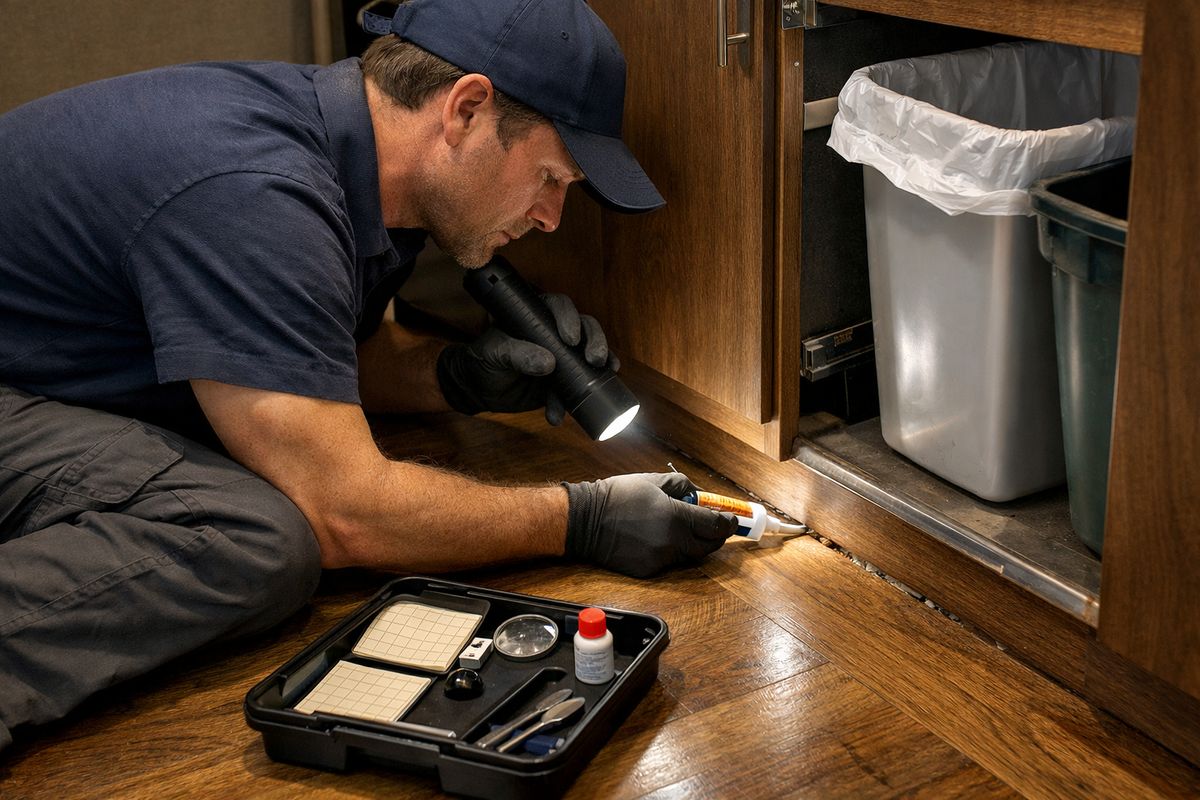
A real inspection should cover more than a glance at the kitchen. Ask whether the technician checks behind appliances, under sinks, inside cabinets, around plumbing, near trash storage, along shared walls, and in basements or utility rooms when relevant.
If the inspection feels rushed, the treatment plan usually will be too. The Illinois Department of Public Health even recommends getting two or more inspections so you can compare how thoroughly companies assess the problem.
How many visits are included, and what happens if roaches come back?
Roach control often takes more than one visit. That is normal. Ask how many visits are included, how soon follow-up happens, what the retreatment policy is, and whether there is any service guarantee.
You are not looking for a magic promise. You are looking for a clear process. Fast knockdown is nice, but long-term control is the goal.
Will you get prep instructions and prevention steps?
A strong provider should give you a simple prep checklist before service and plain-English aftercare instructions. That may include reducing clutter, limiting cardboard, fixing leaks, storing food in sealed containers, emptying cabinets when needed, and sealing cracks.
That guidance should be easy to follow, not written like a legal document. The easier it is to act on, the more likely your treatment succeeds.
How will updates, reminders, and service notes be handled?
Communication is part of the service. Ask whether you will get texts, emailed notes, digital summaries, appointment reminders, or photo documentation. Good providers explain what was treated, what was found, and what still needs attention.
That matters even more in rentals and managed properties. If you already deal with maintenance tickets and access coordination, clean documentation saves a lot of friction. For larger facilities, this overlaps with the same tracking mindset used in measuring service results over time.
Compare pricing without falling for the cheapest quote
Price matters, of course. But a cheap quote that does not solve the infestation is not actually cheap.
What affects the price of roach extermination
Cost usually depends on square footage, infestation severity, property type, number of units, prep needs, frequency of service, and whether exclusion work or sanitation support is included. Severe infestations in older multi-unit buildings often cost more because the work is bigger and the follow-up is more involved.
That does not mean every high quote is justified. It just means roach pricing makes more sense when you connect it to scope.
One-time treatment vs ongoing service plans
A one-time service can work for a small, isolated issue caught early in a single-family home. But recurring plans make more sense for chronic building problems, properties with shared walls, restaurants, or managers overseeing multiple units.
Prevention is often where the value shows up. If you want a clearer picture of why recurring service can outperform reactive calls, it helps to understand why monthly prevention tends to work.
Watch for vague quotes and teaser pricing
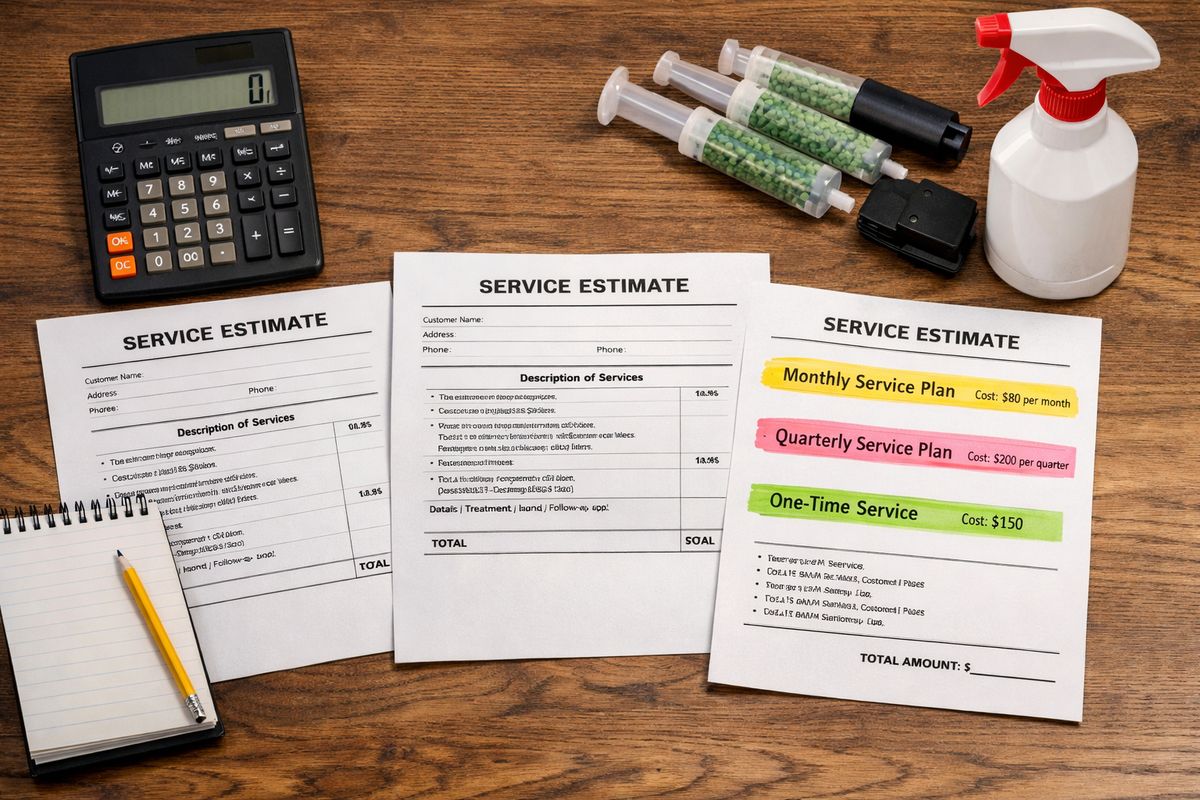
Low starting prices can be fine, but only if the estimate explains what is actually included. Watch for quotes with no inspection detail, no treatment specifics, no follow-up terms, and no explanation of what happens if activity continues.
The rule is simple: if the quote reads like a coupon flyer instead of a treatment plan, keep looking. The Illinois guidance is blunt on this point too: price should not be your main deciding factor.
Spot the red flags that usually lead to a bad experience
Bad providers tend to reveal themselves early. You just have to notice the pattern.
No clear explanation of treatment
If a company cannot explain what it plans to do, where products will go, or why that method fits roaches, that is a problem. Pest control has jargon, sure, but good providers can translate it in about 30 seconds.
You do not need a chemistry lecture. You need clarity.
Promises that sound too perfect
“100% gone overnight” sounds great and means very little. Established roach infestations often improve in phases. You may see a sharp drop first, then a slower cleanup period as hidden populations are exposed.
Fast knockdown and full control are not the same thing. A provider that pretends otherwise is selling relief, not results.
Poor communication before service even starts
If calls go unanswered, arrival windows are vague, or basic questions get brushed off during the estimate, expect more of the same later. Communication rarely improves after the invoice is paid.
That matters in every setting, but especially in apartments and managed properties where access, reminders, and follow-ups make or break the outcome.
Choose the best provider for your situation
The best provider is not automatically the largest company or the one with the slickest website. Fit matters more than size.
Best fit for a sudden kitchen infestation
If you need help now, prioritize fast availability, a real inspection, roach-specific treatment, and a clear follow-up timeline. Same-day or next-day service is useful, but only if the company still takes time to inspect properly.
A rushed visit that misses nesting areas is just an expensive pause button.
Best fit for recurring apartment or condo roaches
Look for a provider that understands shared-wall infestations, landlord coordination, neighboring unit treatment, and monitoring over time. In these situations, building context matters as much as your individual unit.
If the company talks only about spraying your kitchen and never mentions adjacent units or access issues, it may not be the right fit.
Best fit for ongoing property management needs
For property managers, the best fit usually comes down to repeatable systems: scheduled visits, digital records, unit tracking, consistent communication, and prevention planning. If contracts are involved, pay attention to service frequency, reporting, callbacks, and scope, the same way you would review what should be spelled out in a service agreement.
That kind of structure makes roach control less reactive and much easier to manage.
Use this short hiring checklist before you book
Before you book, run through a simple filter. Confirm Illinois licensing. Ask about roach-specific experience. Request an inspection-first plan. Compare follow-up terms, not just the initial price. Read recent local reviews with an eye for recurring roach success, communication, and callbacks. Then pick one company and make the call.
That last step matters. Try one thing today: write down three questions from this guide and use them on your next estimate request. You will know very quickly which providers are actually prepared to fix the problem.
Frequently Asked Questions
How quickly should a pest control provider respond to a roach problem?
For active indoor roaches, especially in kitchens, a quick response matters. Same-day or next-day scheduling is ideal, but speed should not replace a proper inspection. Fast and sloppy is not better than slightly slower and thorough.
Is one treatment enough for cockroaches?
Usually not. Small, early infestations sometimes respond well to one visit plus monitoring, but established roach problems often need follow-up. Roaches hide well, reproduce fast, and may be coming from nearby units or wall voids.
What should you do before the technician arrives?
Follow the prep instructions exactly. That often means cleaning food debris, reducing clutter, emptying certain cabinets, and making access possible behind appliances or under sinks. Good prep helps treatment reach the places that matter.
Are pest control treatments safe for pets and children?
They can be, when products are chosen carefully and applied correctly. Ask where treatments will be placed, how long drying takes, and what reentry guidance applies. You should get clear instructions, not vague reassurance.
Should renters hire a pest control provider directly?
Sometimes, but building management often needs to be involved. In apartments and condos, roaches may be moving through shared spaces or neighboring units. Treatment is more effective when access and coordination happen at the building level.
What is the biggest mistake people make when choosing a pest control company?
Choosing based on price alone. A low quote with no inspection detail, no follow-up, and no prevention plan often leads to repeat infestations and more spending later.