
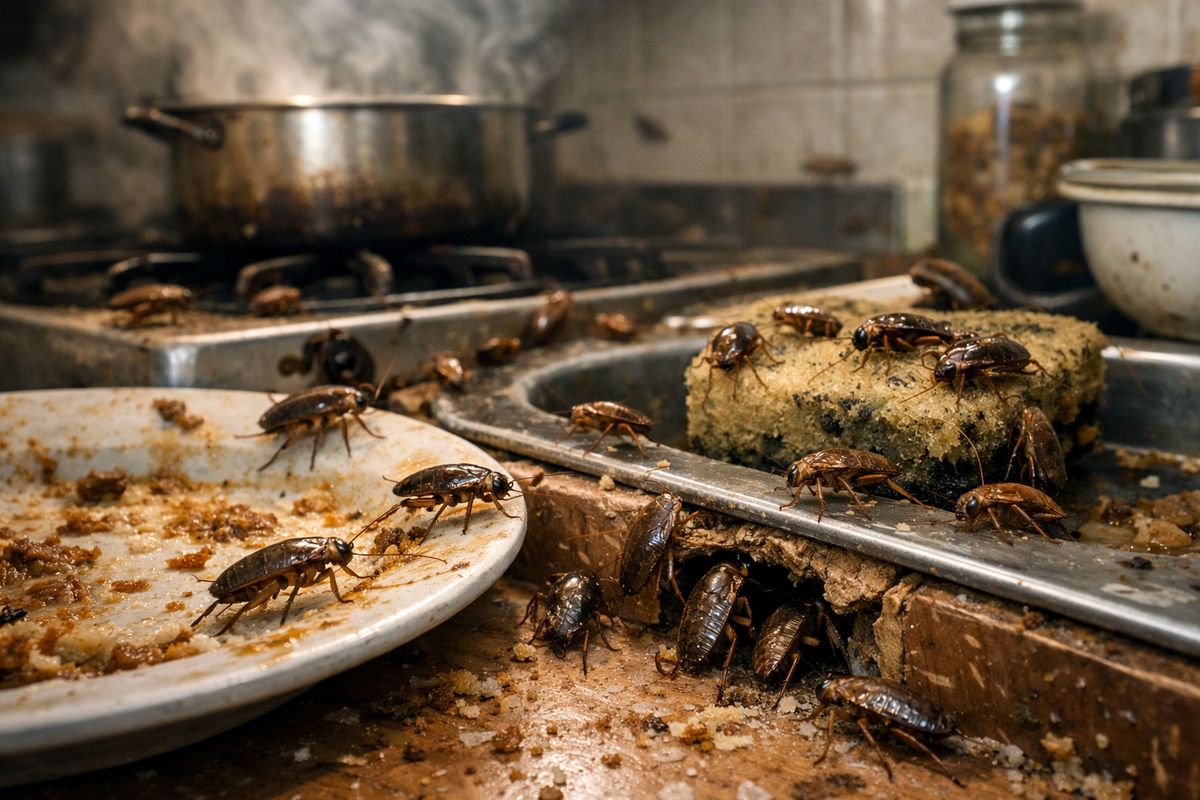
You spot one roach near the kitchen light, tell yourself it was a fluke, then notice two more by the stove the next night. That is how a German roach infestation usually starts: not with a dramatic swarm, but with a small, ugly hint that something bigger is already tucked behind your appliances and inside your walls. Here’s the thing, German roaches spread fast because reproduction, hiding behavior, and building layout all work in their favor.
In plain English, German roaches are small indoor cockroaches that live close to food, warmth, and moisture. Once a few get established, the population can grow quickly, stay hidden during the day, and move from room to room or unit to unit without much effort.
Here’s what you’ll learn:
- Why German roaches multiply so fast
- How to identify them correctly
- Where infestations usually hide
- Why apartments get hit harder
- Why sprays and cleaning often fall short
- What effective treatment actually looks like
- What to do right now to slow the spread
Why a german roach infestation gets out of hand so quickly
A German roach problem feels sudden, but it usually is not sudden at all. What feels like an overnight explosion is often weeks of quiet breeding and hiding, followed by a point where the population gets large enough that a few start showing themselves in the open.
The reason this happens so fast is simple. German roaches reproduce quickly, stay hidden in tight spaces close to food and water, and in many homes and apartment buildings, especially around Chicago, Naperville, and Schaumburg, the building itself gives them easy travel routes. Behind cabinets, along plumbing, under dishwashers, inside wall voids, and through shared utility lines, the space already exists for them.
That is why waiting is a bad bet. A small sighting rarely stays small for long.
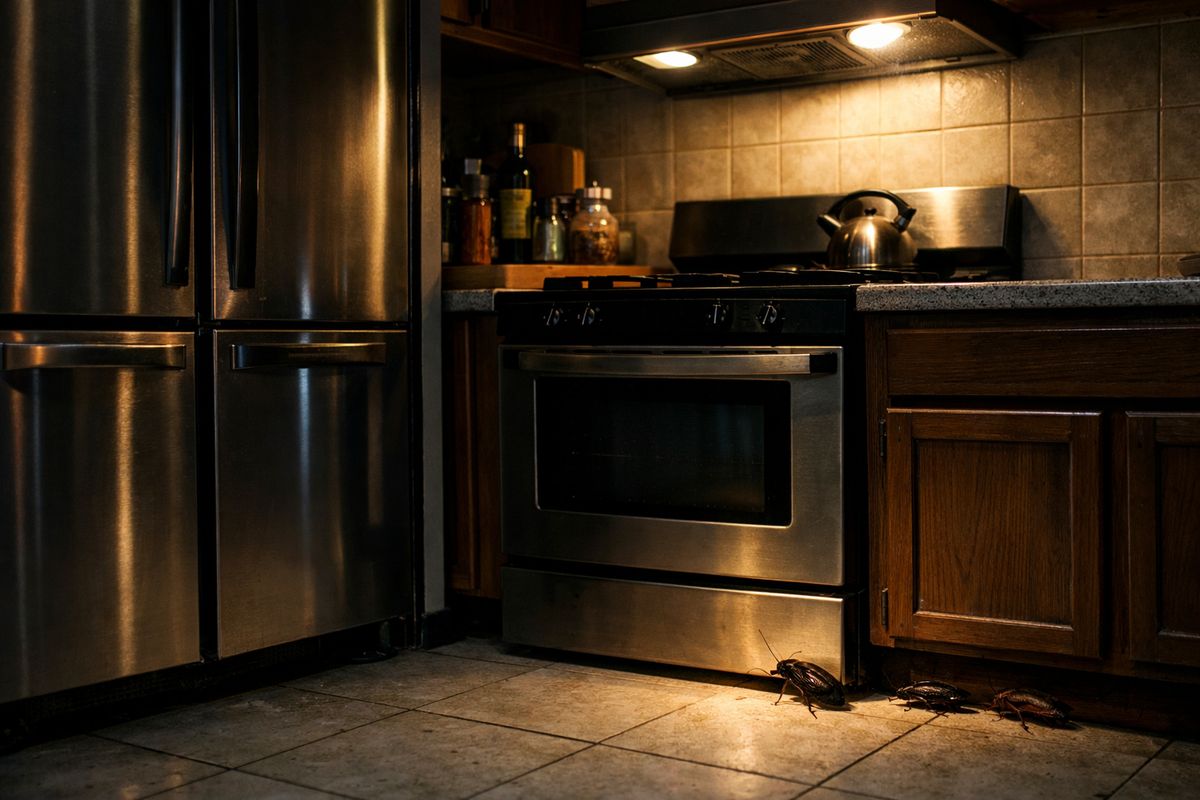
What makes german roaches different from other roaches
Not every roach you see indoors means a full infestation. Some larger roaches wander in from outside, especially in warm weather or after heavy rain. German roaches are different because this species is built for indoor living. According to Rutgers Extension, German cockroaches are the most common cockroach species in the United States because of their small size, short life cycle, and ability to develop resistance to insecticides.
That combination is what makes them such a headache in houses, condos, rentals, restaurants, and apartment buildings. If you are dealing with repeated sightings in the kitchen or bathroom, this is the species that causes the biggest indoor trouble most often.
How to identify a German roach
An adult German roach is usually about 1/2 to 5/8 of an inch long. The body is light brown or tan, and the easiest detail to look for is the pair of dark stripes behind the head. Those two stripes are the giveaway.
Nymphs, which are the younger roaches, are smaller and darker. You may see a mix of tiny ones and full-size adults at the same time. That matters, because it points to an established population rather than a random visitor.
By contrast, larger outdoor roaches tend to be bigger, darker, and less likely to set up a breeding population in your kitchen cabinets.
Why this species is such a persistent indoor pest
German roaches want the same things your home provides every day: warmth, water, food residue, and dark cracks to hide in. Kitchens are ideal. Bathrooms work too. Laundry rooms, utility closets, and the space under a leaking sink can be enough.
The catch is, they do not need much. A few crumbs, a film of grease behind the stove, or condensation under the sink can keep a population going. If you have ever wondered why a clean-looking home can still have roaches, that is why.
The real reason they multiply so fast
Speed is the whole story here. A German roach infestation spreads because the breeding cycle is short, the numbers stack up quickly, and new generations overlap before the old ones die off.
One female can start a much bigger problem
A female German roach carries an egg case, called an ootheca, with about 40 eggs inside. Over a lifetime, one female can produce 5 to 8 egg cases, which adds up to roughly 200 to 250 eggs.
That is the reason a small problem turns into a much bigger one. Not maybe. Usually.
If you wait a few weeks hoping the issue burns out on its own, you are usually giving the infestation time to multiply.
Their life cycle moves fast
German roaches go from egg to adult in about 100 days under good indoor conditions. Young roaches, called nymphs, molt 5 to 6 times before becoming adults. Because this happens fairly quickly indoors, especially in warm kitchens and utility spaces, new roaches keep entering the population while older ones are still active.
So instead of one wave, you get overlapping waves. That is why infestations can feel endless.
If you want a clearer picture of what treatment timing usually looks like, the usual cleanup timeline helps explain why this is a process, not a one-day fix.
Why you often see roaches of different sizes
Seeing tiny roaches and full-size adults in the same room is one of the clearest signs that the infestation is established. Babies, juveniles, and adults living together means breeding has already been happening in your space, not just nearby.
A single large roach from outside is one thing. A mix of sizes near your stove, sink, or dishwasher is a different story.
Where German roaches hide during the day
Most of the population stays out of sight. That is why the spread feels so sudden. You are seeing the tip of it, not the whole thing.
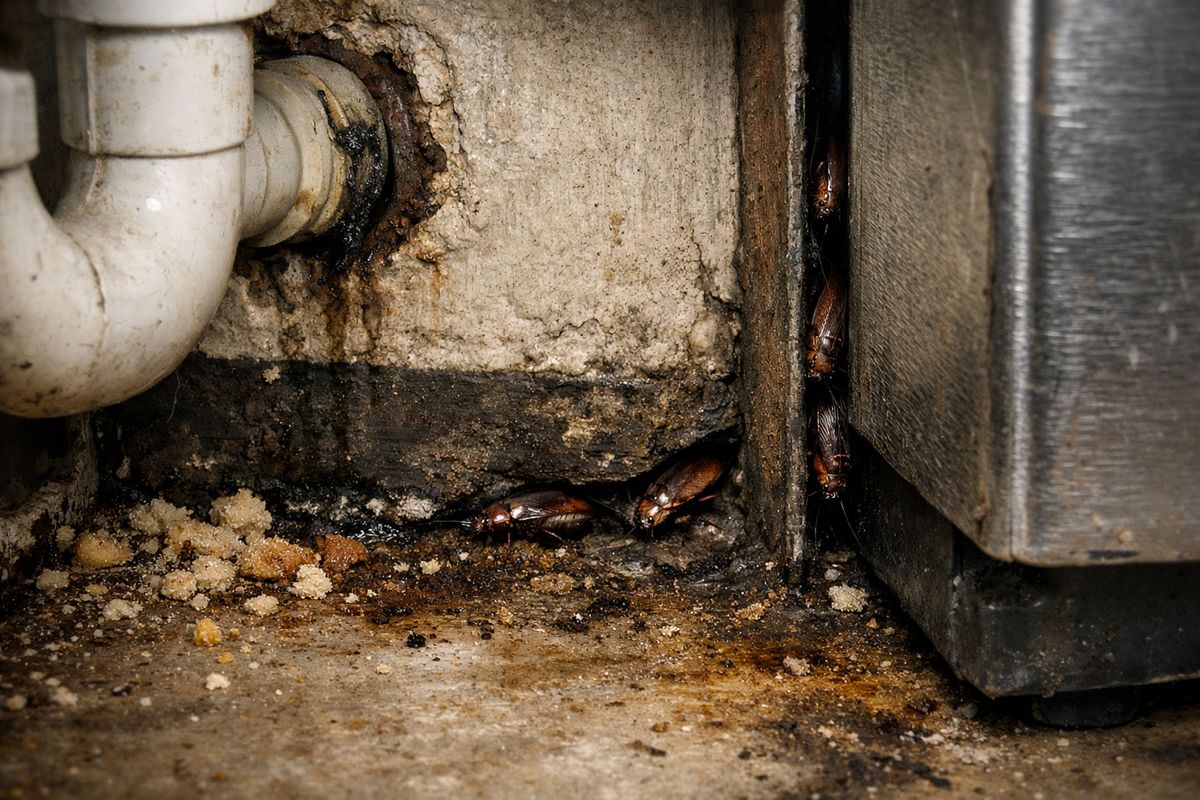
German roaches prefer tight, dark spaces where the top and bottom of the body can touch a surface. Think of the narrow gap behind a backsplash, the seam under a cabinet, or the void around a pipe opening.
The biggest hotspots in kitchens
The kitchen is usually the center of activity, especially around the stove and refrigerator. In a multi-unit building study, traps near those two appliances caught significantly more German roaches than traps under sinks or in bathrooms.
That finding lines up with what you notice in real homes. Heat, crumbs, grease, motor warmth, and dark gaps all come together there. The narrow strip beside the refrigerator is a classic example. It looks harmless, but it collects dust, food bits, and warmth like a magnet.
Dishwashers, cabinet hinges, microwave areas, pantry corners, and the undersides of counters can also hold active harborages, which just means hidden nesting spots.
Bathrooms, laundry areas, and plumbing voids
Bathrooms and laundry spaces stay attractive because moisture is steady, even when the kitchen is fairly tidy. German roaches hide under sinks, behind vanities, around toilet supply lines, near water heater closets, and where pipes enter walls.
A small leak under the sink can support a surprising amount of activity. The floor may look dry, but if the cabinet base stays damp in the back corner, that is enough. It is like having one wet towel stuffed behind a closed door. You do not see it, but the moisture is still there.
Clutter makes the problem easier for roaches
Cardboard, paper bags, crowded cabinets, and stacks of stored stuff give roaches exactly what they want: shelter and protection. Egg cases and nymphs do well in clutter because there are more places to hide and fewer chances of being disturbed.
This is one reason infestations often get worse in packed kitchens, laundry closets, storage rooms, and move-in or move-out situations.
How German roaches spread from room to room and unit to unit
German roaches do not stay politely in one room. Once a population builds, movement starts. Some spread happens inside the home, behind baseboards, through plumbing cutouts, and along electrical lines. In apartment buildings and condos, the problem gets bigger fast because the structure connects everything.
Why apartments and condos face faster spread
Shared walls, pipe chases, hallway gaps, utility lines, trash rooms, and neighboring units make multi-unit housing a perfect setup for roach movement. Research on multifamily housing communities shows these infestations are often connected across units rather than isolated in one apartment.
That matters in Chicago-area buildings, where older structures often have plenty of wall voids and hidden penetrations. In a dense building, one untreated kitchen can affect nearby units on the same floor, and sometimes above or below.
If you are dealing with this as a renter, what tenants can do in a shared building can help you document activity and push for coordinated action.
How roaches hitchhike into your space
Sometimes the infestation starts inside the building. Sometimes it arrives with your stuff.
German roaches commonly hitchhike in grocery boxes, online delivery packaging, used appliances, secondhand furniture, backpacks, and moving boxes. Cardboard is a favorite because it offers both shelter and a travel vehicle. No judgment needed here. Plenty of clean homes end up with roaches this way.
Why treating one unit alone often fails
Here is where building-wide integrated pest management, or IPM, matters. That means combining inspection, monitoring, baiting, sanitation, sealing, and follow-up across the building instead of just spraying one apartment and hoping for the best.
When nearby units stay active, roaches keep finding paths back. That is one reason why infestations return after treatment so often in shared housing when the response is partial or inconsistent.
Why cleaning alone usually does not fix it
Cleaning helps. It absolutely matters. But cleaning alone usually does not solve an established German roach infestation.
Why not? Because roaches can live on tiny food sources, hide in places your mop never touches, and keep breeding where you cannot see them.
Food, water, and grease still hide in tiny places
A shiny countertop is not the same as an empty food supply. Crumbs under the stove, grease film near burners, recycling residue, pet food left out overnight, and moisture around the sink can support roaches just fine.
German roaches do not need a full meal. A smear of grease or a damp sponge can do the job.
Hidden harborages matter more than a shiny countertop
Roaches care more about hiding than appearances. If the room looks spotless but there is a tight crack behind the cabinet next to a warm motor and a little moisture nearby, that spot still works for them.
It is a bit like missing a slow leak under the sink while admiring a dry kitchen floor. The visible part is not the whole story.
Why cardboard and stored items make control harder
Stored packaging, stacked paper goods, and extra clutter do two bad things at once. They create shelter, and they help roaches move from place to place. That is why cardboard boxes from deliveries or recent moves can make control harder than expected.
Why store-bought sprays so often miss the real problem
A spray can feels satisfying because it kills something you can see. But visible roaches are only a fraction of the population.
The bigger issue is that sprays often miss the hidden roaches entirely.
Resistance is part of the problem
German roaches are well known for insecticide resistance. In plain terms, some survive products that used to work, especially after repeated exposure. Rutgers notes that pyrethroid sprays are less effective than bait for German roaches because of resistance and repellency.
So if you have sprayed before and still keep seeing activity, that is not unusual. It is one reason this pest shows up on lists of the toughest Chicago pests to eliminate.
Sprays can scatter roaches deeper into hiding
Contact sprays often kill the ones out in the open and drive the rest deeper into wall voids, cabinets, pipe gaps, or neighboring rooms. In apartment settings, that can make the problem feel like it moved rather than improved.
Foggers are even worse for this. They rarely reach the tight spots where the real population lives.
Why baits, monitors, and follow-ups work better
Baits work because roaches eat them near their hiding spots and carry the effect back into the population. Sticky monitors show where activity is strongest. Insect growth regulators, often called IGRs, interfere with development and reproduction.
Placement matters more than volume. A small amount of bait in the right crack beats blasting every surface in the kitchen. If you want the full picture, how professional roach service usually unfolds is worth understanding before treatment starts.
For stubborn infestations in homes and buildings, targeted service from Midwest Pest Solutions is built around that kind of strategy, not random surface spraying.
Why a german roach infestation is more than just gross
Roaches are disgusting, sure. But the problem goes beyond that.
Food contamination and bacteria concerns
German roaches crawl through drains, trash, dirty voids, and then across food prep areas. In one hospital study, researchers isolated 174 bacterial strains from just 39 German cockroaches, including organisms such as Staphylococcus aureus, Klebsiella, Enterobacter, and Citrobacter.
Your kitchen is not a hospital, but the point is clear. Roaches carry contamination from dirty places into cleaner ones.
Allergies, asthma, and indoor air irritation
Droppings, shed skins, and roach waste add allergens to dust. Newer reporting on infestation-related exposure found that allergen and endotoxin levels were many times higher in infested apartments than in roach-free ones.
In tight indoor spaces, especially where ventilation is not great, that can make breathing issues worse. Kids, older adults, and anyone with asthma often feel this first.
Why this matters more in shared buildings
In dense housing, one active unit can keep feeding the problem in nearby units. That means repeated contamination, repeated allergen buildup, and repeated reintroduction even when one resident tries hard to stay ahead of it.
What an effective treatment plan usually looks like
Good roach control is methodical. Not flashy, but effective.
Inspection and monitoring first
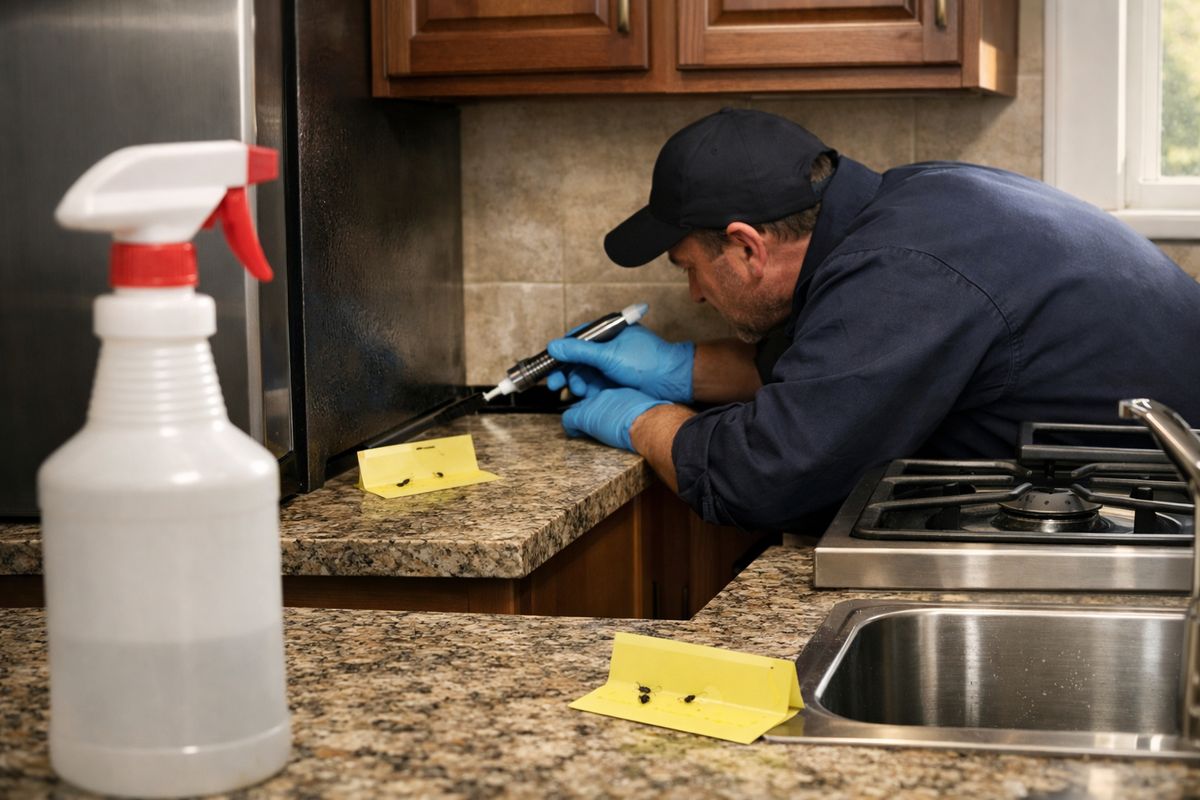
The first job is confirming that you are dealing with German roaches, mapping the hotspots, and placing sticky traps where activity is most likely. That usually means near the stove, refrigerator, sink area, garbage zone, bathroom plumbing, and hidden corners.
Monitoring matters because guessing wastes time. The best treatment starts where the roaches actually live.
Targeted baiting and growth control
Gel baits are usually the backbone of treatment because they can be placed close to harborages. IGRs, which are products that disrupt development and reproduction, help suppress the next wave. Dusts may be used in cracks, wall voids, and other protected spaces where they can stay effective.
This is why the skill of the technician matters so much. The right material in the wrong spot does not do much.
Follow-up visits matter more than a one-time treatment
German roach control often needs repeat visits every 2 to 4 weeks until activity stops. That is not overkill. It is how you catch new hatch-outs, replace consumed bait, and confirm the population is actually collapsing.
If you hire help, look for a company that treats follow-up as part of the process. Midwest Pest Solutions offers roach control in the Chicago area with ongoing retreatment options when needed, which matters with a pest like this.
What you can do before and after service
Your role is practical. Empty problem cabinets if asked. Reduce clutter. Fix leaks. Store pantry goods and pet food in sealed containers. Vacuum up crumbs and roach debris. Leave bait placements alone.
That last one matters. If bait gets wiped away during cleanup, the treatment loses traction.
How to slow the spread in your home or building right now
You do not have to wait passively while treatment gets scheduled. A few simple moves can reduce food, water, and hiding spots right away.
Focus on the stove-and-fridge zone first
Start with the highest-risk area. Pull the refrigerator out if you can do it safely and clean the narrow gap beside it, the floor underneath, and the wall behind it. Then do the same around the stove.
That small strip beside the fridge is one of those places almost nobody sees during normal cleaning, and roaches love it.
Cut off easy water sources
Fix sink drips, dry out wet sponges at night, wipe condensation, and deal with plumbing leaks quickly. If pet water can be picked up overnight without causing a problem, that helps too.
Even a little moisture makes a big difference.
Swap cardboard for plastic storage
Move pantry items, paper goods, and stored supplies out of cardboard when possible. Plastic bins with lids are less inviting and reduce hitchhiking risk from deliveries or stored items.
It is a small change, but honestly, it pays off.
Report activity early in multi-unit housing
If you live or work in a shared building, report sightings early and document where you saw them. Waiting for the problem to get obvious usually means it is already spreading through connected spaces.
Property managers get better results when treatment is coordinated, monitored, and started before every unit around the source gets pulled into the problem. Professional help from Midwest Pest Solutions is especially useful when multiple units, shared walls, or recurring activity are involved.
When It’s time to call for professional roach control
There is a point where DIY stops being realistic. German roaches hit that point faster than most pests.
Clear signs the problem is established
Daytime sightings are a bad sign, because roaches usually stay hidden when populations are low. So are multiple sizes of roaches, pepper-like droppings, egg cases, musty odor in cabinets, and repeated activity after cleaning or spraying.
If you are seeing those signs, the infestation is already settled in.
What chicago-area homes and buildings need
Chicago-area properties have a few extra challenges: dense housing, older buildings with wall voids, shared utility lines, and lots of opportunities for hitchhiking through deliveries and moves. Apartment-heavy neighborhoods and suburban multi-unit properties in places like Schaumburg and Naperville can both run into the same problem for the same reason. Connected spaces help roaches travel.
The best next step to try
Place sticky monitors near the stove and refrigerator, check them over the next few days, and note where activity is highest. Then use that information to start the right treatment quickly, before the infestation spreads deeper into your home or building.
Frequently asked questions
How fast can a German roach infestation grow?
Very fast. One female can produce several egg cases in her lifetime, with about 40 eggs per case, and the full life cycle can finish in about 100 days. That is why a few roaches can turn into a much larger problem in a short time.
Does seeing one German roach mean you have an infestation?
Not always, but it is a real warning sign. German roaches usually stay hidden, so one visible roach, especially in a kitchen or bathroom at night, can mean more are tucked away nearby.
Can a clean apartment still get German roaches?
Yes. Cleaning helps reduce food and water, but German roaches can survive on tiny amounts of grease, crumbs, and moisture. In apartment buildings, activity in nearby units can also spread into a clean space.
Why do roaches keep coming back after spraying?
Sprays often kill only the roaches you see. Hidden roaches survive, some are resistant to common insecticides, and others may scatter deeper into walls or neighboring rooms. That is why baiting, monitoring, and follow-up usually work better.
Where should you place monitors for German roaches?
Start near the stove and refrigerator, then add monitors near sinks, garbage areas, under bathrooms sinks, and other tight spaces where warmth and moisture are present. Those spots usually reveal the real center of activity fastest.