
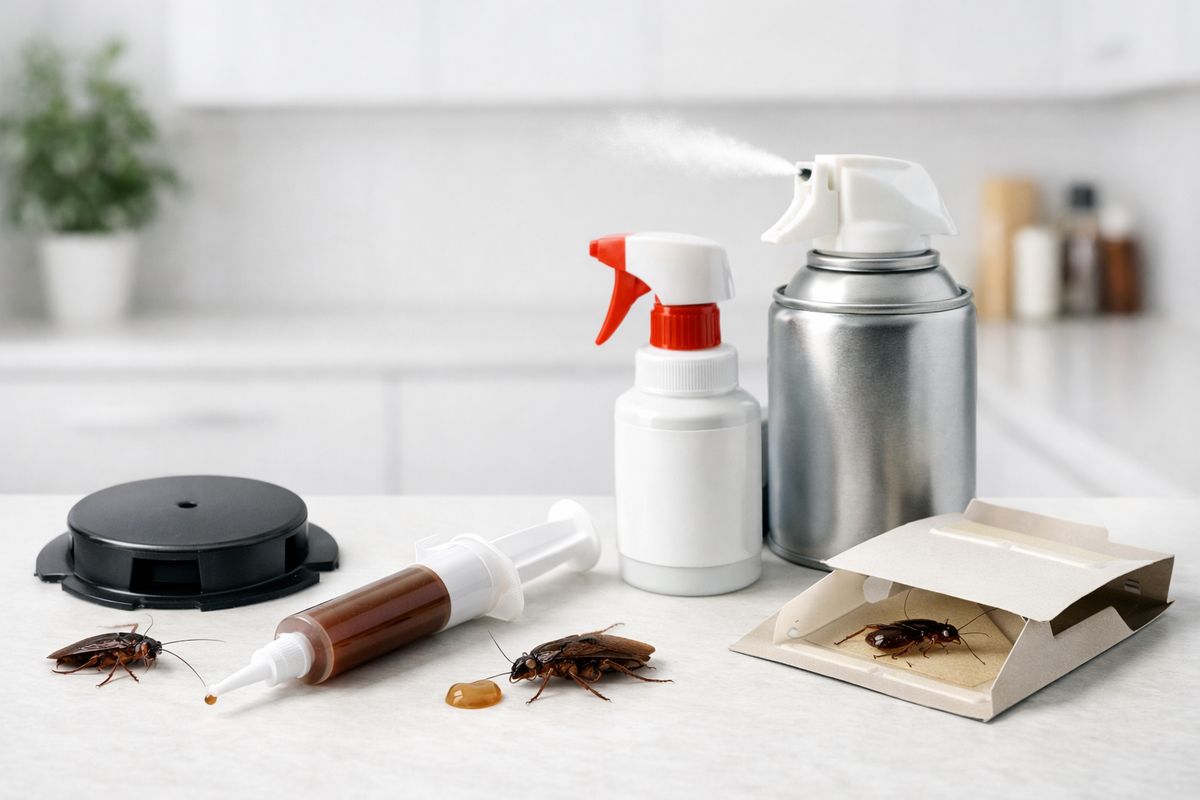
If you keep seeing roaches after dark in the kitchen, or worse, during the day near the sink, you do not need another random spray from the hardware store. The best roach treatment is usually a layered plan, and this guide breaks down which products actually help, which ones waste your time, and when it makes more sense to bring in a pro.
Quick picks at a glance
Here’s the fast answer. If you want the strongest all-around DIY option for an active infestation, Advion Cockroach Gel Bait is the top pick. If you want the easiest no-mess setup, Terro T500 Multi-Surface Roach Baits are the best place to start. If you live in an apartment or condo and want enclosed, professional-grade bait, Advion Cockroach Bait Arena stands out. If you need a budget gel, Combat Max Roach Killing Gel is the practical value choice. If you need to reach hidden gaps behind baseboards or around utility penetrations, Terro T530 Roach Bait Powder or Harris Boric Acid Roach Powder can support a larger plan. And if the infestation keeps bouncing back, Gentrol Point Source and a professional IPM service are where the real long-term control starts.
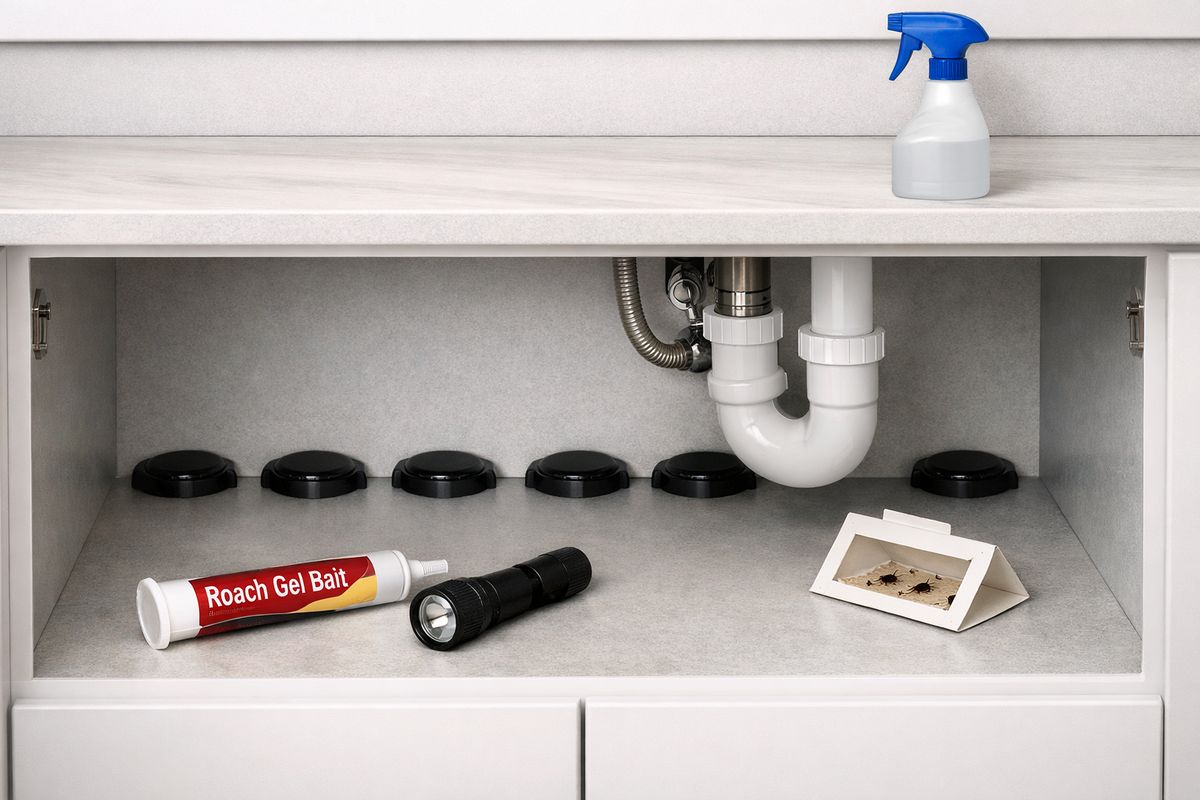
That last part matters most. The best roach treatment is rarely one product sitting under the sink. It is bait placed where roaches already travel, monitors that show where activity is clustering, cleanup that removes easy food and water, and sealing that keeps new roaches from moving in. In a Chicago apartment with shared walls, that system matters even more than the brand name on the box.
How this list was picked
This list was built around the things that actually matter when you are trying to stop an infestation, not just kill a few visible bugs. Kill speed matters, sure. But so does colony control, because a product that kills the roach you see and misses the nest is not solving much. Ease of use matters too, especially in smaller apartments where space is tight and treatment has to fit around kids, pets, and everyday life.
Safety and placement were part of the ranking. Enclosed bait stations earned points for cleaner handling in homes where open gel is not ideal. Gel baits ranked high because they can be tucked into cracks and crevices where German roaches hide during the day. Powders made the list because they still have a place in dry hidden voids, but only when used lightly and strategically.
Price counted, but only in context. A cheap product that needs three repeat purchases and still fails is not actually cheaper. The same goes for sprays that feel satisfying for ten minutes and do nothing about the colony behind the dishwasher.
Fit within an IPM plan mattered most. IPM means integrated pest management, which is just the plain-English version of using more than one tactic at once: bait, monitors, sanitation, exclusion, and follow-up. That approach keeps showing up as the better long-term answer in both housing research and professional pest control practice. In fact, IPM service contracts have taken a much larger share of pest management work in recent years because long-term control beats repeated broad spraying.
Comparison table: Best roach treatments that actually stop infestations
| Treatment | Best For | Active Type | Where It Works Best | Expected Results | Pricing | Main Drawback |
|---|---|---|---|---|---|---|
| Advion Cockroach Gel Bait | Active German roach infestations | Gel bait | Kitchens, bathrooms, utility areas, cabinets | Visible drop in days, follow-up needed | $$ | Placement and refresh matter |
| Terro T500 Multi-Surface Roach Baits | Easy, low-mess setup | Enclosed bait station | Apartments, condos, under sinks, near stoves | Slower but steady control | $ | Less effective in heavy infestations |
| Advion Cockroach Bait Arena | Apartments with shared-wall pressure | Enclosed pro-grade bait | Multi-unit buildings, utility lines, wall-adjacent areas | Strong colony suppression over time | $$-$$$ | Costs more than consumer stations |
| Terro T502 Roach Bait Gel | Smaller infestations | Gel bait | Kitchens, bathrooms, cabinets, cracks | Good for early activity | $-$$ | Limited power in larger infestations |
| Combat Max Roach Killing Gel | Budget-conscious treatment | Gel bait | Small kitchens, bathrooms, light infestations | Decent short-term improvement | $ | Often needs repeat application |
| Terro T530 Roach Bait Powder | Hidden cracks and voids | Powder bait | Behind baseboards, appliances, wall gaps | Useful support treatment | $ | Messy if overapplied |
| Harris Boric Acid Roach Powder | Low-cost residual support | Boric acid dust | Dry hidden areas, under sinks, behind appliances | Slow but long-lasting | $ | Visible residue, poor in damp spots |
| Catchmaster Roach Trap Monitors | Monitoring hot spots | Glue monitor | Under sinks, behind fridge, along walls | Tracks activity fast | $ | Does not solve infestation alone |
| Gentrol Point Source | Breaking the breeding cycle | IGR disk | Cabinets, utility rooms, behind appliances | Strong long-term support | $$ | No instant knockdown |
| Professional IPM Roach Control Service | Severe, recurring, building-wide infestations | Layered service | Apartments, homes, multi-unit properties | Fastest path to durable control | $$$ | Higher upfront cost |
Advion Cockroach Gel Bait – Best Overall for Active Infestations
If you are dealing with active German roaches, especially in a kitchen or bathroom where sightings keep happening, Advion Cockroach Gel Bait is the strongest all-around choice. It hits the sweet spot between effectiveness, precision, and realistic DIY use. You can place it where roaches actually hide, and it keeps working after the first night instead of giving you one dramatic kill and then fading out.
This is the kind of product that makes sense when the infestation is real, not hypothetical. Roaches behind the fridge in a Logan Square apartment. Activity under a bathroom vanity in Naperville. Droppings near the coffee maker and a few live ones around the dishwasher after midnight. That is exactly where a good gel bait earns its keep.
Key features
Advion uses indoxacarb, a delayed-action active ingredient that lets roaches feed, move, and spread exposure before dying. That delayed effect is part of why gel baits work so well. Roaches are not just picking up a fast poison and disappearing in place. The bait can move through the infestation in a way sprays usually do not.
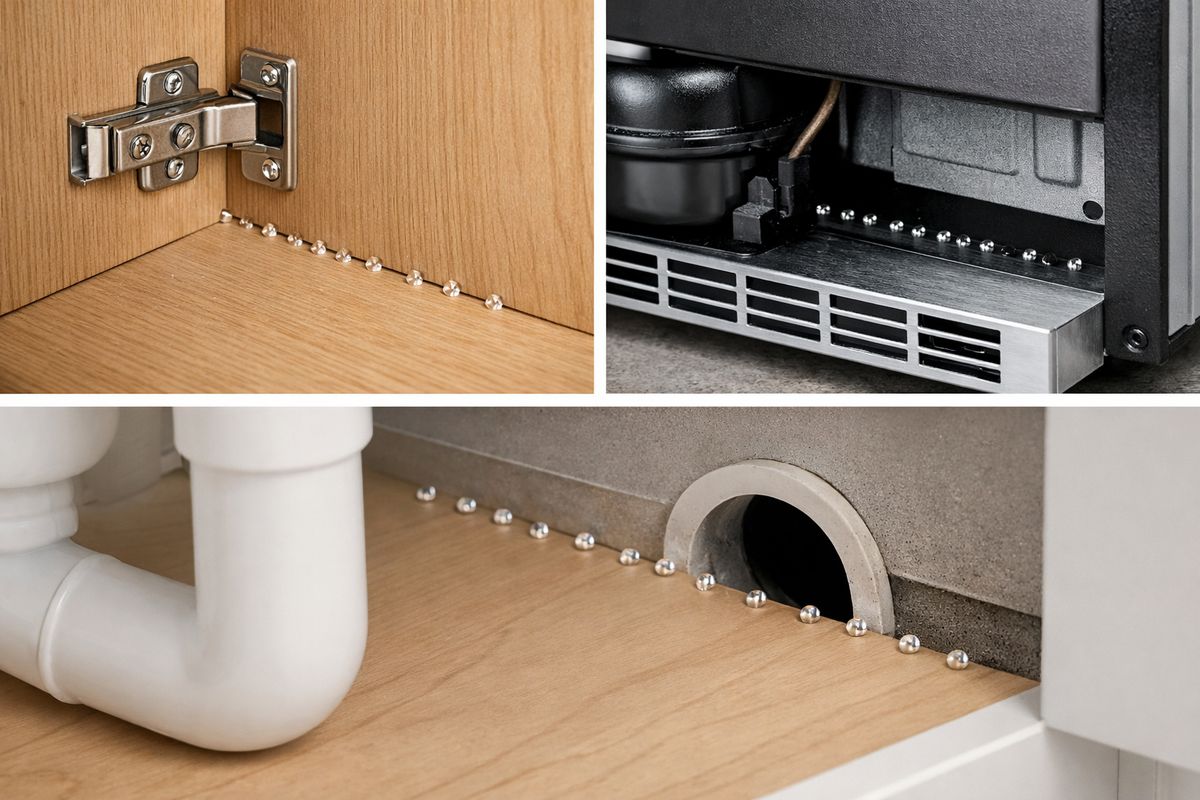
The gel format is the other big advantage. You can place pea-sized or smaller dots into cracks, cabinet hinges, void edges, under sink lips, behind outlet covers, around pipe openings, behind toilets, and near appliance motors. Those are the places roaches spend daylight hours, especially German roaches, which love tight, warm, humid hiding spots near food and water.
In practical use, this is best for active kitchen and bathroom infestations, utility closets, laundry rooms, and apartment units with ongoing sightings. It is especially useful where bait stations are too bulky to reach the hot spots.
Pros and cons
The biggest win is that it is one of the most effective DIY formats for colony-level control. Gel gets into hidden spaces. It does not require a lot of room. It tends to work faster than many enclosed stations, and it is widely used because gel baits held 31.4% of product-type revenue in the global market, largely because they fit sensitive indoor spaces better than repeated spraying.
The catch is simple: placement matters. If you smear it in the wrong areas, place too much, or contaminate it with cleaning products or sprays, performance drops fast. Gel also dries out over time, especially in warmer mechanical areas, so follow-up placement is normal. In heavy infestations, one application is rarely enough.
Pricing
Expect roughly $25 to $45 for a tube, with multi-packs costing more but giving you better value if you are treating multiple rooms or coming back for follow-up. A single tube can go a long way in one apartment if you are applying small placements correctly. For a larger house, repeated treatment, or a multi-unit turnover, buying multiple tubes makes more sense.
For the money, you are paying for precision and stronger bait performance, not flashy packaging. That is usually a good trade.
Verdict
If you want the best roach treatment for most active infestations, this is it. Advion Cockroach Gel Bait is the strongest pick for kitchens, bathrooms, and shared-wall apartments where roaches keep showing up and a basic spray has already failed.
Terro T500 Multi-Surface Roach Baits – Best Bait Stations for Easy Placement
Terro T500 Multi-Surface Roach Baits are the easy answer when you want less mess, fast setup, and no exposed gel dots to deal with. For a lot of renters, that convenience is the whole point. You open the pack, place the stations where activity is happening, and let them work in the background.
This is a good starting option when the infestation looks light to moderate. A few roaches near the sink. Some late-night sightings around the stove. Maybe one under the bathroom vanity. In that kind of situation, enclosed bait stations can be enough to get traction without turning treatment into a weekend project.
Key features
These bait stations keep the bait enclosed, which makes placement cleaner and simpler in cabinets, under sinks, near appliances, behind toilets, and along baseboards. The delayed-action bait is designed so roaches feed and carry the toxicant back into hidden areas before dying.
That is the real value of stations like these. You are not chasing individual roaches. You are setting attractive bait in the paths they already use. In smaller apartments, condos, and townhomes, that works especially well around sink plumbing, lower kitchen cabinets, and corners near trash or recycling bins.
The compact design also makes them easy to hide in places you do not want to see every day, which honestly helps people stick with the treatment instead of giving up after two days.
Pros and cons
The biggest pro is convenience. Setup is easy, placement is tidy, and there is little chance of overapplying product. If you have pets or children and want bait tucked away more securely, enclosed stations are easier to manage than exposed gel. If you need more guidance on safer placement around family spaces, it helps to read about keeping treatment away from curious paws and hands.
The downside is speed and reach. Stations can work well, but they are less flexible than gel in tight cracks and voids. If the infestation is heavy, or if roaches are nesting deep behind cabinets and appliances, you may not get the same reach or feeding pressure you would with a stronger gel-based program.
Pricing
A pack usually runs about $8 to $15, depending on count and retailer. For light to moderate infestations, that is solid value. You get several placement points for a relatively low cost, which makes this a very approachable first step.
Verdict
If you want the easiest clean setup for a lighter infestation, Terro T500 is a smart pick. If activity is heavy, persistent, or coming through shared walls, move up to a stronger gel or a professional service sooner rather than later.
Advion Cockroach Bait Arena – Best Enclosed Bait for Apartments and Shared Walls
Advion Cockroach Bait Arena is what you reach for when basic consumer bait stations have not done enough, but you still want enclosed bait instead of open gel. In apartment buildings, condos, and multi-unit properties, that matters a lot. Roaches are not always staying in your unit. They move through wall voids, plumbing penetrations, radiator lines, electrical chases, and shared trash areas.
That changes the strategy. You need bait that is strong, clean to place, and useful in settings where reinfestation pressure is built into the building.
Key features
These enclosed bait arenas contain professional-grade bait in a sealed station format. That gives you better handling than loose gel while still offering stronger performance than many standard consumer stations. You can place them along shared walls, near pipe openings, behind refrigerators, beneath sinks, near utility access points, and inside cabinets where roach traffic tends to follow edges and dark corners.
This format is especially appealing in multi-unit settings because it keeps bait contained while still giving roaches a place to feed. If you are dealing with a steady apartment issue, it helps to understand what to do when the problem starts inside a shared building.
Pros and cons
The main strength is balance. You get cleaner handling than exposed gel, but stronger baiting than many off-the-shelf enclosed traps. That makes this a great fit for renters, condo owners, and property managers who need dependable placement without messy application.
The drawbacks are cost and availability. These are often more expensive than consumer bait stations, and they are not always sitting on the shelf at the nearest big-box store. If your infestation is severe, you may still need gel, dust, IGR support, or professional service layered on top.
Pricing
Expect roughly $30 to $55 for a pack, depending on size and seller. The cost per placement point is noticeably higher than budget stations, but the stronger bait makes the premium easier to justify if you have recurring apartment pressure.
Verdict
This is one of the best enclosed bait choices for apartments, condos, and multi-unit properties. If standard bait stations have not fixed the issue and you want a cleaner alternative to open gel, Advion Cockroach Bait Arena is worth the upgrade.
Terro T502 Roach Bait Gel – Best Easy-to-Use Gel for Smaller Infestations
Terro T502 Roach Bait Gel is the kind of product that makes sense when you want to try a gel bait without paying professional-grade prices right away. It is approachable, easy to find, and simple enough to use in early infestations where the problem has started but has not exploded.
Think of this as the step between “I saw one roach last week” and “there are droppings behind the microwave and now this is a project.”
Key features
The syringe-style applicator makes it easy to place small dabs in cabinet corners, under sink edges, around plumbing penetrations, behind toilets, near appliance seams, and along hidden crevices in kitchens and bathrooms. That matters because gel works best when it is tucked into the same tight areas where roaches rest during the day.
This product is especially easy to use in smaller spaces, like galley kitchens, apartment bathrooms, and laundry areas. You do not need much product per placement. The trick is using several small placements instead of a few oversized blobs.
Pros and cons
Easy application is the main win. It is less intimidating than some pro-style products, widely available, and budget-friendly enough for an early response. For a smaller infestation, that can be exactly what you need.
The limit is power and persistence. In larger infestations, in buildings with heavy shared-wall pressure, or in situations where resistance may be part of the problem, it can come up short. Gel freshness matters too. Old, dried-out bait is basically furniture.
Pricing
Most tubes or kits land around $7 to $15. Coverage is decent for a kitchen and bathroom if you are using small placements correctly. That makes it a good entry-level gel without much financial risk.
Verdict
If you want an easy gel for a smaller infestation, Terro T502 is a sensible choice. If sightings keep happening after a proper first round, upgrade fast instead of repeating the same weak setup.
Combat Max Roach Killing Gel – Best Budget Gel Bait
Combat Max Roach Killing Gel earns a spot on this list because price matters, and sometimes you just need something today that does not cost much. It is not the strongest gel here, but it is accessible, affordable, and good enough for smaller infestations when placement is done well.
That is the right expectation. Not miracle product. Useful budget option.
Key features
The gel applicator works much like other syringe-style baits. You place small dabs in hidden, active areas such as under sinks, around cabinet corners, behind appliances, and near water lines. The delayed-action bait gives roaches time to feed and move before dying, which is what makes bait more useful than simple contact-kill sprays.
For lighter infestations, a budget gel can absolutely help. If you are dealing with a few roaches in one room or a recently started problem, this can be enough to knock activity back and buy time for deeper cleanup and sealing.
Pros and cons
Affordability is the obvious win. This is often one of the least expensive gel options on the shelf, and it is easy to find locally or online. For a tight budget, that accessibility matters.
The downside is that performance can be weaker in larger, well-established infestations. In resistance-prone situations, especially with German roaches, cheaper gels are more likely to disappoint. Buying a low-cost product twice because the first round did not hold is a very common mistake.
Pricing
Expect around $5 to $12 per tube. That is cheap enough to try, though larger infestations often need more than one tube and more than one round of placement.
Verdict
If your budget is tight and the infestation is still fairly small, Combat Max can be a practical place to start. Just do not confuse “cheap” with “complete.” Placement, cleanup, and follow-up still decide the outcome.
Terro T530 Roach Bait Powder – Best Powder for Cracks, Voids, and Hard-to-Reach Spots
Powder products are not the star of a good roach treatment plan, but they can be very useful in places that gel and bait stations do not reach well. That is where Terro T530 comes in. It works best in hidden cracks, wall gaps, under appliances, behind baseboards, and around plumbing openings where roaches squeeze through tight spaces.
Voids, in plain English, are the hidden gaps inside walls, around fixtures, behind cabinets, or under built-in structures. Roaches love them because those spaces are dark, protected, and usually close to moisture or food.
Key features
This powder format is meant for dry, hard-to-reach locations where roaches travel through narrow paths. As they move through the treatment, the dust clings to their bodies and gets carried back into hidden areas. It is especially useful around baseboard gaps, utility penetrations, under stoves and refrigerators, basement edges, and laundry or furnace rooms.
In a larger house, a powder can help cover the “in between” spaces that bait alone may miss. In an apartment, it is useful around plumbing and utility openings, though careful placement matters a lot.
Pros and cons
The big advantage is access. Powder works where bigger bait stations cannot fit and where gel may be hard to keep fresh. It can last a long time in protected hidden spaces, which makes it useful as a support treatment.
The tradeoffs are real, though. Overapplication is a common mistake. More is not better. A visible pile often works worse than a thin, barely noticeable dusting because roaches avoid heavy deposits. Powders can also be messy and should not be spread around open living areas.
Pricing
A bottle usually costs about $8 to $15 and covers a decent number of hidden access points. If you need to treat multiple cracks, pipe openings, or baseboard gaps, value is pretty good.
Verdict
Use this when roaches are clearly moving through hidden spaces and you need support in cracks and voids. Do not rely on powder alone for an active kitchen infestation. It is the supporting actor, not the lead.
Harris Boric Acid Roach Powder – Best Low-Cost Residual Powder
Harris Boric Acid Roach Powder is an old-school treatment that still has a place, mostly because it is inexpensive and long-lasting when used correctly. The phrase “used correctly” is doing a lot of work there. Boric acid is helpful in dry hidden areas, but only if you apply a very light dusting. Dumping white piles under everything is a good way to waste product and get poor results.
Key features
Boric acid works when roaches pick up the powder on their bodies and ingest it while grooming. It is best used in dry areas where roaches travel regularly, such as behind refrigerators, under sinks, around cabinet voids, near pipe entries, and behind stoves or washers.
A thin layer matters more than a visible one. Think of it like flour on a countertop. Light enough to be barely there, not like a line of snow under your cabinets.
Pros and cons
The strongest positives are cost and residual life. It is one of the cheapest support treatments available, and it can sit in protected areas for a long time without needing constant reapplication. That makes it useful in larger homes or as a low-cost add-on to a bait-focused plan.
Results are slower, though. It also leaves visible residue if overapplied, and it is not ideal in damp areas because moisture ruins performance. For kitchens and bathrooms with real activity, boric acid works better behind things than out in the open.
Pricing
Most bottles fall in the $5 to $12 range, with enough product to last through repeated use in multiple rooms. Value is excellent if you are treating dry hidden areas and pairing it with better primary baiting.
Verdict
Use Harris Boric Acid as a support product in dry hidden travel routes, especially if you need low-cost residual help. Do not treat it like a shortcut around bait placement, cleanup, and sealing.
Catchmaster Roach Trap Monitors – Best for Monitoring and Finding Hot Spots
Catchmaster Roach Trap Monitors are not the thing that ends the infestation. They are the thing that tells you where the infestation actually is. That difference matters.
Roaches are good at staying out of sight, especially in the daytime. Sticky monitors help you map the pressure points so you are not guessing. Under the sink. Behind the fridge. Along the baseboard near a radiator pipe. Inside the pantry corner you forgot about. Those details change your treatment from random to targeted.
Key features
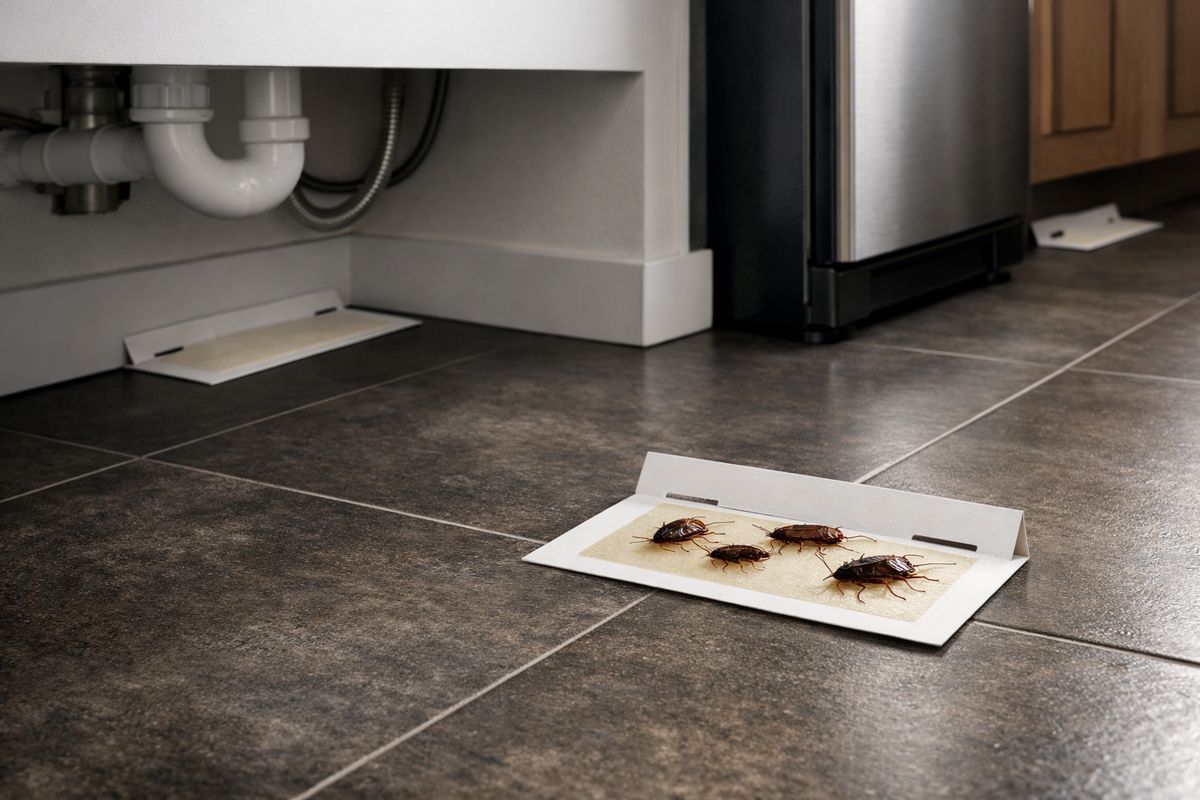
These are glue-board style traps that fold or place flat in likely roach pathways. You set them near walls, under appliances, beneath sinks, behind toilets, along cabinet toe-kicks, near trash areas, and around utility penetrations. After a few days, the trap count gives you a rough picture of where activity is highest.
That is especially useful in multi-unit buildings, where one room may look quiet while another is getting fresh traffic through a shared wall or pipe chase. If you are unsure what to watch for, it helps to review the indoor clues roaches leave behind.
Pros and cons
The biggest value is visibility. Monitors are low-toxicity, easy to place, and incredibly useful for checking whether treatment is working. They also help confirm whether activity is dropping or simply shifting to another room.
But no, they are not a cure. Even though insect traps hold a large market share, mechanical tools like sticky monitors work best as support, not as a standalone answer. They show the scoreboard. They do not win the game.
Pricing
A pack usually costs around $8 to $20 depending on quantity. One pack can monitor several rooms or a small apartment well, especially if you rotate placements after the first week.
Verdict
Every serious roach treatment plan should include monitors. They are cheap, simple, and extremely useful for finding hot spots and tracking progress.
Gentrol Point Source – Best IGR Add-On to Break the Reproduction Cycle
Gentrol Point Source is not a bait and it is not a knockdown product. It is an IGR, short for insect growth regulator. In plain English, that means it interferes with development so young roaches do not mature normally and keep the infestation rolling.
That makes it a smart add-on when baiting helps for a while, then the problem creeps back. If your infestation keeps bouncing between “better” and “back again,” reproduction is part of the story.
Key features
Gentrol comes in small point-source disks that release the active ingredient over time. You place them in cabinets, under sinks, behind appliances, in utility areas, and in other hidden indoor spaces where roaches are active. They pair especially well with gels and enclosed bait stations because the bait reduces the current population while the IGR helps disrupt the next wave.
This is especially useful in long-running infestations, apartment turnovers, and units that sit near trash rooms, shared chases, or repeated reinfestation pressure from neighboring spaces.
Pros and cons
The biggest advantage is long-term control. Gentrol helps break the breeding cycle, which is often the missing piece in stubborn infestations. Research keeps pointing toward integrated pest management because resistance and recurrence make single-method control unreliable.
The catch is that this product does not give you dramatic instant results. You still need bait, monitors, cleanup, and likely follow-up. If you want to understand that rebound pattern better, this guide on why infestations keep returning after treatment is worth reading.
Pricing
Expect around $15 to $30 for a pack, with each disk lasting for months in a protected indoor space. That makes the upfront cost reasonable if recurring pressure is part of your problem.
Verdict
If standard baiting keeps improving the problem without fully ending it, Gentrol is a smart upgrade. If the infestation is tiny and recent, you can probably skip it for now.
Professional IPM Roach Control Service – Best for Severe, Recurring, or Building-Wide Infestations
At a certain point, store-bought products stop being the smart answer. If you are seeing roaches during the day, finding them in multiple rooms, noticing egg cases, or dealing with activity that keeps returning from shared walls, a professional IPM service is the best roach treatment. Full stop.
This is especially true in Chicago-area apartments, older two-flats, condo buildings, and larger homes with basements, utility runs, and moisture issues. Roaches do not respect lease lines or unit boundaries. In multi-unit properties, your treatment can fail simply because the building problem is bigger than your apartment.
Key features
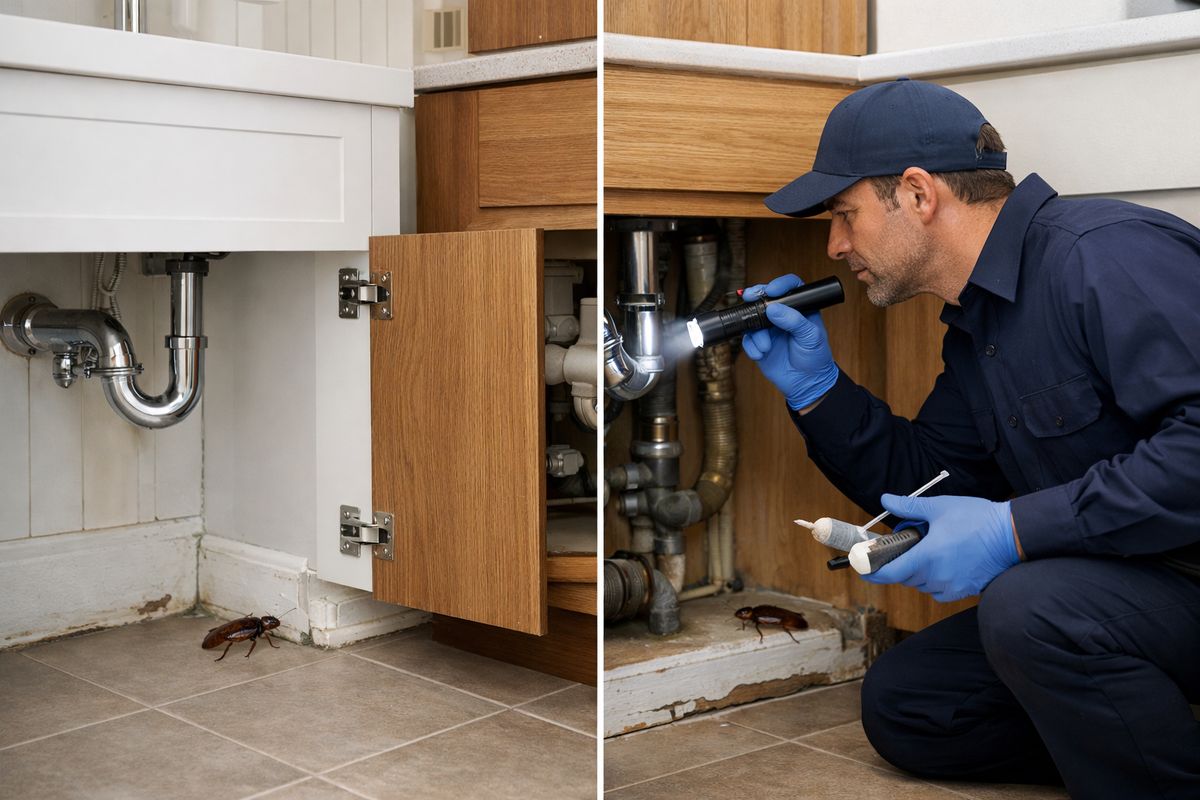
A real IPM service should start with inspection, not a quick spray. That means identifying hot spots, species, moisture sources, harborage zones, and likely entry routes. Treatment should include baiting in active areas, targeted dusting in hidden voids, monitor placement, and recommendations for sanitation and sealing. Follow-up is part of the service, not an afterthought.
The goal is elimination and prevention, not just temporary relief. That matters because small decreases in cockroaches are not enough to meaningfully reduce allergens and endotoxins. Lasting control means getting the infestation all the way down, then keeping it there.
A solid local example of that approach is professional roach control built around inspection, targeted treatment, and exclusion.
Pros and cons
The biggest benefit is better results in severe infestations. Professional treatment is also far better for building-wide issues, unit turnover problems, and recurring shared-wall reinfestation. In dense urban settings, that matters a lot because 62% of households are reported to face recurring cockroach problems.
The obvious downside is higher upfront cost. Cooperation matters too. If prep instructions are ignored, leaks are left active, or food clutter stays untouched, even the best service has to work harder than it should.
Pricing
Single visits often run roughly $150 to $350 for a typical home or apartment, depending on severity and square footage. Recurring service can range from around $40 to $90 per month in some setups, while larger property or multi-unit work can scale much higher depending on unit count, inspection needs, and follow-up frequency.
What you are paying for is not just product. You are paying for inspection, correct placement, species-specific strategy, safer application, monitoring, and follow-up. If you want a clearer breakdown, this page on what a full treatment visit usually includes helps set expectations.
Verdict
If you are seeing daytime roaches, dealing with multiple-room activity, or fighting reinfestation in a shared-wall building, professional IPM service is the smartest move. Severe infestations rarely end with store-bought products alone.
Which roach treatment is best for your situation?
The right product depends less on marketing claims and more on the kind of infestation you actually have. A few kitchen sightings in one apartment call for a different plan than a recurring property-wide issue in a multi-unit building. This is where choosing by situation saves money and frustration.
Best for apartments and condos
Apartments and condos have one big problem that single-family homes do not: shared infrastructure. Roaches can move through plumbing, electrical lines, wall voids, hallways, trash rooms, and neighboring kitchens. That is why enclosed baits like Advion Bait Arena or Terro T500 can make sense, especially when paired with gel in tight hot spots and sticky monitors to confirm movement.
Reinfestation risk changes everything. Even if your unit is clean, pressure from the next unit over can keep the problem alive. In that setup, cleaner enclosed bait plus targeted gel and monitoring is usually the best DIY mix. If complaints are building-wide, coordination matters more than any single product.
Best for single-family homes
In a single-family home, you control the whole structure, which is a huge advantage. You can bait active areas, fix plumbing leaks, dry out basements, seal under-sink penetrations, declutter storage zones, and check multiple rooms without waiting on a landlord or HOA.
That makes a layered plan easier. Gel bait does most of the heavy lifting in kitchens and baths. Monitors show where pressure is highest. Powder or boric acid supports hidden dry access points, especially behind appliances and in utility areas. Sealing and moisture correction make the results stick.
Best for severe infestations
If you are seeing roaches in daylight, finding egg cases, spotting droppings in multiple rooms, or noticing activity around bathrooms, kitchen appliances, and utility chases at the same time, speed matters. This is the point where stronger gel bait, monitor placement, an IGR like Gentrol, and professional service should all be on the table.
Do not try to save money by pretending a severe infestation is a mild one. That is how a small problem becomes a month-long grind.
Best for property managers
Property managers need consistency more than novelty. The best plan for repeated complaints and turnovers usually includes professional inspection, documented monitor placement, bait-focused treatment, targeted dusting, sanitation guidance, and scheduled follow-up. Shared-wall spread means isolated one-unit treatment often fails.
Documentation matters too. Which units are affected, where hot spots are, whether activity is near trash areas or utility lines, and whether follow-up counts are dropping. For more building-specific guidance, this resource on handling recurring roach problems across units is especially useful.
How to choose the best roach treatment
Choosing the right treatment starts with reading the problem clearly. Buy the wrong format, and you can spend money fast while roaches keep breeding behind the wall.
Start with the roach behavior you’re seeing
A few late-night sightings in the kitchen usually point to a smaller infestation than daytime roaches crossing the counter. Daytime activity often means the hiding places are crowded and the population is established. Droppings that look like black pepper near cabinet hinges, activity near water sources, or repeated sightings in the same room are all signs the infestation has been there longer than you want.
Location matters too. Kitchens and bathrooms are common hot spots because roaches need food and moisture. Research has even found that kitchens tend to carry heavier endotoxin loads in infested homes because roaches cluster around food and water sources. That tracks with what you see in real life. Under the sink is not random. It is a roach magnet.
Pick the right format: gel, station, powder, trap, or service
Gel bait is usually the best all-around format for active infestations because it reaches hidden harborages. Stations are easier and cleaner, but less flexible in tight cracks. Powders help in dry hidden spaces and wall gaps, but should support a bigger plan, not replace it. Sticky traps monitor movement and confirm progress. Professional service becomes the right format when the infestation is severe, recurring, or clearly spreading beyond one room.
Here’s the simple version: gels and stations feed the problem where it lives, powders support hidden areas, monitors tell you where to act, and service handles what DIY cannot realistically finish.
Think beyond kill speed
The product that looks fastest is not always the one that works best. Sprays can give you instant satisfaction because you see a roach die right away. But that does not mean the nest is touched. In fact, sprays are losing favor in professional treatment because hidden infestations, resistance, and chemical exposure concerns make bait-focused control more durable.
The real goal is not “dead roach tonight.” It is “no new roaches next week.”
Factor in kids, pets, and shared spaces
Placement matters more than panic. Enclosed stations are often the better fit in homes with kids or pets because the bait stays contained. Gels and powders need more careful placement in inaccessible cracks, behind appliances, inside cabinet voids, and other protected areas. Shared spaces also matter. Hallway-adjacent units, common trash areas, and laundry rooms can all keep pressure on a unit even after treatment starts.
If your home setup makes safe DIY placement tricky, professional placement is usually the better answer.
The treatment plan that works better than any single product
Here’s the thing: the best roach treatment is not one item. It is a sequence. That is the difference between temporary improvement and actual control.
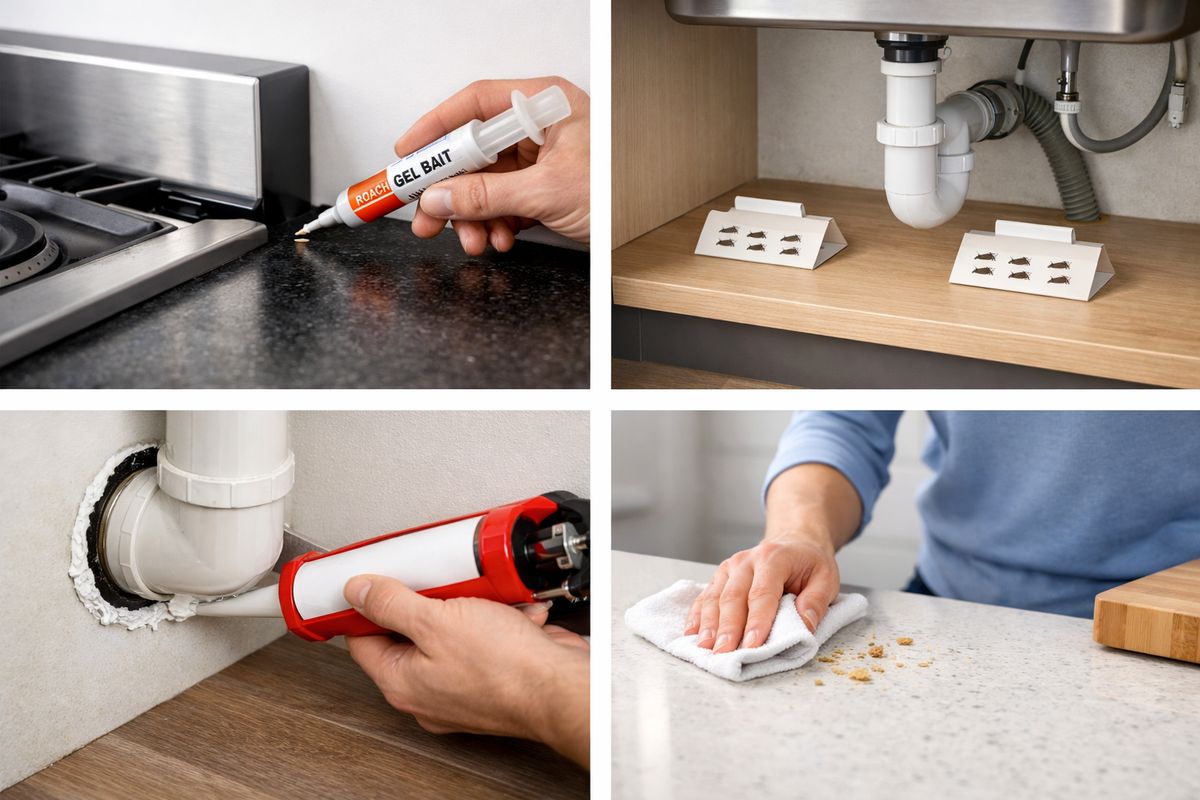
Step 1: Put bait where roaches already travel
Place gel or bait stations near confirmed activity, not randomly around the room. Behind the fridge, under the sink, near pipe openings, behind the toilet, inside cabinet corners, and along baseboards near appliances are all strong starting points. Roaches follow edges and hide in tight spaces, so treatment should meet them there.
Do not place bait in the middle of a clean countertop and call it done. That is not where the traffic is.
Step 2: Add monitors to track progress
Sticky monitors go under sinks, behind the fridge, near the stove, along baseboards, and close to utility penetrations. Check them after a few days, then again over the next couple of weeks. If trap counts drop, the plan is working. If activity shifts, you move the bait.
This part sounds boring, but honestly, it is where a lot of people finally stop guessing.
Step 3: Fix food, water, and clutter
Roaches need shelter, food, and water. Even a clean home can still give them all three through grease residue, crumbs, pet food, damp sinks, leaky supply lines, cardboard, crowded cabinets, and clutter under the bathroom vanity. Sanitation is not about blame. It is about removing the backup food sources so bait looks better by comparison.
Wipe grease near the stove. Store pet food. Dry out sinks overnight. Clear the cabinet floor under the plumbing. Small changes help the bait win.
Step 4: Seal gaps and entry points
Close the routes that keep feeding the problem. Caulk gaps around pipe penetrations, baseboards, backsplash seams, cabinet edges, and utility lines. Add door sweeps where needed. In older buildings, this step can feel like plugging holes in a drafty window during January in Chicago, not glamorous, but it changes the whole situation.
Structural conditions matter more than many people realize. Research has found housing improvements matter alongside pest control, because infrastructure problems can keep infestations going even when treatment is applied.
Step 5: Recheck and retreat if needed
Recheck activity in one to three weeks. Replace dried gel, add stations where pressure remains, review monitor counts, and keep food and moisture pressure down. Durable control usually takes more than one pass, especially with German roaches or apartment reinfestation.
Keeping them down is the real win.
Roach treatments that usually waste your time
Some treatments look dramatic, smell strong, or feel productive. That does not mean they work well.
Bug bombs and total-release foggers
Foggers are famous for making people feel like something major just happened. The problem is that roaches do not spend most of their time out in the open. They hide in cracks, behind appliances, inside wall voids, under cabinet joints, and around plumbing penetrations. Fog does a poor job reaching those harborages.
Worse, it can scatter roaches deeper into walls and new rooms instead of eliminating the source. If the goal is colony control, bug bombs are usually a dead end.
Over-spraying baseboards
Broadcast spraying baseboards is another classic move that often misses the actual nest. It can also contaminate bait placements and make them less attractive. That is a terrible trade. Contact sprays have a role in very limited targeted situations, but using them as the main plan often leads to disappointment.
DIY shortcuts that ignore follow-up
One treatment with no monitoring, no sealing, and no cleanup is rarely enough. Roaches reproduce quickly, hide well, and exploit the same gaps again and again. If you treat once, stop paying attention, and assume the issue is over, you may be right for about a week.
Then the same cycle starts over.
Why stopping roaches matters for your health, not just your sanity
Roaches are disgusting, sure. But this is not just about being grossed out when you turn on the kitchen light. Roaches are linked to allergens, endotoxins, asthma triggers, and contamination in the spaces where food is stored and prepared. Research shows that eliminating infestations leads to meaningful drops in allergens and endotoxins, while partial reductions often do not do enough.
Roaches are also associated with more than 30 species of bacteria, including Salmonella and E. coli, which is one more reason kitchens, pantries, and sink areas deserve immediate attention. In some settings, cockroaches have also been found carrying parasitic contamination. This is a real household health issue, especially in homes with asthma, kids, older adults, or chronic respiratory sensitivity.
In other words, “fewer roaches” is not the goal. Gone is the goal.
When it’s time to call a pro in Chicago
There is a point where DIY stops being efficient. In Chicago, that point often comes sooner in older apartment buildings, shared-wall condos, basement units, and properties with recurring turnover issues. Dense housing means reinfestation pressure is just part of the landscape.
Signs the infestation is bigger than it looks
Daytime activity is a big one. Roaches in multiple rooms is another. Repeated sightings after proper baiting, fresh droppings near several water sources, activity around utility chases, or roaches showing up near trash rooms and hallways all point to a larger infestation than a single product is likely to solve.
If you are opening a cabinet in the morning and seeing one run across the hinge line, the problem is already established. If you are finding them in the bathroom and kitchen at the same time, it is more widespread than you want it to be.
What to expect from a solid service visit
A good service visit should include inspection, identification of hot spots, targeted bait placement, possible dusting in hidden voids, monitor placement, and clear follow-up recommendations. It should not be just a quick lap with a spray can. If you are comparing providers, look for what separates a properly trained pest professional from a quick in-and-out service, and pay attention to whether follow-up is built into the plan.
In a serious infestation, professional help usually saves time, money, and frustration. That is especially true when neighbors, shared plumbing, or building conditions are part of the problem.
Frequently asked questions about the best roach treatment
What is the best roach treatment for apartments?
For apartments, the best setup is usually enclosed bait plus targeted gel plus sticky monitors. Shared walls, plumbing lines, and trash areas raise the chance of reinfestation, so cleaner enclosed bait stations and monitor-based follow-up make a lot of sense. If activity keeps returning, building coordination or professional service is often necessary.
What kills roaches fast and keeps them from coming back?
Those are actually two different goals. Sprays can kill visible roaches fast, but bait plus monitoring plus sealing is what keeps them from coming back. The winning combo is usually gel or stations placed near activity, sticky traps to track results, cleanup to remove food and water, and follow-up after one to three weeks.
Are gel baits better than sprays?
For most active indoor infestations, yes. Gel baits usually do a better job with colony control because roaches feed on them in hidden areas and carry the effect deeper into the infestation. Sprays can give quick knockdown, but they often miss the harborages where roaches actually live.
What’s the best roach treatment for German roaches?
German roaches respond best to bait-focused treatment, especially gels and enclosed professional-grade bait stations. They hide close to food and moisture, reproduce fast, and often require close monitoring and follow-up. In dense apartment buildings, professional treatment is often the fastest path to full control.
Do roach traps actually work?
Sticky traps work very well for monitoring and finding hot spots. They can catch some roaches and show whether treatment is working, but they do not eliminate a full infestation by themselves. Think of them as the scoreboard, not the star player.
How long does it take to get rid of a roach infestation?
A light infestation can improve noticeably within a few days to two weeks with proper baiting and monitoring. A moderate infestation often takes several weeks. A severe infestation, especially in a multi-unit building, may need repeated treatment and professional follow-up over a longer period.
Is professional roach treatment worth it?
If the infestation is severe, recurring, or tied to shared-wall spread, yes. Professional treatment is usually worth it because it combines inspection, stronger targeting, safer placement, follow-up, and building-specific strategy. For large or stubborn infestations, that saves a lot of wasted time and repeat purchases.
Try this this week
Put two sticky monitors under the kitchen sink and one behind the fridge this week. Check them in three days, then use what you find to place bait where the real traffic is instead of guessing.