
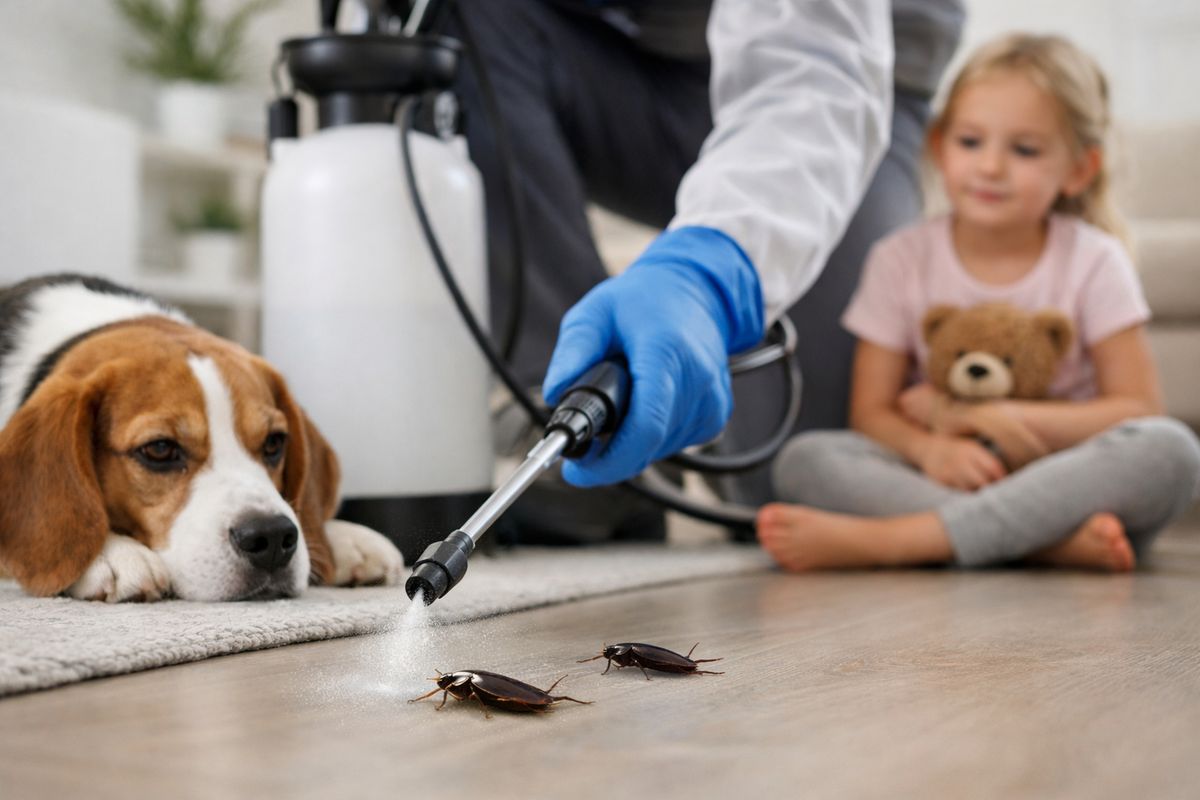
You spot one roach after flipping on the kitchen light, and suddenly the real question is not just how to get rid of it, but whether roach treatment safe for pets is actually possible in a home with a dog bowl on the floor or a toddler crawling past the cabinets. The short answer is yes. Roach treatment can be safe for pets and kids when the method is chosen carefully, placed out of reach, and used exactly as directed.
Is Roach Treatment Safe for Pets and Kids?
Yes, roach treatment can be safe for pets and kids, but only when “safe” is handled as a setup, not a slogan. In a Logan Square apartment, a bungalow on the Northwest Side, or a split-level in Schaumburg, the same rule applies: low exposure wins.
Here’s the thing: almost every treatment option has some level of risk if it is used carelessly. A sealed bait station behind the refrigerator is very different from aerosol spray drifting across the kitchen floor. A tiny bead of gel inside a wall gap is very different from open powder under the sink where a curious cat can track through it. The difference is not marketing language. It is placement, access, and amount.
If you remember one idea from this whole article, make it this one: the safest effective roach control plan usually looks boring. It leans on cleanup, moisture control, sealing entry points, monitoring, and targeted bait in hidden areas. That boring plan is usually the smartest one.
What “Safe” Actually Means in a Home With Pets and Kids
“Safe” does not mean harmless in every possible situation. It means controlled risk. In practical terms, that comes down to low exposure, low residue, and no access by hands, paws, mouths, or noses.
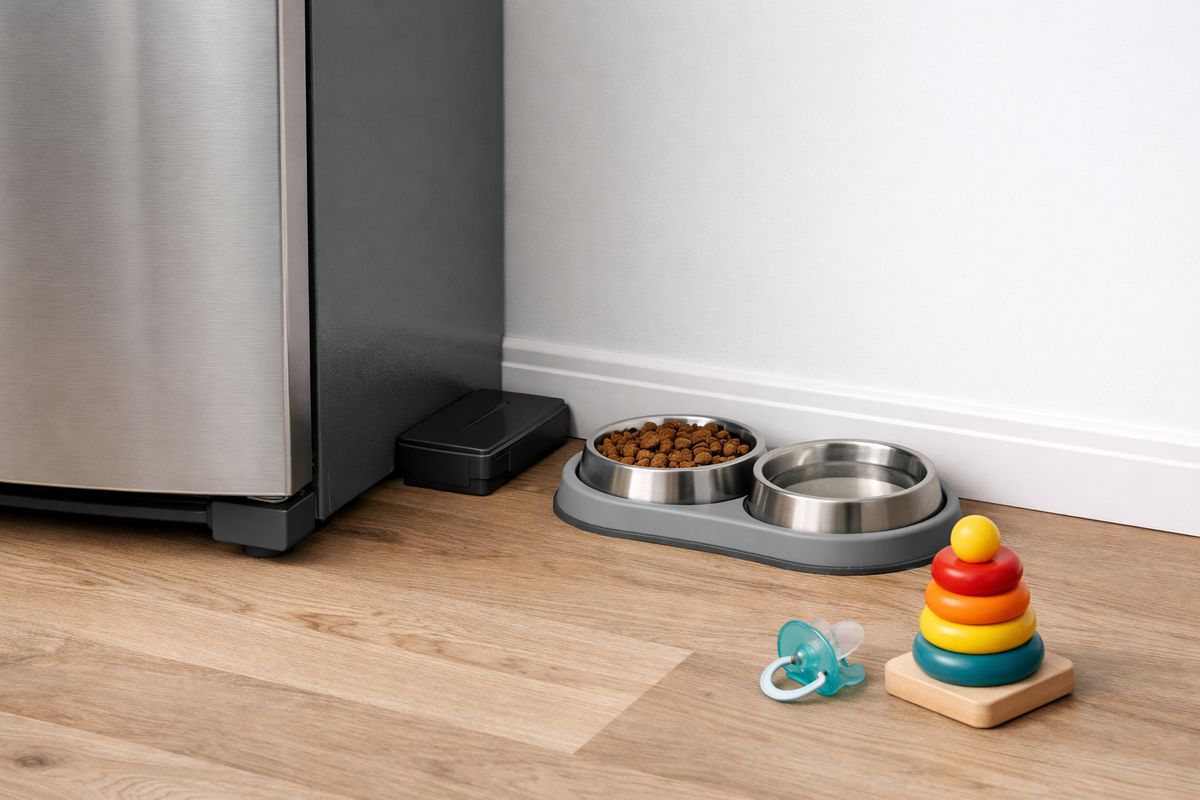
That matters because indoor pest control is not happening in a lab. It is happening next to cereal boxes, pet dishes, pacifiers, dish towels, floor vents, and the pile of reusable grocery bags under the sink. So the real question is not “Is this product safe?” It is “Can this treatment do its job without being touched, licked, inhaled, or tracked around the home?”
The answer is often yes, but only with a setup that respects how your household actually works.
Why pets and children face higher exposure
Kids and pets interact with a home at floor level, which is exactly where a lot of bad roach-control decisions happen. Children crawl, touch baseboards, grab whatever is within reach, and put fingers or toys in their mouths. Pets sniff first, lick second, and think about consequences never.
Smaller body size raises the stakes. A little residue that barely affects an adult can matter much more to a kitten, a toy breed dog, or a toddler. Kittens are especially vulnerable to roach poison exposure because of that small size, and the same basic principle applies to young children.
Cats add another wrinkle. A dog might chew a bait station once and move on. A cat can brush against residue, then groom it off later. That delayed exposure catches a lot of households off guard.
Why indoor pesticide use needs extra care
Indoor treatments deserve extra caution because the exposure tends to stay with you. Ventilation is lower than outdoors. Surfaces are shared. Residue lingers longer. And unlike a treatment in the yard, indoor applications happen where people nap, cook, play, and eat.
The EPA notes that about 80% of most people’s pesticide exposure occurs indoors. That is a striking number, but honestly, it makes sense. A small amount used repeatedly in a closed space adds up faster than most people realize.
This is why broad indoor spraying is so often the wrong instinct. You are not just treating roaches. You are changing the chemical exposure inside your everyday living space.
The Real Risk: It’s Usually the Method, Not Just the Product
A lot of people want a simple good list and bad list. Good product, bad product. Safe chemical, unsafe chemical. But the real risk usually comes from the method, not just the label.
A product marketed as pet friendly can still be risky if it is left where a dog can chew it. A product with a harsher reputation can sometimes be used more safely if it is applied in a hidden crack by someone who knows exactly where it belongs. That may sound backwards, but it is how real-world exposure works.
This is also why “natural” does not automatically mean safer, and “professional strength” does not automatically mean more dangerous. The catch is that bad placement turns almost anything into a problem.
How accidental exposure happens
Most accidental exposure is pretty ordinary. A bait station gets knocked out from behind the trash can and ends up in the open. Gel bait gets applied in visible blobs under a low cabinet edge, where a toddler can touch it. Powder gets puffed so heavily that it drifts into the air and settles onto nearby surfaces. Spray gets used on pet bedding, around food bowls, or along counters where snacks are made five minutes later.
Another common mistake is treating every visible area instead of the actual hiding spots. Roaches spend most of their time in cracks, voids, behind appliances, around plumbing penetrations, and inside wall gaps. If treatment is smeared across open living areas, your household gets the exposure while the roaches stay tucked away.
That is why targeted placement matters so much more than dramatic application.
Why “more product” does not work better
More product is not smarter pest control. It is just more product.
The EPA says increasing the amount does not provide better pest control and can harm people, pets, and plants. Roaches do not surrender because a floor got extra wet with spray. If anything, overapplication can scatter them deeper into walls or into neighboring units.
This is where DIY treatment often goes sideways. After a few sightings, it is tempting to spray every baseboard, dust every cabinet, and stack every bait you can find from the hardware store. But roaches are good at hiding and surprisingly good at avoiding badly applied products. You end up raising exposure without fixing the nest behind the stove or the pipe gap under the sink.
The Main Types of Roach Treatment and How Safe Each One Is
Not all roach treatments work the same way, and that matters a lot when pets or kids are in the picture. Some are targeted and low-residue. Some spread pesticide broadly and create more contact points than you want in a lived-in home.
A plain-English comparison helps.
Roach bait stations
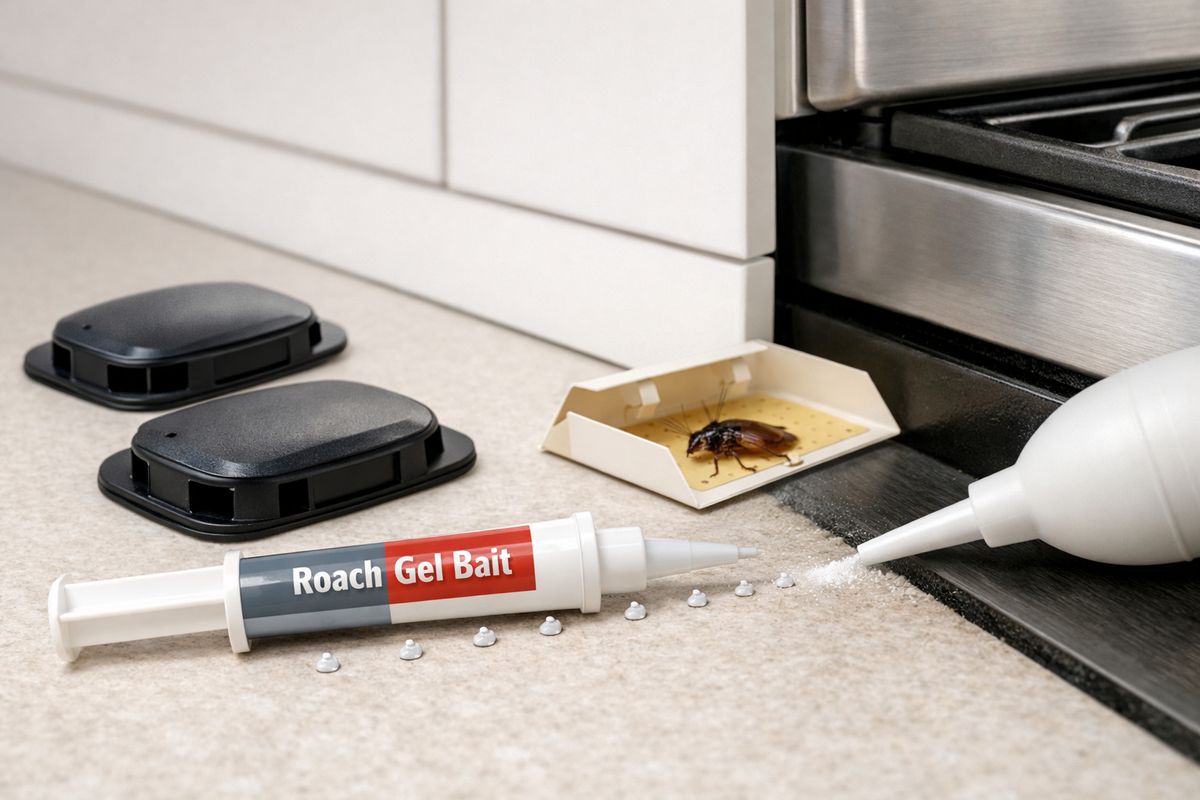
Bait stations are enclosed plastic containers with poison bait inside. Roaches go in, feed, and carry the toxicant back to the nest or die after exposure. Because the bait is enclosed, bait stations are often one of the safer options for homes with pets and children.
But safer does not mean toss them anywhere. Placement still matters. Stations should go in hidden areas such as behind appliances, inside inaccessible cabinet voids, or tucked into cracks where roaches travel. They should not be left loose in open floor areas where a dog can bat them around or a child can pick one up like a toy.
Carefully placed bait is one of the pet-safe options most often recommended because it targets the roach rather than the whole room.
Roach bait gel
Gel bait is one of the most effective roach treatments because it can be placed exactly where roaches hide. Tiny dots can go inside crevices, behind outlets, under sink lips, near plumbing penetrations, and behind refrigerators.
The trick is precision. Done right, gel bait is hidden and out of reach. Done sloppily, it becomes exposed blobs on visible surfaces, which is not acceptable in a home with kids or pets. Gel should never look like somebody frosted the cabinets. If you can easily see or touch it, it is probably placed poorly.
Gel also works best when it is not competing with repellent sprays. Some sprays can push roaches away from bait and make the whole strategy less effective.
Glue traps
Glue traps are sticky monitoring tools. Roaches walk across them and get stuck. They do not poison anything, which makes them one of the lowest-risk tools in the category.
That said, glue traps are not toy-safe. A toddler can get fingers stuck. A cat can step on one. A dog with long fur can make a mess of it fast. So while glue traps are generally low-risk and non-toxic, they still belong in hidden spots such as behind appliances, under sinks, or inside cabinets.
Think of glue traps as security cameras, not a full cleanup crew. They help show where activity is happening and whether treatment is working.
Diatomaceous earth
Diatomaceous earth is a fine powder made from fossilized algae. In plain English, it works like microscopic broken glass on the roach’s outer shell. It scratches that waxy layer, the roach loses moisture, and it dehydrates.
That sounds simple, but the catch is the dust. Diatomaceous earth can irritate pets if inhaled or if it gets into the eyes, and the same basic concern applies to children. Food-grade labeling does not make it okay to breathe. A thin application in inaccessible dry voids can be reasonable. A visible cloud of it under every cabinet is not.
Less is better here. Roaches are also more likely to avoid heavy piles.
Boric acid and borax
Boric acid and borax show up in a lot of DIY roach advice because they can work, and they have been around forever. But old-school does not mean low-risk. These products can be harmful if ingested, and open powder in an active household is usually a bad fit.
If boric acid is placed in accessible areas, a pet can lick it off paws or fur, and a child can touch it and then touch the mouth. Boric acid and borax are at least mildly toxic to pets, so treating them as casual household dust is a mistake.
In homes with babies, cats, or curious dogs, open powder is usually more risk than it is worth.
Sprays and aerosols
Sprays include contact killers, residual sprays, and over-the-counter aerosol cans. These are popular because they feel satisfying. You see a bug, you spray it, problem solved. Except not really.
Surface sprays mostly kill the roaches you see, and the ones you see are often a small part of the infestation. The hidden colony behind the dishwasher does not care much about a dramatic moment on the kitchen tile. Meanwhile, broad indoor spraying creates more residue, more inhalation risk, and more chances for contact on floors and surfaces.
Sprays have a place in some treatment plans, especially when used sparingly in targeted cracks and crevices, but routine aerosol use around pets and kids is rarely the safest route.
Foggers and bug bombs
Foggers and bug bombs are usually a poor choice for homes with pets and kids. That is the blunt version.
They spread pesticide broadly through the air, coat surfaces you did not actually want treated, and still tend to miss the hidden harborages where roaches spend most of their time. So you get wide exposure and limited precision, which is almost the opposite of what a child- and pet-aware plan should aim for.
If your goal is low exposure, foggers are usually a step in the wrong direction.
Professional crack-and-crevice treatments
This is often the safer version of pesticide use indoors. A professional crack-and-crevice treatment targets the hidden spaces where roaches live: behind appliances, into wall voids, around plumbing gaps, under toe-kicks, and inside structural seams.
Because the product goes where the roaches are, less often ends up where your family is. That matters. The advantage is not “stronger chemicals.” The advantage is precision.
In many homes, a carefully targeted professional treatment creates less overall exposure than repeated DIY spraying from room to room. A local provider offering targeted roach control should be able to explain exactly where products will go and how access will be restricted.
Which Roach Treatments Are Usually the Safest for Pets and Kids?
The safest effective setup for most homes is not a single product. It is a mix of low-risk tools plus prevention. Monitoring, sanitation, sealing gaps, fixing leaks, and targeted baiting usually beat broad spraying.
That is basically integrated pest management, or IPM. It sounds technical, but it really just means solving the pest problem in layers instead of blasting the whole home with chemicals.
Lowest-risk options for most homes
The lowest-risk options are the ones that do not put much pesticide into shared living space at all. Glue traps for monitoring fit here. So does vacuuming visible roaches, sealing entry points, fixing plumbing leaks, reducing clutter, and removing food sources.
Sealed bait stations placed fully out of reach also belong in this group for many households. They are not risk-free, but compared with broadcast spray or open powder, they usually keep exposure lower.
If your home has a pet feeding area, one of the smartest steps is simply not leaving food out overnight. Roaches love the easy buffet. Sealed storage and quick cleanup help more than people expect.
Options that can be safe with careful use
Gel bait can be safe with careful use because it can be tucked into hidden cracks where contact is unlikely. Limited diatomaceous earth in inaccessible voids can also fit here, but only when it is applied as a very light dust and kept away from air movement, pet traffic, and open play areas.
Careful use means truly inaccessible placement. Not “probably fine.” Not “under the sink, but kind of visible.” Actually inaccessible.
This is where professional help often makes a difference. A good technician knows how to find voids and harborages you would not normally think to use.
Higher-risk options to think twice about
Open powders, routine aerosol spraying, broad residual treatments across exposed surfaces, and foggers belong in the think-twice category. These methods raise the odds of contact and inhalation, especially in homes where kids crawl or pets spend time on the floor.
The problem is not just the ingredient. It is the spread. The wider the treatment footprint, the more chances for accidental exposure.
If you are comparing products and one requires you to clear the room, ventilate heavily, and avoid treated surfaces until dry, that is already telling you something about the exposure profile.
Are Professional Roach Treatments Safer Than DIY?
Often, yes. Especially if your home has children, pets, or a bigger infestation.
That does not mean every pest control visit is automatically safer than any DIY effort. It means a good professional plan usually reduces exposure because it uses less product, puts it in better places, and solves the actual infestation faster.
Why professional treatment can reduce exposure
A professional starts with inspection. That part matters more than most people think. Roaches are not random. Different species behave differently, prefer different hiding spots, and respond to different treatments.
If the real activity is inside the wall behind the dishwasher or around a leaking pipe under the bathroom vanity, a professional can target that spot instead of coating the whole kitchen. That is safer because the treatment is narrower and smarter.
DIY often turns into “spray everything and hope.” Professional work, at its best, turns into “find the source and treat only what matters.” If you want a clearer picture of how a service visit is supposed to work, this guide to what happens during a full service visit helps set expectations.
What a good pest control plan should include
A good plan should include a full inspection, product disclosure, placement details, prep steps, re-entry guidance, and follow-up. The EPA recommends choosing companies carefully and getting a written plan rather than agreeing to a vague spray-and-go visit.
You should know what products are being used, where they will go, and what you need to do before and after treatment. If safety is the priority, vague answers are not enough.
A strong plan also includes non-chemical steps. Cleanup recommendations. Moisture control. Sealing access points. Monitoring after treatment. That is what separates real pest management from just applying pesticide.
Questions to ask before service starts
Before treatment starts, you should know the product names, where each one will be placed, how long kids and pets need to stay out, whether any surfaces need to be covered, and whether bait can be used instead of broad spray.
Ask what needs to be cleaned before the appointment and what should not be cleaned afterward. Ask whether pet bowls, baby bottles, toys, or food-prep items need to be removed. Ask if crack-and-crevice treatment is an option. Ask if there will be follow-up visits.
If the answers sound rushed or fuzzy, keep looking. Safety is not a side note. It is part of the treatment design. That is also why choosing somebody with the right licensing and training matters more than a cheap one-time quote.
What to Expect on Treatment Day if You Have Pets or Children
Treatment day feels a lot less stressful when you know what is coming. The exact process depends on the products being used, but most child- and pet-aware plans follow the same general flow.
Before treatment
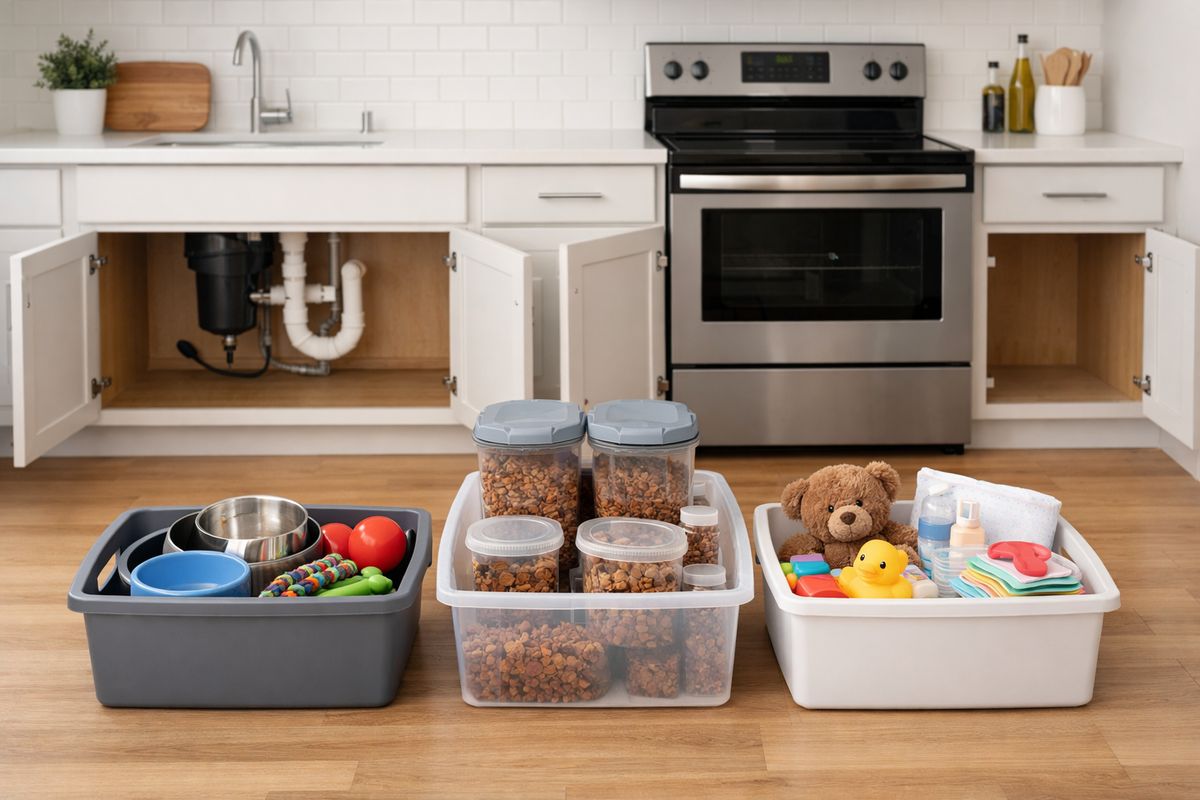
Start by removing or sealing anything that could pick up residue or get in the way. Pet food should be stored in sealed containers. Bowls should be picked up. Chew toys, pacifiers, baby utensils, and anything normally left on the floor or counter should be moved out of treatment areas.
Under sinks usually need to be cleared. The same goes for the space around refrigerators, stoves, dishwashers, radiators, utility closets, and basement edges. If treatment is happening in an apartment, access matters. A technician cannot place bait behind appliances if every inch is packed with storage bins and cleaning bottles.
Aquariums should be covered if instructed, and windows may need to be opened later depending on the treatment type. If you want a room-by-room breakdown, this checklist on getting your place ready before service is useful.
During treatment
Children and pets should stay out of treatment areas for the stated time. If spray or dust is being used, that usually means fully out of the room and sometimes out of the home for a period. If bait-only treatment is being done in hidden areas, the disruption may be smaller.
Ventilation matters when advised. If the label or technician says to open windows, do it. If wet products are present, nobody should touch treated surfaces until they are dry. That includes paws.
The main goal during treatment is simple: no contact.
After treatment
Re-entry timing depends on the product and the label. In many cases with sprays, the safe return point is when treated surfaces are fully dry and the area has been ventilated as directed. With hidden bait placements, the concern shifts from re-entry to not disturbing the bait.
Here’s where people accidentally sabotage their own treatment. A few roaches may still show up at first. That does not always mean failure. Roaches often become more visible as bait starts working or as harborages are disturbed. Also, if you immediately scrub every treated crack and every bait placement, you may erase the treatment before it finishes the job.
Clean food debris and grease, yes. Wipe away hidden bait placements or treated crevices right away, no, unless you were specifically told to do that.
The Safest Roach-Control Setup for Different Household Situations
The right setup depends on your home. A third-floor apartment in Lakeview has different pressure points than a house with a basement in Naperville. Same pest, different environment.
Apartments and condos
Apartments and condos are tricky because roaches do not respect unit lines. Shared walls, utility chases, hallways, neighboring kitchens, trash rooms, and laundry areas all create pathways. If one unit is treated and the source problem stays active next door, roaches can keep showing up.
That is why apartment roach problems often need building-level coordination. Targeted bait and monitoring inside your unit can help, but repeated reinfestation from shared structure changes the equation. If you are dealing with that situation, this piece on what to do when the problem starts in a shared building gets into the practical side.
For safety, apartments benefit from hidden baiting, sealing pipe penetrations, and minimizing sprays in tight indoor spaces with limited ventilation.
Single-family homes
Single-family homes usually give you more control, which is a big advantage. But the risk areas spread out. Kitchens, basements, garages, laundry rooms, utility spaces, crawlspaces, and moisture-prone corners all matter.
In suburban homes, under-sink leaks, sump areas, floor drains, and cardboard storage in basements are classic trouble spots. So are pet food stations in mudrooms and laundry rooms, where kibble dust and water bowls quietly feed the problem.
For these homes, the safest plan is usually inspection plus targeted treatment at the actual activity zones, not a full-house fogging approach.
Homes with cats
Cats are hard mode. That is the honest version.
Cats jump onto counters, squeeze into cabinets, inspect every weird new object, and groom residue off fur. A placement that is “out of reach” for a dog may be very reachable for a cat. That means counter edges, upper cabinet gaps, and open shelf treatments need extra scrutiny.
Dusty products in open areas are a bad fit for cat homes. So are any exposed bait placements near favorite hiding spots. Hidden crack-and-crevice gel, sealed stations in inaccessible spaces, and strict cleanup of food sources are usually the smarter path.
Homes with dogs
Dogs live at floor level, chew first, and are very willing to sample mystery objects. Bait stations need to be in places a dog cannot nose out or drag across the room. Surface sprays around feeding areas deserve extra caution because dogs lick floors and paws more than people think about.
Doggy doors and doors left ajar can also increase roach access. Pet food bowls left out overnight are another common attractant. The trick is not just safer treatment. It is also making the room less inviting to roaches in the first place.
Homes with babies and toddlers
With babies and toddlers, crawling height is the danger zone. If a product can be touched from the floor, assume it will be touched. If something can be picked up and mouthed, assume that can happen too.
That means all products need to be completely inaccessible, not just “mostly hidden.” Open powder is usually out. Visible gel is out. Glue traps in reachable places are out. Spray residue on toy-level surfaces is a real concern.
In these homes, a low-exposure plan matters even more: cleanup, monitoring in inaccessible spaces, hidden baiting, leak repair, and careful professional placement where little hands cannot get near it.
Signs a Roach Infestation Is Serious Enough to Call a Pro
Some roach problems are small enough to monitor and correct with a tight prevention plan. Some are already past that point. Knowing the difference can save you time, money, and a lot of unnecessary chemical exposure.
Roaches in daylight
Roaches prefer hiding. If you are seeing them in the daytime, especially more than once, that often points to a larger population or overcrowded harborages. In other words, the good hiding spots are already packed.
One roach in the middle of the night is bad enough. Several at 2 p.m. is a stronger signal that the infestation is established.
Repeated sightings after store-bought treatment
If you already cleaned up, placed bait, monitored with traps, and still keep seeing roaches week after week, the issue is probably deeper than a couple of stragglers. Hidden harborages, wrong product choice, poor placement, or reinfestation from nearby units are all common reasons.
This is especially true if the roaches seem to disappear briefly and then come right back. That pattern often means the visible insects were knocked down, but the nesting sites were never fully addressed. If that sounds familiar, this article on why the problem returns after treatment can help connect the dots.
Roaches in multiple rooms or units
A roach in the kitchen is one thing. Roaches in the kitchen, bathroom, laundry area, and basement point to a wider issue. In apartments, sightings in multiple units or shared walls suggest a building-level pathway. In houses, spread into several rooms often means structural access and established hiding spots.
Once activity is spread out, over-the-counter spot treatment becomes less useful and more likely to raise exposure without solving much.
Health and sanitation concerns
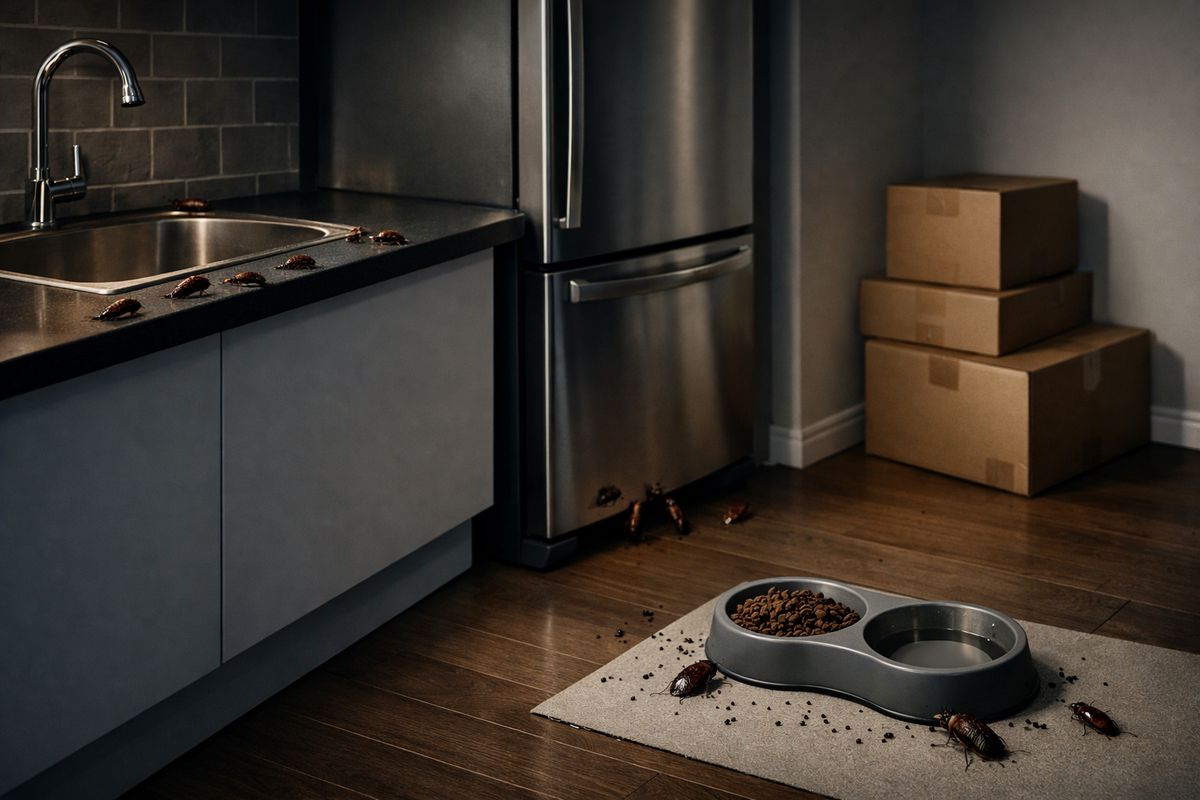
Droppings, egg cases, musty odor, contamination near food, and activity around pet bowls all raise the urgency. Roaches are not just unpleasant. They contaminate surfaces and food storage areas.
The more signs you have, the less this is about “seeing one bug” and the more it becomes a sanitation and exposure issue. At that point, a precise treatment plan is usually the safer move.
How to Lower Risk Before, During, and After Any Roach Treatment
This is the practical safety section. If you want the simplest way to think about it, imagine you are trying to do two things at once: make the treatment unreachable and make the home less attractive to roaches.
Keep all products inaccessible
Anything used for roach control should be placed in locked cabinets, high inaccessible voids, sealed stations, behind appliances, or inside structural gaps where pets and children cannot reach it. “Hidden enough” is not good enough if a cat can jump there or a dog can nose it out.
Tamper-resistant placements help, but the location still matters. Under-sink clutter is notorious for making “hidden” bait easy to reach. Clear placement zones beat crowded ones.
Follow the label exactly
The label is not decoration. It is the law. The EPA says using a pesticide in a way that is inconsistent with the label is illegal and can be dangerous for people and pets.
That includes dilution, where the product can go, ventilation requirements, protective steps, and re-entry timing. If the label says do not apply to food-prep areas, do not. If it says keep children and pets out until dry, do that. If it says only a thin application, resist the urge to pile it on.
The label is the shortest route to fewer mistakes.
Ventilate the space
Ventilation matters most after sprays and aerosols, but it can also help after some professional applications if advised. Open windows when instructed. Run fans if appropriate. Avoid sealing the room back up right away on treatment day.
In apartments and during Chicago winters, ventilation can feel annoying. Still worth it. A short blast of cold air is better than lingering indoor residue and fumes.
Store food, pet dishes, and toys properly
Before treatment, put away bowls, food, bottles, utensils, pacifiers, chew toys, and countertop items that could pick up residue. After treatment, bring them back only when the area is cleared for use.
Pet food deserves extra attention because it attracts roaches and because contaminated bowls or kibble create a second problem. Store dry food in sealed containers, not loosely clipped bags on the floor.
Clean smart, not too aggressively
You want to remove crumbs, grease, spills, and clutter. You do not want to erase the treatment you just paid for. That balance matters.
Clean exposed surfaces and food areas as directed, but do not wipe away hidden gel placements or treated cracks right after service unless you were told to. Good cleaning supports treatment. Overcleaning can undo it.
Common Symptoms of Exposure in Pets and Kids
Most exposure does not lead to a crisis, but it still deserves attention. Stay calm, act quickly, and do not wait around hoping symptoms explain themselves.
In pets
Watch for vomiting, diarrhea, drooling, lethargy, reduced appetite, skin irritation, trouble walking, or unusual behavior after treatment or after access to bait, powder, or spray residue. In cats, symptoms can show up hours later, so a normal first hour does not prove everything is fine.
A pet that suddenly seems quiet, wobbly, itchy, or sick after getting near roach treatment should be taken seriously.
In children
In children, watch for eye, nose, or throat irritation, headache, dizziness, nausea, unusual drowsiness, coughing, or skin irritation after contact with sprays, dusts, or residues. The EPA warns that pesticide exposure can cause eye, nose, and throat irritation, along with headache, dizziness, and nausea.
If symptoms show up soon after treatment or possible contact, do not brush it off as coincidence.
When to get help right away
Get help right away if a pet or child ingests treatment, has trouble breathing, seems unusually drowsy, cannot walk normally, vomits repeatedly, or shows worsening symptoms after exposure.
Call Poison Control, a veterinarian, emergency services, or the product manufacturer as appropriate. Keep the label, packaging, or a photo of the product with you. That detail can save time when someone is trying to tell you what to do next.
What to Do if a Pet or Child Touches or Eats Roach Treatment
The goal here is simple: stop the exposure, identify the product, and get real guidance fast.
If a pet gets into bait or poison
Remove access immediately so no more can be eaten or licked. Check the product label and call a veterinarian or Pet Poison Helpline right away. Do not wait for severe symptoms before acting.
Even if only a small amount was eaten, the product type matters. A bait station, gel, powder, or aerosol residue can carry different risks. Time matters here, especially with smaller pets.
If a child touches or ingests treatment
If treatment got on skin, rinse as directed on the label. If a child may have ingested any product, call Poison Control immediately and keep the packaging nearby.
Do not guess your way through it. Use the label, the product name, and the exposure details to get specific guidance.
If someone inhaled spray or dust
Move to fresh air right away. Watch for ongoing coughing, irritation, dizziness, breathing trouble, or worsening symptoms. If breathing trouble continues or symptoms are significant, seek medical care promptly.
Inhalation exposure is one of the reasons dusty or fogging-style treatments are such a poor fit for homes with kids and pets.
Common Mistakes That Make Roach Treatment Less Safe
A lot of household risk comes from ordinary mistakes, not dramatic ones. People rarely set out to use roach treatment unsafely. It usually happens because a quick fix feels easier in the moment.
Spraying where you prep food
Counters, cutting areas, high chairs, pet feeding stations, and dishes should not become casual treatment zones. Food-prep surfaces need special care. Spraying them directly creates residue right where food and mouths end up.
Roaches near a counter are frustrating, but the answer is usually treating hidden cracks nearby, not soaking the visible surface.
Leaving bait where it can be reached
Low shelves, cluttered under-sink cabinets, open baseboards, and loose corners are all common trouble spots. Bait only works safely when it is inaccessible.
A bait station on the floor next to the trash can may look tidy. To a toddler or dog, it looks interesting. That is the whole problem.
Using multiple products at once
Mixing sprays, baits, powders, and foggers can increase exposure and make treatment less effective. Some sprays repel roaches away from bait. Too many product types at once also make it harder to know what caused a symptom if someone gets exposed.
Simple and targeted beats chaotic and chemical-heavy.
Ignoring leaks and crumbs
Treatment without cleanup is like mopping with the faucet still running. Roaches need food, water, and hiding spots. If those stay easy to find, they keep coming back.
Leaky pipes, damp cabinets, greasy stove sides, crumbs under the toaster, pet food left out overnight, and cardboard clutter all make treatment work harder than it should.
Natural and “Pet-Safe” Roach Remedies: What Works and What Doesn’t
A lot of people start here because the idea of using something gentler feels better. That instinct makes sense. But honesty matters more than wishful thinking.
Safer non-chemical steps that really help
Vacuuming visible roaches and egg cases helps. So does reducing clutter, storing food in sealed containers, drying sinks at night, fixing leaks, sealing cracks, and cleaning up grease and crumbs fast.
These steps sound basic because they are. But basic does not mean weak. Roaches are moisture-driven, food-driven opportunists. If you remove what they need, every other treatment works better and you may need less of it.
Pet food matters a lot here. Roaches are drawn to leftover kibble, water bowls, and crumbs near feeding stations. Sealed storage and overnight cleanup make a real difference.
Essential oils and DIY home remedies
Essential oils and strong-smelling home remedies may repel roaches for a little while, but they rarely eliminate an established infestation. If roaches are nesting behind a dishwasher or inside a wall void, peppermint scent is not going to solve that.
Some homemade remedies also create a false sense of progress. The smell is strong, the room feels treated, and meanwhile the infestation keeps growing out of sight.
That said, non-chemical prevention absolutely helps. Just do not confuse prevention with colony elimination.
Why “natural” does not always mean harmless
Natural products can still irritate lungs, eyes, and skin. Plant-based sprays, essential oils, and powders can all be rough on pets, babies, or anyone with asthma. “Natural” is not a free pass.
This is especially true with airborne materials. If it can be inhaled, sprayed, or spread across surfaces, think in terms of exposure, not just ingredient source.
How to Keep Roaches Away Without Raising Risk at Home
Long-term roach control is mostly about making your home less useful to roaches. That sounds less exciting than poison, but it is what actually changes the pattern.
Cut off food sources
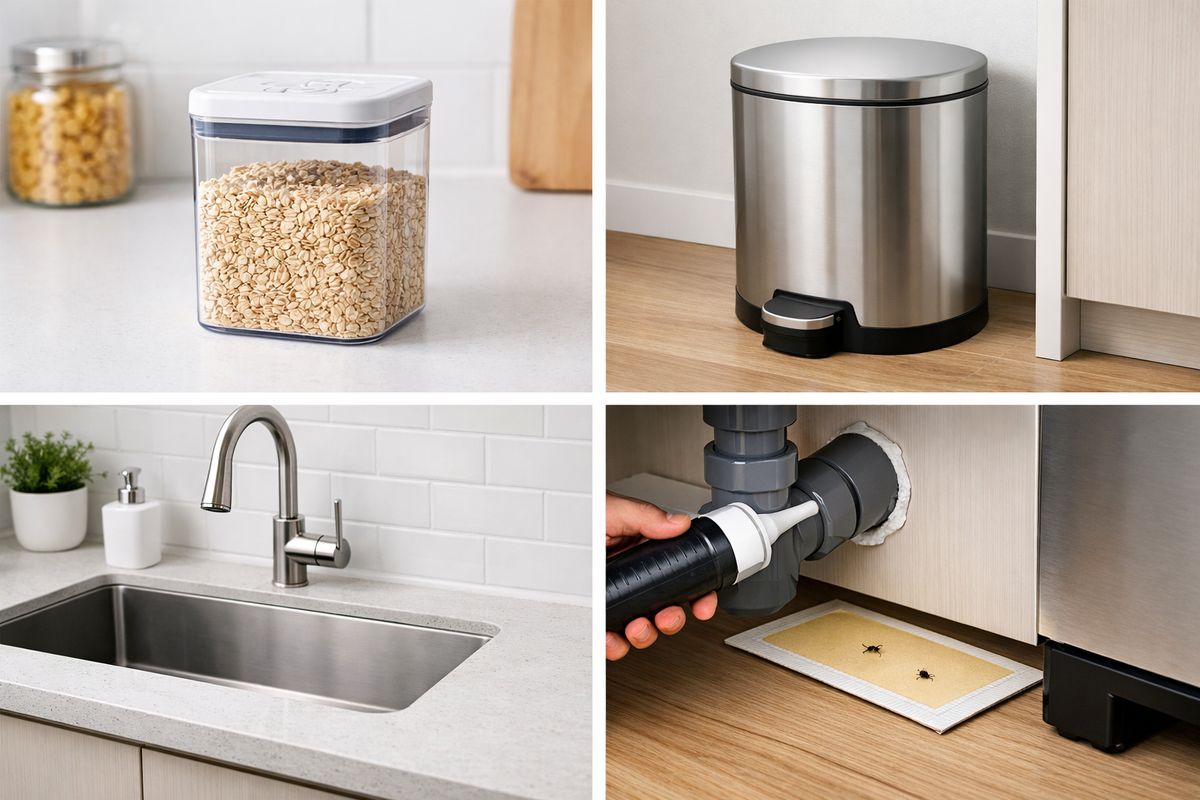
Wipe crumbs. Degrease the stove sides. Store pantry goods in sealed containers. Take out trash regularly and use a bin with a tight lid. Do not leave pet food out overnight if you can avoid it.
Roaches can live on tiny scraps, grease film, and spilled kibble. That is why “the kitchen looks clean” is not always enough.
Cut off water sources
Water is a huge driver. Fix drips under sinks. Dry out wet sponges. Empty standing water. Watch for condensation near pipes and appliances. Do not ignore damp cabinet bottoms or basement seepage.
Even pet water bowls can become part of the attraction if food debris and moisture collect around them all night.
Block entry points and hiding spots
Seal gaps around pipes, caulk cracks, repair weatherstripping, and reduce cardboard clutter. Roaches enter through drains, gaps, boxes, grocery bags, furniture, and utility lines. Once inside, they love protected hiding spots.
Less clutter means fewer harborages. Less access means fewer repeat guests.
Monitor so small problems stay small
Glue traps placed in hidden areas can help catch activity early. Behind the refrigerator, under the sink, in utility rooms, and near suspected travel paths are all smart spots.
Monitoring is underrated. Catching a small issue early often means you can solve it with less product, less disruption, and lower cost.
Roach Treatment Costs and Why Early Action Usually Costs Less
People asking about safety are often also thinking about cost, because bigger infestations usually mean bigger treatments. And bigger treatments usually mean more exposure potential.
Typical professional treatment cost ranges
Professional roach extermination usually costs between $100 and $600, with lighter infestations often landing closer to $100 to $200. Heavier infestations can run $300 to $700 per treatment, depending on severity and how many visits are needed.
Annual plans often range from $400 to $1,100. Whole-house fumigation is a different category entirely and can run from around $1,000 into several thousand dollars for severe cases. Most households never need that level, but it is one more reason to act before the problem gets out of hand.
What affects the final cost
Price changes based on home size, infestation severity, species, how many rooms or units are involved, whether follow-up is included, and whether the issue is confined to one kitchen or spread through a building.
A studio apartment with fresh activity near one sink is not priced like a multi-unit building with recurring roaches across several floors. Nor should it be.
Why waiting can raise both price and exposure
Waiting usually means more roaches, more hiding places, more contamination, and more treatment effort later. A small bait-focused plan can turn into repeat service visits, larger treatment footprints, and more tenant disruption if the infestation spreads.
Early action is not just cheaper. It usually lets you solve the problem with a lower-exposure plan.
FAQs About Roach Treatment Safety for Pets and Kids
Is roach bait safer than spray around pets?
Often, yes. Sealed bait stations or precisely placed gel in inaccessible spots usually create less exposure than broad spray on open surfaces. The key phrase is “out of reach.” If a pet can chew or lick it, it is not safely placed.
How long should pets and kids stay out after treatment?
It depends on the product and label instructions. With sprays, pets and kids usually need to stay out until treated surfaces are fully dry and the area has been ventilated as directed. With hidden bait placements, the main issue is keeping the bait inaccessible.
Can a cat or dog get sick from eating a roach that ate poison?
Secondary exposure can happen, but the risk depends on the product and the amount involved. If your pet may have eaten a poisoned roach and then seems unwell, treat it seriously and contact a veterinarian.
Are glue traps safe around toddlers?
Glue traps are non-toxic, but they are not safe as playthings. A toddler can get fingers stuck fast, so place them only in hidden areas that little hands cannot reach.
Is diatomaceous earth safe if it says food grade?
Food grade does not mean safe to breathe. It can still irritate lungs and eyes, especially if applied too heavily or disturbed into the air. Thin application in inaccessible dry voids is very different from visible dust in open living areas.
Should you leave during apartment roach treatment?
Sometimes yes, sometimes no. It depends on the treatment type, building instructions, and whether sprays are being used in your unit or common areas. If management or the pest company gives re-entry instructions, follow those exactly.
How to Choose a Pest Control Company if Safety Is the Priority
When safety is the priority, the company matters almost as much as the product. A careful plan can lower exposure. A sloppy one can do the opposite.
Look for inspection-first service
An inspection-first approach is a good sign. Roaches hide in kitchens, bathrooms, utility chases, basement edges, and shared-wall gaps. A real inspection should look at those areas before anybody reaches for product.
One-size-fits-all spray visits are not what you want here. You want somebody who identifies the species, the source, and the access points before treatment starts. If you are comparing options, this guide on how to vet a local pest company is a good place to start.
Ask for child- and pet-aware treatment planning
Ask directly for targeted baiting, crack-and-crevice work, minimal broadcast spray, and clear prep and re-entry instructions. If somebody can explain the plan in plain English, that is a good sign.
You should also ask how the service handles homes with cats, dogs, babies, or shared apartment hallways. If safety is treated like an afterthought, move on.
Get the plan in writing
Get the product names, placement details, follow-up timing, prep list, and what happens if activity continues. Written instructions prevent a lot of confusion later.
That includes re-entry timing, what can be cleaned, what should not be disturbed, and what symptoms would justify a call back. Clear written steps make treatment safer because you are not guessing.
The Bottom Line: Safe Roach Treatment Starts With the Right Setup
Roach treatment can be safe for pets and kids, but the safety comes from the setup: targeted bait, smart placement, cleanup, moisture control, and careful follow-through. Broad spraying, open powders, and foggers usually raise exposure without solving the root problem nearly as well.
If you do one thing this week, check under the kitchen sink for leaks and move pet food into a sealed container overnight. It is a small fix, but small fixes are often what make the safer treatment plan actually work.
Frequently Asked Questions
What is the safest roach treatment for a home with pets?
For most homes, the safest approach is a mix of glue traps for monitoring, sealed bait stations placed fully out of reach, and prevention steps like cleaning, sealing cracks, and fixing leaks. Hidden gel bait can also be a good option when it is applied precisely in inaccessible areas.
Are “pet-safe” roach killers really safe?
“Pet-safe” usually means lower risk when used correctly, not harmless in every situation. Placement still matters. A product that is safer on paper becomes unsafe fast if a dog chews it, a cat licks it, or a child can touch it.
Should you clean right after roach treatment?
Clean food debris, crumbs, and grease, yes. But do not wipe away bait placements or treated cracks right after service unless you were told to. Cleaning too aggressively can remove the treatment before it has time to work.
Is professional roach treatment worth it if you have kids or pets?
Often, yes, because professional treatment is usually more targeted. A good technician can place products in hidden harborages and use less material overall than repeated DIY spraying. That often means lower exposure and better results.
What should you do before a pest control visit?
Pick up pet bowls, toys, pacifiers, and food-prep items. Store food in sealed containers. Clear under sinks and around appliances so hidden treatment areas are accessible. Good prep helps the service stay targeted and keeps products away from everyday items.