
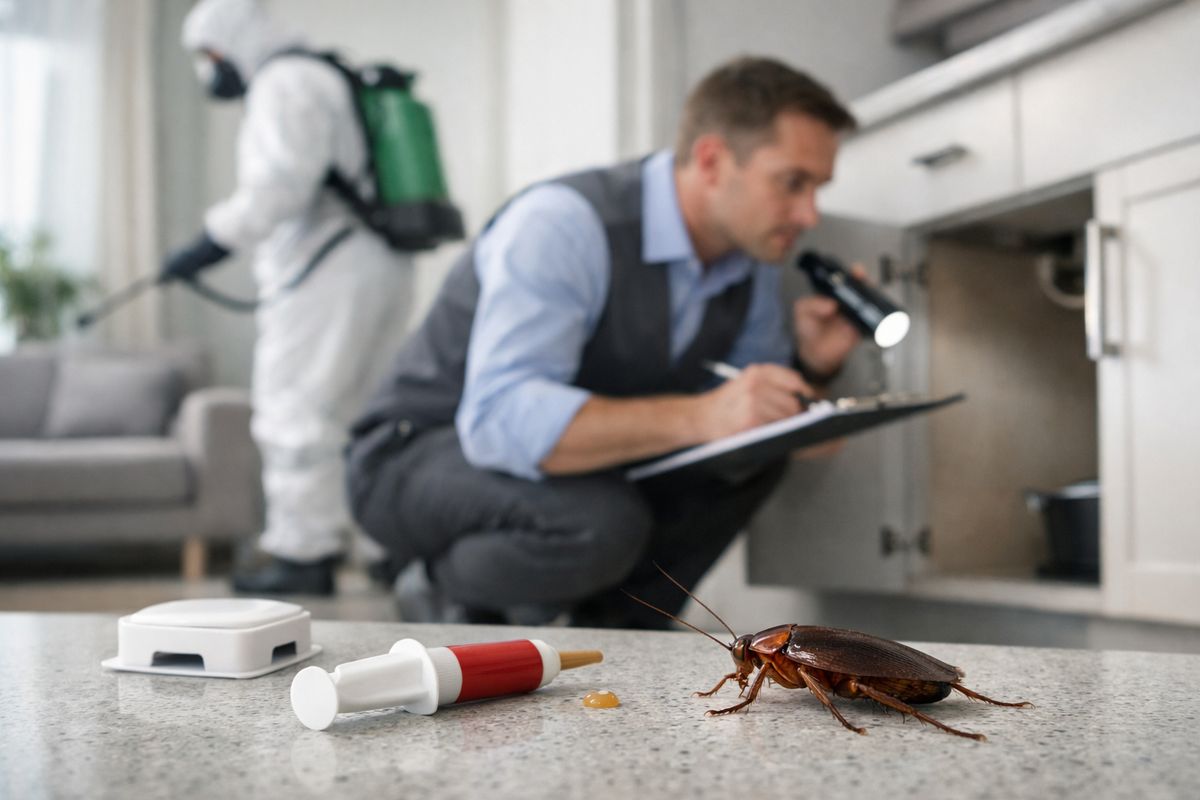
Apartment roach control gets messy fast. One sighting in a kitchen at 10 p.m. can turn into three maintenance tickets by morning, and if you manage a multi-unit building, that usually means the problem is already bigger than one apartment. Here’s what actually matters when you’re choosing a service plan, and what tends to waste time and money.
Why apartment roach control has to be building-wide
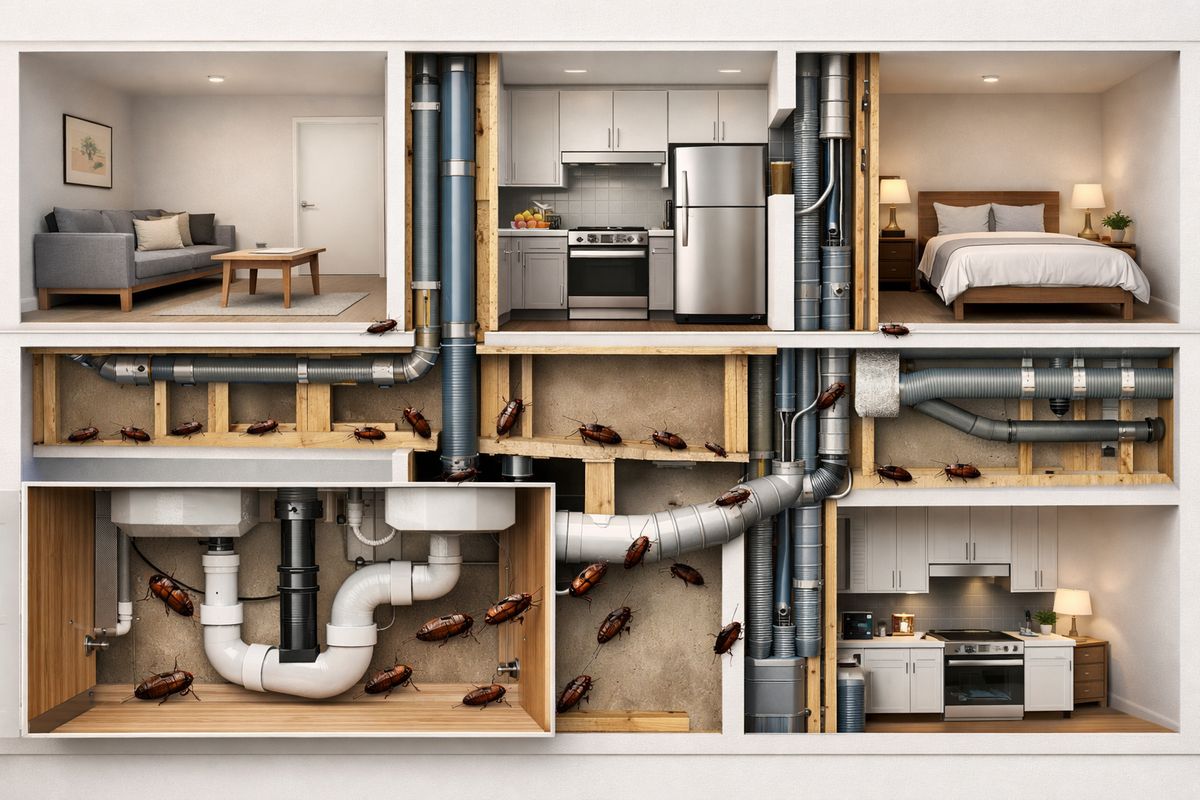
Roaches do not respect unit lines. In an apartment building, a hidden infestation under one sink can connect to the next unit through wall gaps, plumbing lines, utility penetrations, and shared spaces the same way smoke or cooking smells drift from place to place.
That is why complaint-only spraying does not solve apartment roach problems. It may quiet one apartment for a week or two, but it usually leaves the source untouched. If you want apartment roach control that lasts, you need a plan that treats the building like one connected system.
How roaches spread from one unit to the next
The common paths are predictable: around pipes under sinks, through cracks behind cabinets, along electrical lines, inside laundry rooms, through storage areas, and across basement utility spaces. In older buildings, those openings can be everywhere, even when the place looks fine at a glance.
The speed is the part people underestimate. Research on multi-family infestations notes that a problem in one unit can spread into 12 or more nearby units within weeks. Add in German cockroaches, which can produce about 300 offspring per female per year, and a quiet problem can turn loud in a hurry.
Why Chicago-area buildings get repeat infestations
Chicago-area properties have a few built-in challenges. Older housing stock often comes with more cracks, pipe gaps, worn sweeps, and moisture issues. Dense city blocks add pressure from neighboring buildings, mixed-use storefronts, alley trash, and shared infrastructure. In suburbs like Naperville and Schaumburg, larger multi-family communities can still struggle because shared trash rooms, utility runs, and frequent move-ins give roaches plenty of chances to spread.
Maintenance issues make repeat infestations much more likely. Leaks under sinks, damp boiler rooms, food debris in trash areas, and gaps around wall penetrations create a setup roaches love. If nearby structures are neglected, risk climbs even more. Homes within half a block of an abandoned building are over three times more likely to have a pest problem.
What property managers should look for before buying pest control service
A good vendor is not just selling chemicals. A good vendor is selling process: inspection, tracking, communication, follow-up, and safe treatment in occupied units. That’s the difference between getting ahead of the infestation and running in circles.
A real inspection beats a quick spray visit
A strong inspection goes beyond the apartment that called. It should include adjacent units where needed, common areas, trash rooms, utility spaces, moisture sources, and likely travel routes. The point is to map where activity is concentrated and where it is moving.
Hidden units are often the reason infestations keep going. In proactive multi-unit programs, unit-by-unit monitoring regularly uncovers severe infestations that complaint-driven service misses.
Ask for an IPM plan, not just pesticide use
IPM means integrated pest management. In plain English, that means inspection, sealing gaps, sanitation fixes, monitoring, targeted baiting, and repeat checks instead of just spraying and hoping for the best.
This approach works better because it tackles the reasons roaches survive. In one Rutgers-linked study, a brief IPM intervention with the right materials cut roach counts by 99% in the intervention group. That is the kind of result you want your contract built around.
Documentation, reporting, and accountability
If your pest control company cannot show you what happened in each visit, you are flying blind. Service logs, photos, infestation maps, unit histories, and trend reports help you spot repeat stacks, plan follow-up, and keep staff aligned when turnover happens.
This is also where resident communication gets easier. When somebody asks what is being done, you need more than “the tech came by.” You need dates, findings, next steps, and a record of access issues.
Licensing, label compliance, and occupied-unit safety
Before signing, confirm commercial licensing, insurance, occupied-unit treatment procedures, and clear re-entry instructions. Product labels are legal instructions, not suggestions. That matters in any apartment building, but especially when kids, pets, and tight schedules are involved.
If residents are worried about safety, point them toward practical guidance on treatment around families and pets. You should also understand why licensed pros matter before handing over a building account.
The main apartment roach control service models
Most property managers end up choosing between three service styles. The trick is knowing what each one actually gets you.
Complaint-driven service
This is the basic model: a resident calls, the vendor treats that unit. Up front, it looks cheap. The catch is that it misses silent infestations, ignores nearby units, and lets roaches keep moving through the building.
This model works only when activity is truly isolated, which honestly is rare in apartments.
Scheduled preventive service
This model uses recurring visits, monthly, bi-monthly, or quarterly, with common-area monitoring and follow-up treatment where activity shows up. It fits buildings with a history of complaints, larger unit counts, or older structures where small issues become building issues fast.
For many properties, this is the most practical baseline. If you are comparing providers, it helps to know what a full roach service usually includes.
Intensive clean-out for active infestations
When you have multiple complaints, visible daytime roaches, activity in common areas, failed prior treatments, or ugly move-out surprises, you need a clean-out plan. That usually means a fast inspection blitz, treatment across connected units, sanitation corrections, and repeat visits on a tight schedule.
Think of it like catching up on deferred maintenance. You are not just maintaining control, you are stabilizing a building.
Budgeting for roach control without choosing the cheapest mistake
The cheapest invoice is often the most expensive choice six months later. Roach control costs should be judged against repeat calls, staff time, vacancy risk, bad reviews, and the chance that one ignored stack turns into a floor-wide problem.
What changes the price
Price usually moves based on unit count, common-area size, infestation severity, emergency volume, follow-up frequency, and whether exclusion work or sanitation support is included. Access problems matter too. A building where half the scheduled units miss appointments is harder and slower to control.
When paying more saves money
Better inspections, stronger reporting, and real follow-up often reduce repeat visits and prevent infestations from spreading. Proactive IPM programs have even shown lower annual costs than reactive programs in some multi-unit settings, while improving control at the same time.
That is why bargain service can be a trap. If you keep hearing that roaches return after treatment, weak follow-up and poor building coordination are often the real issue.
Questions to ask before signing a contract
Ask how units are selected for inspection, what happens when residents refuse entry, whether common areas are included, how success is measured, what reports you will receive, and who flags sealing or repair needs. Also ask how nearby, above, and below units are handled after a complaint.
Those questions tell you quickly whether you are buying a real system or just a spray route.
The operational pieces that make treatment actually work
Good apartment roach control is part pest service, part building operations. If one side breaks, results stall.
Resident communication and access
Access is often the hardest part. Notice needs to be clear, realistic, and easy to follow. Prep instructions should not read like a weekend-long move-out plan. In many buildings, multilingual notices and reminder calls make a huge difference.
Simple education helps too. In one proactive housing program, resident cooperation improved after on-site education. If you need residents to get ready for service, send something practical like this guide on getting apartments ready before treatment.
Maintenance and exclusion fixes
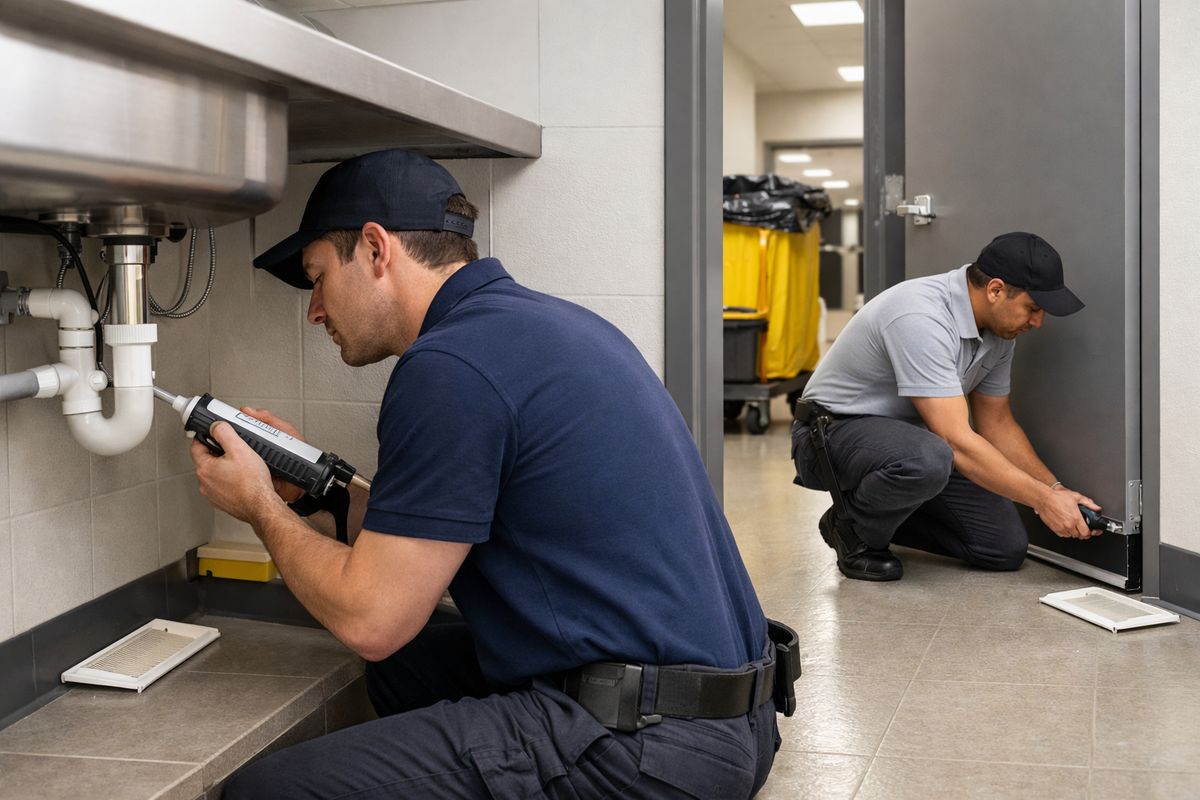
Sealing gaps under sinks, fixing leaks, replacing door sweeps, closing wall penetrations, repairing screens, and cleaning trash rooms all support the treatment plan. Without that work, you are mopping up water without fixing the leak.
The EPA recommends sealing gaps around pipes, wires, doors, windows, and walls as part of multi-family IPM. That is not extra credit. It is part of the job.
Monitoring and follow-up after the first visit
Glue boards and other monitors help confirm where activity remains. Reinspections should focus on problem lines, repeat units, and adjacent apartments tied to earlier findings. Then treatment gets adjusted based on results.
That last part matters. Lower bug counts in one apartment do not mean the building is clear.
Common mistakes property managers make with apartment roach control
Most setbacks come from a few repeat mistakes, not from a lack of effort.
Waiting for more complaints before acting
A low complaint count does not mean a small problem. Some residents never report. Others try sprays first, stay quiet, or assume management already knows. By the time daytime sightings start, the infestation may be well established.
Treating one unit and ignoring adjacent ones
This is one of the most common reasons a problem seems to disappear, then bounce right back. Roaches shift to nearby units and return through the same shared gaps and chases that let them spread in the first place.
Relying on resident sprays and store-bought foggers
Store products often make things worse. Foggers can scatter roaches deeper into walls, and random sprays can interfere with bait placements. For active infestations, professional roach control is usually more effective because it targets hiding spots and building pathways instead of just exposed insects.
Skipping records, photos, and trend tracking
Without records, every flare-up feels like a brand-new mystery. Good documentation helps you spot repeat offenders, identify travel patterns, and keep progress visible when staff or vendors change.
Best apartment roach control approach by property type and situation
The right service model depends on the building, the history, and how much activity you are seeing right now.
Small apartment buildings and two-to-four flats
Smaller properties usually do best with a fast inspection, sealing of obvious entry points, targeted treatment in connected areas, and a simple recurring check if the building has had prior issues. In a two-flat or four-flat, one ignored kitchen wall can act like a hallway.
Mid-size and large multi-family properties
Larger properties need scheduled service contracts, unit tracking, common-area monitoring, and enough admin structure to manage access, notices, and repeat follow-up. This is where weak documentation falls apart fast.
Older buildings, affordable housing, and repeat-problem properties
These properties usually need the most structured plan: building-wide IPM, stronger resident communication, maintenance coordination, and more frequent follow-up. Responsibility can vary by lease and local rules, so you should confirm who handles habitability issues, common areas, and tenant-caused conditions before a dispute lands on your desk.
Try this this week: the one step that gives you the clearest picture
Pull the last 90 days of pest complaints and map them by floor, stack, or line. Even a simple spreadsheet can show whether the issue is isolated to one apartment or moving through the building. Try that this week. It is one of the fastest ways to see what kind of service plan you actually need.
Frequently Asked Questions
How long does apartment roach control usually take?
Light activity in a small building may improve quickly, but building-wide infestations usually take multiple visits over several weeks or months. The timeline depends on access, follow-up, and whether leaks, gaps, and trash problems get fixed along with treatment.
Should adjacent units be treated too?
Yes, in many cases. Units next to, above, and below the complaint unit often need inspection and sometimes treatment because roaches travel through shared walls, pipe runs, and utility openings.
Is one spray treatment enough for an apartment building?
Usually not. One treatment may reduce visible activity, but apartment infestations typically need inspection, monitoring, targeted baiting, and repeat visits. A one-and-done approach is rarely enough in multi-unit housing.
What if residents refuse entry?
Your vendor should have a clear access policy before service starts. That usually includes written notice, repeat scheduling, documentation of no-entry units, and a plan for how nearby units and common areas will still be addressed.
Are clean apartments safe from roaches?
Not always. Cleanliness helps, but roaches also need shelter and water, and apartment buildings give plenty of both through wall voids, leaks, and shared infrastructure. A spotless unit next to a bad one can still end up with activity.
What is the best first step for a property manager?
Start by reviewing complaint history by unit and location, then schedule a real inspection that includes common areas and connected apartments. That gives you a clearer picture than reacting to the loudest current complaint.