
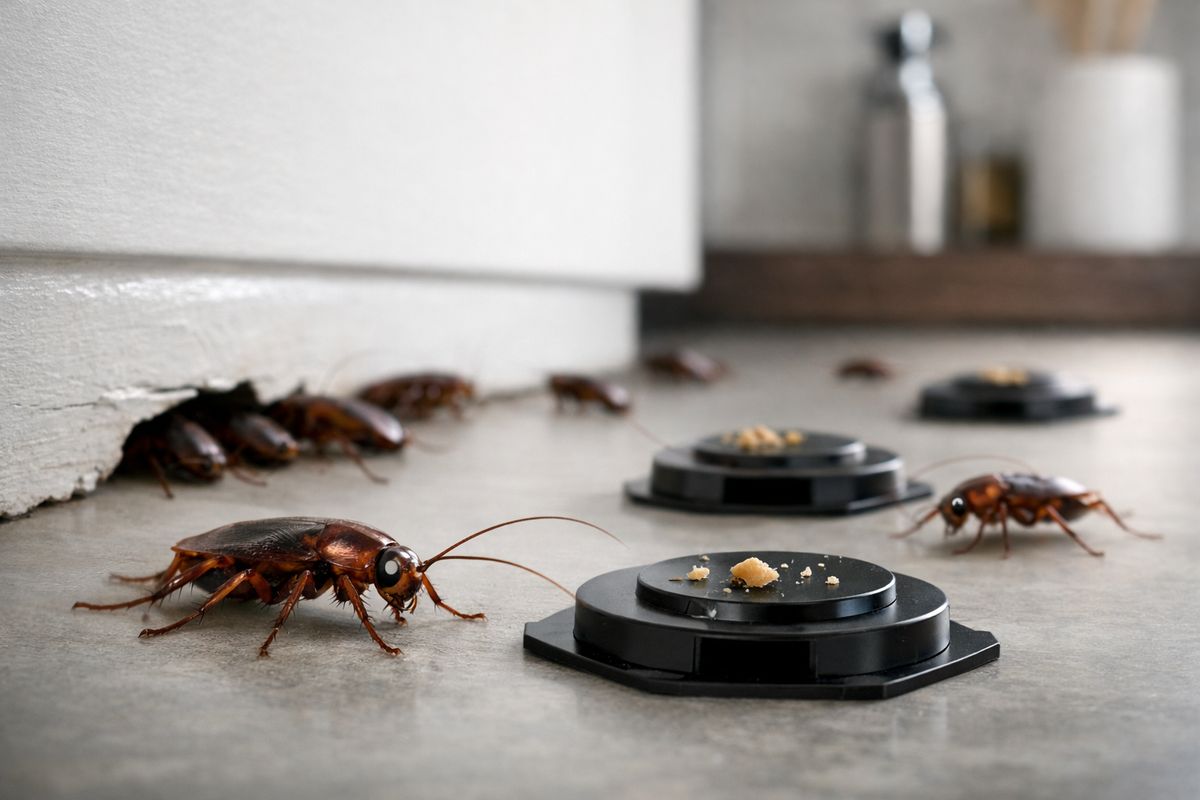
If cockroaches keep coming back, the usual reason is simple: the treatment knocked down the bugs you could see, but not the infestation hiding out of sight. That awful moment, spotting one run across the kitchen floor at 2 a.m. a week after spraying, usually means the problem was interrupted, not finished.
Why Roaches Show Up Again After You Thought the Problem Was Fixed
Seeing roaches after treatment feels like proof that nothing worked. Here’s the thing: in most homes, apartments, and older Chicago-area buildings, recurring roach activity is a sign of unfinished control, not bad luck.
Roaches are built for staying hidden. A quick spray can kill the ones out in the open, but the colony often survives behind the stove, under the sink, inside cabinet gaps, or deep in wall voids. If the food, water, and hiding spots are still there, the infestation has room to recover.
What “Coming Back” Usually Really Means
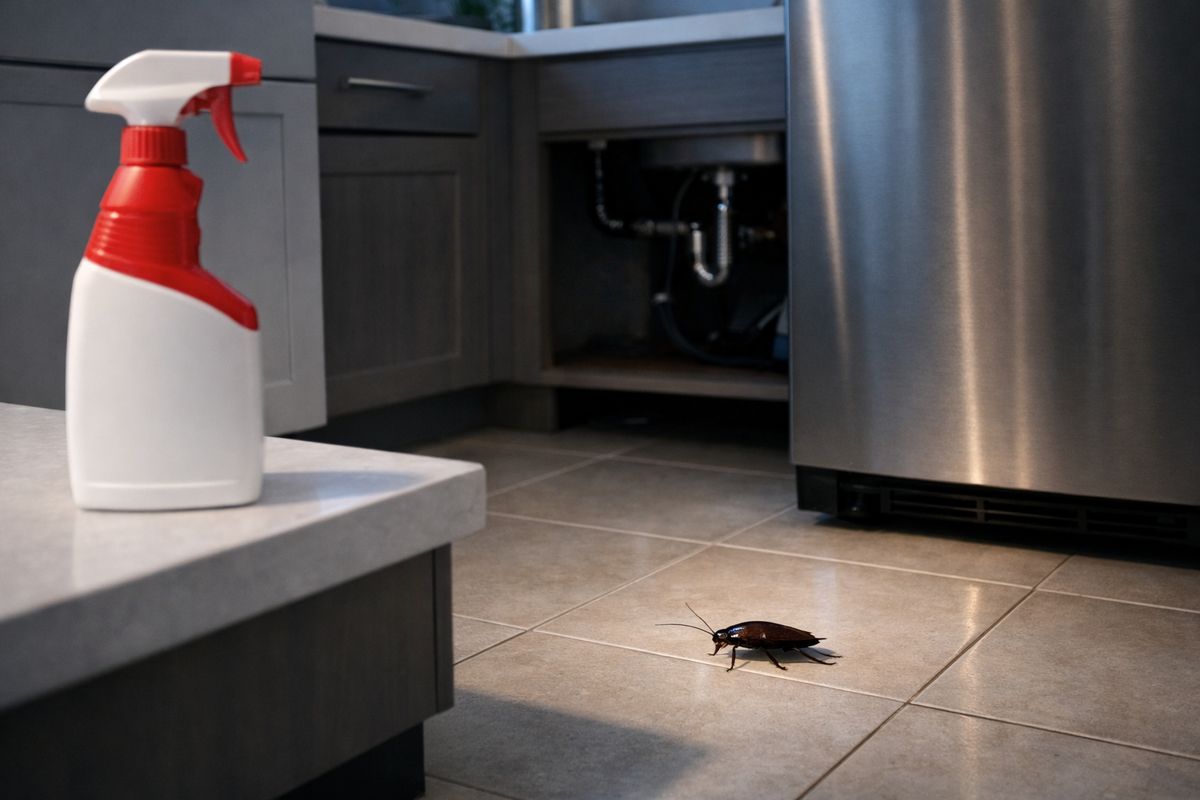
Most of the time, “coming back” means roaches never fully left. You saw fewer of them for a while, which felt like progress, but the nest, egg cases, and hidden travel routes were still active.
That distinction matters. Fewer sightings is not the same as elimination. Think of it like pulling weeds without getting the roots. The surface looks better for a bit, then the problem shows up again.
The ones you see are only a small part of the problem
Roaches are mostly nocturnal, so daytime quiet can be misleading. During the day, you can have an active infestation tucked into cracks, wall voids, drains, cabinet hinges, appliance motors, and the warm space behind your refrigerator.
That hidden behavior is why store sprays disappoint so often. Many products only reach the insects crossing the floor, not the colony tucked away in protected spots. As pesticides alone will not solve a roach problem, the source keeps surviving.
Eggs and baby roaches keep the cycle going
Killing adult roaches does not automatically stop the next wave. Egg cases can hatch later, and baby roaches, called nymphs, can keep the infestation going even after the kitchen seems quiet for a few days.
German cockroaches are especially good at this. Female German roaches carry egg cases for most of the roughly 30-day incubation period, which helps protect the next generation until hatching is close. So yes, a “quiet week” can fool you.
Why One Treatment Often Isn’t Enough
One-and-done spraying rarely solves a real roach problem. In apartments, garden units, older homes, and heavier infestations, repeat visits are normal because the treatment has to catch survivors, hatchlings, and reinfestation from nearby areas.
That does not mean the plan failed. It usually means the plan is being done correctly.
Sprays can kill fast but miss the source
Surface sprays are popular because they feel immediate. You spray, a few roaches die, and it looks like progress. But roaches hiding behind cabinets or inside plumbing walls may never touch that treatment.
The catch is resistance. Some German cockroach populations no longer respond well to common consumer sprays, and less than 20% may die quickly in some cases. That is why repeated spraying often turns into a frustrating loop. For a better look at methods that actually target the infestation, it helps to understand which treatment plans hold up longer.
Follow-up matters because new hatchlings show up later
Professional rechecks are commonly scheduled in 2 to 4 weeks for a reason. Newly hatched roaches can appear after the initial treatment, especially when egg cases were protected.
A follow-up is part of an effective process, not a red flag. If activity is dropping over time, that is usually what you want to see. If it stays steady or spreads to more rooms, the plan needs adjusting.
The Conditions That Keep Pulling Roaches Back In
Roaches stay where survival is easy. In Chicago bungalows, vintage apartment buildings, basements, and suburban townhomes, the same everyday conditions tend to keep infestations hanging on.
Food and water sources are smaller than you think
Roaches do not need a messy kitchen counter covered in crumbs. A thin grease film near the stove, pet food left out overnight, sticky recycling, a wet sponge, sink drips, or a slow leak under the bathroom vanity can be enough.
Moisture is a huge driver. Under sinks, around radiators, near utility rooms, in basement corners, and around old plumbing lines, water gives roaches exactly what they need. Even clean homes can have moisture issues that keep feeding the problem.
Clutter, cardboard, and tight hiding spots give roaches cover
Storage piles make roaches feel safe. Cardboard boxes, paper grocery bags, crowded cabinets, and stacks of stuff under the sink create perfect shelter close to food and water.
German cockroaches can squeeze into cracks as narrow as 1/16 inch. That is about the thickness of a couple of stacked business cards. In other words, the hiding spot does not need to look big to matter.
Entry points let new roaches move in
Sometimes the roaches are not rebuilding from inside your unit. Sometimes new ones are coming in through pipe gaps, baseboards, utility penetrations, door sweeps, window gaps, drains, or shared walls.
That is a big reason apartments are tricky. In multi-unit buildings, roaches can travel from neighboring units even if your place is tidy. If that sounds familiar, this guide to what usually happens in apartment infestations can help connect the dots.
Why the Type of Cockroach Changes the Fix
Not all roaches behave the same way, so the right fix depends on the species. Treating every roach problem like it started under the kitchen sink is one of the fastest ways to waste time.
German cockroaches are the usual indoor repeat offenders
German roaches are the classic indoor problem. You usually find them in kitchens and bathrooms because those rooms give them warmth, moisture, food, and tight hiding spots all at once.
These are the repeat offenders that seem to “come back” overnight. They breed fast, stay hidden well, and spread easily in apartment buildings. If your issue involves small tan roaches near appliances or cabinets, a targeted inspection and treatment plan matters more than more spray.
American and Oriental roaches often start from moisture-heavy areas
Larger roaches often point to a different source. American and Oriental roaches are more likely to start in basements, drains, crawl spaces, boiler rooms, sump areas, and other damp zones.
That changes the strategy. If large roaches are showing up near a floor drain or in a utility room, the source may be building infrastructure or outdoor entry points, not a hidden kitchen nest.
What Actually Works Better Than Repeated Spraying
The better approach is IPM, short for integrated pest management. In plain English, that means using several fixes together instead of relying on one product and hoping for the best.
Baits, dusts, and growth regulators go after the hidden population
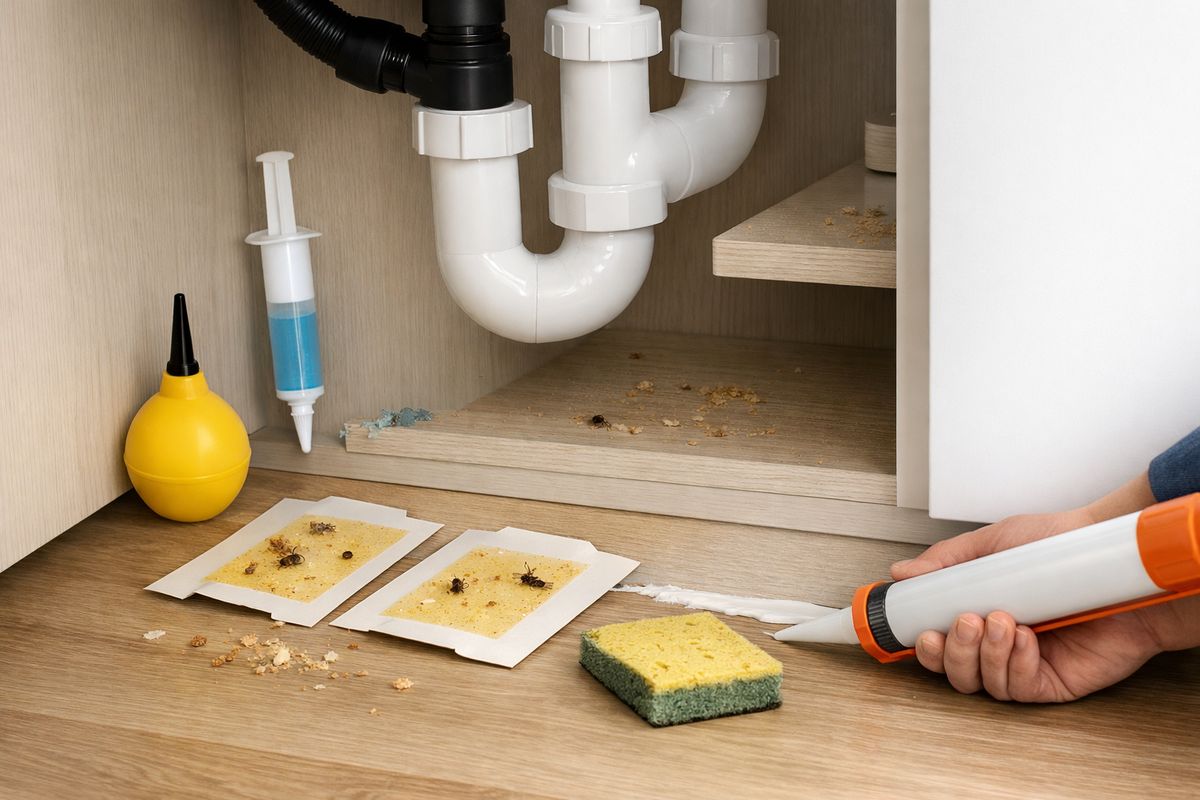
Gel baits work because roaches feed on them in hidden areas and carry the effect back into the population. Dusts such as boric acid or desiccant dust can help in dry, undisturbed voids where sprays do not reach well.
Growth regulators add another layer. These products do not give instant drama, but they interrupt development so immature roaches do not become breeding adults. That is how you slow the cycle instead of chasing the same problem over and over.
Sealing, drying, and cleaning make treatments work better
Bait works best when competing food is removed. If roaches have grease, crumbs, spilled juice, and leaky plumbing, the treatment has to compete with a full buffet.
That is why a full IPM approach includes fixing leaks, sealing cracks, storing food in containers, reducing clutter, and cleaning greasy buildup around stoves and cabinets. If you already have service scheduled, it helps to know how to get your place ready before treatment.
Sticky traps help you find the real hotspots
Sticky traps are not a complete fix, but they are one of the simplest ways to see what is really happening. Put them under sinks, behind the stove, near the fridge, and along baseboards.
That gives you useful clues fast. If traps are filling behind the refrigerator but nowhere else, you have found a hotspot. If you are not sure what else to watch for, these common indoor warning signs can help you spot the pattern earlier.
When Professional Roach Treatment Makes the Biggest Difference
Professional help makes the biggest difference when DIY products keep giving short-term relief, when roaches show up in multiple rooms, when you see them during the day, or when the source seems tied to plumbing walls, basements, or shared spaces.
There is also a health reason not to let it drag on. Roach allergens are linked to asthma risk, especially in multi-unit housing, so recurring infestations are more than just gross.
Professional service is about strategy, not just stronger chemicals
Good service is not just someone spraying baseboards and leaving. It starts with inspection, species ID, targeted placement, hidden-void treatment, and follow-up visits that match the breeding cycle.
That is also why choosing someone with the right licensing and training matters. The difference is usually strategy, not just product strength.
In apartments and multi-unit buildings, the whole building can be part of the issue
If you rent or manage apartments, one unit can stay active because the larger source has not been addressed. Shared walls, trash rooms, pipe chases, laundry areas, and neighboring kitchens can all keep pushing roaches back into the same space.
In those cases, unit-by-unit spraying is often too small of an answer. Building-level coordination usually works better, especially in older properties with lots of hidden pathways.
Common Questions About Roaches Coming Back After Treatment
Does seeing a few roaches after treatment mean it didn’t work?
Not always. Some activity can be normal at first, especially when hidden roaches move through treated areas or bait placements. But if sightings stay steady, increase, or spread to new rooms, you need follow-up.
Does having roaches mean your place is dirty?
No. Clutter, crumbs, and moisture help roaches, but infestations also happen in clean homes and well-kept apartments through leaks, shared walls, drains, and entry gaps.
Are bug bombs or foggers a good fix?
Usually not. Sprays and foggers often give temporary knockdown, miss hiding spots, and can push roaches deeper into walls.
How long does it take to really get rid of roaches?
That depends on the size of the infestation and the species, but real control usually takes more than one visit. The goal is steady reduction, not instant perfection.
Why are roaches showing up in daylight?
Daytime sightings can mean the infestation is crowded enough that roaches are being pushed out of hiding. It can also mean the hotspot is very close to where you are seeing them.
What You Can Do This Week to Slow the Comeback
Try one simple thing this week: place a few sticky traps under the sink, behind the stove, and near the fridge. Check them after a few days and pay attention to where activity is strongest.
That one step gives you a real map of the problem. It shows what to fix next, what to clean or seal first, and what to show a pro if the roaches keep coming back.