
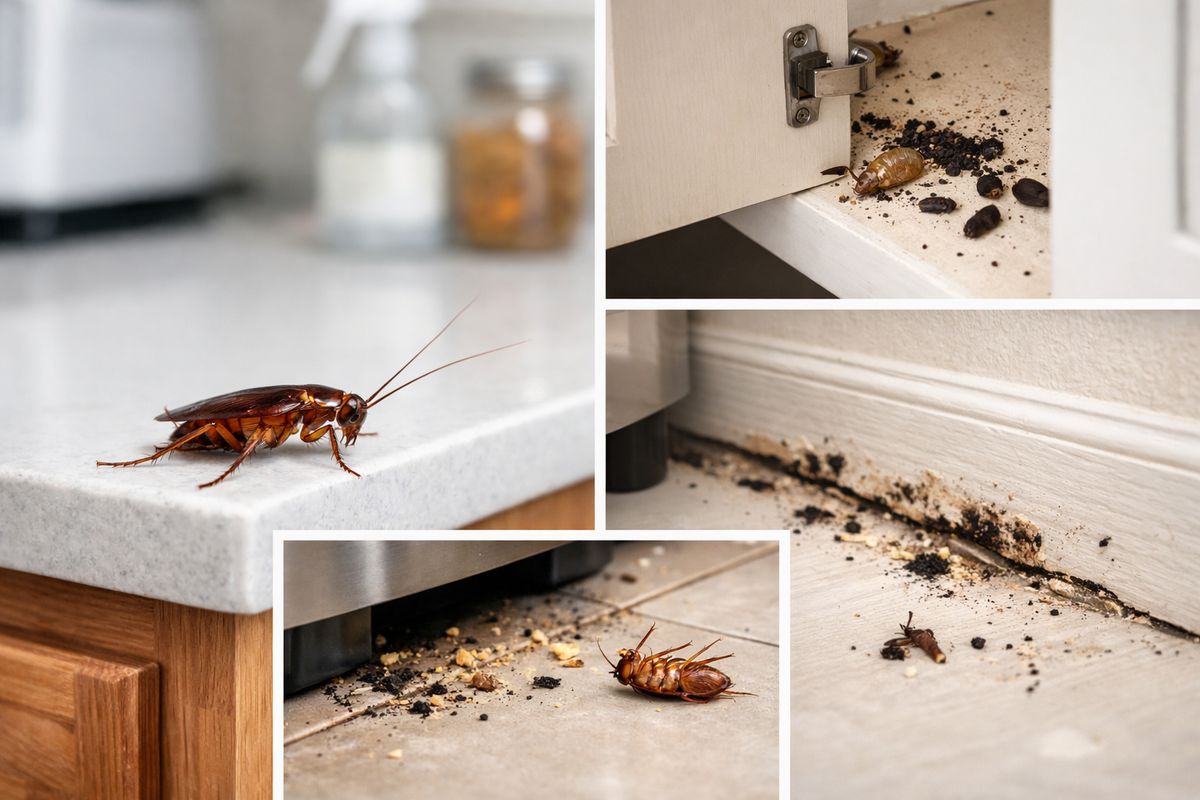
Cockroach infestation signs are the clues that roaches are living inside your home, not just wandering through once. If you have ever flipped on the kitchen light in a Chicago apartment at 11:30 p.m. and watched something dart behind the stove, you already know the feeling. Here’s the thing: if you keep noticing more than one sign, the problem is active, and it usually means roaches are feeding, hiding, and breeding somewhere nearby.
What a Cockroach Infestation Looks Like Indoors
Cockroach infestation signs include the visible evidence, smells, and patterns that point to indoor roach activity. That means droppings, egg cases, shed skins, smear marks, odd odors, and repeated sightings in the same parts of your home or building.
A true infestation looks less like a dramatic movie scene and more like a string of small warnings you almost talk yourself out of. A few black specks in the cabinet corner. A stale oily smell under the sink. A dead roach by the dishwasher one week, then a live one near the pet bowl the next. Put those together, and the picture gets pretty clear.
That matters because roaches are masters of staying hidden until the population grows. In kitchens and apartment buildings especially, what you see out in the open is often just a fraction of what is tucked into cracks, wall voids, and appliance gaps. If you want a quick comparison for what active problems often look like in real homes, this roach activity guide lays out the same basic pattern: recurring signs almost never stay small by accident.
The Most Common Cockroach Infestation Signs
Some signs are easier to spot than others, but a handful come up again and again indoors. The trick is not just knowing what each one looks like, but recognizing what it means when you find several in the same area.
Droppings in Cabinets, Drawers, and Along Baseboards
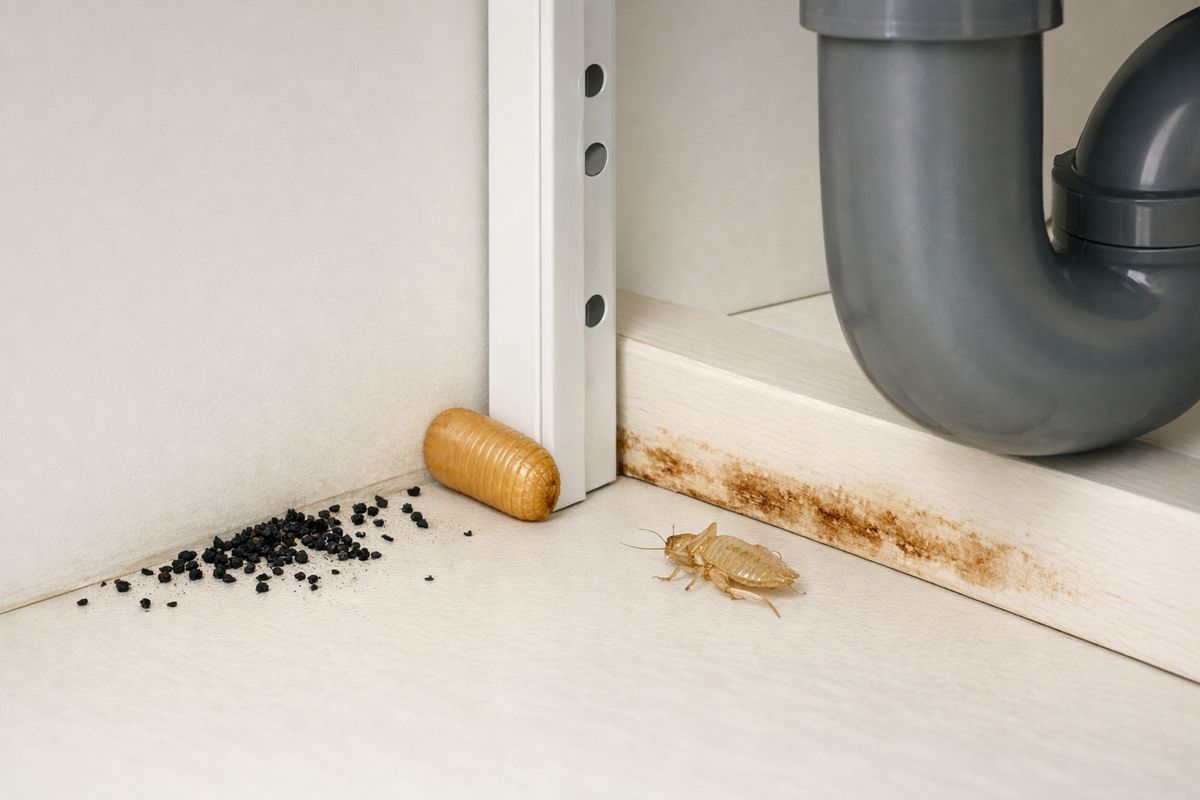
Roach droppings usually look like black pepper, coffee grounds, or tiny dark grains scattered in corners. Larger roaches can leave droppings that look more like small dark cylinders, but in many kitchens and apartment units, especially where German roaches are involved, the debris is finer and easier to miss.
Start with the places your eyes skip over during normal cleaning: under the sink, behind the toaster, inside pantry corners, along baseboards, and where the cabinet wall meets the shelf. In one housing study, visible roach evidence showed up as black specks behind and under refrigerators, inside kitchen cabinets, and around other hidden kitchen surfaces.
Droppings are one of the earliest signs because roaches leave them where they travel and hide. If you wipe the area clean and the specks come back, that is not random dirt. That is traffic.
Egg Cases, Shed Skins, and Other Signs of Breeding
Roach egg cases are called oothecae, but the plain-English version is easier: they are little capsule-like cases that hold multiple eggs. Depending on the species, they can look tan, brown, or reddish-brown, a bit like a tiny ridged bean.
Finding one egg case indoors matters because it points to reproduction inside the space, not just a stray roach that wandered in from outside. The same goes for shed skins. Roaches molt as they grow, so papery shell-like remains near cabinets, appliance gaps, or storage areas suggest young roaches are developing nearby.
This is where the problem stops being casual. Once you find egg cases or multiple shed skins, the infestation is established.
Smear Marks, Greasy Streaks, and Mystery Residue
In damp areas, roaches can leave brownish smear marks where bodies repeatedly brush against surfaces. You may notice streaks along wall edges, greasy-looking residue near pipe openings, or marks in cabinet corners that seem too dirty to be ordinary dust.
These stains often show up where moisture and tight hiding spots overlap. Think sink bases, plumbing penetrations, gaps behind dishwashers, and the edge where the wall meets the floor near a utility closet. It can look like someone touched the area with a dirty fingertip over and over.
That repeated contact matters. Smear marks tell you roaches are using the same route often enough to leave a trail.
A Musty, Oily Odor That Wasn’t There Before
Heavy infestations can create a distinct odor that is musty, stale, or oily. It tends to collect in enclosed spaces, especially under sinks, inside lower cabinets, pantry areas, laundry rooms, and utility closets.
The smell usually does not show up on day one. It builds as activity grows, which is why a new lingering odor in one closed-off area often means the problem has been developing for a while. If a cabinet smells off even after you clean it, pay attention.
A lot of people notice the odor before finding the source. That is more common than you might think.
Live Roaches, Dead Roaches, and Daytime Sightings
Seeing one roach late at night is concerning. Seeing roaches during the day is worse.
Roaches are mostly nocturnal, so daytime sightings often mean the hiding spots are overcrowded or the infestation has grown large enough that normal behavior breaks down. A single dead roach by the back door does not always prove a serious infestation. But recurring activity around food, moisture, warmth, or appliances should never be brushed off, especially in kitchens and bathrooms.
If you are seeing baby roaches, adults, or both, and especially if sightings repeat in the same room, you are past the “wait and see” stage.
Where to Look First in Your Home or Building
Roaches are not evenly spread through a home. Certain spots make life easy for them, which means certain spots make inspection easier for you.
Kitchen Hotspots
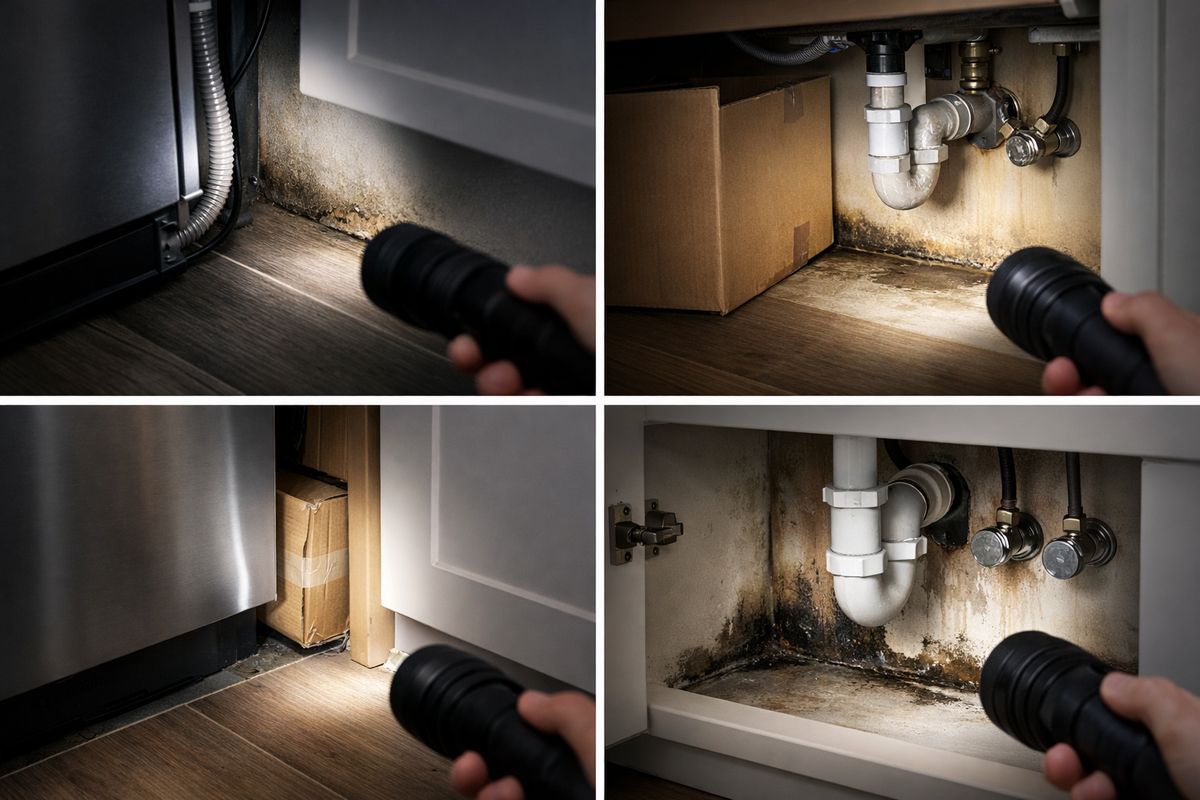
The kitchen is ground zero in most indoor roach problems. Food crumbs, grease, moisture, heat, and tight hiding spaces all collect there, often in places you cannot see without a flashlight.
Check behind and under the stove first. Then move to the refrigerator, dishwasher, microwave area, sink base, pantry shelves, and the spaces around countertop appliances that rarely get pulled forward. In infested housing, kitchens had far higher roach counts than bedrooms, with 41.8 per day trapped in kitchens versus 3.8 in bedrooms in one study. That tracks with what shows up in real homes every day.
Pantry areas deserve extra attention. Roaches will settle near dry goods, pet food, grease splatter, and cardboard packaging because those spaces are quiet and easy to hide in.
Bathrooms, Laundry Areas, and Utility Spaces
Roaches like water almost as much as food. Bathrooms, laundry rooms, and utility spaces give them steady moisture, warmth, and cover.
Look inside vanity cabinets, around tub gaps, near floor drains, around laundry hookups, and beside water heaters. Basement utility rooms are another favorite, especially in older Chicagoland homes where pipes, drains, and storage boxes all share the same tight corners. Even a slow leak can keep roaches going. The EPA notes that slow plumbing leaks can provide enough water to support pest activity indoors.
If your kitchen looks clean but you are still seeing signs, shift to the wet rooms. That is often where the pattern becomes obvious.
Hidden Cracks, Wall Voids, and Shared Building Spaces
Apartments, condos, and multi-unit properties add a bigger challenge: roaches move. A gap around plumbing in your kitchen wall may connect to another unit. Shared walls, hallways, trash rooms, boiler rooms, radiator lines, and HVAC openings can all act like pest highways.
That is why renters and property managers often see signs return even after one round of cleaning or spraying. In dense urban housing, roach activity tends to persist where shared infrastructure gives pests easy movement and shelter. If you are dealing with a multi-unit issue, this guide to handling roaches in apartment buildings helps explain why one unit rarely tells the whole story.
For property managers, building-wide coordination matters just as much as unit-level cleanup. This is also why what managers need to know in shared housing becomes so relevant once sightings start showing up in more than one space.
What Different Signs Can Tell You About the Infestation
Not all signs mean the same thing. Some suggest an early catch. Others tell you the infestation is already settled in.
Early Warning Signs vs. Signs of a Larger Problem
A few droppings under one sink or one egg case in a cabinet can be an early warning. It still needs action, but there is a difference between that and widespread droppings, strong odor, repeated sightings in several rooms, and roaches showing up during the day.
The broader the signs, the broader the infestation. Once evidence appears in the kitchen and bathroom, then pops up in a laundry area or utility closet too, the problem has likely spread beyond one hiding spot.
Why Baby Roaches Usually Mean an Active Nest Nearby
Baby roaches, often called nymphs, are a big clue because young roaches do not travel far at first. If you are seeing tiny tan or dark roaches near the sink base, behind the fridge, or in cabinet hinges, breeding is happening indoors and close by.
This is one of the clearest signs of an active nest nearby. Adult roaches can wander in. Nymphs usually do not.
Does Seeing One Roach Always Mean There Are More?
Not always, but in the rooms that matter most, you should assume one sighting deserves a serious check. A lone roach in a garage or entryway could be accidental. One roach in the kitchen at midnight, plus droppings under the sink, is a different story.
In apartment buildings and condos, one sighting often means access already exists through plumbing lines, wall gaps, deliveries, or neighboring units. That is why a single sighting plus any second sign should move you into inspection mode right away.
Why Roaches Show Up Indoors in the First Place
Roaches are drawn by conditions, not character. A roach problem does not mean you failed at housekeeping. It means the space offers food, water, shelter, or access, and sometimes all four.
Food, Moisture, and Clutter
Crumbs under the stove, grease film near the cooktop, pet food left overnight, leaky pipes, cardboard stacks, and crowded storage all give roaches what they need. Kitchens are obvious targets, but utility closets, basements, and laundry corners can be just as inviting.
Even tidy homes get roaches. The catch is that cleanliness lowers the odds, but it does not seal off entry points or remove every water source.
Entry Points and Multi-Unit Spread
Roaches get in through gaps around plumbing, foundation cracks, sewer and drain connections, grocery boxes, deliveries, used appliances, and neighboring units. In dense neighborhoods and older buildings, that movement can happen quietly for a long time.
German roaches are especially tough indoors because they breed fast and hide well. In one urban sticky-trap study, the German cockroach made up more than 95 percent of detections, which tells you how dominant this species is in kitchens and residential spaces.
The Indoor Species You’re Most Likely to Run Into
German cockroaches are the big one in apartments, condos, and kitchens. Small, fast, and good at hiding, these are often behind cabinet hinges, refrigerators, and dishwashers.
American cockroaches are larger and more likely to show up around basements, drains, and boiler or utility areas. Oriental cockroaches are often tied to damp, cool spaces like basements and crawl-adjacent areas. Brown-banded roaches tend to turn up in drier, higher spots such as upper cabinets, closets, and behind wall decor or electronics.
You do not need to identify the species perfectly to recognize a problem. But if small roaches keep appearing in kitchen cracks and appliance gaps, German roaches are a strong possibility.
Why These Signs Matter for Health and Sanitation
Roaches are not just unsettling. The signs they leave behind point to real sanitation and indoor air concerns.
Allergens, Asthma Triggers, and Indoor Air
Droppings, shed skins, saliva, and body fragments can aggravate indoor allergies and asthma. That matters in any home, but especially in apartments and smaller spaces where exposure can build up. Researchers describe cockroach allergens as major asthma triggers, especially for children and anyone already sensitive to indoor irritants.
This is one reason cleanup matters even after the roaches are gone. The physical pests are only part of the problem. The residue sticks around.
Food Contamination and Germ Spread
Roaches move through drains, trash, damp voids, and other unsanitary spots, then cross counters, dishes, pantry shelves, and food prep areas. Research links cockroaches to more than 30 bacteria, including Salmonella and E. coli.
You do not need a science lecture to know why that is bad news. If a pest spends the night in a drain and the morning on your dish rack, sanitation becomes a real issue fast.
What to Do if You Notice Cockroach Infestation Signs
Quick action beats waiting. Roaches multiply fast, and surface-level treatment often misses the place where the problem is actually rooted.
Check, Photograph, and Monitor the Problem
Start with a flashlight and inspect under sinks, behind appliances, inside cabinets, and along baseboards. Take photos of droppings, egg cases, smear marks, or damaged food packaging. In rentals or multi-unit properties, that record helps show the problem clearly.
Sticky traps are also worth using. Glue monitors are a standard way to confirm activity and show where roaches are most concentrated. If you place traps under the sink, beside the fridge, and behind the toilet, patterns show up quickly.
Clean Up the Right Way Without Scattering the Problem
Remove food residue, seal pantry items, store pet food tightly, fix leaks, cut down cardboard clutter, and empty trash regularly. Vacuuming visible droppings and egg cases can help, and the EPA recommends a HEPA-filter vacuum when possible to reduce allergen spread during cleanup.
Random spraying is the part that trips people up. Spray the wrong crack, and roaches often scatter deeper into walls or into neighboring units. If you are trying to understand why surface treatments fail, this breakdown of why the problem keeps returning after treatment explains the pattern. And if treatment is already scheduled, it helps to know how to get your home ready beforehand so monitoring and products work better.
When It’s Time to Call a Professional Exterminator
If you are seeing repeated activity, baby roaches, egg cases, strong odor, widespread droppings, or signs in multiple rooms, it is time to call for professional help. The same goes for apartment buildings, condos, and mixed-use properties where infestations can move through shared spaces.
Persistent infestations usually need targeted treatment plus monitoring, not a one-time spray-and-go visit. A licensed pro can identify the species, the hiding zones, and the access points that keep the infestation alive. If you want a clear picture of what professional roach treatment usually involves, start there. For a local service overview, this Chicago-area roach control page gives a practical sense of what professionals look for and how recurring infestations are handled.
Common Questions About Cockroach Infestation Signs
Are cockroach droppings ever confused with something else?
Yes. Roach droppings are often mistaken for mouse droppings, coffee grounds, pepper, or plain dirt. Mouse droppings are usually larger and more shaped, while roach droppings are often finer and scattered like grains. Location helps too. Roach droppings tend to collect in cabinet corners, appliance gaps, and along baseboards.
Do cockroaches only come out at night?
Mostly, yes. Roaches prefer darkness and usually stay hidden during the day. But daytime sightings are a bigger warning sign because they often mean crowding, disturbed hiding spots, or a larger infestation pushing more roaches into the open.
Does a cockroach problem mean your home is dirty?
No. Sanitation affects how attractive a space is to roaches, but even clean homes get infestations through plumbing gaps, shared walls, deliveries, used appliances, drains, and neighboring units. Access and moisture matter just as much as crumbs.
Frequently Asked Questions
What does a strong roach smell usually mean?
A musty or oily roach smell usually points to a heavier infestation that has been building for a while. One stray roach rarely creates a noticeable odor. If the smell is strongest inside cabinets, under sinks, or near appliances, check those spots first.
Are baby roaches worse than adult roaches?
In a way, yes. Baby roaches usually mean breeding is happening nearby, which makes the problem more urgent. Adults can wander in from another area, but nymphs often mean an active indoor nest.
Can you have roaches without seeing live ones?
Absolutely. That is common. Droppings, egg cases, shed skins, smear marks, and odor often show up before live sightings become frequent. Roaches hide first and get obvious later.
Where should you place sticky traps to check for roaches?
Put traps where roaches hug edges and stay hidden: under sinks, beside the refrigerator, behind the stove, near the dishwasher, inside pantry corners, and around bathroom plumbing. Keep them against walls or inside cabinets, not out in the middle of the floor.
How fast can a small roach problem turn into a bigger infestation?
Faster than most people expect. German roaches in particular breed quickly, so a few missed signs can become a much larger problem within weeks. That is why repeated evidence in the same room should be treated as an active issue, not a future possibility.
Try This Indoor Roach Check This Week
Set aside 10 minutes this week and check three places: under the kitchen sink, behind the stove, and around bathroom plumbing. Use a flashlight and look for droppings, egg cases, shed skins, and brown smear marks. If you find more than one sign, do not sit on it. Get help before a hidden problem turns into an obvious one.