
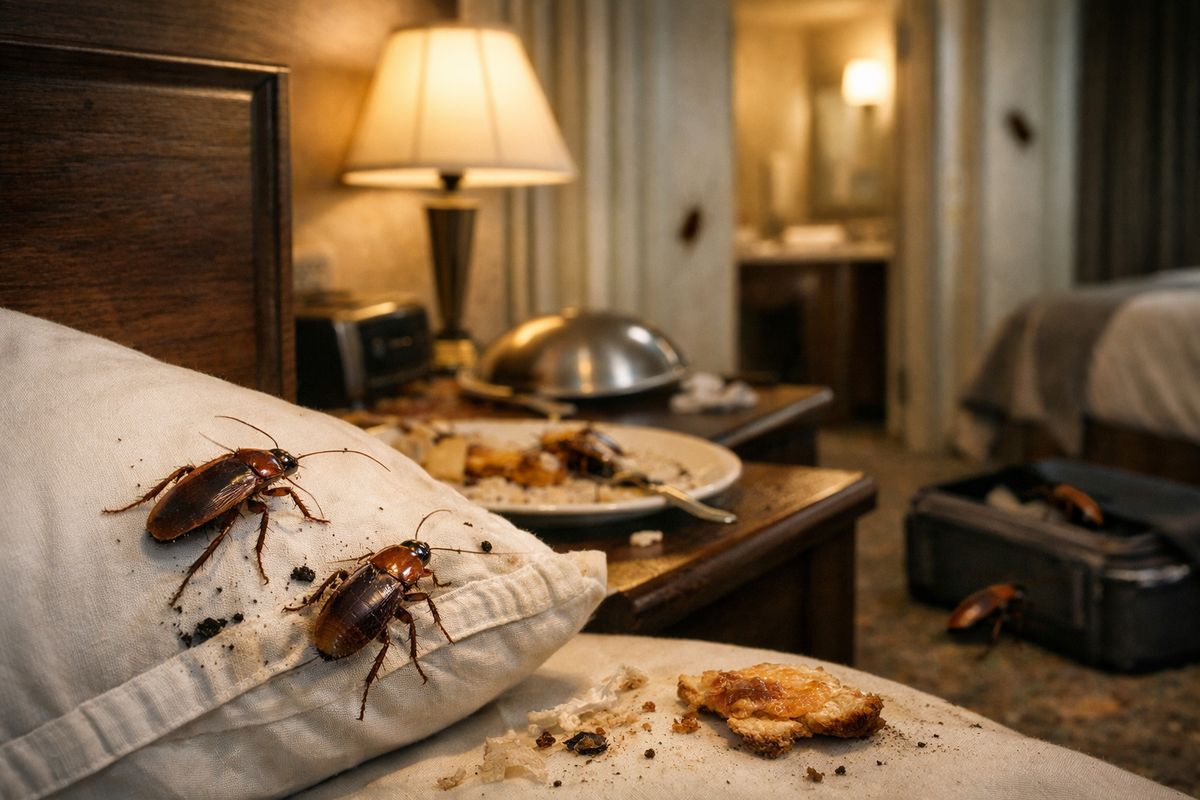
Cockroach infestation signs are the clues that roaches are active long before you catch one sprinting across the floor. In hotels, that matters a lot, because a hallway can look spotless at 10 p.m. and still tell a very different story behind the ice machine, under a mini-fridge, or near the breakfast station by sunrise.
The Cockroach Infestation Signs Hotels Miss Too Often
Most roach problems do not announce themselves with a dramatic daytime sighting. They show up as small, easy-to-dismiss hints: specks in a cabinet hinge, a stale oily smell in a linen closet, a smear along a baseboard that looks like plain dirt.
Here’s the thing: in a hotel, those little hints matter more than the obvious sighting. Roaches are built for staying hidden. By the time one gets seen out in the open, the quieter signs have usually been there for a while.
Why Hotels Miss Roach Signs Even When the Building Looks Clean
Hotels are almost designed to hide pest activity. Rooms get reset fast, trash gets moved, counters get wiped, and guest-facing spaces are meant to look polished all the time. That visual cleanliness can create a false sense of security.
In Chicago-area properties, the challenge gets bigger. Older buildings, shared plumbing lines, back-of-house moisture, food service areas, and frequent turnover create perfect little pockets for roaches to settle in. A property in River North, Naperville, or Schaumburg can have the same problem for the same reason: lots of warmth, lots of hiding spots, and plenty of chances to move unnoticed.
Roaches Show Up in the Gaps Between Cleanings
Roaches love the quiet hours. After a room turn, after the kitchen closes, after the breakfast bar is wiped down, that is when hidden activity becomes easier for them. A surface can look clean at checkout and still have enough crumbs, moisture, and shelter nearby to support an infestation.
That is why a clean-looking surface does not equal a clean pest picture. The signs often collect in the gaps between cleaning cycles, under equipment, behind carts, inside cabinet corners, and near plumbing where nobody lingers long.
Shared Walls, Utility Lines, and Deliveries Help Them Spread
Roaches do not stay in one neat little zone. They move through wall voids, pipe chases, utility openings, laundry areas, storage rooms, and loading spaces. Think of it like an apartment hallway hidden inside the walls.
That spread is especially common in urban neighborhoods and mixed-use suburban properties, where restaurants, retail, offices, and apartments can sit side by side. If you want a broader view of the pests hotels deal with most often, it helps to see roaches as part of a bigger building-wide pattern, not just a room-by-room issue.
The Most Common Cockroach Infestation Signs to Watch For
The most useful signs are usually physical evidence, odor, and pattern. Not glamourous, but reliable.
Droppings That Look Like Pepper, Coffee Grounds, or Smudges
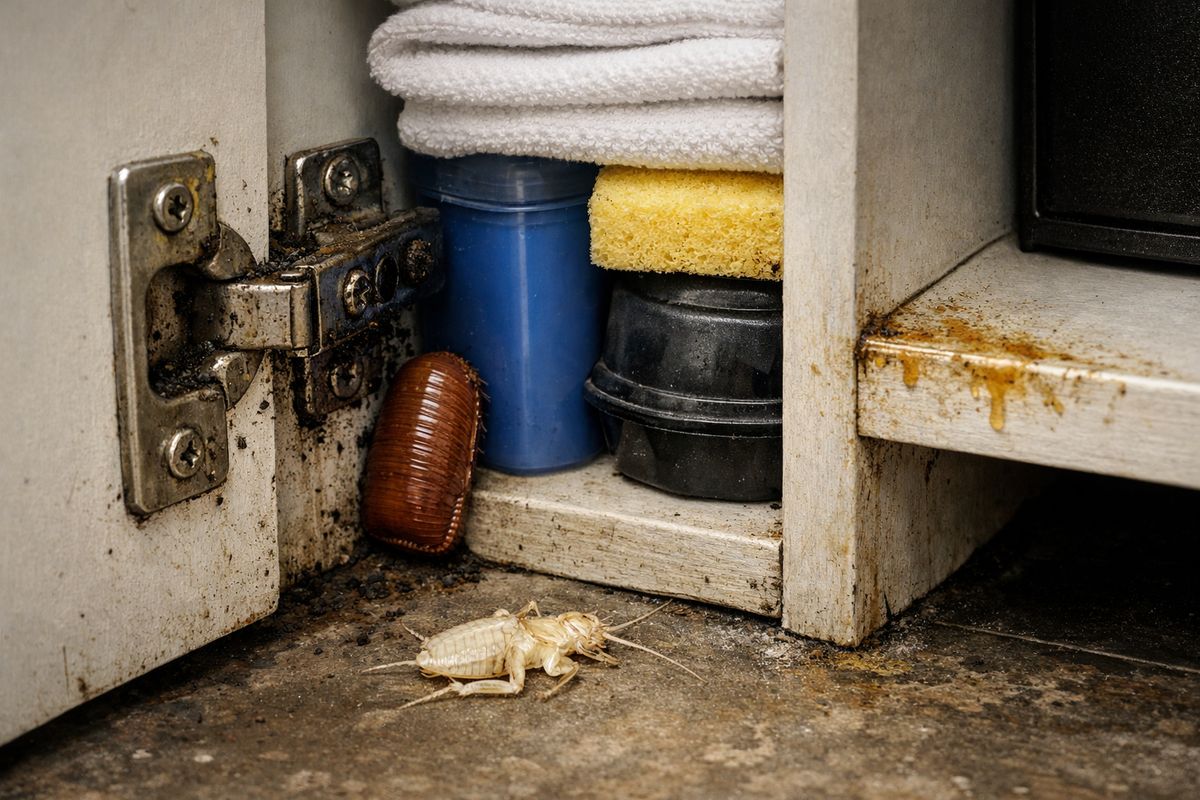
Small roach droppings can look like black pepper or coffee grounds. Larger roaches leave more of a dark, cylindrical dropping. In heavier activity, you may notice smeared marks instead of distinct pellets.
Check drawer corners, under sinks, behind mini-fridges, near baseboards, around vending areas, inside cabinet hinges, and around coffeemaker stations. Those tiny specks are easy to write off as dust or tracked-in grime. Often, they are not.
Egg Cases, Shed Skins, and Dead Roaches
An egg case, also called an ootheca, is basically a little capsule that holds multiple eggs. It often looks brown, oval, and ridged. Finding one in a quiet closet, behind stored paper goods, or near a housekeeping cart is a bigger warning sign than it sounds, because it points to breeding, not just wandering.
Shed skins matter too. Roaches molt as they grow, so those papery remains are a sign of ongoing activity. Dead roaches count as evidence as well, especially when you keep finding them in the same zone.
Musty, Oily Odors That Linger
Roaches leave behind a smell. It is often described as musty, oily, stale, or greasy, and once you notice it, it tends to stand out in enclosed spaces.
Look for that odor in linen closets, under bars, around dish stations, inside cabinets, and near drains. The trick is noticing when a smell survives normal cleaning. If a closet still smells stale and greasy after surfaces are wiped, something deeper may be going on.
Stains, Smears, and Tiny Damage Around Hiding Spots
Roaches leave brown smear marks along walls, greasy streaks near cracks, and light contamination on cardboard, food packaging, or paper goods. These signs get ignored all the time because they look like ordinary wear.
But there’s a pattern to them. If the marks cluster near moisture, warmth, and narrow hiding spaces, that is not random dirt. That is traffic.
Where Hotels Should Look First
Good inspection starts where roaches have food, water, warmth, and cover. In hospitality spaces, that usually means more than the obvious kitchen.
Guest Rooms and Bathrooms
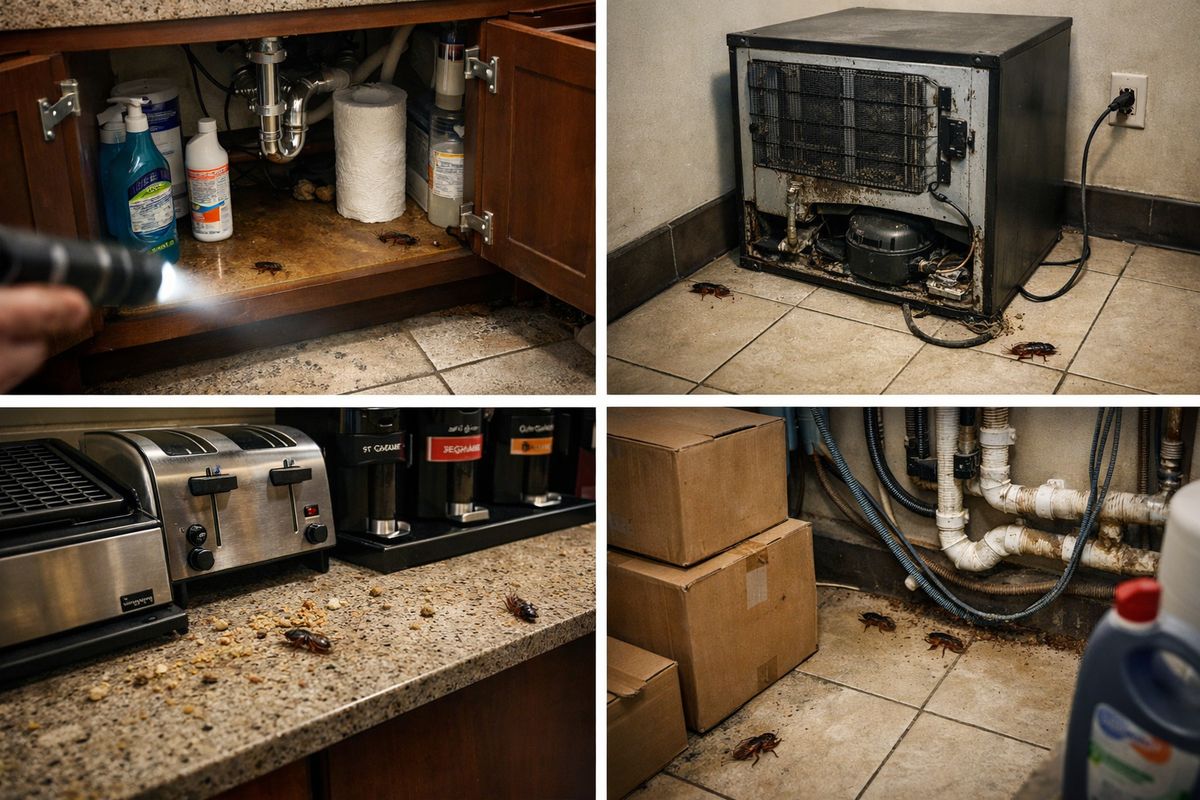
Start with nightstands, headboards, luggage racks, mini-fridges, coffeemaker areas, bathroom vanities, and plumbing openings under sinks. One complaint from a room near a shared riser or plumbing stack can point to a much wider issue.
This is where zoning helps. A room problem is rarely just a room problem, which is why checking each part of a property by area makes more sense than treating the whole building like one open box.
Kitchens, Breakfast Bars, and Trash Areas
These areas attract roaches for obvious reasons: grease, crumbs, drains, cardboard deliveries, and standing water. Breakfast areas are especially deceptive. They can look perfectly fine by 9 a.m. and still host overnight activity under cabinets and behind equipment.
Research on commercial pest control keeps coming back to the same point: food residue and standing water feed pest problems. Roaches are not complicated. If a spot gives them moisture and scraps, they keep coming back.
Laundry Rooms, Housekeeping Closets, and Basements
Warm machines, humidity, stored linens, paper products, and low-traffic corners make these spaces ideal hiding spots. Basements and utility rooms often work like hidden highways through the building.
That is why back-of-house inspections matter so much. Guest areas show the consequences, but service spaces often show the source.
What a Roach Sighting Really Means
If you see one roach, the problem is usually bigger than it looks. That is the honest version.
Roaches are nocturnal and secretive. Visible activity often means crowding, nearby nesting, or a population that has already spread beyond one crack or cabinet.
Daytime Sightings vs. Nighttime Sightings
A nighttime sighting is serious. A daytime sighting is worse.
Roaches prefer darkness, so if one is running along a lobby baseboard at noon or showing up in a bathroom during the day, that often means hiding spaces are full or the infestation has grown enough to push activity into the open.
Why One Guest Complaint Should Trigger a Full Check
One complaint can connect to adjacent rooms, shared maintenance access, plumbing gaps, or a nearby food and water source. Document the room number, time, and exact location right away. That detail helps reveal patterns instead of leaving you with random anecdotes.
For management teams, tracking what treatment changes over time is often what separates a quick response from a repeating problem.
Why Early Signs Matter More in Hotels Than in Houses
A hotel has higher stakes than a single-family home. One missed warning sign can affect guest experience, housekeeping workflows, food service, and online reviews all at once.
Sanitation and Contamination Risks
Roaches contaminate surfaces simply by moving across them. In plain English, that means food prep areas, utensils, storage shelves, carts, and cabinets can pick up bacteria and filth from roach activity.
That contamination risk is one reason commercial properties rely on a thorough inspection first, especially when early signs show up in food or guest spaces.
Fast Spread Means Bigger Costs Later
The catch is roaches do not stay put. In a hotel or multi-unit building, waiting can turn a small, contained issue into room downtime, repeat service visits, deeper cleaning, and more disruption.
That is also why monthly prevention tends to work better than treating pests as one-off emergencies. Roaches exploit every missed week.
What Hotels Should Do as Soon as Signs Show Up
Once signs appear, the goal is not just to spray something and hope. The goal is to find the activity, cut off what is feeding it, and keep it from restarting.
Start With a Thorough Inspection and Documentation
Inspection comes first because you need to know where the roaches are, how far the activity spreads, and what conditions are helping it. In commercial settings, documentation and pictures can make a huge difference, especially when multiple rooms or departments are involved.
Notes should include droppings, odors, egg cases, sightings, leaks, and exact locations. Digital reporting is useful here because it gives you a record you can actually track.
Fix Food, Water, and Hiding Spots Before They Keep Feeding the Problem
Clean residue, remove cardboard clutter, seal gaps, repair leaks, improve trash handling, and reduce standing water. Those steps are not extra credit. They are what makes treatment stick.
Without that cleanup, the building keeps offering free shelter and snacks. A spray alone cannot outwork that.
Use Ongoing Pest Control, Not a One-Time Spray
Integrated Pest Management means inspection, targeted treatment, and prevention working together. It is a smarter approach because it deals with the cause, not just the visible bug. Commercial providers often use an IPM approach with prevention and lower-toxicity treatment in mind.
That matters in hotels and multi-unit properties where pests return fast if the root issue stays in place. If you are comparing service options, pay attention to follow-up plans, reporting, and how quickly a provider responds.
When It’s Time to Call a Professional Exterminator
Repeated sightings, egg cases, strong odors, or signs across multiple rooms mean it is time to act now. In Chicago-area buildings with shared walls, older infrastructure, and high traffic, roaches can spread faster than most people expect.
Professional help should include inspection, a property-specific treatment plan, and ongoing monitoring, not a generic one-time visit. If you are weighing options, start with what to look for in a pest company so you know what solid service actually looks like.
Try one simple thing tonight: do a quick after-dark check under sinks, behind mini-fridges, and near drains, then document anything you notice.
Frequently Asked Questions
What is the first sign of a cockroach infestation?
The first sign is often droppings, not a live roach. Small black specks in corners, cabinet hinges, or under sinks tend to show up before an obvious sighting.
Do roaches mean a place is dirty?
Not always. Roaches can show up in clean buildings if moisture, hiding spots, and access points are available. Cleanliness helps, but it does not block shared walls, plumbing gaps, or deliveries.
Is seeing one roach a big deal?
Yes, especially indoors. One roach in a hotel, apartment, or shared building often points to more activity nearby, particularly if the sighting happens during the day.
What does a roach infestation smell like?
It usually smells musty, oily, stale, or greasy. The odor tends to linger in enclosed spaces like cabinets, closets, utility rooms, and areas near drains.
Where should you check for roach activity first?
Start under sinks, behind refrigerators or mini-fridges, around drains, inside cabinets, near trash storage, and around warm equipment. In multi-unit or hotel buildings, shared plumbing areas deserve extra attention.
Can a one-time treatment get rid of roaches?
Sometimes it knocks activity down, but it rarely solves the full problem in a hotel or multi-unit property. Roaches often return if moisture, food residue, entry points, and hidden nesting areas stay in place.