
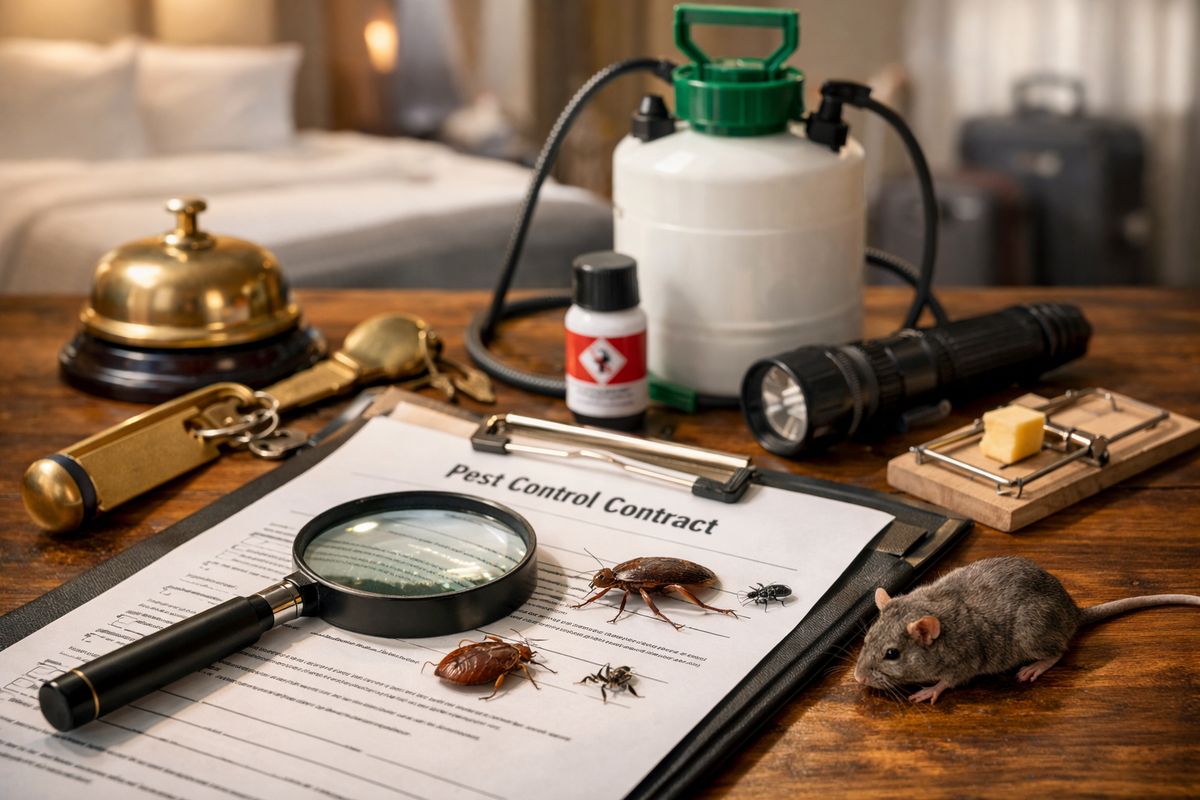
A hotel pest control contract looks boring right up until a guest finds something on a mattress at 10:40 p.m. on a sold-out Friday. At that point, the fine print matters a lot. A strong pest control contract does far more than schedule spray visits, it sets the rules for speed, coverage, accountability, and what happens when one room problem threatens your reviews, your staff, and your revenue.
Why a Hotel Pest Control Contract Is More Than a Service Call
Hotels do not get the luxury of treating pests like a minor maintenance issue. One complaint can become a refund, a public review, a room outage, a staff scramble, and a reputation problem before breakfast. That is why the contract matters so much. It is not just a purchase order for treatment. It is a risk-control document.
A weak contract usually sounds fine at first. It promises routine service, maybe a low monthly rate, and vague language about treating pests as needed. The catch is that vague wording helps nobody when something real happens. If bed bugs are suspected in a guest room, if roaches show up near breakfast service, or if mice start appearing in storage areas, you need the contract to answer practical questions immediately. How fast does somebody show up? Which spaces get inspected? Are follow-up visits included? What records will you receive? What happens if the first treatment does not work?
That is the difference between a service call and a working agreement. A service call reacts. A contract should reduce the odds that you need crisis mode in the first place.
Why hotels face a different pest risk than most properties
Hotels are unusually exposed because the building never really rests. Guests arrive with luggage from airports, rideshares, train stations, and other hotels. Housekeeping turns rooms quickly. Food moves through kitchens, bars, vending areas, and breakfast spaces. Laundry carts move linens from floor to floor. Deliveries come through loading areas. Shared walls, pipe chases, utility penetrations, and back-of-house spaces create easy movement paths for pests.
That combination changes the risk picture completely.
Bed bugs are the headline pest because hospitality properties are one of the places where introductions happen constantly. Industry surveys have found that 70% of pest professionals treated bed bugs in hotels and motels, which tells you this is not a fringe problem. Roaches are another recurring threat, especially in kitchens, laundry rooms, trash areas, employee break rooms, and older buildings with plenty of moisture and hiding places. Rodents love loading docks, storage rooms, compactors, and poorly sealed exterior gaps. Flies can build up around drains, bars, food prep zones, and waste areas. Stored-product pests can show up in dry goods and supply storage.
A single-family home can sometimes get by with occasional service. A hotel usually cannot. The traffic is too constant, the exposure too broad, and the cost of delay too high.
What a strong contract actually does for you
A strong contract gives you five things: prevention, response, documentation, accountability, and fewer surprises.
Prevention means scheduled inspections, monitoring devices, and written recommendations before a guest complaint forces action. Response means defined service windows for routine calls and emergencies. Documentation means written reports after every visit and accessible records when a guest dispute or audit shows up months later. Accountability means clear language about covered pests, included follow-ups, escalation steps, and who is responsible for what. Fewer surprises means the monthly fee may not be the lowest, but the contract is less likely to explode into emergency charges and arguments later.
That is the real buying standard. Not who promises the cheapest visit, but whose contract makes bad days smaller.
The pests your contract needs to cover explicitly
“General pest service” is one of those phrases that sounds helpful until you try to pin it down. If a proposal uses broad language without naming pests, rooms, and treatment expectations, assume the scope is narrower than you need.
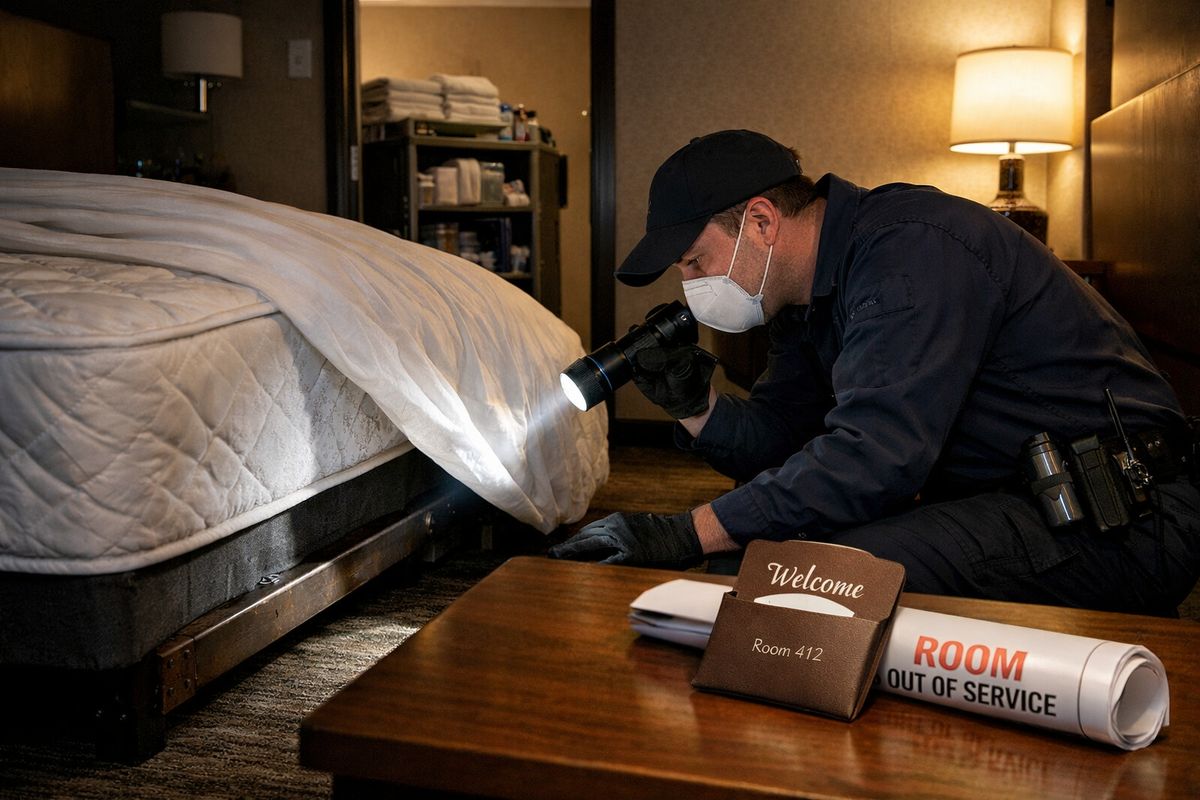
A hotel contract should list target pests in plain language. At minimum, that usually means bed bugs, cockroaches, ants, flies, mice, rats, and occasional invaders such as spiders or stinging insects where relevant. Depending on your building, it may also need to address stored-product pests in food storage and termites or wood-destroying insects.
Named coverage matters because each pest creates different operational problems. Bed bugs can take rooms offline and trigger guest claims. Roaches can move from utility spaces into guest-facing areas and suggest sanitation failures even when the cause is structural. Rodents create health and property concerns fast. Flies around food and beverage areas can raise compliance issues in a hurry.
If you want a useful comparison between vendors, start by checking whether the pest list is specific or fuzzy.
Bed bugs: the clause you cannot afford to leave vague
If your contract gives bed bugs a passing mention, that is a problem. Bed bugs deserve a separate section with separate rules.
Why? Because the operational stakes are completely different. A bed bug complaint is not just a treatment issue. It is a room-inventory issue, a staff-communication issue, and sometimes a guest-relations issue within minutes. One source estimates bed bug remediation costs at $1,000 to $6,000 per room, and that is before refunds, labor time, room downtime, or legal headaches. If a room goes offline on a busy Friday night, the contract should already tell you what happens next.
Look for bed bug language that covers inspection methods, response time, adjacent-room handling, included retreatments, verification, and return-to-service standards. Also look for clarity on what evidence triggers treatment. A trained inspection after a guest complaint is not the same thing as blindly treating every room in a hallway. The contract should explain the difference.
Another point that gets missed: bed bugs are hard to eliminate. Surveys have found that 76% of professionals consider them the most difficult pest to remove. That alone is reason to reject vague promises and demand specifics.
Cockroaches, rodents, and other recurring structural pests
Roaches and rodents usually reflect building conditions as much as treatment quality. That means your contract should define not only which pests are covered, but where service applies.
Guest rooms, kitchens, bars, laundry rooms, vending spaces, housekeeping closets, basements, boiler rooms, trash rooms, compactors, exterior perimeters, storage areas, and loading docks should be addressed directly if they exist on your property. If a proposal only talks about “interior and exterior service” without naming pressure zones, push harder.
Cockroaches deserve especially clear treatment language because recurring activity often shows up in hidden places first. Utility penetrations under sinks, behind ice machines, around dish areas, and inside cluttered storage zones can keep feeding the problem while surface treatments make it look controlled for a week or two. If recurring roach issues are already a concern, it helps to understand the signs properties miss most often so your contract can mirror those risk areas.
For rodents, the contract should address inspection for droppings, gnawing, rub marks, burrows, and entry points, plus the provider’s recommendations for sealing gaps and improving waste handling. Poison alone is not a rodent strategy. In a hotel, it is usually a short-term patch.
Termites and wood-destroying pests if your property needs that layer
Not every hotel contract needs termite coverage built into the main agreement, but many older properties should at least ask the question. Buildings with known moisture issues, older wood framing, past termite activity, crawlspaces, or vulnerable landscaping may need a separate termite agreement or a clearly defined add-on.
This is one of those places where assumptions get expensive. The U.S. EPA notes that termite guarantees often run one to five years, and buyers should verify exactly what is covered. If termite service is included, the contract should say whether annual inspections are extra, whether retreatment is included, and whether any structural damage responsibility exists if treatment fails.
If termite coverage is excluded, that should be obvious too. Quiet omissions are not your friend.
The exact scope of services your contract should spell out
“Pest control” is too broad to buy on faith. The contract should describe the actual service model in writing, not force you to guess based on a sales pitch.
At a minimum, the scope should cover inspections, monitoring, treatment methods, treatment areas, follow-up visits, retreatment rules, and prevention recommendations. If any of those pieces are missing, you are not looking at a full operating agreement. You are looking at a partial promise.
Routine inspections and monitoring schedules
Routine inspections are the backbone of the contract because they decide whether pests are found early or late. The schedule should state how often inspections happen and where inspections occur. Monthly may make sense for many hotels. Biweekly may fit high-turnover, food-heavy, or higher-pressure properties. Quarterly may work for smaller, lower-risk sites, though it is often too sparse for buildings with active history or dense urban exposure.
The catch is that frequency should match the property, not a generic template. A compact roadside hotel with minimal food service is different from an extended-stay property with kitchenettes and frequent laundry movement. A suburban property in Naperville may face different pressure patterns than an older urban building near alleys, restaurants, and heavy foot traffic on the North Side of Chicago.
The contract should also name the inspection points. Guest rooms, mattress seams, headboards, luggage racks, upholstered furniture, kitchen lines, drains, storage shelving, loading docks, utility rooms, trash areas, and exterior access points are all common examples. If those details are not listed, ask for them.
Treatment methods and application areas
Not every treatment belongs everywhere in a hotel. Your contract should say what types of treatments may be used, where they may be used, and how sensitive areas are handled.
That means guest rooms, kitchens, breakfast bars, spas, lounges, laundry spaces, and public areas need separate attention. A useful agreement explains whether the provider uses baits, crack-and-crevice applications, dusts, traps, monitoring devices, exclusion work, heat treatment, steam, vacuuming, or other methods depending on the pest. It should also explain whether low-odor or reduced-risk options are available for occupied or guest-sensitive spaces.
This is not just about comfort. The EPA advises that pesticides should not be applied unless pests are present and other measures will not control them. In plain English, the contract should reflect targeted, justified treatment, not blanket spraying because it sounds reassuring.
If you want a better mental map for what needs attention where, it helps to review how different building zones attract different pests. Contracts are stronger when service areas follow the building’s real pressure points.
Follow-up visits and retreatment terms
The first visit is rarely the whole story, especially for bed bugs, roaches, and rodents. So the contract should spell out what happens next without making you negotiate during the problem.
Look for language that answers four things. Are follow-up visits included? How many are included? How quickly do they happen after the initial treatment? What counts as unresolved activity that triggers retreatment?
Good contracts make this boringly clear. Bed bug work may include a set number of follow-up inspections and treatments. Roach work may include return visits until activity drops below a defined threshold or until no fresh evidence appears in monitored areas. Rodent service may include trap checks and replacement on a stated cadence, plus exclusion recommendations.
Bad contracts leave room for finger-pointing. One visit happens. A week later the issue persists. Suddenly every return trip is “outside scope.” Avoid that version.
Exclusion, sanitation, and prevention recommendations
No pest company can fix a leaking pipe, repair a warped door sweep, or reorganize an overstuffed storage room unless your contract separately pays for that work. But a good contract should still require the provider to identify those conditions in writing.
This is where a lot of proposals go thin. They focus on treatment but not on the conditions feeding the problem. Moisture issues, grease buildup, food storage gaps, clutter, cardboard accumulation, open drains, damaged weatherstripping, wall void access, and poor trash handling should show up as written findings and recommendations.
That matters because many repeat infestations are not treatment failures in the strict sense. They are building-condition failures that nobody documented clearly enough to fix. If you are trying to understand why certain pests seem to disappear and then come right back, the answer often lives in conditions, not chemistry. That is exactly why ongoing prevention-focused service tends to outperform a reactive approach.
Inspection frequency: how often service should happen
Service cadence is one of the biggest contract decisions because it shapes everything else. Too infrequent, and you find problems late. Too frequent in the wrong areas, and you may overpay without solving root causes. The right schedule is not glamorous, but it is where a lot of value lives.
Monthly, biweekly, quarterly, and on-demand plans
Monthly service is a common baseline for hotels because it supports consistent monitoring, trend tracking, and regular correction of sanitation or exclusion issues. For many full-service hotels, extended-stay sites, and higher-turnover properties, monthly is the minimum that still feels proactive.
Biweekly service makes sense where pressure is elevated. That can mean active bed bug history, recurring roach activity, substantial food service, older structures, dense urban surroundings, or loading and waste areas with steady issues. Boutique hotels with intense occupancy swings can also benefit because one bad incident hits harder when inventory is smaller.
Quarterly service can work for lower-risk properties with limited food operations, strong housekeeping controls, newer construction, and little history of pest activity. But quarterly should not be a default just because the price looks nicer.
On-demand only is not really a strategy for a hotel. It is delayed reaction dressed up as savings.
High-risk areas that may need more frequent checks
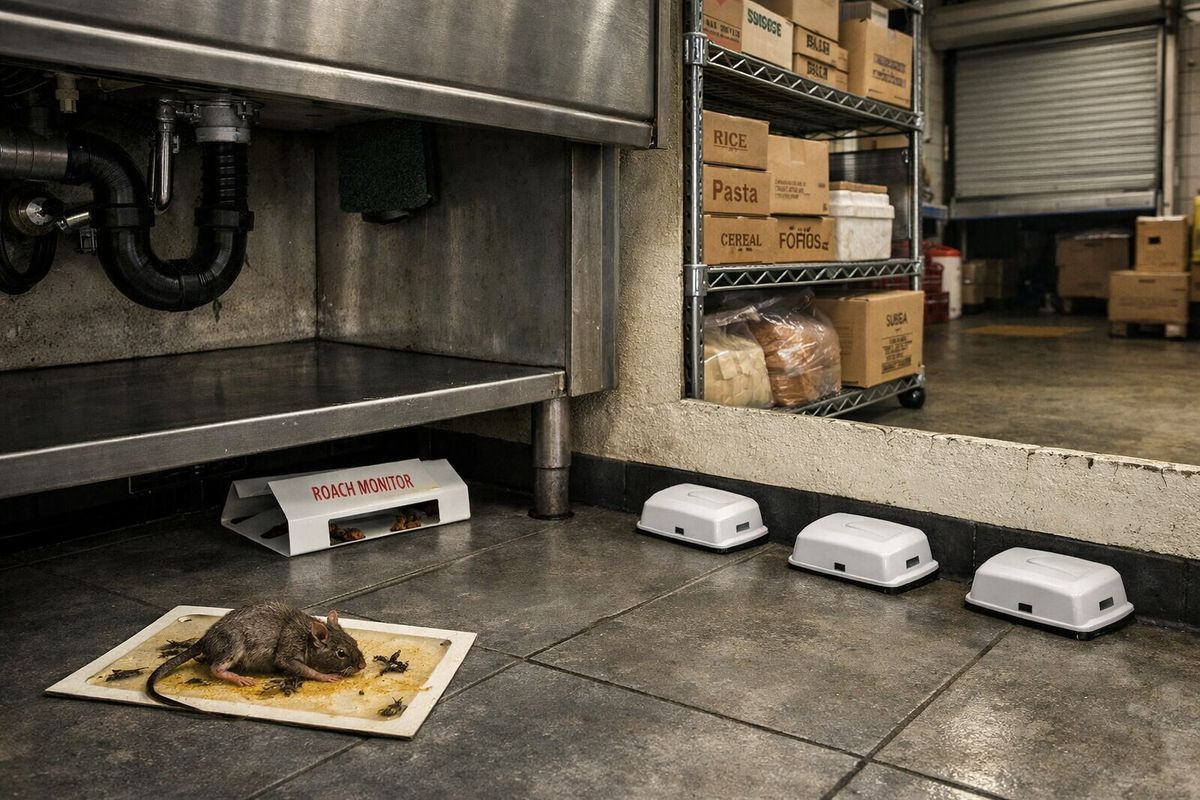
Even if your base service is monthly, some spaces need tighter attention. Kitchens, bars, employee break rooms, laundry rooms, vending areas, loading docks, compactors, housekeeping closets, dry storage, and maintenance rooms all tend to build pest pressure faster than standard guest-room corridors.
That means the contract can and should use mixed frequencies. For example, kitchen and waste areas may need more frequent inspection than upper guest-room floors. Loading zones may need targeted rodent monitoring year-round. Laundry and linen handling areas may deserve closer checks if bed bug introductions are a concern.
This kind of zoning is often more useful than simply buying more visits for the entire property. It also shows that the provider understands how hotel pests behave, not just how to price a generic route.
Seasonal adjustments and occupancy swings
Pest pressure changes with weather, occupancy, and travel patterns. Summer travel, holidays, large event weekends, and weather shifts can all raise exposure. In Chicago-area markets, warm months often mean more fly pressure, more exterior insect activity, and stronger rodent movement around trash and delivery areas. Harsh cold snaps can push mice indoors. Heavy holiday occupancy can increase luggage-related introductions and room-turn pressure.
Your contract should leave room for those changes. That does not always mean rewriting the agreement every season. It may mean building in flexible inspections, optional surge visits, or pre-defined high-season service adjustments.
That flexibility matters because annual contracts exist partly to preserve continuity across changing conditions. Industry reporting describes contract-based services as a core service type, and that makes sense here. A hotel needs readiness, not improvisation.
Bed bug language your contract should include word for word
If one section of the contract deserves extra attention, it is bed bug language. This is where vague wording causes the most damage because the timeline is short, the stakes are high, and everybody wants answers immediately.
You do not need legal poetry here. You need clear, operational language.
Inspection protocol after a complaint or suspected sighting
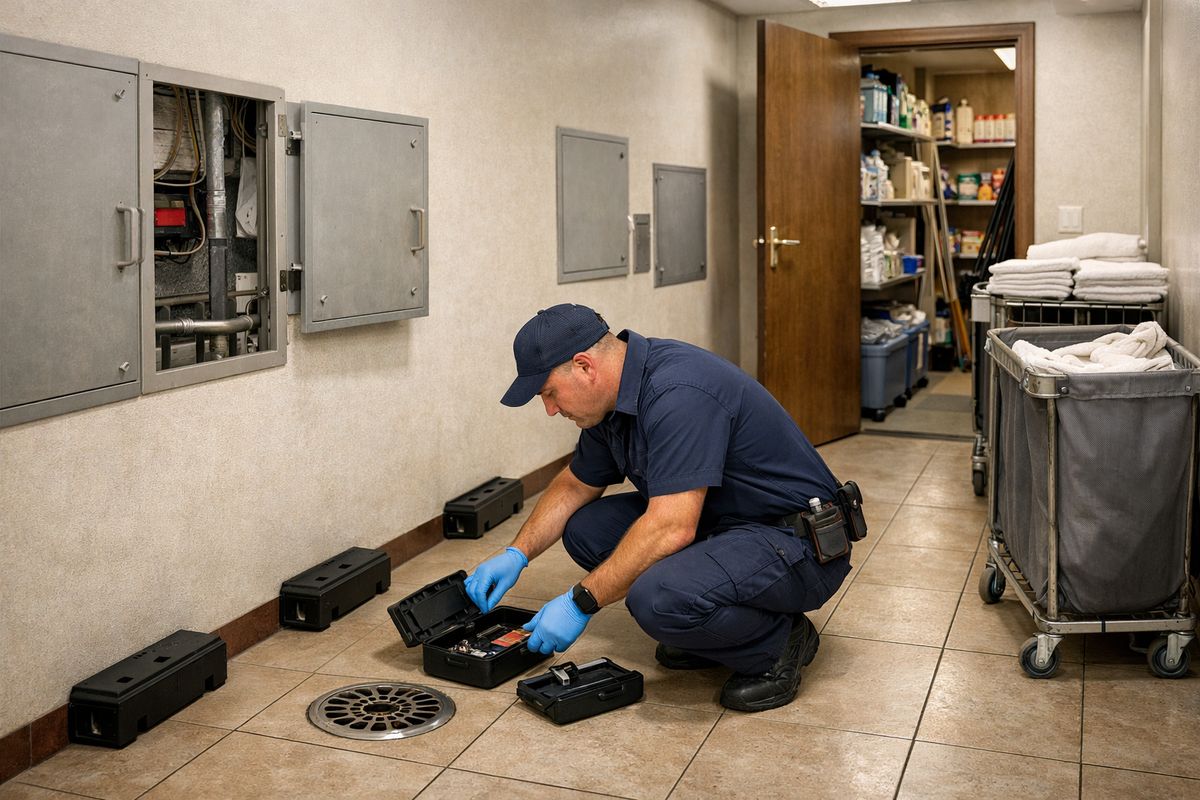
The contract should define who performs the inspection, how quickly inspection happens, which rooms are checked, and what evidence counts.
At minimum, the protocol should address inspection of the reported room plus nearby exposure zones. It should name the common harborage points: mattress seams, box springs, headboards, upholstered furniture, luggage racks, baseboards, carpet edges, and cracks around the bed area. Best-practice guidance routinely points to those hiding spots because that is where early activity often shows up.
The contract should also explain what triggers treatment. A live bug, viable eggs, fresh fecal spotting, cast skins, or a credible trained finding after a complaint may all qualify. If the standard is unclear, every incident becomes a debate.
Response-time guarantees for guest-room incidents
Speed should be written into the agreement, not implied. A reported bed bug incident in an occupied guest room is not the same as a routine exterior ant call.
A solid contract will set response expectations such as same-day, within 24 hours, or another clearly defined emergency window for suspected bed bug activity. It should also explain whether a technician must be on site physically, whether remote triage is allowed first, and what qualifies as an emergency. After-hours expectations matter just as much because bed bug complaints love to show up late.
This is where cheap contracts often reveal themselves. They look fine until you discover “emergency response” means the next business day if somebody is available.
Treatment scope for adjacent rooms and shared walls
Bed bugs do not respect room numbers. If the contract only covers the reported room unless you approve add-on pricing later, that is a red flag.
A strong agreement will define whether adjacent rooms, rooms above and below, shared-wall units, connecting rooms, hallway edges, and common furnishings are included in the response plan. The exact scope may vary, but it should not be mysterious.
This matters even more in multi-story properties and older buildings where wall voids, conduit paths, and furniture movement complicate containment. One complaint may actually be a cluster. The contract should make it easier to contain that cluster quickly.
Retreatments, verification, and room return-to-service standards
A bed bug response is not over when the first treatment is done. The contract should say how many follow-ups are included, how success is verified, and what documentation supports reopening the room.
That may include scheduled reinspections, interceptor checks, visual confirmation, canine inspection if used, or a defined symptom-free interval. The exact method can differ, but your room return standard should be practical and written down. Otherwise, one manager wants the room back online immediately, another wants three clean inspections, and nobody is working from the same script.
The best version of this clause protects both operations and caution. It gets rooms back into inventory as soon as there is a defensible basis, not a hopeful guess.
Response times, emergencies, and escalation rules
A pest issue spreads on its own timeline, not yours. That is why response language needs numbers, not nice-sounding promises.
Standard service windows vs emergency response
Routine service windows are for scheduled visits, non-urgent observations, and issues that can wait until the next regular stop without adding risk. Emergency response is different. Visible rodent activity in guest-facing areas, active roaches in food service zones, bed bug complaints in occupied rooms, or urgent health-related concerns all need faster action.
The contract should define both categories. It should state the standard turnaround for non-emergency calls and the guaranteed turnaround for emergencies. “Prompt service” is not enough. “Within 24 hours for routine non-emergency calls, same day for qualifying guest-room bed bug incidents, and within X hours for urgent health or food-service concerns” is much better.
Clear service levels reduce arguments, speed internal decision-making, and give staff a rule to follow at 11 p.m. when nobody wants to interpret vague wording.
After-hours, weekend, and holiday coverage
Hotels operate every day, so pest support has to acknowledge reality. If your contract covers only weekday daytime response unless you pay extra, that should be obvious before you sign.
Check whether after-hours, weekend, and holiday service exists at all, whether it is included, and what surcharge applies if it is not. Also check how contact works. Is there a live emergency number? A portal? Text support? A dispatch line? Something has to function when a manager on duty needs help now.
This point sounds administrative until you imagine a Sunday checkout rush, a review threat at the front desk, and no confirmed support path. Then it becomes very real.
Escalation steps when the first treatment does not solve the problem
Not every treatment works on the first pass, especially when the issue is advanced or the conditions feeding it remain in place. The contract should say what happens if activity continues.
That may include supervisor review, a more senior technician, deeper inspection, revised treatment strategy, expanded coverage to nearby areas, use of different tools, or a written corrective action plan. The point is not to promise magic. It is to make escalation automatic instead of awkward.
This section is especially helpful for recurring roach issues. If you have ever dealt with the feeling that roaches keep returning after service, you already know the cost of a contract that never defines the next move.
Documentation and reporting requirements that protect you
Paperwork sounds dull until you need it. Then it feels like insurance.
A hotel pest control contract should require records because records solve real problems. They show what was inspected, what was found, what was treated, what still needs fixing, and whether the same issue is repeating in the same location. They also give you something to point to when a guest complaint, audit, or management review lands on your desk.
Service reports after every visit
Every visit should generate a service report. Not once a quarter. Not only when something major happens. Every visit.
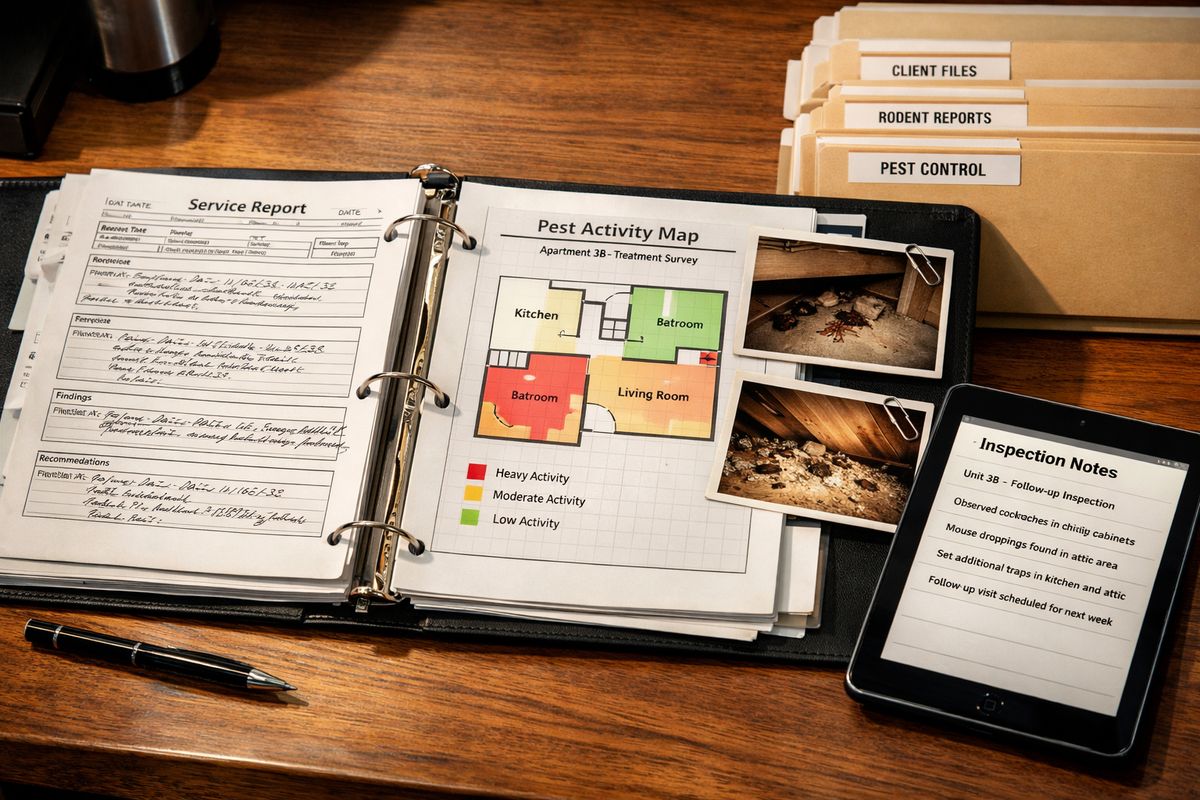
That report should include areas inspected, pest evidence found, devices checked, treatments used, product names if applicable, technician notes, sanitation or exclusion recommendations, and any follow-up needed. It should be legible, dated, and easy to store.
A useful report also separates observations from actions. If a roach issue is driven partly by standing water under a sink or cardboard accumulation in storage, the report should say so plainly. That lets maintenance and housekeeping act quickly instead of guessing what the technician meant.
Trend logs, activity maps, and recurring issue tracking
One-off reports are helpful. Pattern tracking is better.
Your contract should support logs, maps, or digital dashboards that show recurring activity by room block, floor, storage area, kitchen line, trash zone, season, or pest type. When you can see that the same stairwell closet, break room, or compactor corridor keeps producing activity, you stop treating symptoms and start fixing the actual problem.
This is also where good service becomes measurable. If you want a stronger way to evaluate performance over time, tracking what real pest results look like can help you compare vendors beyond “Did somebody show up?”
Documentation for guest disputes, claims, and audits
Guest claims do not always arrive while the event is fresh. Sometimes a complaint comes days later. Sometimes it comes through a review platform. Sometimes it comes through legal counsel. When that happens, documentation becomes your memory.
If a guest reports bites, claims to have seen a pest, requests compensation, or challenges your response, your records should show inspection timing, findings, actions taken, follow-up steps, and room status decisions. That does not guarantee a painless dispute, but it puts you on solid ground.
Documentation also supports audits, brand standards, health reviews, and internal management oversight. In commercial settings, hygiene and brand protection are major priorities. That is not overkill. It is ordinary operational defense.
Digital access to records and alerts
A paper binder in a manager’s office is better than nothing. It is not enough for many properties.
Digital reporting gives you faster sharing, cleaner storage, easier trend analysis, and timestamped communication. A contract should say whether you get emailed reports, portal access, uploaded photos, monitoring dashboards, digital signatures, or alert notifications after service and after urgent incidents.
This is one of those details that feels small until a district manager asks for six months of bed bug response records by 3 p.m. and you either have them in two minutes or spend the afternoon digging.
Integrated Pest Management should be written into the contract
Integrated Pest Management, or IPM, sounds technical, but the idea is simple. Find pests early, fix what is attracting them, treat only where it makes sense, and keep tracking the result. For hotels, that should be the default standard. Not the premium option. The default.
An IPM-based contract is usually better because hotels are complicated environments. Spraying blindly is a poor fit for sleeping rooms, food areas, public spaces, and constant occupancy. Monitoring, targeted treatment, and prevention work better and create fewer side effects.
Monitoring before blanket treatment
The best contracts build monitoring into routine service. That can include traps, interceptors, glue boards, rodent stations, remote sensors, or room-specific inspection routines depending on the pest pressure.
The point is not to avoid treatment forever. The point is to know where activity is happening before you throw product at the whole building. Monitoring tells you where to focus, whether a problem is growing, and whether previous treatment worked.
Research and industry practice both support this approach. One report associated compliant IPM and digital monitoring programs with a dramatic drop in pest-related incidents. That makes sense because targeted action usually beats guesswork.
Reduced-risk products and guest-sensitive practices
Hotels need practical pest control, but they also need guest-sensitive operations. Your contract should address low-odor, targeted, and lower-toxicity options where practical, especially in sleeping rooms, dining areas, and public spaces.
That language matters because “effective” and “disruptive” are not the same thing. A provider can be aggressive without being careless. The contract should explain how occupied rooms are handled, when rooms must be vacant, what ventilation or reentry requirements apply, and how food-contact or spa-adjacent areas are managed.
You are not buying a chemistry list. You are buying a treatment process that fits a hospitality building.
Coordination with housekeeping, maintenance, and food service
IPM works only if findings move to the people who can act on them. If housekeeping spots fecal spotting near a headboard, if maintenance sees a failed door sweep at a rear exit, or if food service notices fly activity around a floor drain, the provider needs a clear loop for communication.
That means your contract should support coordination. Not motivational slogans, actual reporting flow. Who gets recommendations? How quickly? In what format? Are photos included? Are recurring issues flagged until fixed?
A hotel contract should also reflect the reality that pest control is partly cross-department work. Service gets much better when staff know what to report and where the provider expects action.
Compliance, licensing, and insurance clauses to verify
This part is less exciting than bed bug response language, but it protects you from avoidable mistakes. If licensing, insurance, and compliance language are unclear, the provider may still be fine. But you should not assume.
State licensing and technician credentials
The contract should confirm that the company and applicable technicians hold active licensing for the work performed in the relevant jurisdiction. For Illinois properties, that means appropriate commercial authority and current credentials.
The EPA recommends verifying that the company has a certified applicator in the proper category and that other applicators are licensed or working under proper supervision. That should not be a hidden detail. Ask for proof.
For hospitality work, it is also fair to ask about commercial experience, technician continuity, and training standards. A hotel is not the place for trial-and-error learning.
Insurance, liability, and indemnification language
The contract should state what insurance coverage exists and who bears responsibility if something goes wrong. Look for general liability, workers’ compensation, and any property-damage language relevant to treatment mistakes.
Liability language deserves a slow read. If a treatment error damages furnishings, creates guest disruption, or triggers extra room downtime, what happens? If an exclusion recommendation was documented but never repaired, how does that affect responsibility later? If a missed emergency response worsens the problem, is there any remedy?
This is not about picking a fight in advance. It is about preventing confusion after an expensive incident.
Health, safety, and regulatory compliance
A hotel contract should also address safety and regulatory expectations. That includes lawful pesticide use, adherence to label directions, access to safety data or product information, posting or notification obligations where applicable, and compliance with health-related standards relevant to the property.
This language protects your operations staff too. When a treatment is scheduled in a kitchen, guest room, or public area, you need to know what precautions apply and what documentation will be available.
A provider that treats compliance as a routine part of service usually runs a cleaner operation overall. That tends to show up everywhere else in the contract.
Staff communication and training support
Even the best contract underperforms if staff do not know what to notice or how to report it. Pest control works better when your people have a simple, repeatable playbook.
What housekeeping should be trained to spot
Housekeeping is often closest to early warning signs, especially in guest rooms. Training support in the contract should cover what signs matter and how to report them.
For bed bugs, that means dark fecal spots, shed skins, eggshells, or live insects around mattress seams, headboards, luggage racks, upholstered furniture, and baseboards. For roaches, it may mean pepper-like droppings, egg cases, musty odors, or activity around sinks and mini-fridge areas. For rodents, droppings, gnawing, greasy rub marks, and odd odors matter. Moisture conditions matter too because water is often half the story.
The goal is not to turn staff into technicians. It is to help staff recognize the difference between “ignore it” and “report this now.”
How front desk and managers should route complaints
A front desk complaint is only useful if it gets routed correctly. Your contract should support a clear reporting chain for guest complaints, especially late-night reports that can easily fall through shift changes.
That process should define who gets notified, what information gets captured, who contacts the provider, and what temporary room-handling steps apply before inspection. If you have ever watched an issue bounce from desk to housekeeping to management with nobody owning it, you already know why this matters.
Clear routing also protects guest experience. Calm, consistent handling does more good than frantic improvisation.
Maintenance responsibilities that affect pest pressure
Maintenance controls a surprising amount of pest pressure. Leaks, caulking gaps, door sweeps, loose thresholds, drain issues, trash enclosure conditions, storage shelving placement, and wall penetrations all affect whether pests stay occasional or become recurring.
Your contract should connect provider findings to maintenance action. If an issue is documented three times in the same area and never resolved, that should be easy to see. Otherwise, every service call starts from zero.
This is especially useful in older suburban and urban properties where age, utility retrofits, and patchwork repairs create lots of tiny access points that never make it onto a guest complaint but quietly keep the pressure alive.
Pricing, billing, and what drives contract cost
Price matters. But the cheapest monthly number is often the least useful buying metric because contracts hide cost in different places.
A fair comparison looks at what is included, what triggers extra billing, how much follow-up is built in, and how expensive a failure could become. A lower base rate can still be the higher-risk choice if key services are carved out.
What is usually included in the base contract
Base contracts often include scheduled inspections, routine monitoring, standard treatments for listed pests, device checks, service reports, and a certain level of ordinary service calls between scheduled visits.
But “usually” is doing a lot of work there. Some agreements include guest-room follow-ups for common pests. Some do not. Some include trend reporting and digital records. Some treat those as premium features. Some include kitchen drain service or rodent station maintenance. Some carve them out.
That is why the scope section and the pricing section need to match. If the contract promises regular monitoring but bills separately for every device replacement, you should know that upfront.
Common add-on charges to watch for
Most hotel contracts have potential extras. That is not automatically bad. It just needs to be transparent.
Common add-ons include canine bed bug inspections, heat treatment, emergency callouts, after-hours visits, extra service beyond a set cap, excluded pests, large numbers of additional rooms, structural exclusion work, and specialty reporting. Bed bug service is especially likely to create extra charges if the contract does not define what is bundled.
Look closely at the language around “initial treatment,” “retreatment,” and “specialty service.” That is where surprise invoices like to live.
Why preventive contracts often cost less than one major outbreak
Recurring service can feel like another line item until you compare it with the cost of one ugly event. A bed bug incident can take a room offline, trigger staff overtime, produce refunds, and drag in follow-up inspections. One source notes that a single negative bed bug review may cut bookings by 20% to 30% for months. Suddenly the monthly service fee looks small.
The same logic applies to roach and rodent issues in food-service or guest-facing spaces. Preventive contracts are not cheap because providers love paperwork. They exist because prevention usually costs less than reacting late.
Contract terms, renewals, and cancellation details
Service promises matter, but business terms matter too. A decent service scope can still become a bad deal if renewal and cancellation language traps you.
Contract length and auto-renewal language
Many pest control agreements run for a year. Some offer multi-year pricing discounts. Neither is a problem by itself. The problem is auto-renewal language that is easy to miss and hard to escape.
Check the term length, notice window, and renewal trigger. Does the contract renew automatically unless notice is given 30, 60, or 90 days in advance? Is the notice method specific? Does a discounted multi-year term remove flexibility you may want if service quality drops?
Nothing is wrong with renewal. Hidden renewal is the issue.
Performance guarantees and service credits
“Guaranteed service” sounds impressive, but the wording matters. A real guarantee says what happens if pests persist, if a scheduled service is missed, or if response windows are not met.
The best versions include no-charge return visits for covered issues within a defined period and may include service credits or another remedy if the provider misses stated service levels. Weak guarantees just promise satisfaction without defining the fix.
Read this section the same way you would read a warranty on an expensive appliance. A promise that cannot be measured usually cannot be enforced.
Cancellation rights and exit terms
Every contract should make it clear how you can leave. That includes early termination fees, no-cause cancellation rights, cure periods for poor performance, and how monitoring devices, records, or site maps are handled after service ends.
A cure period can be reasonable. It gives the provider a chance to fix documented problems before termination. But if the contract makes exit nearly impossible even when service is weak, that is a bad sign.
Also check record access after cancellation. If your service history disappears with the vendor, changing providers becomes harder than it should be.
Red flags that signal a weak hotel pest control contract
Some contract problems are subtle. Others are glaring. Learn to spot both.
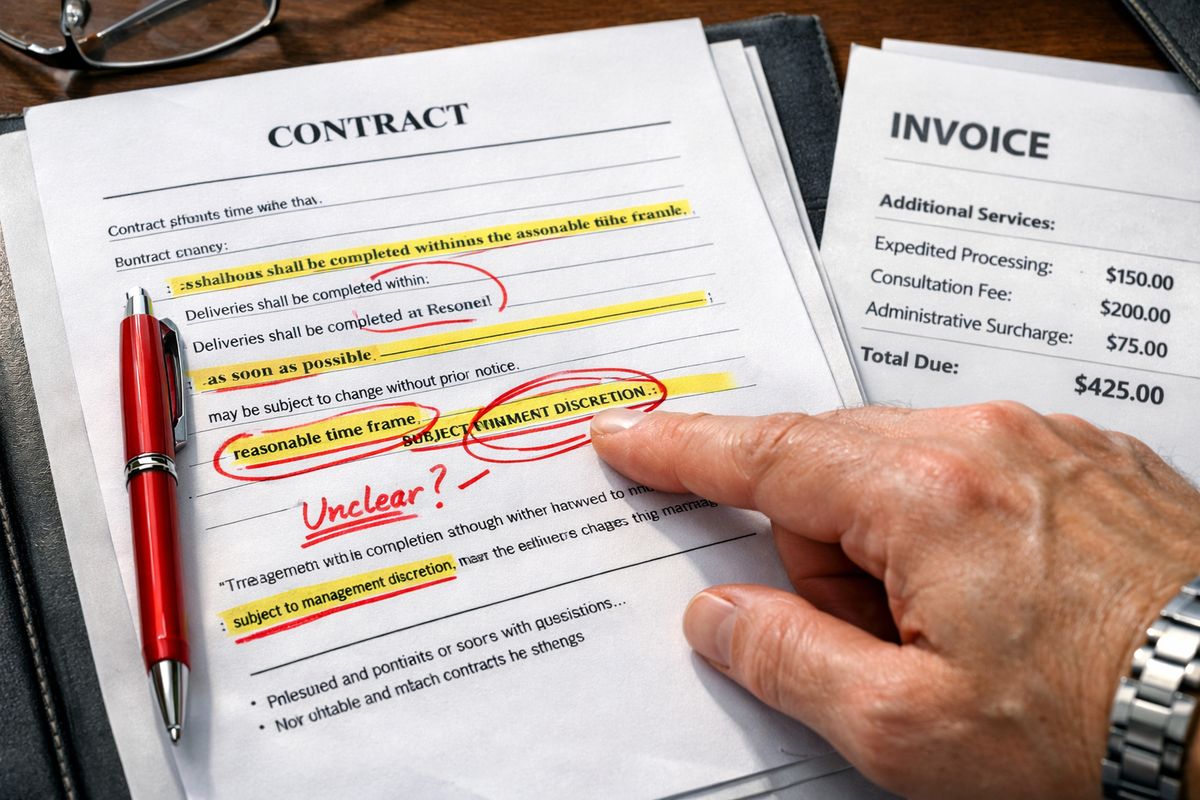
Vague wording like “treat as needed”
This phrase is one of the biggest warning signs in hotel pest contracts. Needed according to whom? Based on what evidence? Within what timeline? In which rooms? With how many follow-ups?
Vague wording shifts power away from you at exactly the wrong time. It creates room for delay, surprise billing, and conflicting expectations.
No bed bug protocol and no response timeline
For a hotel, this is not a minor omission. It is a major risk.
Bed bug language should have its own process, scope, and timing. If the proposal treats bed bugs like any other generic insect service or pushes everything into “additional service as quoted,” keep looking.
Poor documentation promises or verbal-only assurances
If a proposal leans heavily on verbal reassurance but light on written deliverables, slow down. “Don’t worry, you’ll be taken care of” is not contract language. Neither is “usually” when you are discussing emergency response or included follow-ups.
If it is not written down, assume it will be hard to enforce later.
Pricing that looks low because key services are excluded
Low monthly pricing can be real. It can also be misleading. A bargain proposal may exclude emergency visits, bed bug response, adjacent-room inspections, extra devices, retreatments beyond one visit, or reporting features you actually need.
That is why scope and price must be read together. If the number looks unusually attractive, the missing pieces are usually where the profit moved.
How to compare pest control proposals side by side
Comparing proposals gets easier when you stop asking “Which one is cheaper?” and start asking “Which one is clearer?” Clear contracts are easier to manage, easier to enforce, and easier to trust.
Questions to ask before signing
Before signing, pin down the practical gaps. How fast is emergency response for a guest-room complaint? Are adjacent rooms included in bed bug inspection and treatment? How are follow-up visits billed? What reports arrive after every visit? Which pests are excluded? Which areas are covered routinely? How does after-hours service work? What happens if the first treatment fails?
Those questions are not picky. They are basic operating questions. If the answers come slowly, vaguely, or only verbally, that tells you a lot.
It also helps to spend some time comparing service providers the right way so sales polish does not distract you from contract detail.
What the best proposal should make easy to find
A strong proposal should make scope, frequency, covered pests, response windows, emergency rules, exclusions, documentation, pricing, and escalation steps easy to find on the page. You should not have to dig through attachments or wait for side emails to understand what you are buying.
Clarity is a quality signal. If the proposal is well organized, the service operation often is too. Not always, but often enough to matter.
Simple contract comparison checklist
The easiest way to compare two or three contracts is line by line. Use the same categories for each: pests covered, inspection frequency, high-risk areas included, bed bug protocol, response time, follow-up terms, reports, digital access, staff training support, compliance proof, insurance, pricing, add-ons, guarantee, and cancellation.
A clean checklist beats memory every time. It keeps you from being swayed by whichever salesperson called most recently.
Sample checklist: what every hotel pest control contract should include
If you want one practical takeaway, it is this: pull out one contract today and test it against a plain checklist. If the answers are hard to find, the contract is weaker than it should be.
Must-have operational items
Your contract should clearly state inspection frequency, covered pests, included areas, treatment methods, emergency response windows, follow-up visit rules, retreatment triggers, and after-hours coverage. It should explain how kitchens, guest rooms, laundry areas, trash zones, loading areas, and public spaces are handled.
It should also spell out who gets reports, how quickly issues are escalated, and what seasonal or occupancy-based service adjustments are available.
Must-have protection items
You should be able to find service reports, trend tracking, digital record access, licensing confirmation, insurance proof, compliance language, product and safety information, performance guarantees, and cancellation rights without hunting through fine print.
If any of those are missing or hand-waved verbally, pause before signing.
Must-have bed bug items
The bed bug section should define complaint response time, inspection protocol, evidence standards, adjacent-room handling, shared-wall considerations, included treatments, number of follow-ups, verification steps, and room return-to-service standards.
This part should be specific enough that a night manager, housekeeping supervisor, and technician could all follow the same process without guessing. That is the real test.
Try one thing before moving on: take the contract in front of you and highlight every sentence that answers who, when, where, and what happens next. Blank space tells the story fast.
Frequently Asked Questions
How detailed should a hotel pest control contract be?
It should be detailed enough that routine service, emergencies, follow-ups, reporting, and billing are all clear without extra explanation. If important items like bed bug response, adjacent-room scope, or after-hours coverage are vague, the contract is not detailed enough.
Should bed bug treatment always be included in the main contract?
Not always in the monthly base price, but bed bug protocol should always be addressed in the contract. Even if treatment is billed separately, response times, inspection rules, surrounding-room scope, and follow-up expectations should be written in advance.
Is monthly service better than quarterly service for hotels?
Often, yes. Monthly service is usually a stronger baseline for hotels because turnover, luggage traffic, food service, and shared spaces create steady risk. Quarterly service can work for lower-risk properties, but it is usually too light for hotels with active history, older buildings, or food-heavy operations.
What documents should you receive after each visit?
You should receive a service report showing areas inspected, pests found, treatments used, technician notes, recommendations, and follow-up needs. Digital copies are especially useful because they are easier to store, share, and pull during claims or audits.
What is the biggest red flag in a pest control contract?
For hotels, the biggest red flag is vague language around bed bugs and emergencies. If the contract does not clearly define response timelines, inspection scope, and follow-up rules, you are likely to end up arguing about service when speed matters most.
Can the cheapest proposal still be the wrong choice?
Absolutely. A low monthly rate can hide expensive exclusions like emergency callouts, bed bug response, extra inspections, or limited retreatments. The better deal is the one with clear scope, solid response standards, and fewer surprise charges when something goes wrong.