
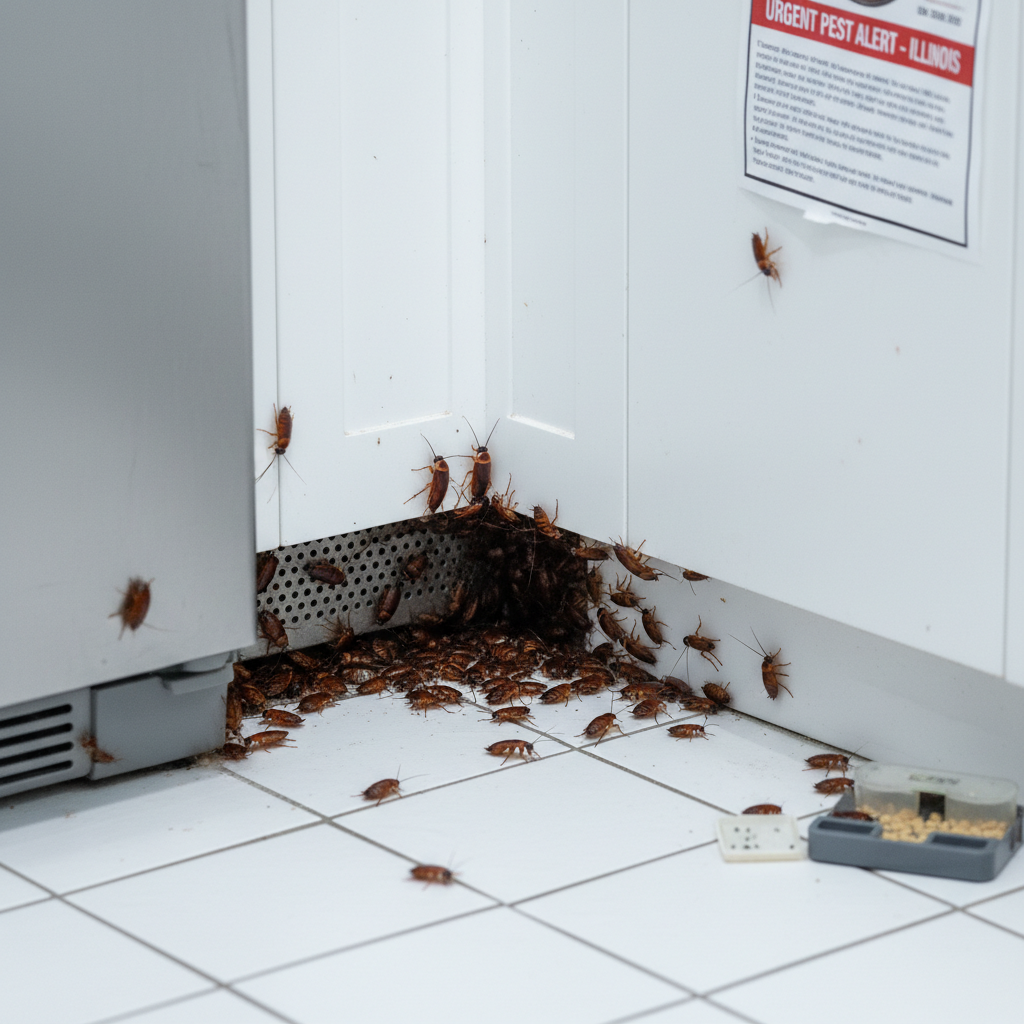
German roaches in Illinois aren’t just a seasonal nuisance. These small, bronze-colored pests can become a full-blown infestation, especially if you live in an older building with shared walls. Even in newer apartments or single-family homes, they find warm, hidden spots close to food and water—like behind your refrigerator or under your sink. If you’ve spotted these wiry insects scuttling across the kitchen floor, it’s time to act with a focused, informed strategy.
Below is your ultimate guide to understanding why German roaches thrive in Illinois, what makes them a pressing concern, and, most importantly, how to tackle them through a targeted approach. By the end, you’ll have the knowledge you need to keep these pests out of your home and out of your life.
Understanding German roaches in Illinois
German cockroaches are the most common roach species in Illinois kitchens, and for good reason. Unlike some roach types that prefer damp basements or sewers, German roaches crave warmth and proximity to food. According to the Illinois Department of Public Health, these pests spend about 75 percent of their lives hidden away in cracks and crevices, emerging primarily at night. [1]
Because the climate in Illinois often fluctuates between hot, humid summers and freezing winters, German roaches rarely survive for long outdoors. Instead, they choose indoor environments—crowded apartment buildings, restaurant kitchens, or even your cozy home—to ensure year-round warmth and abundant food sources. Despite their name, these roaches aren’t from Germany. It’s likely they traveled here through global trade routes, hitching rides on shipments and setting up shop wherever they found ideal conditions.
If you’ve recently noticed small roaches that measure about a half-inch long, with two distinct black stripes behind the head, you’re most likely seeing German cockroaches. Because they hide efficiently, you might see one scurry from underneath the stove only when you flip on the kitchen light. Sadly, spotting even one is a strong indicator that you may have many more lurking close by. This species reproduces quickly, so don’t dismiss a single sighting as a fluke. In fact, if you’re curious about just how quickly populations can expand, explore rapid reproduction german roaches for more insights.
Know the signs of an infestation
German cockroach infestations aren’t always obvious at first. These creatures avoid daylight and remain hidden in warm, moist spaces. Whether you live in a small studio in downtown Chicago or a suburb with a spacious kitchen, recognizing early signs will help you jump on the problem sooner rather than later.
• Fecal spotting. You may see small brown or black specks on surfaces, particularly in corners, behind appliances, or in cabinets. Experts say these droppings are sometimes mistaken for ground pepper.
• Egg cases and shed skins. A female German roach carries her egg capsule (ootheca) until just before hatching, and each capsule can contain up to 30-48 eggs. Keep an eye out for discarded egg sacs or translucent shed skins; they indicate an active colony.
• Foul or musty odor. When roach populations are large, you might notice a vaguely unpleasant, musty smell in enclosed areas like cabinets, pantries, or drawers.
• Nighttime sightings. Because roaches are nocturnal, you’re more likely to spot them after dark. If flipping on a light in the kitchen causes a frantic scramble of scurrying insects, there’s a good chance you’re dealing with an infestation.
Pinpointing these red flags is central to containing the issue before it becomes severe. If you’re in Chicago specifically, you might also want to learn about German cockroach infestation Chicago to see why urban environments are particularly prone to widespread roach problems.
Recognize the health risks
It’s not just the creeping sensation of seeing a roach that should concern you—it’s the health challenges they bring. German cockroaches contaminate the surfaces and food they come into contact with. In doing so, they can spread bacteria like Salmonella and E. coli, which may then trigger foodborne illnesses. [1]
For many urban Illinois residents—especially children—these roaches can also spark or worsen respiratory issues. Cockroach allergens are found in their saliva, shed skins, and droppings, which become airborne and affect the air quality in your home. Asthma sufferers or those with allergies frequently experience flare-ups if roach populations go unchecked. The Illinois Department of Public Health also warns that allowing infestations to persist might amplify these allergic reactions, particularly when roaches breed in large numbers in multi-unit housing.
German roaches in Illinois can also carry pathogens from unsanitary locations to your countertops or dining area. Imagine a roach crawling across a trash chute before darting across your cutting board. That’s how quickly bacteria can transfer. So while an infestation might seem more annoying than dangerous, there’s a notable public health angle to consider.
Learn why they spread so quickly
One reason German roaches are so notorious in Illinois is the pace at which they multiply. A single fertilized female can hold a substantial egg capsule until just hours before hatching, giving the colony a major jump-start. According to the University of Illinois Extension, some cockroach populations can produce multiple generations per year, especially in heated indoor environments. [2]
Illinois’ urban housing setups—old Victorian homes split into apartments, or high-rise buildings crisscrossed with vents and shared plumbing—magnify the spread. If a neighbor in a shared complex isn’t taking care of their own infestation, roaches can travel through cracks, crawl spaces, or even along electrical wiring. This phenomenon is why roaches sometimes show up unexpectedly in clean homes. They don’t discriminate between spotless kitchens and messy ones. Roaches follow warmth and food sources wherever they can.
To see how quickly roaches can gain a foothold in your building, remember that many apartment units share common walls, ceilings, or floors. So if one resident is battling a full-blown infestation, it’s much easier for another to end up with the same problem. Because you can’t control what your neighbors do, focusing on sealing potential entry points is crucial. You can also check out tips for preventing German roach infestation to stop them from migrating into your home.
Why “DIY” may help the spread
You might think spraying a store-bought insecticide around your kitchen baseboards will force roaches to retreat or die off, but these cockroaches are surprisingly resilient. Research from a 2024 University of Kentucky study found that short-term exposure to many aerosol or spray-based pesticides only resulted in minimal mortality, less than 20% for wild German cockroach populations. [2]
Some chemicals even repel the roaches enough that they avoid the treated areas but remain alive elsewhere. This repellent effect can drive them deeper into wall voids or adjacent rooms, allowing the colony to persist. If roaches sense pesticides in one apartment, they may migrate to a neighboring unit. This is why real, targeted treatment must go beyond an off-the-shelf solution.
Use targeted treatment strategies
Given German roaches’ remarkable adaptability, approach them with a game plan. Whether you manage a restaurant in downtown Chicago or live in a suburban duplex, you need strategic tactics to tackle roaches at every stage of their life cycle.
Identify hot spots\
Start with a thorough inspection. Check behind your refrigerator, stove, dishwasher, and under sinks or counters. Place sticky traps in dark corners to see which areas have the most activity.Focus on baits instead of sprays\
Baits—especially gel-based formulations—can be more effective than broad pesticide sprays. Roaches eat the bait and then return to their harborage sites, inadvertently killing others through secondary contact. While some off-the-shelf baits work, newer generations of professional-grade products are customized to break the roach life cycle more effectively.Eliminate water sources\
Roaches can go a while without food, but even a small leak under a sink or drips from an AC unit can sustain them. Fix plumbing issues immediately, and wipe out standing water daily.Clean thoroughly and often\
Sanitation is your ally. Wiping up crumbs, vacuuming regularly, and sealing food containers will leave roaches with fewer dining options. Store pantry goods in airtight plastic or glass containers, and avoid leaving dirty dishes in the sink overnight.Fill gaps and cracks\
Roaches slip through unsealed crevices around cabinets, pipes, or baseboards. Use silicone caulk or weatherstripping to block these entry points. This measure also prevents roaches from traveling between adjacent apartments.Seek professional pest control if needed\
For large or persistent infestations, it’s wise to work with a specialized pest control service. This can be especially true if you own a rental property or restaurant where roaches can jeopardize health department inspections.
When you want an in-depth perspective on overcoming tricky infestations, best treatment for German roaches offers further detail to refine your approach.
Adopt IPM for long-term control
Integrated Pest Management (IPM) is an approach that combines proactive measures with targeted treatments. Rather than relying solely on pesticides, IPM emphasizes inspection, prevention, and continuous monitoring, supported by the Illinois Department of Public Health’s recommendations. [1]
IPM has four main pillars: • Inspection. Figure out exactly where roaches hide and breed by placing traps or sticky boards around suspected areas.\
• Exclusion. Block entrances in walls, windows, vents, or doorways. Address potential roach highways in older properties, such as shared pipes and conduits.\
• Sanitation. Store your food in sealed containers and clear away clutter. Vacuum floors, kitchen corners, and furniture to remove crumbs and roach eggs.\
• Targeted action. Use gel baits or insect growth regulators (IGRs), and consult professionals for solutions that fit your building’s unique structure.
IPM is especially relevant in places where roaches move between units, like multi-family dwellings or large commercial buildings. If one area is treated but another is neglected, the pests often rebound later. IPM prevents roaches from simply shifting locations.
Table: DIY approach vs. IPM approach
| Aspect | DIY Approach | IPM Approach |
|---|---|---|
| Main tactic | Over-the-counter sprays, foggers | Combination of baits, exclusion, sanitation |
| Roach mortality | Low to moderate (possible quick reinvasion) | High (targets both adult roaches and their offspring) |
| Environmental impact | Potentially higher chemical usage | Focus on minimal, targeted pesticide use |
| Sustainability | Often short-term, no ongoing prevention | Long-term solution with continuous monitoring |
Using IPM can mean you’re not merely battling roaches in the moment; you’re effectively designing a defense strategy to keep them from returning. It’s a balancing act between thorough property upkeep, occupant cooperation, and the occasional use of specialized products.
Keep your space roach-free
Even if your unit has never experienced a roach issue, it’s wise to take a few extra steps. The unique climate in Illinois can mean roaches look for permanent shelter in your cozy interior. And if you’ve kicked roaches out once, you don’t want them slipping back in.
• Deep-clean weekly\
Focus on corners, behind large appliances, and under furniture. Crumbs and spills feed roaches for days.
• Use sealed food containers\
Cardboard boxes or open cereal bags are easy pickings for determined pests. Transferring pantry staples into sealed plastic or glass containers denies roaches an easy source of nourishment.
• Monitor regularly\
Keep a few sticky traps in potential hot spots. If roaches show up in higher numbers, act right away, rather than waiting for an infestation to escalate.
• Encourage neighbors to cooperate\
If you live in a condo or apartment building, roach control works best when all tenants are on board. Share tips or articles with building management so they understand the importance of unified action.
A note about professional help
Sometimes even the most diligent homeowner or tenant can’t handle an entrenched infestation alone, especially if roaches are pouring in from a neighbor’s untreated unit. When you need a robust solution, consider booking a thorough inspection or scheduling a service that specifically targets roaches. You can learn more about local pest control strategies and services at Midwest Pest Solutions, where technicians understand the unique structural challenges of older Illinois homes.
If your concern is more about preventing roaches year-round, see our insights on preventing German roach infestation. Even little steps—like sealing a leaky faucet or putting steel wool around pipe penetrations—can stop an invasion in its tracks before the roaches have a chance to settle in.
Final thoughts
German roaches in Illinois aren’t selective about where they settle. From busy student apartments to high-end restaurants, they happily hide where it’s warm and close to reliable food. In fact, your clean-looking kitchen may well offer them everything they need: a bit of moisture under the sink, a warm motor behind the fridge, and stray crumbs on the floor if you aren’t diligent.
Recognizing early red flags, limiting easy water and food, plus enlisting the best treatment options can save you time, money, and plenty of headaches. Whether you do it yourself or call in professionals, focus on methods that target the root cause of the infestation. Keep an eye on potential entry points and reduce clutter so roaches have fewer places to hide.
By relying on Integrated Pest Management and a consistent cleaning routine, you can ensure roaches never gain the foothold they crave. If you suspect roaches are spreading from unit to unit, act fast—part of roach control is being proactive before a small sighting turns into a widespread infestation. With the right strategy, you can protect your kitchen, your peace of mind, and everyone else who calls your Illinois home their own.