
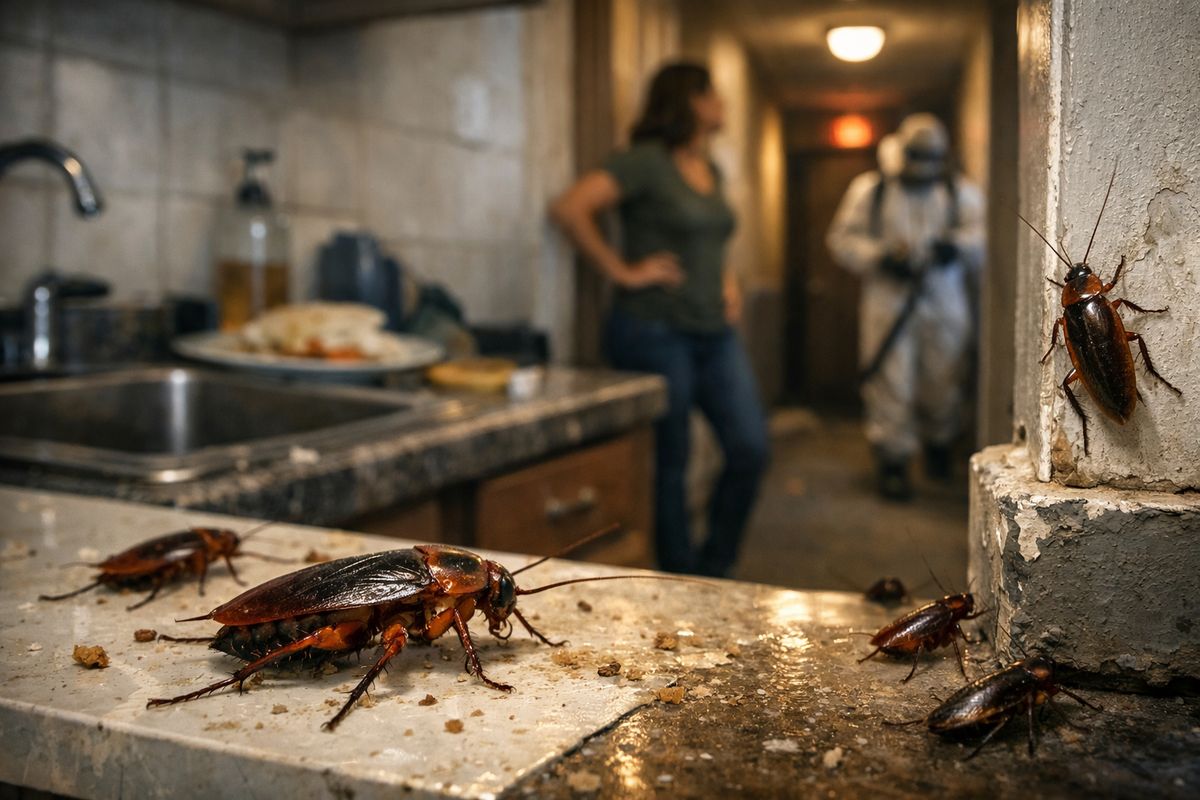
You flip on the kitchen light at 11 p.m., head for a glass of water, and catch one roach streaking behind the stove. That moment is exactly why people search for roaches in apartment building, because in a shared building, one bug in your kitchen often points to a bigger problem in the walls, plumbing lines, or neighboring units. Here’s the thing: you can do a lot right away, but a lasting fix usually takes building-wide action, not one quick spray.
If you want the short version, start here:
- Figure out where activity is worst
- Cut off easy food and water
- Document everything in writing
- Report it fast to management
- Push for building-wide treatment
- Avoid sprays that make baiting harder
Why roaches in one apartment usually mean a bigger building problem
In a single-family house, a pest problem can sometimes stay contained to one room or one bad habit. In an apartment building, that is rarely how it works. Roaches move through pipe openings, wall voids, electrical gaps, hallway doors, trash areas, and shared utility spaces. They do not care where your lease starts and stops.
That matters because your apartment can be spotless and still get hit if the unit next door has a leak under the sink, if the basement trash room is active, or if gaps around plumbing let roaches travel like smoke slipping through tiny cracks. Research on apartment housing has shown that shared plumbing connections can drive movement between units, which is a big reason isolated treatment fails.
The direct claim is simple: one roach in an apartment is never something to shrug off. If you wait until you see several, the problem is already more expensive, more frustrating, and harder to fully clear.
What kind of roaches show up in apartment buildings?
Not every roach points to the same source. Species matters because it changes where the insects hide, how fast the infestation grows, and what treatment makes sense.
In apartment buildings, the usual troublemaker is the German cockroach. It is small, fast, good at hiding, and built for indoor living. Bigger roaches, like American or Oriental cockroaches, show up too, especially in older buildings, basements, boiler rooms, and damp utility spaces around Chicago.
German cockroaches: the ones most tenants end up fighting
German cockroaches are light brown to tan, usually around half an inch long, with two dark stripes behind the head. If you see small roaches in the kitchen, that is the first suspect. Typical hiding spots include under the sink, behind the refrigerator, around the stove, inside cabinet hinges, under microwave feet, and near any warm appliance with crumbs or moisture.
The real problem is speed. German roaches breed fast, spread fast, and stay hidden until numbers build up. Random store-bought sprays alone usually do not beat them. In fact, over-the-counter products can fall short, especially when roaches are nesting in multiple units.
If you want a closer look at why this type gets out of hand so quickly, it helps to read about why these infestations spread fast.
Other roaches you may see
Larger roaches tend to point to different conditions. American cockroaches are bigger, reddish brown, and often connected to basements, drains, boiler rooms, sewers, and damp common areas. Oriental roaches, darker and slower, also love cool, wet spots and show up more often in older brick buildings, crawl spaces, and utility rooms.
In Chicago-area properties, especially older multifamily buildings or garden apartments, those larger roaches can show up after heavy rain, around floor drains, or near water-damaged spaces. Small roaches usually mean indoor nesting. Large roaches often mean moisture, entry, and drainage issues.
Signs the problem is more than an occasional roach
A single stray insect from a hallway is one thing. Repeated sightings, hidden signs, and activity across rooms tell a different story. Apartment infestations often build quietly because roaches are nocturnal and very good at staying out of sight.
That is the catch. You can have a real infestation before you see one crawl across the counter.
The clues roaches leave behind
Roach droppings are one of the clearest signs. For small roaches, droppings can look like black pepper or coffee grounds. You’ll usually notice them in cabinet corners, under sinks, along shelf edges, behind the toaster, or near the back of drawers. Heavier infestations can leave smear marks in damp corners where roaches travel often.
Egg cases are another giveaway. These small brown capsules may turn up under appliances, inside cabinets, behind stacked items, or near baseboards. Shed skins, dead roaches, and a musty, oily odor also matter. That smell tends to show up in tight enclosed spaces first, like under the kitchen sink or inside a crowded pantry.
Why daytime sightings are a red flag
Roaches prefer darkness. So if you see one in broad daylight, especially in the kitchen or bathroom, assume pressure is building in the hiding spaces. Daytime sightings often mean overcrowding, heavy activity, or a nest close to open living areas.
Put plainly, roaches out in the daytime usually mean you are not dealing with a one-off visitor.
Hidden hot spots in apartments and common areas
Start with the usual apartment trouble spots: under sinks, behind the fridge, around the stove, inside bathroom vanities, around radiator lines, and wherever pipes enter the wall. Then think beyond your own unit. Laundry rooms, trash rooms, basements, storage lockers, utility closets, and shared chases are classic building hot spots.
Cardboard and paper matter more than most people realize. Roaches hide in wood and cardboard boxes, so that stack of delivery boxes by the pantry or paper bags under the sink can become easy shelter.
What causes roaches in an apartment building
People love to reduce this to one sentence: dirty apartment, get roaches. Real buildings are messier than that. Cleanliness matters, but it is only one piece.
Roaches need food, water, warmth, shelter, and access. Apartment buildings provide all five if leaks go unfixed, trash areas stay active, walls have gaps, and untreated units sit next to treated ones. Housing studies have also linked cockroach activity to peeling paint, water damage, and higher residential density. That means building condition is part of pest control, not a side issue.
Food and water sources roaches keep coming back to
Crumbs under the toaster, grease beside the stove, pet food left out overnight, sticky recycling bins, and forgotten takeout containers all help roaches stick around. But water is often the real driver. Roaches can go longer without food than without moisture, so drips under sinks, condensation behind the fridge, wet sponges, and standing water in bathroom corners keep the party going.
If your apartment has a leak and roaches, report both. The two problems often travel together.
Cracks, pipe gaps, and shared walls
Roaches move through amazingly small openings. Gaps around plumbing penetrations, electrical cutouts, baseboards, radiator lines, and hallway doors give them a highway between units. Picture smoke slipping under a door and through a wall opening. Roaches use the same kind of path, just slower and uglier.
Research has found that shared plumbing connections can play a big role in roach movement between apartments. That is why a treatment in one kitchen can fail if the unit above, below, or next door stays active.
Why clean apartments still get roaches
This is one of the most frustrating parts of apartment living. You can wipe every counter, store every snack in containers, and still get roaches because the source is outside your unit. Untreated neighbors, hidden leaks, bad trash handling, old caulk, damaged walls, and common-area activity can keep pressure on your apartment no matter how careful you are.
So yes, sanitation helps. No, it does not guarantee protection in a shared building.
What you can do right away in your own apartment
You do not need to tear your apartment apart tonight. The trick is to make a few moves that reduce activity, help professionals later, and give you proof when you contact management.
Store food better and cut off easy water
Move dry food into sealed containers if possible. Wipe counters before bed, empty the toaster tray, rinse recycling, and take trash out regularly. Dry the sink at night, especially in the kitchen, and do not leave pet bowls full overnight if roach activity is already obvious.
Any drip under the sink, toilet, or radiator line should get fixed or reported fast. Moisture is often the piece people miss.
Declutter the spots roaches love most
You do not need a full deep-clean marathon. Focus on the crowded places that make treatment harder: under-sink cabinets, the gap beside the stove, the back of the pantry, and any area full of cardboard, paper bags, or old grocery sacks.
Swap cardboard storage for plastic bins when you can. Clear enough space so inspection and treatment can actually reach the hiding spots.
Use sticky traps to figure out where activity is worst
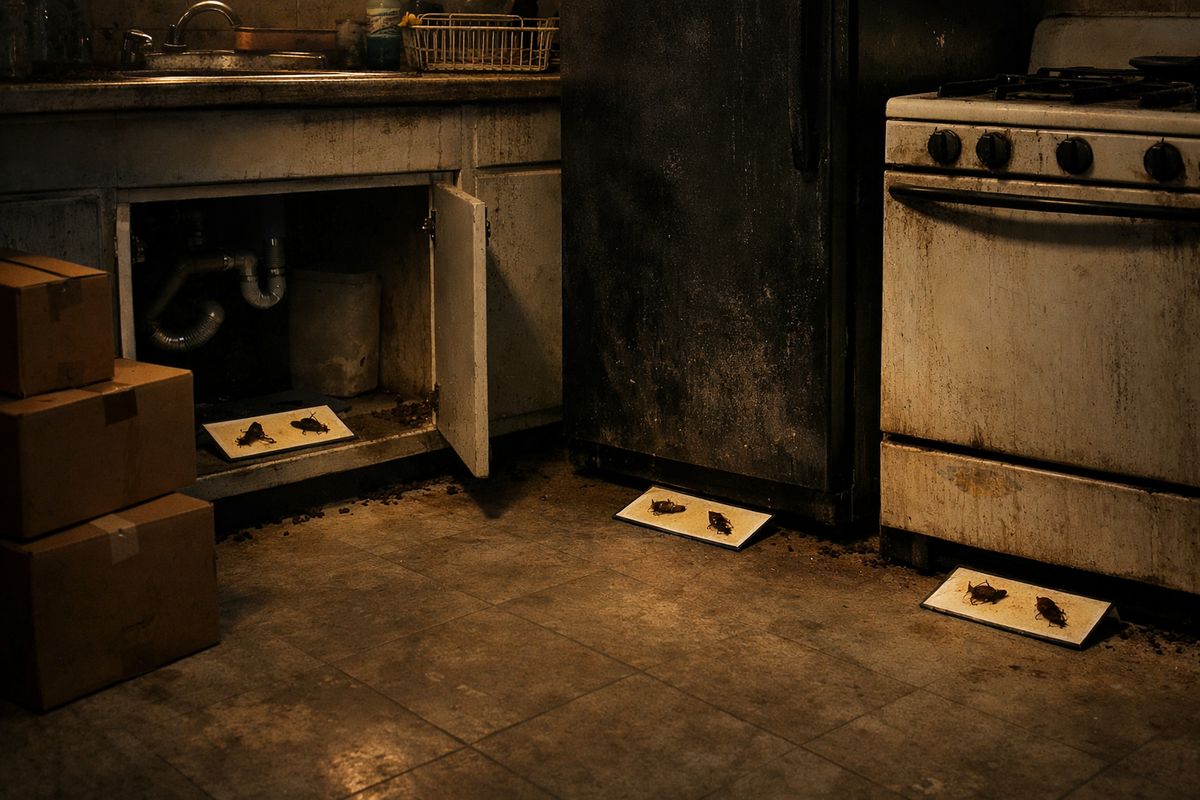
Glue traps are useful because they show where movement is happening, even when you are not seeing roaches. Place traps under sinks, behind the fridge, near the stove, by pipe openings, and inside bathroom vanities. In apartment studies, traps near cooking appliances often caught more activity than bathroom spots, which matches what many tenants notice in real life.
Treat traps as a monitoring tool, not a complete solution. A few trap counts and photos give you something concrete to send management, especially because 36% of residents were unaware of roaches that had already been caught in traps in one apartment study.
What not to do
Do not set off foggers. Do not hose every crack with random aerosol spray. Do not mix five different products because the label looked convincing at the hardware store.
Those moves can scatter roaches deeper into walls, contaminate surfaces, and make professional baiting less effective. If the problem keeps returning, skip the chemistry experiment and look into how professional treatment usually works. If you need direct local help, Midwest Pest Solutions handles roach control in the Chicago area and works with multi-unit properties.
How to report roaches to management so something actually happens
A vague message like “saw bugs” is easy to ignore. A short, specific written report is harder to brush aside and much easier for management to act on.
What to include in your complaint
Keep it simple and factual. Include dates, times, where you saw activity, where traps caught roaches, photos of droppings or egg cases, and notes about leaks, wall gaps, or odors. If activity is in more than one room, say that clearly.
Email is ideal because it creates a record. Save copies of emails, texts, portal submissions, and maintenance requests.
Ask for more than a spray visit
A quick spray in one apartment can make it look like action happened, but that is not the same as solving the problem. Ask for inspection of adjacent units, common areas, trash rooms, plumbing lines, and any shared spaces near your apartment. Follow-up matters too. Roach control is usually a process, not a single visit.
A building-level approach works better than isolated treatment. In one apartment-building study, building-wide IPM reduced dispersal between units over time.
When to follow up and escalate
If management does not respond, or if the same problem keeps coming back, follow up in writing. Keep the tone calm, but be direct. Ask what inspection and treatment steps are being taken and when.
If nothing moves, escalate through local channels such as 311 or the appropriate housing or health department guidance for your city or suburb. Municipal guidance in other cities says tenants should notify management first, then use city complaint channels if the issue is not addressed. That general pattern makes sense here too.
What property management should be doing to fix the problem
Good apartment-building roach control is not mysterious. It is just more involved than a quick spray around the baseboards. The plain-English version of integrated pest management is this: inspect thoroughly, fix the conditions helping roaches survive, use targeted treatment, monitor results, and come back until counts drop.
Building-wide inspection, not just one unit
If one apartment reports roaches, management should think next-door units, units above and below, common utility spaces, basements, hallways, and trash areas. Not every tenant reports pest problems, and the visible unit is not always the source.
That is why professional companies that serve multi-unit properties often inspect beyond the complaint apartment and provide sanitation notes and documentation. Midwest Pest Solutions offers service for multi-unit buildings and documents conditions for managers and owners, which is exactly the kind of coordination recurring building problems need.
Targeted baits, dusts, and monitoring
Professionals usually rely on tools like gel baits, insecticidal dusts placed in voids, and monitors such as sticky traps. Baits work by getting roaches to feed and carry exposure back into the nesting population. Dusts are used in cracks and inaccessible voids. Monitoring shows whether activity is actually dropping.
That approach works better than blasting every surface with spray. If you are curious why some infestations drag on, it helps to understand why roaches return after treatment.
Repairs that make treatment stick
Treatment works better when the building stops helping the roaches. That means sealing wall gaps, fixing leaks, replacing damaged caulk, repairing peeling paint, addressing water-damaged surfaces, and improving trash handling. Housing studies have linked water damage and other disrepair issues with higher cockroach activity.
Without repairs, even a good treatment can feel like bailing water from a boat with a hole in it.
Health risks you Shouldn’t brush off
Roaches are not just gross. They are a real indoor health issue. Research and industry sources describe cockroaches as carriers of bacteria like salmonella, and the residue they leave behind can aggravate indoor air and breathing problems.
Roach allergens, asthma, and indoor air
Allergens are tiny proteins left behind in droppings, body parts, and residue. Over time, those particles collect in dust, especially in kitchens and bedrooms. That means the health problem is not just the bug you saw last night. It is the constant exposure in the background.
This matters even more in homes with kids, seniors, or anyone with asthma or breathing issues. Studies have found much higher allergen levels in infested homes, and those levels drop most when cockroaches are actually eliminated, not just reduced a little.
When It’s time to bring in professional extermination
If you keep seeing roaches after cleaning, if activity shows up in multiple rooms, if you find egg cases, if you spot roaches during the day, or if neighbors are noticing the same thing, DIY has hit its limit. Recurring apartment roaches usually need coordinated professional treatment.
For stubborn infestations, it also helps to know how long this process can really take, because the answer is often longer than one visit. If you need local service, Midwest Pest Solutions can schedule roach control for Chicago-area apartments and multi-unit properties.
How to keep roaches from coming back after treatment
After treatment, the goal shifts from crisis mode to maintenance. You do not need perfection. You need consistency.
The weekly apartment reset that actually helps
Once a week, wipe grease around the stove, vacuum crumbs, dry the sink area, empty trash, check traps, and clear clutter under sinks and near appliances. That takes less time than a full panic-clean and does more good in the long run.
Think of it like resetting your kitchen before it starts sliding backward. Small habits beat occasional heroic effort.
What to watch for over the next 30 days
Some activity right after treatment can happen. Roaches may move more before counts drop. What you want to see is a downward trend in trap catches, droppings, odors, and sightings.
Track changes. If trap counts stay flat, new droppings keep appearing, or moisture problems remain, report that fast. Early follow-up is easier than starting over a month later.
One smart first step to try today
Place a few sticky traps in the kitchen and bathroom tonight. Tomorrow, send one clear written report to management with photos, trap locations, and notes about leaks or gaps. That one move turns a gross moment into a documented problem that is harder to ignore.
Frequently asked questions
Can roaches come from a neighboring apartment?
Yes. Roaches often travel through plumbing gaps, electrical openings, baseboards, hallways, and shared walls. In apartment buildings, the source is often close by but not always inside your unit.
Is one roach a sign of infestation?
In an apartment building, it often is a warning sign. One sighting at night could mean hidden activity nearby, and repeated sightings usually mean a larger issue in your unit or elsewhere in the building.
Should you tell your landlord right away?
Yes. Report it as soon as you notice activity or find droppings, egg cases, or trap catches. Fast reporting gives management a better chance to inspect surrounding units before the problem spreads.
Do roach bombs work in apartments?
Usually not well, and they can make the situation worse. Foggers and random sprays may push roaches deeper into walls and interfere with professional baiting.
How long does it take to get rid of roaches in an apartment building?
It depends on how widespread the infestation is, how quickly management responds, and whether neighboring units and common areas get treated too. Small problems can improve quickly, but building-wide infestations usually take multiple visits and follow-up.
Can a clean apartment still get roaches?
Absolutely. Cleanliness helps, but untreated nearby units, leaks, trash issues, structural gaps, and common-area activity can still bring roaches into a well-kept apartment.