
German roaches are small, fast, and annoyingly easy to miss until there are far too many of them. If you live in Chicago, Naperville, Schaumburg, or anywhere nearby, knowing how to spot them quickly can save you a lot of stress, and possibly a much bigger infestation a few weeks from now.
What German Roaches Are, and Why They Spread So Fast in Chicago
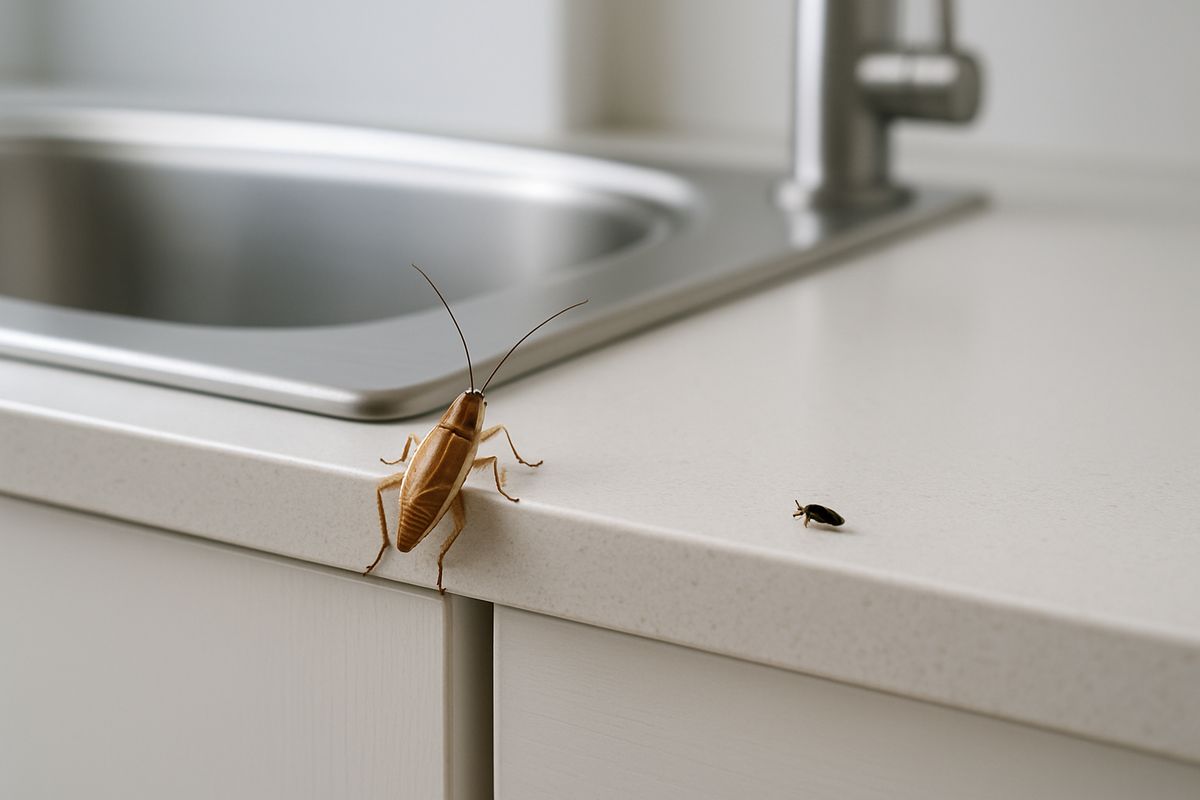
German roaches are the small tan-to-bronze cockroaches that most often show up in kitchens. In fact, the Illinois Department of Public Health says they are the most common roach found in kitchens, and adults plus older nymphs can be identified by their half-inch bronze bodies with two black stripes behind the head.
That’s the basic definition. Why does it matter? Because these are not the occasional giant roaches people picture from basements or alleyways. German roaches are indoor specialists. They do especially well in apartments, condos, older homes, and multi-unit buildings where food, moisture, heat, and hiding spots are all packed into a small space.
Chicago gives them plenty to work with. Shared walls, old plumbing, radiator heat, leaky pipe chases, and dense housing can all help them move from one unit to the next. Add restaurants, trash rooms, basement utility spaces, and seasonal cold that pushes pest activity indoors, and you’ve got a setup where a small problem can spread fast.
They spread fast because they hide well, reproduce quickly, and stay close to what they need. The state notes that German cockroaches are extremely successful indoors because they spend about 75 percent of their lives hiding, usually within 10 feet of their food source, and they prefer to move and feed in darkness. That means by the time you notice one, plenty more may already be tucked away behind the scenes.
How to Identify a German Roach in Seconds
If you only remember one thing, remember the stripes. That’s the giveaway most people miss.
Size, Color, and the Two Stripe Marking
An adult German roach is usually about half an inch long. It’s light brown, tan, or bronze, not dark red-brown like some larger roaches. Right behind the head, you’ll see two dark, parallel stripes.
Those stripes matter because they help you identify the insect fast, even if it disappears in two seconds flat. In a real kitchen sighting, you usually don’t get a long look. You get a quick dash across the counter, sink edge, or cabinet opening. If it was small and tan with those two dark lines near the head, German roach is the top suspect.
What Baby German Roaches Look Like
Baby German roaches, called nymphs, are smaller and darker. They can look brown to almost black, often with a lighter stripe running down part of the back as they grow. Because they’re tiny, people often mistake them for beetles, crumbs that moved, or “just one small bug.”
Here’s the bad news: seeing tiny roaches is often more troubling than seeing one adult. The state reports that German cockroaches reproduce rapidly, females hold the egg capsule until about 24 hours before hatching, each capsule contains 30 to 48 eggs, and about 80 percent of roaches in a growing population are nymphs. So if you’re seeing babies, the population is usually not new.
German Roach vs. American Roach
These two get mixed up all the time in Chicago.
German roaches are small, light brown, and usually found in kitchens, bathrooms, cabinet voids, and around appliances. American roaches are much larger, often 1.5 to 2 inches long, darker reddish-brown, and more likely to show up in basements, boiler rooms, drains, or after heavy rain.
So if you saw a huge roach near a floor drain in the basement, that may not be a German roach at all. But if you saw a smaller tan roach sprint out from under the coffee maker or dishwasher, that’s much more likely to be one. If you want a side-by-side breakdown of the bugs people most often confuse indoors, that comparison helps.
The First Signs You Have German Roaches
One sighting doesn’t always tell the full story. The pattern around that sighting usually does.
Seeing Them at Night, Especially in the Kitchen
German roaches are nocturnal. They prefer darkness, and they usually stay hidden during the day. So when you flip on the kitchen light at 11 p.m. and something darts behind the toaster, don’t shrug that off.
Because they spend most of their time hidden, a nighttime sighting often means you’ve caught a roach during its normal feeding run. If you see one in daylight, that can be worse. Daytime activity can suggest overcrowding in the hiding spots, which means the infestation may already be established.
Droppings, Smear Marks, and Egg Cases
Roach evidence is often easier to find than the roaches themselves. Look in cabinet corners, drawer tracks, under the sink, behind the stove, and around the refrigerator compressor area.
German roach droppings look like black pepper, coffee grounds, or tiny dark specks. In damp areas, you may also see brown smear marks along edges where they travel. The Illinois Department of Public Health notes that German cockroach populations often cluster under stoves, refrigerators, and dishwashers, as well as in wall and cabinet voids, where their droppings leave dark speckling and pheromones that attract more roaches.
Egg cases matter too. They’re small, brown, and capsule-shaped. Each one can hold dozens of future roaches, which is not a fun thought, but it’s useful information.
A Musty, Oily Odor in Tight Spaces
Larger infestations often create a stale, oily, musty smell. It tends to build up inside cabinets, pantries, under sinks, and in the narrow gaps around appliances.
People sometimes notice the smell before they know what they’re smelling. If a cabinet has a weird, lingering odor that doesn’t go away after cleaning, and you’re also seeing dark specks or occasional roach activity, that combination is telling.
Where German Roaches Hide First in Chicago Homes and Apartments
German roaches like tight, warm, damp places close to food and water. Think of them like terrible little tenants who want the shortest possible commute.
Kitchen Hotspots to Check Tonight
Start in the kitchen. Always.
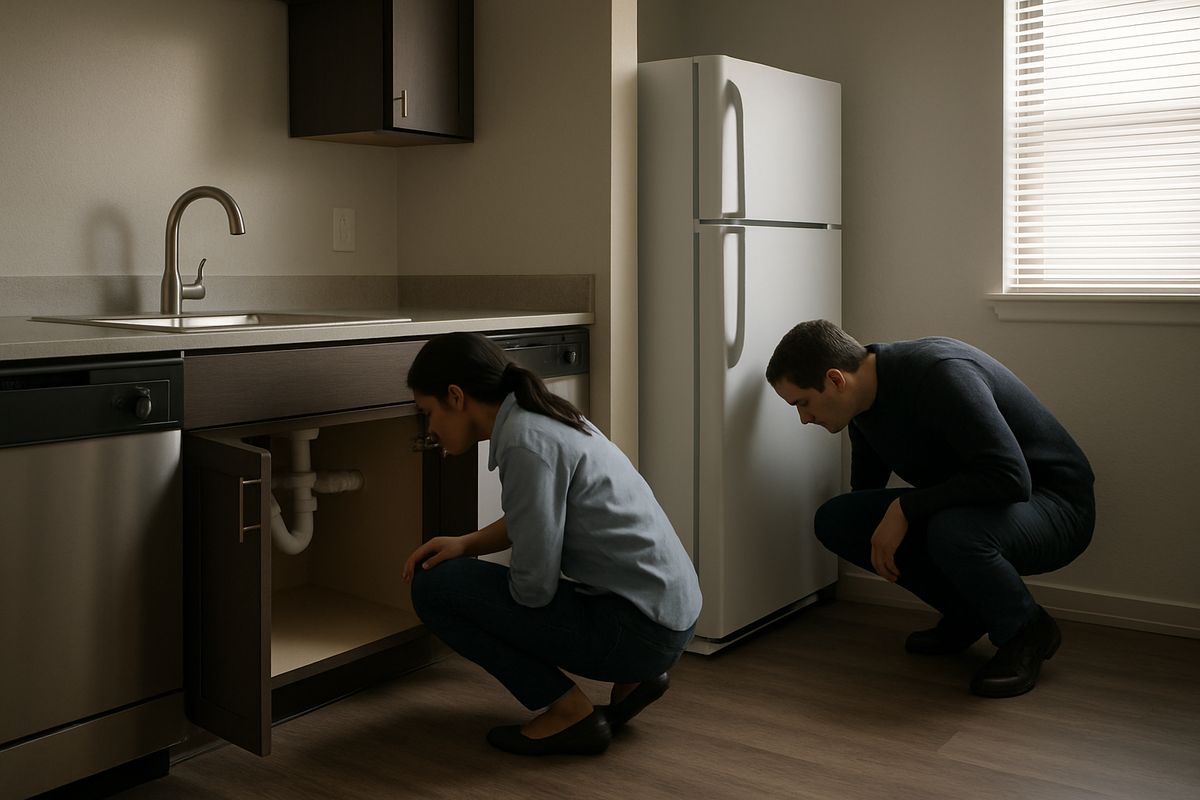
The most common hiding spots are under and behind the stove, refrigerator, and dishwasher. Check the sink base cabinet, especially around plumbing penetrations. Open drawers and look along the tracks and corners. Inspect cabinet hinges, microwave vents, the area behind wall-mounted appliances, and even small countertop appliances like coffee makers and toasters.
Warmth helps, moisture helps, grease helps, and tight spaces help most of all. That’s why the tiny gap under a dishwasher or the insulated motor area behind a fridge can hide a surprising number of roaches.
If you’re already seeing activity, it’s smart to read up on why spray treatments often stop giving results after a while, because German roaches are famous for surviving sloppy, spray-only attempts.
Bathroom, Laundry, and Utility Area Hiding Spots
Bathrooms come next, especially in apartments and older homes. Check under vanities, around toilet supply lines, behind access panels, and near pipe openings. In laundry rooms, inspect behind the washer, around utility hookups, and anywhere condensation builds up.
Water heater closets, furnace rooms, and utility cabinets can also attract them. It’s not because those rooms have food. It’s because leaks, humidity, and sheltered crevices still give them what they need to survive.
Shared-Wall and Multi-Unit Trouble Spots
This is where Chicago buildings get tricky. In condos, apartments, duplexes, and mixed-use properties, roaches don’t respect unit lines.
They can move through wall voids, pipe chases, electrical outlets, gaps under sinks, and shared plumbing routes. The state specifically says that German cockroaches commonly move through shared walls in apartment buildings, including gaps around pipes under sinks, so sealing these openings with silicone sealant or urethane foam is a key exclusion step.
If you live in a building with recurring issues, shared-wall treatment problems are usually the real story, not just what happens inside one kitchen.
Why German Roaches Are So Common in Urban Buildings
A lot of people feel embarrassed when they find roaches. Honestly, they shouldn’t. Roaches are often a building problem before they’re a housekeeping problem.
It’s Not Only About Cleanliness
Crumbs and clutter can absolutely help roaches. But spotless apartments can still get them if the building has leaks, unsealed gaps, or an infestation next door.
One Chicago inspection analysis includes an expert observation that German cockroach infestations correlate more strongly with building infrastructure than with sanitation practices alone, indicating that shared walls, aging buildings, and structural conditions are key risk factors to inspect. That lines up with what pest pros see every day. A tidy renter in a vulnerable building can still end up dealing with roaches coming through the wall behind the sink.
Why Chicago Buildings Can Be Vulnerable
Chicago has older housing stock, dense restaurant corridors, mixed-use buildings, basement utility spaces, and plenty of shared trash and plumbing systems. Those features create lots of hidden travel routes.
Inspection trends hint at that bigger picture. One local dataset found that Chinatown had 96 cockroach citations, roughly six times the median Chicago neighborhood’s level of about 15. Another summary showed that Rogers Park ranked second for cockroach citations with 57, followed by Albany Park with 45, West Ridge with 41, and Uptown with 38, showing that cockroach issues were concentrated in dense commercial areas with older buildings and shared walls.
That doesn’t mean those neighborhoods are “dirty.” It means density, infrastructure, and building layout matter. A lot.
Are German Roaches Dangerous?
Yes. Not in a horror-movie way, but definitely in a don’t-ignore-this way.
Food Contamination and Surface Spread
Roaches travel through drains, trash areas, floor gaps, and greasy voids, then walk across counters, dishes, pantry shelves, and food prep surfaces. That’s gross enough on its own, but it also creates a contamination issue.
One Chicago pest control source says cockroaches can spread 33 different types of bacteria, 6 parasitic worms, and 7 other human pathogens. A broader public health review also notes that cockroaches can transmit pathogens including Escherichia coli and Salmonella, and can also spread allergens that worsen respiratory conditions.
Allergies, Asthma, and Indoor Air Concerns
The health side goes beyond food contamination. Roach droppings, shed skins, and body fragments can become part of indoor dust, and that can trigger symptoms in sensitive people.
Research shows cockroach allergens can trigger asthma, especially among children, and are a key concern in low-income, urban settings. A newer study on German roaches found that infested homes had significantly higher endotoxin levels, and those allergen and endotoxin levels declined significantly when cockroaches were eliminated. In plain English, getting rid of the roaches helps the air in the home too.

What to Do the Moment You Spot One
Panic is understandable. Useful, not so much.
Take a Quick ID Photo and Check the Right Areas
If you can, snap a photo. Even a blurry one can help with identification. Then check under the sink, behind the stove, near the refrigerator motor, inside cabinet corners, and around warm, damp crevices.
Look for more than live bugs. Look for specks, smear marks, egg cases, and skins. And remember, seeing one in the daytime can suggest a bigger population than you think.
If you want a direct path to help, you can schedule roach control service here.
Reduce Food, Water, and Hiding Spots Fast
This is triage, not a full cure, but it matters. Wipe crumbs and grease. Store dry goods in sealed containers. Empty trash promptly. Fix drips under sinks. Don’t leave pet food out overnight. Reduce cardboard piles and clutter, especially under sinks and in pantry areas.
Rose Pest Solutions recommends repairing leaky faucets, keeping counters and floors clean, storing food in sealed containers, vacuuming often, and taking trash out regularly. Those steps won’t erase a deep infestation, but they do make treatment work better.
Don’t Rely on Random Spray Alone
This is where many people lose time. Over-the-counter sprays often hit the few roaches you see, not the many you don’t. Worse, some products can drive roaches deeper into walls and voids.
The Illinois Department of Public Health warns that cockroach foggers or bombs are often counterproductive because they do not reach hiding places well, can scatter roaches into new areas, and create fire and explosion risks near ignition sources. There’s also the resistance problem. A recent review highlights that insecticide resistance is a major barrier to controlling cockroaches.
That’s why pros talk about Integrated Pest Management, or IPM. It means inspection, targeted treatment, sealing entry points, moisture control, and follow-up, not just spraying everything and hoping for the best.
When It’s Time to Call a Professional Exterminator
Sometimes you can catch a problem early. Sometimes the problem is already way ahead of you.
Signs the Infestation Is Already Established
If you’re seeing roaches repeatedly, finding nymphs, spotting droppings in more than one room, discovering egg cases, or noticing a musty odor, the infestation is likely established. The same goes if neighbors are seeing them too.
By the time you’re seeing several, many more are probably hidden. That’s just how German roaches work.
Why Building-Wide Treatment Matters in Apartments and Multi-Unit Properties
Single-unit treatment often fails when roaches are traveling through common walls, plumbing lines, and utility gaps. One apartment gets treated, the next one doesn’t, and the cycle keeps going.
That’s why coordinated treatment matters. Tenants, landlords, property managers, and pest pros need to be on the same page. If the issue keeps bouncing back, it helps to understand why DIY wins often turn into repeat infestations.
You can also book professional roach control here when sightings are recurring or spread across multiple units.
What a Pro Will Usually Do
A good exterminator won’t just spray baseboards and leave. They’ll inspect the space, identify the species, locate harborages, place bait strategically, use monitors, point out moisture issues, and recommend exclusion work like sealing pipe gaps and crevices.
The state recommends Integrated Pest Management using inspection, exclusion, and sanitation first, because infestations are rarely eliminated by pesticide use alone or by a single pesticide product without follow-up inspections and treatment. That’s the standard you want.
If you’re hiring help, it’s worth reviewing what to ask before choosing a local exterminator, especially in a multi-unit building where follow-up matters just as much as the first visit.
Common Questions About German Roaches
This is where most people get hung up, so let’s keep it simple.
Does Seeing One German Roach Mean I Have an Infestation?
Not always. But often enough that you should inspect right away.
A single roach could have wandered in on a grocery bag, delivery box, or from a neighboring unit. Still, if the sighting happened in the kitchen, at night, or during the day near a sink or appliance, assume there may be more and check thoroughly.
Can German Roaches Come From a Neighboring Unit?
Yes, absolutely. This is common in apartments, condos, attached homes, and mixed-use buildings.
They move through gaps around pipes, electrical openings, wall voids, and shared utility lines. If your unit is clean but you keep seeing them near plumbing or shared walls, neighboring activity may be part of the problem.
Do German Roaches Go Away in Winter?
No, not if they’re established indoors. Heated buildings give them stable warmth, water, and shelter all year.
In fact, colder weather can make indoor pest exposure feel worse because people are spending more time inside. One Chicago pest-control expert notes that cockroach allergen exposure is elevated during colder months because people spend more time indoors.
Can I Get Rid of German Roaches Without a Pro?
A very small, early issue may improve if you act fast, clean aggressively, remove moisture, and use the right products carefully. But established infestations usually need professional treatment and follow-up.
If you’re seeing nymphs, repeated sightings, or activity in multiple rooms, call for help sooner rather than later. It usually costs less in time, money, and stress than dragging it out.
Fast Takeaways for Chicago Residents
German roaches are the small tan roaches with two dark stripes behind the head. They usually start in kitchens, hide near heat and moisture, and spread fast through cabinets, appliance gaps, plumbing openings, and shared walls.
If you’ve seen one, check under sinks, behind the stove and fridge, inside cabinet corners, and around damp, tight spaces tonight. If you find droppings, nymphs, egg cases, odor, or repeated sightings, move quickly. In Chicago-area buildings, roach problems often grow because of structure and shared access, not because someone missed a crumb.
The best next step is simple: act early. If the signs are there, get professional help for roach control now before a small problem turns into a building-wide one.
Frequently Asked Questions
What do German roaches look like up close?
They’re small, usually about half an inch long, light brown to bronze, and marked with two dark stripes behind the head. That stripe pattern is the fastest way to tell them apart from larger roaches.
Why do I only see German roaches at night?
German roaches prefer darkness and spend most of their time hidden. If you see them after turning on a kitchen or bathroom light, that’s normal behavior for them. If you see them during the day, the population may be heavier.
Where should I check first if I think I have German roaches?
Start with the kitchen: under the sink, behind the stove and refrigerator, around the dishwasher, in cabinet corners, drawer tracks, and around small appliances. Then check bathrooms, laundry hookups, and pipe openings.
Are German roaches a sign my home is dirty?
Not necessarily. They can show up in clean homes when there are leaks, cracks, shared-wall entry points, or infestations in nearby units. Cleanliness helps, but building conditions matter a lot too.
What is the fastest way to stop German roaches from spreading?
Move fast on the basics: clean food debris, seal food, reduce moisture, and inspect the main hiding areas right away. Then get professional treatment if you’re seeing repeated activity, nymphs, or signs in more than one room.
How long does it usually take to get rid of German roaches?
It depends on how established the infestation is, but it usually takes more than one visit for lasting control. Deep infestations, especially in apartments and older buildings, often need follow-up treatment, monitoring, and building-wide cooperation.
References
- dph.illinois.gov
- chispections.com
- rosepestcontrol.com
- sciencedirect.com
- pctonline.com
- pmc.ncbi.nlm.nih.gov