
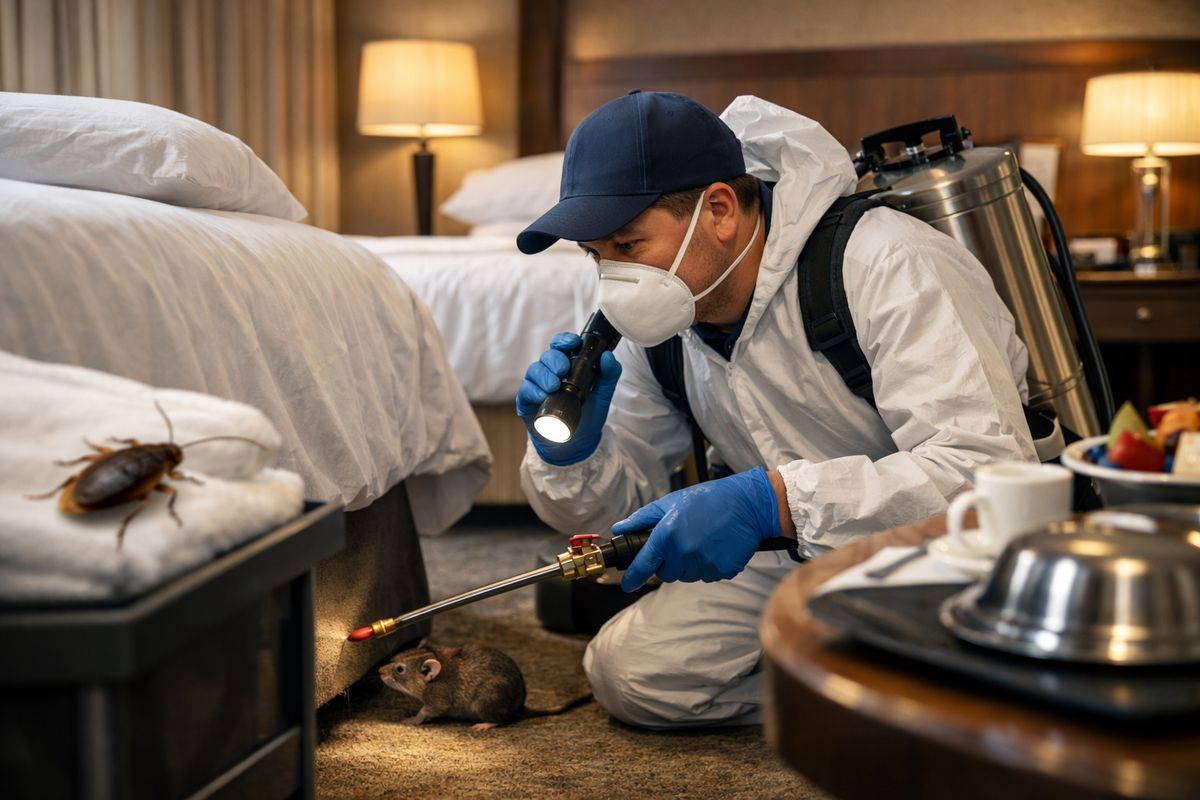
A pest sighting in a hotel rarely stays small. One guest complaint can turn into a refund, a room outage, and a review that keeps showing up long after the bug is gone. That is why commercial pest control services matter in hotels: not as a panic button, but as ongoing protection for your rooms, your staff, and your reputation.
Why Hotels Need Commercial Pest Control Services Before There’s a Visible Problem
Hotels deal with a kind of pest pressure that ordinary properties do not. Guests come and go every day, luggage rolls through hallways, food moves from loading areas to kitchens, and laundry travels room to room like a shuttle line. By the time a problem is visible, it may already be established in more than one place.
Pest issues spread faster in hotels than in most properties
A hotel has constant movement, which pests love. Shared walls give roaches and bed bugs easy paths. Utility lines, housekeeping carts, trash rooms, vending spaces, and laundry areas create a network of hiding spots and travel routes. Even a clean property can end up with an introduction because pests often arrive with people, packages, or deliveries.
Picture a late check-in at 11:40 p.m. A tired guest pulls back the blanket and notices tiny dark marks near the mattress seam. That moment is not just a maintenance issue. It becomes a front-desk issue, a guest-service issue, and possibly an online-review issue before sunrise.
Prevention costs less than a reputation hit
Waiting for obvious evidence is usually the expensive choice. Bed bug incidents alone can cost hotels $6,383 per incident for treatment, replacement of soft goods, and lost business, and litigation can push that far higher. Even without a lawsuit, one room taken offline during a busy weekend in Chicago can hurt more than a recurring service plan ever will.
The bigger point is simple: preventive service is cheaper than scrambling. A hotel that treats pest control like insurance tends to spend less, lose fewer rooms, and avoid the kind of guest story that spreads faster than any pest.
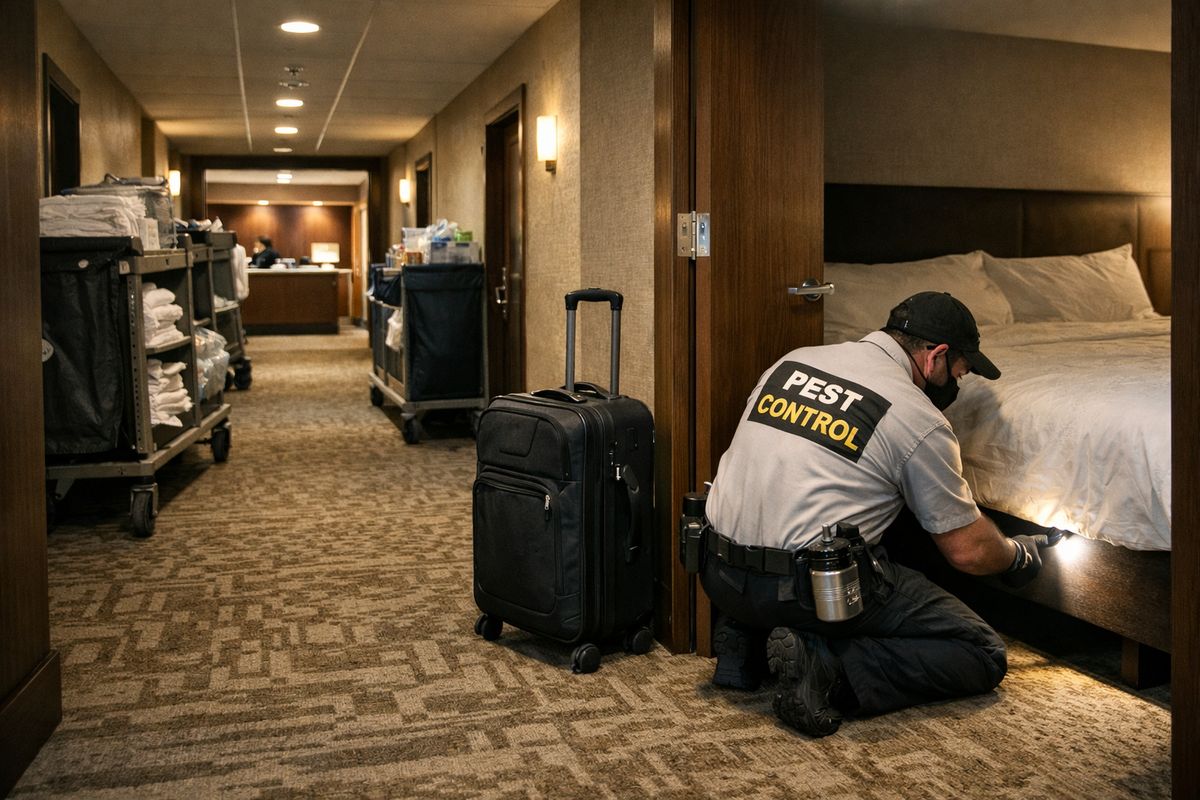
The Pests Hotels Need to Worry About Most
Not every pest creates the same kind of risk. Some threaten guest trust immediately. Others damage sanitation scores or slowly harm the building itself. Your service plan should match those differences, not treat every problem like a spray-and-go job.
Bed bugs: the hotel pest you can’t afford to ignore
Bed bugs are the headline problem for a reason. Guests bring them in unknowingly, staff can miss early signs, and even a small issue can cause outsized damage. In hospitality settings, 70% of pest professionals reported treating bed bugs in hotels and motels in the past year.
Here is the catch: many travelers cannot identify bed bugs correctly, which sounds reassuring until you think about it. Misidentification creates confusion, delayed reporting, and poor response. Real inspections and professional monitoring matter because bed bugs hide well, survive for months, and are widely considered one of the hardest pests to eliminate.
Roaches, rodents, and flies in guest-facing and back-of-house areas
Roaches, mice, rats, and flies tend to build pressure in the places guests do not always see first: drains, employee break areas, dumpsters, vending zones, and laundry rooms. But they never stay politely hidden forever. Roaches move along plumbing and wall voids, rodents follow warmth and food, and flies signal moisture or sanitation issues that can quickly become health-inspection problems.
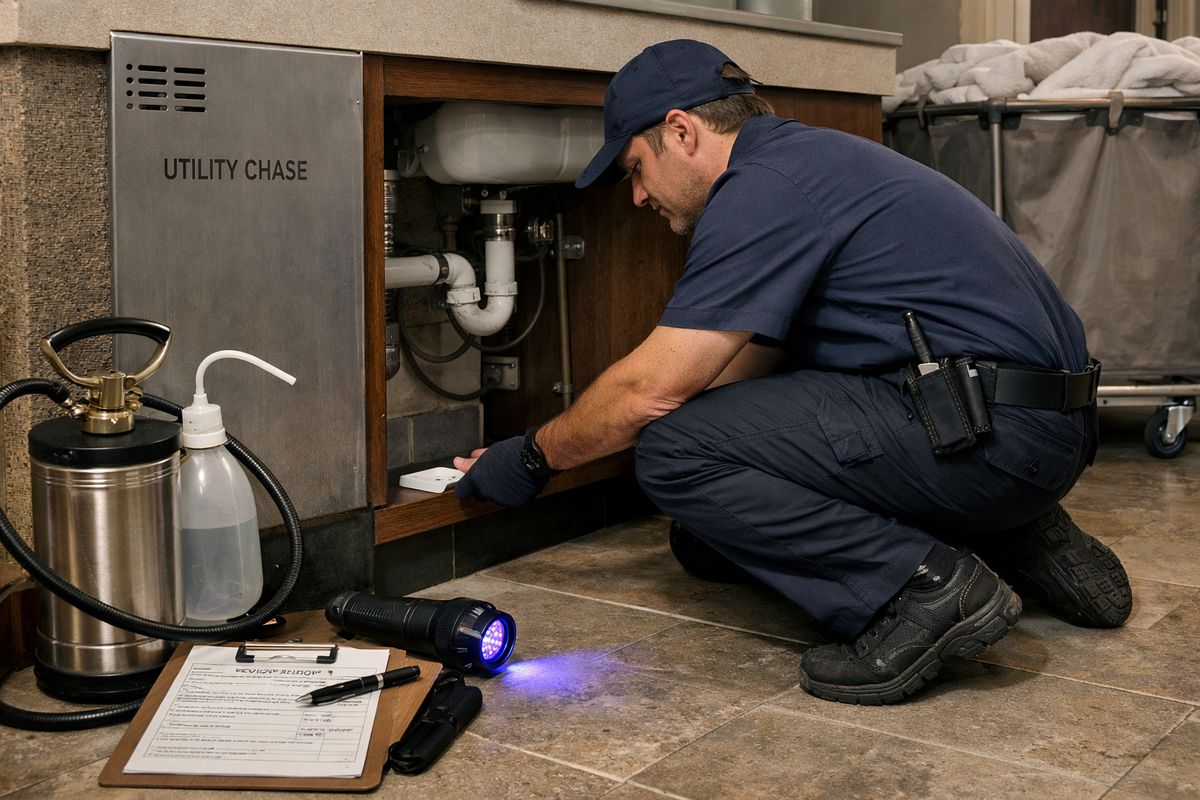
This is also where pattern tracking matters. If you keep seeing activity in the same drain line or utility chase, you need more than repeat treatment. You need root-cause work, the same kind of thinking behind why recurring roach problems happen.
Termites and other structural pests
Hotels sometimes focus so hard on visible insects that structural pests get ignored. Older buildings, suburban lodging properties with multiple structures, and sites with wood framing or moisture issues need termite awareness too. Guests may never spot termites, but repair bills eventually do.
A good provider should be able to look beyond nuisance pests and flag wood-destroying risks early. That is especially true if your property has basements, crawl spaces, exterior wood contact, or long-deferred maintenance.
What to Look for in Commercial Pest Control Services for a Hotel
This is the part that matters most when comparing providers. Plenty of companies can show up with chemicals. That alone does not mean your hotel is protected.
A true inspection and monitoring plan, not just spray visits
If a provider only talks about spraying, that is not enough for a hotel. You want inspection, monitoring, targeted treatment, and prevention steps that remove what pests are using to survive. That approach is usually called integrated pest management, which really just means fixing the conditions behind the activity instead of fogging the symptom and leaving.
That can include trap placement, mattress and furniture checks, crack-and-crevice treatment where needed, drain monitoring, exclusion work, and digital logs that show where activity is rising. Some commercial programs now use remote sensors and data analytics, which can improve accuracy and help catch patterns earlier.
Hotel-specific experience and staff training support
Hospitality experience is not a nice extra. It changes everything. A provider that understands hotels knows how to work around occupied rooms, housekeeping timing, guest privacy, and front-desk escalation. A provider used to warehouses or offices may miss those realities.
Training support matters too. Housekeeping and maintenance staff are your eyes between service visits. If your team does not know what early bed bug evidence or easy-to-miss roach activity looks like, a small problem gets a head start.
Fast response times and discreet service
Speed matters when a guest reports a pest in a room. The response should be clear, quick, and calm, not improvised. You want to know how fast a technician can arrive, what happens after hours, and how containment works if a room must come offline.
Discretion matters just as much. A marked truck parked under the porte cochere during check-in rush can create its own headache. Good hotel service feels almost invisible, which is exactly the point.
Clear documentation for audits, health concerns, and management records
You should expect service logs, treatment notes, monitoring results, and practical recommendations in plain language. That paperwork helps with ownership reporting, health concerns, recurring hot spots, and internal accountability. It also makes it easier to measure whether your program is actually working instead of guessing based on fewer complaints.
Good documentation turns pest control from a vague expense into a trackable operating system.
How Hotel Pest Control Programs Usually Work
Service plans can sound fuzzy until you know the basic structure. Once you do, comparing providers gets much easier.
Initial inspection and risk mapping
A strong program starts with a full walkthrough. That means guest rooms, kitchens, storage, laundry, basements, utility spaces, trash areas, exterior doors, and other access points. The goal is not just to find bugs today. It is to map risk, traffic paths, moisture points, and conditions likely to feed future activity.
That is especially useful in Chicago-area properties, where older buildings can have layered access points that newer suburban properties in places like Schaumburg or Naperville simply do not.
Ongoing treatment, follow-up, and seasonal adjustments
After the initial inspection, recurring service usually includes monitoring checks, treatment updates, and prevention work based on what is happening on site. In colder months, pests push indoors fast. In warmer months, exterior activity, fly pressure, and dumpster issues can climb.
This is why monthly prevention plans often make more sense than waiting for a visible problem. The service adjusts with the season, the occupancy pattern, and the building.
Emergency callouts when something slips through
Even a strong prevention program cannot stop every introduction. Bed bugs in particular arrive with guests, and that part is outside your control. What matters is the response: quick inspection, room containment, focused treatment, follow-up checks, and a plan to keep the issue from spreading next door or down the hall.
You are not buying a promise that nothing will ever happen. You are buying a system that keeps one incident from becoming ten.
How to Compare Providers, Pricing, and Service Contracts
There are a lot of pest control companies out there, and the market is crowded. That makes shopping harder, but it also means you should be picky.
What affects cost
Price usually depends on property size, room count, building age, food service operations, visit frequency, past pest history, and whether bed bug monitoring or treatment is included. A limited-service roadside hotel and a full-service downtown property do not need the same plan.
The cheapest bid often becomes the expensive one if it leaves gaps. A low monthly number looks great until you learn emergency calls, follow-ups, or bed bug work cost extra every time.
Questions to ask before signing
Ask direct questions and listen for direct answers. What pests are covered? How often are visits scheduled? Is bed bug monitoring included? What is the response time for a guest-room incident? Are follow-up visits extra? What reporting do you get? What parts of the property are inspected every visit?
It also helps to review what a solid service agreement should spell out. Contracts should make expectations boringly clear. That is a good thing.
Red flags that signal a weak service plan
Watch for one-size-fits-all contracts, vague treatment language, little inspection detail, no documentation, and no real hospitality references. Be wary of promises that sound too easy, especially around bed bugs.
Here is the direct version: if a provider mainly talks about spraying, move on. Hotels need monitoring, pattern recognition, training support, and fast response, not a monthly chemical lap around the building.
Choosing the Right Pest Control Approach for Your Property
The right plan depends on your property type, but the buying logic stays the same: match the service to the risk, not to the sales pitch.
Limited-service and smaller independent hotels
Smaller properties usually do well with a lean plan that still covers the basics thoroughly. That means regular inspections, a bed bug response protocol, quick incident handling, and focused attention on laundry, trash, entry points, and utility lines.
You do not need the biggest package on the menu. You do need consistency.
Full-service hotels with food, events, or high guest turnover
Larger hotels need broader monitoring and tighter coordination. Kitchens, bars, banquet areas, loading docks, staff spaces, and frequent room turnover all raise pest pressure. More service visits, more documentation, and stronger coordination with housekeeping and maintenance usually pay off here.
Think of it like running a busy kitchen versus reheating leftovers. The system has to keep up with the pace.
What to try first if you’re shopping right now
Start by scheduling a site inspection with each provider you are considering. Ask each one to walk through bed bug response, monitoring, reporting, and how incidents are handled after hours. Then compare those plans side by side, not just by price.
Frequently Asked Questions
How often should a hotel have commercial pest control service?
Most hotels benefit from recurring service at least monthly, with added visits for higher-risk properties or busy food-service operations. The right schedule depends on guest turnover, pest history, and how complex the building is.
Are bed bugs a sign that a hotel is dirty?
No. Bed bugs are often introduced by travelers and luggage, not by poor cleaning. Cleanliness helps with detection and response, but it does not prevent every introduction.
Should bed bug monitoring be included in a hotel service plan?
Yes, especially for guest rooms and nearby risk zones. Bed bug monitoring helps catch activity early, before one complaint turns into multiple affected rooms.
What documentation should a pest control company provide?
You should expect service logs, treatment notes, monitoring results, trend reporting, and practical recommendations. Clear records help with audits, ownership updates, and repeat trouble spots.
Is emergency response included in most commercial pest control services?
Not always. Some plans include emergency callouts, while others bill separately. Check response times, after-hours coverage, and follow-up costs before signing.
A good hotel pest plan should feel boring in the best way: predictable, documented, and ready before anything goes wrong. If you are comparing commercial pest control services now, try one simple thing first. Ask every provider to explain exactly how a bed bug report in an occupied room gets handled from the first phone call to the final follow-up.