
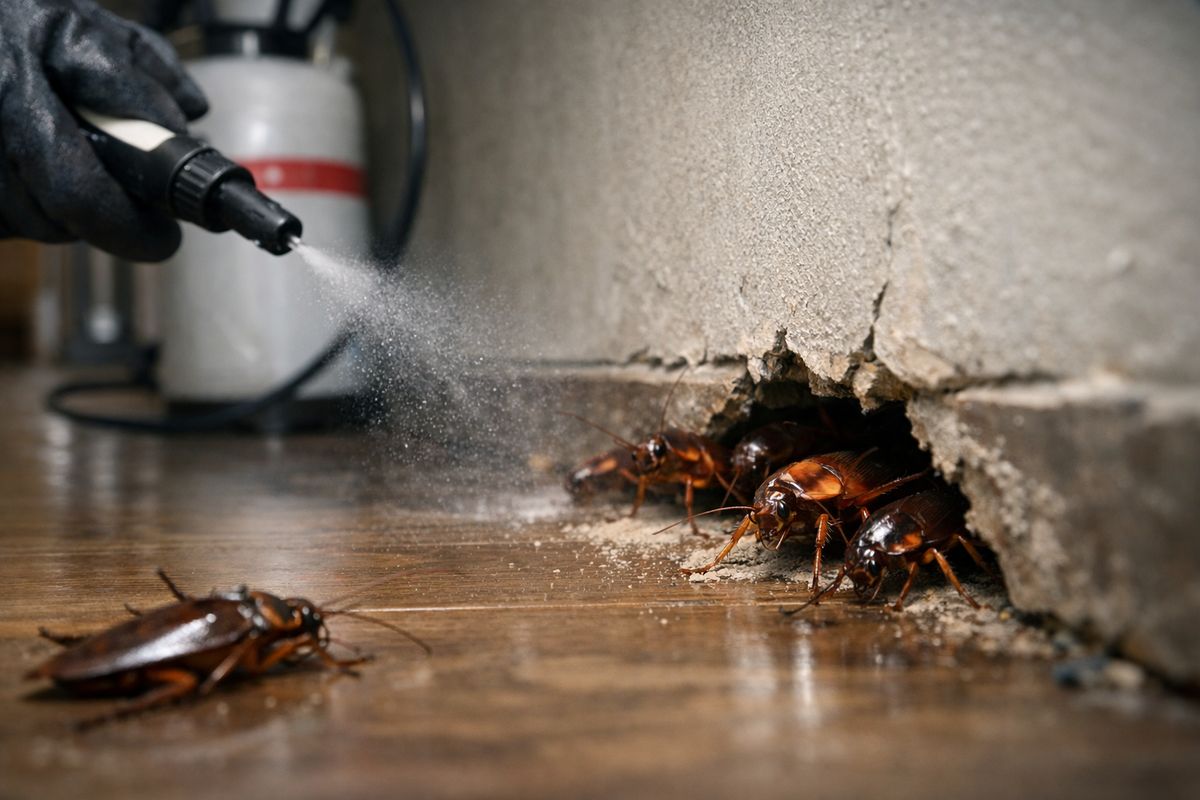
If roaches keep coming back after pest control, the treatment probably knocked down the ones out in the open but missed the reason the infestation started in the first place. That is frustrating, especially when you already paid for service and still spot one darting across the kitchen floor at 11 p.m. This is what usually causes the comeback, what it means in apartments and homes around Chicago, and what actually stops the cycle.
Why Roaches Keep Coming Back After Pest Control
Seeing a roach after treatment does not automatically mean the service failed. Sometimes activity picks up for a short stretch because hidden roaches are being pushed out of cracks, plumbing voids, cabinet hinges, and appliance gaps. But if roaches keep showing up, the bigger issue is usually still there.
Here’s the core idea: roaches return when the hidden population survives, egg cases hatch, moisture sticks around, food stays available, entry points stay open, or nearby units keep feeding the problem. Pest control works best when it hits the insects and the conditions supporting them. If only one part gets handled, the infestation often resets.
That is why a one-time treatment can feel like progress for a week and disappointment the week after. Roaches are not just wandering around your counters. Most of the problem is tucked away where you never look.
The Short Answer: Pest Control Often Kills the Roaches You See, Not the Ones You Don’t
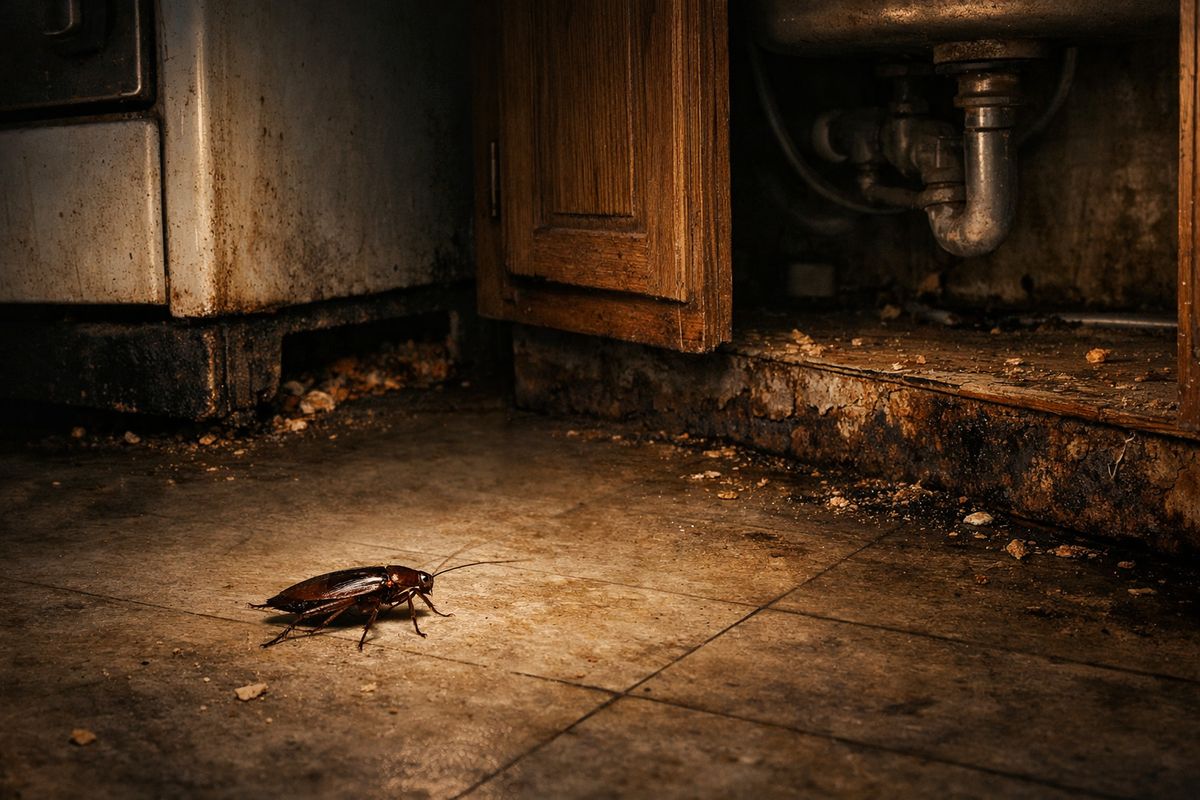
The short answer is simple: visible roaches are usually just the front edge of the infestation. The main population stays hidden behind the refrigerator, under the sink, inside wall voids, near warm motors, around plumbing lines, and inside tiny cracks.
Think of it like wiping up water on the floor without fixing the leak under the sink. The puddle disappears for a bit, but the source is still running. Roach treatments that only kill exposed insects work the same way.
This is especially true with German cockroaches, the small tan ones most often found in kitchens and bathrooms. A few sightings can represent a much larger hidden population. Once that hidden group keeps access to water, crumbs, grease, and shelter, the comeback is not mysterious at all. It is predictable.
Why Sprays and “Quick Kill” Treatments Don’t Always Hold
Quick-kill products can be satisfying in the moment. You spray, a roach flips over, and it feels like something got fixed. But visible knockdown and long-term control are not the same thing.
A lot of treatments work on contact. The catch is that roaches do not spend much time out in the open. So a broad spray along a baseboard may hit a few insects while leaving nests, egg cases, and deep hiding spots untouched. That is one reason pesticides alone will not solve a roach problem when food, water, and shelter stay in place.
Roaches Spend Most of Their Time Hidden
Roaches are nocturnal. During the day, most stay packed into dark, tight spaces where surfaces touch their bodies from above and below. That pressure makes them feel safe. German cockroaches can squeeze into cracks as small as 1/16 inch, which is about the thickness of a couple of stacked credit cards.
That matters because surface sprays rarely reach those spaces well. Roaches cluster behind outlet covers, under loose laminate edges, inside cabinet joints, around dishwasher insulation, and in the void behind a bathroom vanity. If you are seeing roaches in daylight, that often means the hidden areas are crowded enough that some are getting pushed out. In plain English, daytime sightings usually point to a bigger infestation, not a random straggler.
Egg Cases Survive and Restart the Problem
Roaches do not need many survivors to start over. Egg cases, called oothecae, protect developing young and can survive a treatment that kills active roaches nearby. One egg case can hold dozens of nymphs, which are baby roaches that look like tiny dark versions of the adults.
So you spray on Saturday, the adults drop, and a few weeks later small roaches show up near the sink. That does not mean roaches appeared from nowhere. It usually means the breeding areas were missed and the next wave hatched.
Some Products Scatter Roaches Instead of Solving the Infestation
Foggers, bombs, and some repellent sprays can make the problem worse. Instead of wiping out the colony, they can push roaches deeper into walls, farther under cabinets, or into adjacent rooms. In apartments and condos, that can mean sending them into the next unit for a while, only to have them return later through the same plumbing chase.
That is why sprays may repel and disperse roaches instead of ending the infestation. It looks active. It feels dramatic. But it often misses the nest.
The Real Reasons Roaches Keep Coming Back
Roaches stay where survival is easy. If the setup still works for them, they keep coming back.
Food Sources: Tiny Crumbs Still Count
Roaches are not picky, and that is the whole problem. A few crumbs under the toaster, grease splatter beside the stove, sticky residue on the side of a trash can, dry pet food left out overnight, or a forgotten takeout sauce packet in a drawer can be enough to keep them going.
Even cardboard and paper can help support an infestation because they collect food residue and give roaches a place to hide. In crowded pantries, the issue is often not what you can see from the front. It is the fine dust, crumbs, and spills in the back corners.
This is why cleaning for roaches is different from cleaning for company. A shiny counter means less than the mess behind the microwave.
Water and Moisture: Leaks Are a Big Deal
If food is one half of the story, water is the other half. Roaches need moisture, and damp spaces make them comfortable. Drips under sinks, condensation on pipes, wet mop heads, sweating basement walls, floor drains, sump areas, and humid laundry rooms all help.
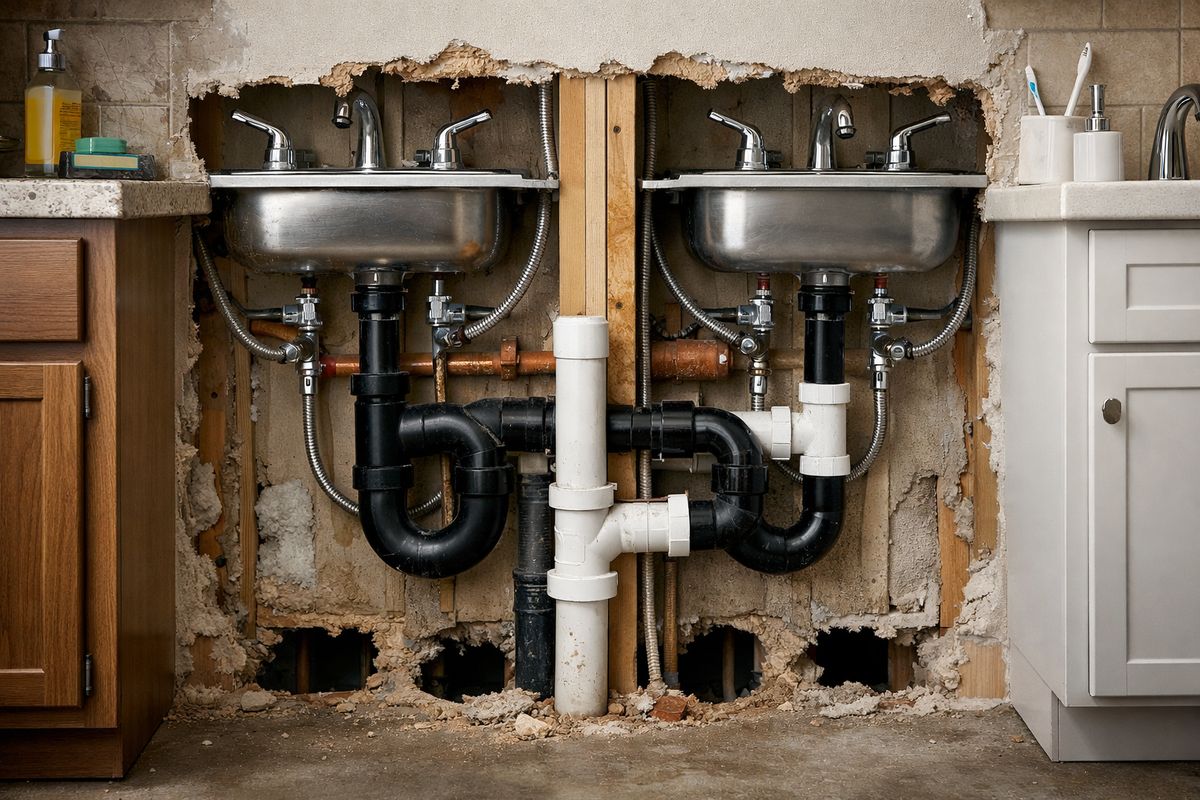
In older Chicago homes, this is common under kitchen sinks where supply lines, drain fittings, and shutoff valves have been slowly leaking for months. In a North Side two-flat, that damp cabinet base can become a perfect roach zone. In Naperville after heavy rain, a musty basement or utility room can do the same thing.
Even a slow drip matters more than most people realize. Roaches can survive longer without food than without water, so moisture control is often the fastest way to make a treated space less livable.
Shelter and Harborage: Clutter Gives Roaches a Safe Base
Harborage is just the protected place where roaches hide, rest, and breed. Think of it as home base.
Paper grocery bags, stacked cardboard, overstuffed cabinets, piles under the sink, unused small appliances, cluttered utility shelves, and storage packed tightly against the wall all create harborage. Roaches love places that are dark, warm, narrow, and undisturbed. The void under a fridge motor cover is perfect. So is the gap behind a loose backsplash.
If your kitchen or basement gives them lots of safe base areas, treatment has to work much harder. That is also why pest professionals often ask you to reduce clutter before or during service. It is not busywork. It opens the infestation up.
Entry Points and Reinfestation
Sometimes the original infestation gets reduced, but new roaches keep entering. That can happen through gaps around pipes, cracks in walls, openings under doors, foundation defects, shared utility lines, and even grocery or delivery boxes brought inside.
In multi-unit properties, reinfestation is a constant risk. Roaches move through shared walls and plumbing voids easily. In single-family homes, used appliances, secondhand furniture, garages, and exterior gaps can bring them right back.
Sealing openings matters because cracks and crevices are more than hiding spots. They are highways.
Why Roach Problems Are Harder in Apartments and Multi-Unit Buildings
Apartment roach problems are harder because your unit is only one part of the system. You can keep your sink dry, wipe down counters every night, and still get roaches from next door or from a shared building space.
That is why repeated activity in a condo or apartment is not always about cleanliness. Building conditions often matter more.
Shared Walls, Shared Plumbing, Shared Problem
Roaches travel along plumbing lines, behind cabinets, through wall voids, around radiators, under hallway doors, and between stacked kitchens and bathrooms. If your bathroom backs up to another bathroom, or your kitchen lines up with another kitchen, you are connected whether you like it or not.
In practical terms, that means activity can bounce from one unit to another. You may notice roaches around the same time a neighboring unit has a leak, a trash buildup, or a fresh infestation. If your building has older utility penetrations around sink pipes or open gaps behind escutcheon plates, movement gets even easier.
For property managers, this is where tracking results over time matters more than counting how many bugs were sprayed on one visit. A unit-by-unit view misses the bigger pattern.
Building-Wide Conditions Matter More Than One Unit
Treating one apartment while ignoring nearby units, trash rooms, laundry rooms, and maintenance spaces often leads to repeat sightings. Roaches do not care whose lease covers which room. If a warm, damp wall void runs through several units, that is one connected habitat.
Building-wide communication matters too. If one resident reports activity and another does not allow access, the infestation can keep circulating. The same goes for delayed plumbing repair, overflowing trash areas, and poor sanitation in shared spaces.
This is one reason affordable and dense housing has such a stubborn roach problem. Long-term control depends on treatment, maintenance, and cooperation lining up at the same time.
Why DIY Roach Control So Often Falls Short
DIY roach control is understandable. You see bugs, you want them gone tonight, and the hardware store is still open. The problem is that many do-it-yourself fixes are built for quick visible results, not full elimination.
That is not a character flaw. It is just the limit of the tools.
Store-Bought Sprays Can Work Fast and Fail Faster
Aerosol sprays can kill exposed roaches quickly. That part is real. But most infestations are not sitting in the middle of the kitchen floor waiting for a spray can.
So the product creates a sense of progress while the hidden population keeps breeding. A week later, the sightings return and it feels like the roaches somehow became immune overnight. Usually, the truth is much less dramatic: the spray hit the scouts, not the nest.
Too Much Product Can Make Baits Less Effective
This one gets missed all the time. Heavy spraying can contaminate bait placements or make roaches avoid the very areas where bait should be doing the work. If every corner smells like fresh insecticide, roaches may stop feeding normally or bypass bait entirely.
Baits work because roaches eat them and carry the effect back into the population. If sprayed surfaces block that behavior, control gets slower and less reliable. So more product is not always better. Sometimes it is the thing getting in the way.
Wrong Product, Wrong Placement, Wrong Species
Not all roaches behave the same way. German cockroaches live and breed indoors, usually close to food and moisture. Larger roaches, like American or Oriental cockroaches, may come from sewers, basements, crawl spaces, or outdoors and wander inside. The treatment strategy changes depending on which one you are dealing with.
That is why species ID matters. If the issue is German roaches behind the stove, random exterior spraying will not solve it. If large roaches are coming in from a floor drain or a damp basement, kitchen bait alone may not be enough. If recurring activity affects a business or lodging property, it helps to understand the warning signs that get missed before the problem spreads.
Yes, Roaches Can Become Harder to Kill
Sometimes the product really is part of the problem. Roaches can become harder to kill over time, especially German cockroaches exposed to the same bait ingredients again and again.
This is not bad luck. It is a real biological problem.
Insecticide Resistance and Bait Avoidance
Some German cockroach populations develop resistance that makes standard insecticides less effective. Even more frustrating, some develop behavioral resistance. In plain English, they stop wanting the bait.
A well-known example is glucose aversion. Certain German cockroaches taste glucose as bitter instead of sweet, so they avoid glucose-based baits that were supposed to attract them. A 2024 review found glucose-averse roaches in 37 percent of tested field populations, which helps explain why one bait can work well in one building and badly in another.
So if a bait worked last year and seems useless now, that is not your imagination. The roaches may literally be rejecting it.
Why Professional Treatments Sometimes Need Adjustment
Effective roach control often requires changing bait formulas, rotating products, and checking monitors to see where activity is still happening. That is a big reason one-and-done treatment plans fall apart. The infestation changes. The treatment has to change with it.
Professionals who handle recurring infestations usually rely on inspection and adjustment, not just repeated spraying. If you are comparing companies, pay attention to whether the service plan actually covers follow-up and strategy changes, not just the first visit.
Signs the Infestation Is Still Active After Treatment
The first week after treatment can be confusing. You may still see roaches. You may even see more for a short time. That does not always mean the infestation is thriving.
The trick is knowing what is normal and what is not.
What You Might See in the First 7 to 14 Days
After treatment, some roaches may leave hiding spots, move through treated zones, or show up in unusual places. Bait programs especially can take time. It is common for visible activity to continue for at least several days, and 7 days or longer is a realistic window before you see a noticeable drop.
You may also find dead or dying roaches near sinks, under appliances, or along cabinet edges. That can be a sign the treatment is reaching active areas. It is not pleasant, but it is often normal.
Red Flags That Mean the Problem Is Not Under Control
Some signs point to a continuing infestation rather than normal post-treatment activity. If you keep seeing roaches day after day, especially in daylight, the population is probably still established. Fresh droppings that look like pepper or coffee grounds, shed skins, egg casings, or a lingering musty odor are other strong clues.
New activity in multiple rooms matters too. If sightings spread from the kitchen to the bathroom, laundry area, and basement, the problem is likely broader than one nest. Repeated daytime roaches are one of the clearest red flags because overcrowding usually forces them out.
What Actually Works to Stop the Cycle
Lasting control is a system. Not a can. Not a bomb. Not a single visit.
The method most often used for repeat infestations is integrated pest management, usually shortened to IPM. That sounds technical, but the idea is simple: inspect carefully, remove what roaches need, treat the hidden hot spots, block re-entry, and keep checking until activity stops. When done well, integrated pest control tends to outperform extermination-only approaches because it fixes the setup roaches rely on.
Inspection: Find the Nesting Areas and Travel Routes
A good inspection does more than confirm that roaches exist. It identifies which species is present, where activity is heaviest, where moisture is building up, and how roaches are moving through the space.
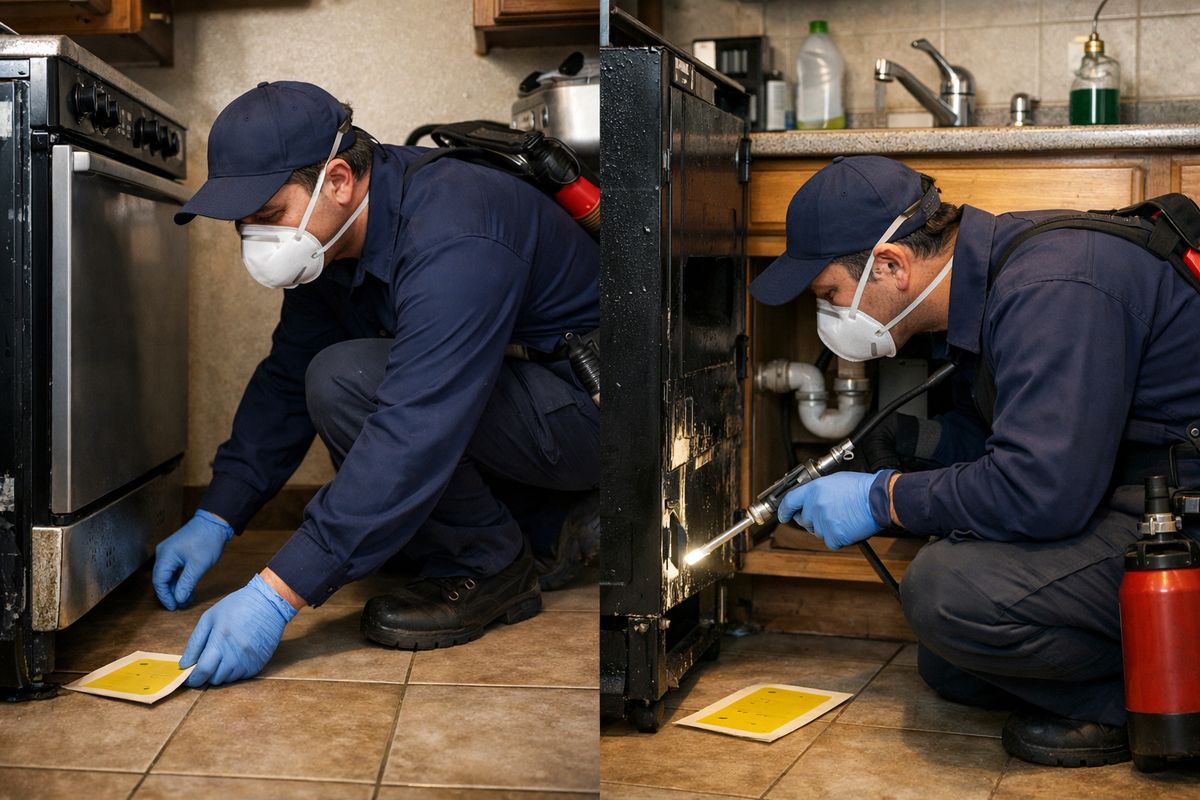
Sticky traps help with that. Placed near walls, appliances, under sinks, inside cabinets, and near entry points, they show where roaches are feeding and traveling. Pulling out the stove and fridge often reveals the real center of activity. So does checking sink bases, cabinet hinges, dishwasher voids, and bathroom plumbing penetrations.
Without that inspection, treatment is mostly guesswork.
Targeted Baits and Dusts Beat Broad Spraying
Baits usually work better than broad sprays because they go where roaches live and feed. Small placements inside cracks, cabinet joints, appliance voids, and hidden edges target the infestation where it actually spends time.
Dusts are fine insect-killing powders used in enclosed spaces like wall voids, pipe penetrations, and other protected areas. Used correctly, they can stay effective where liquid sprays would not last or should not be applied.
This is the opposite of spraying baseboards everywhere and hoping for the best. Targeted treatment looks less dramatic, but it usually does more.
Sealing Gaps and Cutting Off Access
If openings stay open, roaches keep moving. Caulking cracks, sealing pipe penetrations, repairing door sweeps, and closing utility gaps all reduce the ways roaches travel and re-enter.
This matters in city buildings and suburban homes alike. In a Chicago apartment, the gap under the sink around plumbing lines can connect you to a whole wall system. In a Schaumburg single-family home, gaps at the garage entry door or foundation can support occasional invaders from outside.
Blocking movement is not glamorous, but it is one of the biggest differences between short-term relief and lasting control.
Fixing Leaks and Removing What Roaches Need
Treatment gets a lot more effective once you remove the easy food and water. Fixing sink drips, drying damp cabinet bottoms, cleaning grease near the stove, storing pantry foods in sealed containers, and cutting down clutter all push the environment in your favor.
The point is not perfection. The point is pressure. Every crumb removed, leak fixed, and hiding place cleared makes the infestation less stable.
Follow-Up Visits Are Part of the Fix
One visit is often not enough. That is just the reality, especially with German roaches, larger infestations, or multi-unit buildings. Egg cases hatch later. Hidden areas get discovered later. Resistance issues show up later.
Complete elimination can take several weeks to several months depending on infestation size, species, and building conditions. Follow-up visits are not a sign something went wrong. They are part of what getting it right usually looks like.
If you manage a larger property, recurring service and prevention matter even more. That is the same reason facilities invest in ongoing monthly prevention instead of waiting for the next outbreak.
What You Can Do Between Pest Control Visits
The most helpful things you do between visits are not complicated. They just need to be focused.
Clean for Roaches, Not for Appearances
Target the places roaches actually use: under appliances, cabinet corners, around trash bins, pet feeding spots, and greasy areas near the stove. Wipe spills from the sides of cabinets, not just the countertops. Vacuum crumbs from drawer tracks and pantry edges. Clean the grime under the toaster, not just around it.
That kind of cleaning changes the food supply. Surface tidying alone usually does not.
Make Water Harder to Find Overnight
Dry the sink before bed. Fix drips if possible, or at least catch and remove water until repairs happen. Empty pet bowls overnight when practical. Check bathrooms, laundry rooms, and basements for standing water or condensation.
Roaches are most active at night, so reducing available water during those hours matters more than doing a perfect deep clean once a week.
Stop Giving Them Free Hiding Spots
Get rid of extra cardboard, paper bags, and clutter under sinks or in pantry corners. Open up crowded storage areas in utility rooms, garages, and basements. Put loose pantry items into sealed containers if possible.
The goal is simple: make your home feel exposed and inconvenient to a roach.
When It’s Time to Call for Professional Help Again
Calling back after treatment is not overreacting. If the problem keeps going, the plan probably needs adjustment.
Good Reasons to Schedule a Follow-Up Fast
Daytime roaches are a strong reason to call. So is activity in multiple rooms, roaches returning a few weeks after service, or fresh droppings and egg casings showing up after the initial treatment window. In apartments, condos, and older multi-unit buildings, repeated sightings should also trigger a follow-up quickly because the source may be bigger than one unit.
Heavy German cockroach activity is another reason not to wait. Once breeding is active in kitchens and bathrooms, the population can build fast.
What to Ask a Pest Control Company
Ask whether the service includes a real inspection, not just spraying. Ask whether the plan uses baiting, dusting, species ID, exclusion recommendations, moisture checks, and follow-up visits. Ask how the company handles apartment buildings, condos, older homes, and shared-wall situations.
Good questions matter because not every service call is built for persistent roach problems. If the answer sounds like random spraying plus hope, keep looking.
Common Questions About Roaches Coming Back After Treatment
Is It Normal to See Roaches After Pest Control?
Yes, for a short time. Some activity in the first 7 to 14 days can happen as roaches move through treated areas or encounter bait. What is not normal is steady ongoing activity, especially daytime sightings, fresh droppings, or new roaches showing up in multiple rooms several weeks later.
How Long Does It Take for Roaches to Go Away for Good?
Usually longer than a few days. Mild infestations may improve within a couple of weeks, but full elimination often takes several weeks and sometimes a few months, especially in apartment buildings or heavy German cockroach infestations. A realistic timeline depends on treatment quality, follow-up, moisture control, and how much hidden harborage is present.
Do Clean Homes Still Get Roaches?
Yes. Clean homes can still get roaches through shared walls, plumbing lines, used appliances, grocery boxes, exterior entry points, damp basements, and neighboring units. Cleanliness helps, but it is not the only factor. Moisture, access, and building conditions can matter just as much.
Are Roach Bombs Worth It?
Usually no. Roach bombs and foggers rarely reach the hidden infestation, and they can scatter roaches deeper into walls or into nearby rooms. That often makes control slower and more frustrating. For recurring infestations, targeted baits, dusts, inspection, and follow-up work better.
The One Thing to Try First if Roaches Keep Showing Up
Start with water. Check the kitchen and bathroom first, dry sinks at night, fix drips, and look for damp spots under plumbing or around appliances. If roaches keep coming back, pair that moisture fix with a follow-up inspection aimed at hidden harborages, not more random spraying.
That one shift changes the whole approach. Instead of chasing the roaches you happen to see, you start cutting off the reason they can stay.