
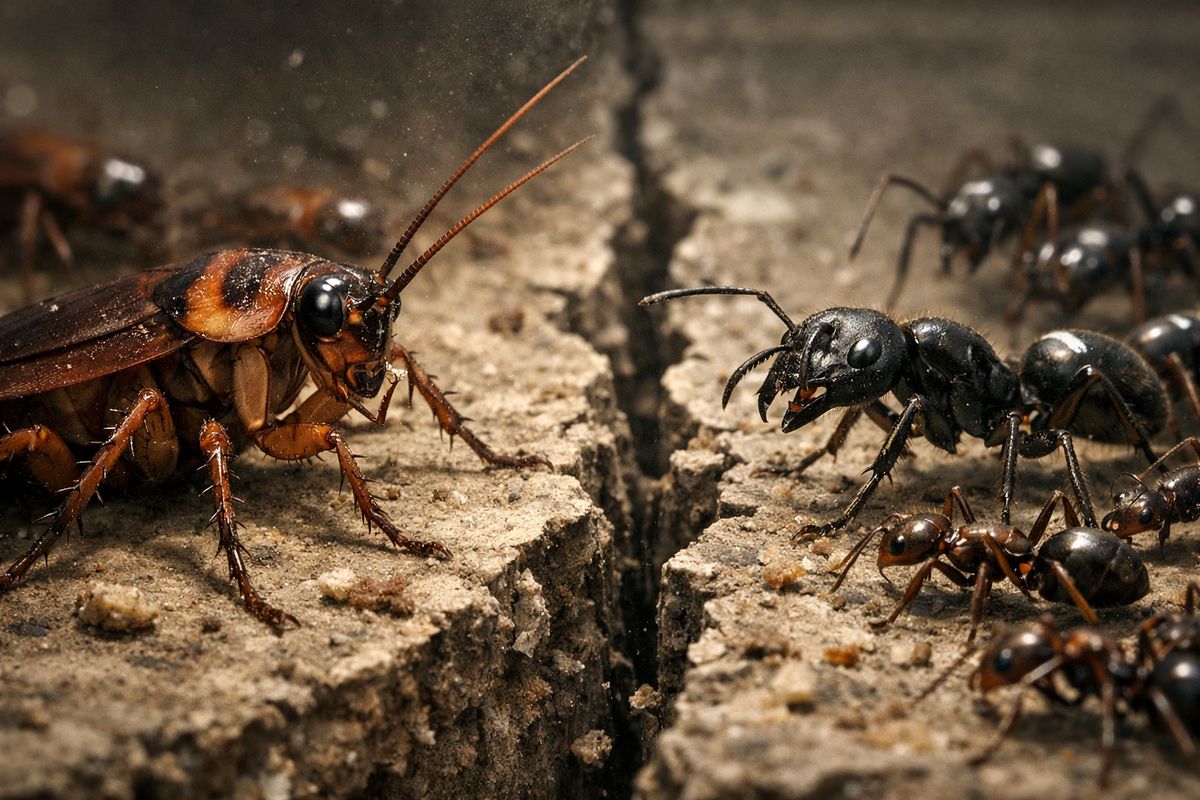
If you’re dealing with bugs in the kitchen, the question behind “cockroaches vs ants” is usually simple: which one is actually tougher to get rid of for good? Here’s the short answer. Ants can be maddening at the colony level, but cockroaches are usually harder to fully beat inside your home, especially in Chicago apartments, condos, and tightly packed neighborhoods where pests move through walls, pipes, and shared spaces.
Quick overview: cockroaches vs. ants at a glance
If you want the fast verdict, pick cockroaches as the harder pest overall.
Ants often frustrate you first because the trail keeps coming back. You wipe the counter, spray the line, and by the next afternoon there’s another little parade along the baseboard. But roaches are a different kind of problem. They hide better, breed fast indoors, and spread through buildings in a way that makes one kitchen issue feel like a whole-property issue.
That matters in Chicago-area housing. In a vintage walk-up in Rogers Park, a condo building in the West Loop, or a single-family home in Naperville or Schaumburg, ants may enter from outdoors through tiny gaps. Roaches often stay and multiply inside. In multi-unit buildings, that difference is huge.
How easy they are to spot
Ants are usually easier to notice early. You see a trail near the sink, pet bowl, pantry shelf, or back door. The activity is visible, organized, and honestly a little rude about it. Ants don’t always care if you see them.
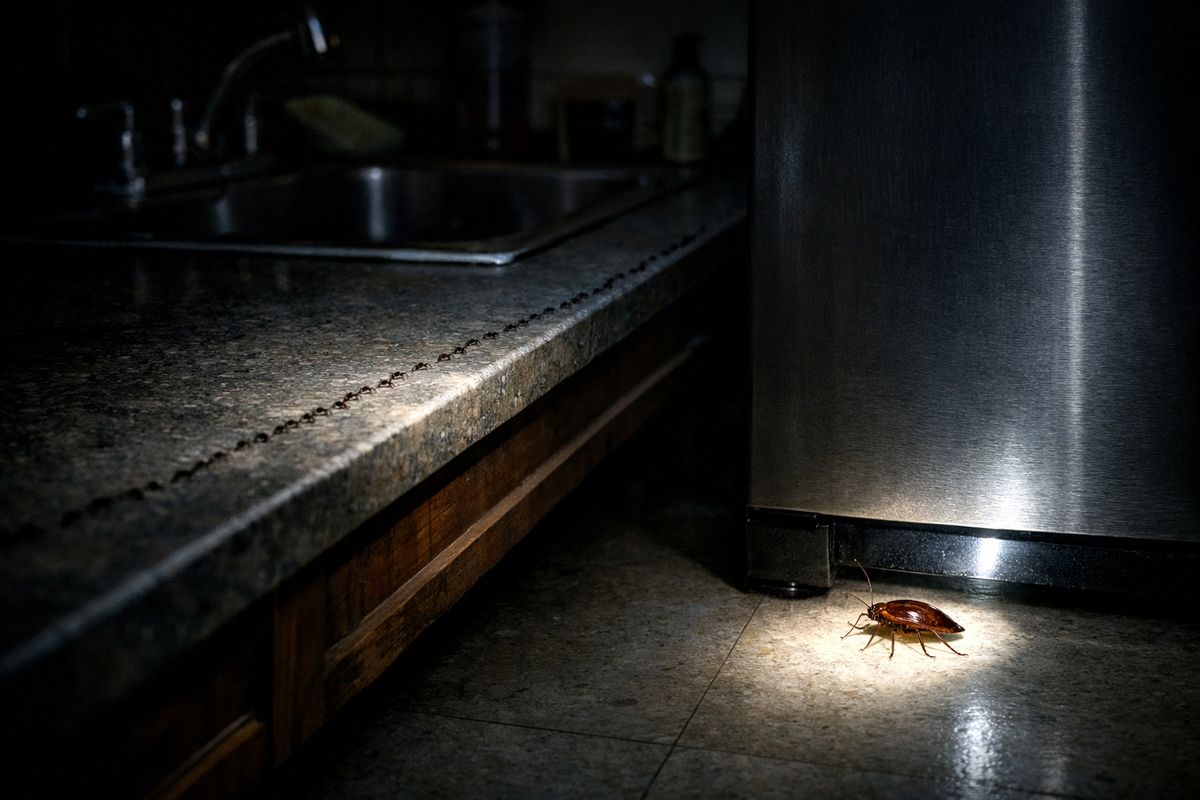
Roaches are better at staying out of sight. A lot of infestations start with one quick movement when you flip on the kitchen light at 11 p.m. or open the cabinet under the sink. That single sighting matters more than most people think, because roaches are nocturnal and good at hiding. If you see one in the open, the real activity may be tucked behind the fridge, inside wall voids, or around plumbing penetrations.
So which pest hides better? Roaches, by a mile. Which one gives you earlier warning? Usually ants. That early visibility is one reason ant problems can feel easier to manage at first.
Where they hide and how they spread
Ants nest wherever access, moisture, and food line up. That can mean soil around the foundation, under concrete slabs, inside walls, under mulch, or behind trim. You may see them in the kitchen, but the colony itself could be several feet away, or outside the house entirely. That’s why sealing gaps and following the trail matters as much as treating the room where you spotted them.
Cockroaches stick close to protected indoor harborages. “Harborage” just means a safe hiding spot where pests rest and cluster. For roaches, think cracks around cabinets, the motor area behind the refrigerator, dishwasher insulation, drains, pipe chases, bathroom vanities, and shared utility lines. According to the University of Kentucky, hidden cracks and crevices matter far more than open floor space, which is why surface spraying so often disappoints.
In apartment buildings and condos, roaches usually spread faster. Shared walls, ceilings, pipe openings, and trash areas turn one unit’s infestation into the next unit’s problem. If that sounds familiar, it helps to understand what tenants can do in shared buildings. Ants can spread too, but indoor roach movement tends to be more persistent once the building gives them food, warmth, and moisture.
Reproduction and colony growth
Both pests multiply fast enough to turn a small annoyance into a real infestation, but roaches usually escalate worse indoors.
Ants build numbers through a colony system: queen, workers, brood. The foragers you see are only the working edge of the problem. Roaches reproduce differently. Females produce egg cases, called oothecae, and young roaches, called nymphs, keep developing in hidden indoor spaces where temperature stays comfortable year-round. German cockroaches are especially brutal in this respect. A single mated female can produce enormous numbers in less than a year.
That’s the real headache in climate-controlled homes. Ant pressure may rise and fall with weather and outdoor conditions. Roaches don’t need spring to get moving once a kitchen or laundry area gives them what they need.
Why ant queens change the game
With ants, killing the visible workers can make you feel like you won when you didn’t. The queen is the engine of the colony. If the queen survives, fresh workers can return after the trail disappears for a while.
The catch is that baiting can also look strange while it’s working. UC Riverside found that ants became more active with one treatment before dying off, so a temporary spike in wandering ants does not always mean failure. On the flip side, fewer ants on the counter does not guarantee the colony is gone.
Why roach egg cases make comebacks so common
Roach egg cases protect developing young, and that protection is one reason infestations rebound. If treatment misses the hidden spots where roaches are resting and breeding, you can knock down the visible adults and still end up right back where you started.
That comeback pattern is common enough that many people assume the product “stopped working.” Usually the bigger issue is coverage. Miss the harborages, miss the life cycle.
What they eat and why that makes control tricky
Ants can be picky in a very annoying way. One week the colony wants sugar. The next week it shifts toward grease or protein. That means the bait you bought may suddenly stop getting attention even though the ants are still around.
Roaches are less fussy. Crumbs, grease, pet food, cardboard glue, residue under the toaster, even old spills behind the stove can keep them going. That adaptability makes them tougher in dirty and clean homes alike. You do not need a messy home to have roaches. You just need enough food film, moisture, and hiding space.
So who wins on adaptability? Roaches. But ants can still be trickier in short bursts because bait preference can change just when you think you’ve found the fix.
Health risks and everyday stress
Both pests create stress fast. Nobody wants to make coffee and find insects near the sugar jar.
Still, cockroaches are usually the bigger indoor health concern. Roaches contaminate food-contact areas, leave droppings, and contribute allergens that matter in homes with kids or anyone with breathing issues. In urban housing, cockroach allergens are linked to asthma-related problems, which raises the stakes beyond simple disgust.
Ants are more nuisance-heavy in many homes, though certain species can bite, sting, or damage wood. Carpenter ants deserve more respect than most people give them. But in a typical kitchen infestation, roaches create the more serious indoor health burden.
Damage to your home
Ant damage depends a lot on species. Common kitchen ants mostly invade food areas and annoy you. Carpenter ants are different, because wood damage can become part of the problem. That’s one reason ant issues should not always be brushed off as harmless.
Roaches usually damage your home in a less dramatic but more persistent way. Droppings in cabinets, staining, foul odor, shed skins, and contamination around stored food add up over time. The property issue is less about structural destruction and more about indoor spread, sanitation, and the fact that every untreated hiding spot keeps the cycle going.
If you’re comparing pure structural risk, carpenter ants can be worse than standard roaches. If you’re comparing everyday indoor contamination, roaches are worse.
DIY control: which one responds better to store-bought fixes?
Ants often respond better to decent DIY work, at least when the problem is limited and the species is straightforward. A good bait, some patience, and sealing entry points can go a long way.
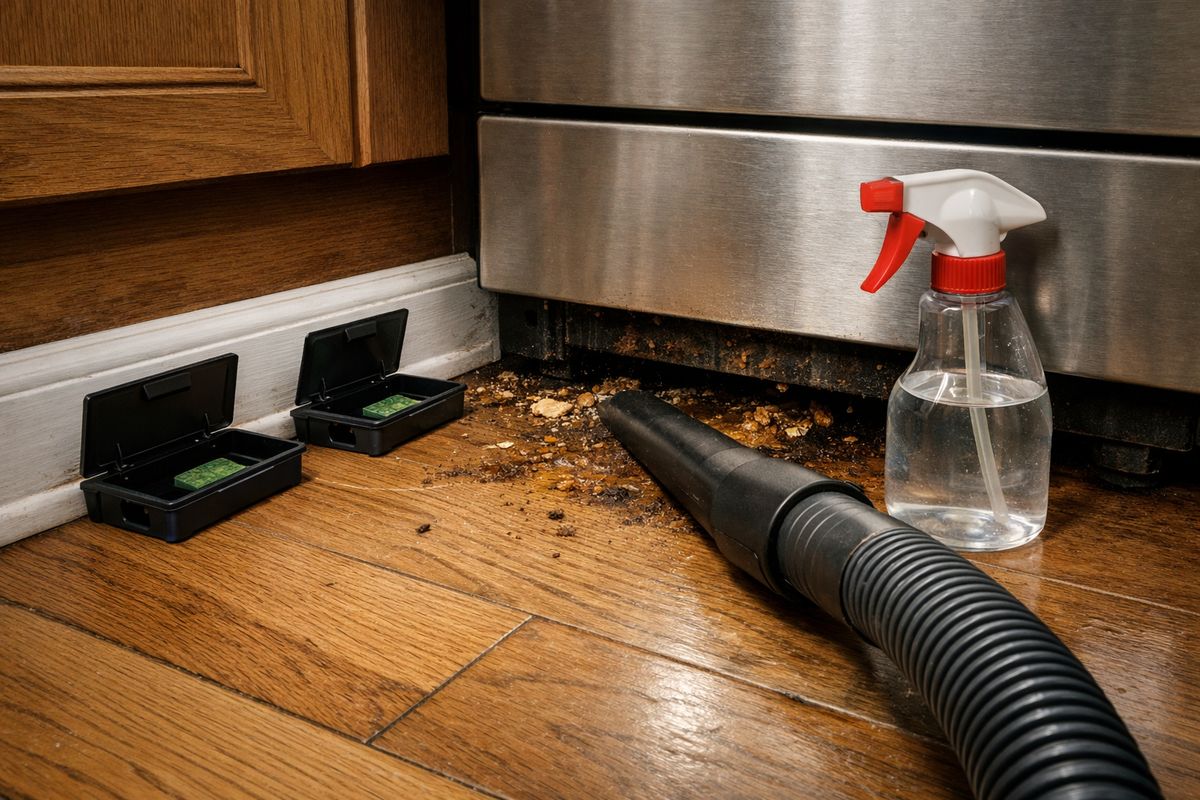
Roaches usually demand more discipline. Not just a spray under the sink, but a combination of bait, light dusting in voids, sanitation, monitoring, and follow-up. According to the University of Kentucky, foggers are not recommended for cockroach control because they rarely reach hiding spots and can even drive roaches deeper into cracks.
Real-world results back that up. In homes, professional-grade bait programs outperform typical store-bought approaches over time. That’s a big reason roaches so often end with a service call.
Common DIY mistakes with ants
Spraying the visible trail is the classic mistake. It kills the scouts you can see, but often does nothing to the colony. Using the wrong bait is another problem. If the colony wants protein and you put out sugar bait, you may get ignored completely.
Cleaning too aggressively right after placing bait can also interfere. You want ants to find and carry bait back. Strange as it sounds, activity can briefly look worse before it improves.
Common DIY mistakes with cockroaches
The biggest mistake is treating only the open areas. Baseboards, floors, and countertops look like the obvious target, but roaches spend most of the day in protected voids. Another common error is relying on bug bombs or random sprays from the hardware store.
Skipping deep cleaning behind appliances is another one. Grease and crumbs under the stove or fridge can keep feeding survivors. If you’ve been wondering why the problem keeps returning, that hidden food plus missed harborages is usually the answer.
Professional treatment difficulty
Professional ant control usually starts with species identification, inspection, bait selection, entry-point sealing, and follow-up if activity shifts. That can still be tricky, especially with large outdoor colonies or recurring seasonal invasions.
Professional roach work is often more labor-intensive. It usually involves inspection around appliances and plumbing, crack-and-crevice applications, bait placement in specific harborages, possibly dust in wall voids, sanitation guidance, and repeat visits to break the life cycle. In a multi-unit building, success may also depend on treating neighboring units or common pathways.
That’s why roach jobs tend to cost more and take longer. If you want a clearer picture of how treatment usually unfolds, the process is less like one spray visit and more like a targeted program.
Resistance, behavior, and why treatments fail
Here’s the thing: treatment failure does not always mean bad service or bad products. Sometimes it means pest behavior outlasted a simple plan.
Both ants and roaches are pushing pest control toward integrated pest management, or IPM, which means inspection, monitoring, sanitation, exclusion, and targeted treatment instead of blind spraying. That shift matters because resistance and behavior are real problems, especially with cockroaches.
Ants: why the colony can survive the first win
Workers may die off while the queen survives. Satellite nests can also stay active. So you get a “win” that feels real for a week or two, then the kitchen trail returns.
Changes in movement after treatment can mislead you. More visible ants might mean a bait is working. Fewer visible ants might mean the colony pulled back temporarily. You need time and follow-up to know which one happened.
Cockroaches: why social hiding makes them so persistent
Roaches don’t build ant-style colonies, but social behavior still helps them survive. NC State found that young German roaches use pheromones in feces to recognize and return to familiar group areas. Put simply, roaches learn where “safe” is, then keep clustering there.
That social hiding makes full elimination tough indoors. A harborage behind the refrigerator or inside a wall void becomes a repeat destination. Unless treatment reaches those spaces, the infestation keeps rebuilding. In severe cases, it helps to understand how German roaches spread so quickly.
Pricing and treatment costs
Ant control usually costs less than cockroach extermination, especially for a localized, easy-to-trace ant problem. Roach service often costs more because inspection is deeper, treatment points are more numerous, and follow-up is more likely.
For a larger home, broad pest treatment can range roughly from $400 to $950, but actual pricing in the Chicago area depends on square footage, building type, infestation severity, and how many visits are needed. A single-family home in Schaumburg with a mild ant issue is one thing. A multi-unit property in Chicago with German roaches moving through kitchens and bathrooms is another.
For the most accurate local service details, Midwest Pest Solutions, LLC handles both ant and roach problems in the Chicago area, including follow-up when the first visit isn’t enough.
When to choose ant control first
Choose ant control first when the evidence points clearly to ants as the active issue: visible trails, recurring kitchen invasions, outdoor colony pressure near doors or patios, or any sign of carpenter ants around damp wood.
Ants also move up the list when the pattern is seasonal and entry-driven. You notice them near windows, back doors, foundation gaps, or the same pantry corner every warm spell. In those cases, targeted baiting and exclusion can work well.
Professional help makes sense when the trails keep returning, when you can’t identify the species, or when carpenter ants may be involved. In Chicago, that can be the difference between a nuisance and a repair problem.
When to choose cockroach control first
If roaches are active indoors, cockroach control should jump to the top of your list. No debate.
Daytime sightings are a bad sign. So are roaches near appliances, under sinks, in bathrooms, around drains, or in any multi-unit property with shared walls and plumbing. A single roach in the wrong place, especially a small tan German roach in the kitchen, deserves fast action.
This is where calling Midwest Pest Solutions, LLC early can save time, stress, and repeat DIY costs. Roaches usually get worse quietly, not loudly.
Verdict: which pest is harder to beat?
Ants can be harder to knock down in the short term because the colony may outlast the workers you see, and baiting can be fussy. But cockroaches are harder to fully beat in a home. They hide better, reproduce fast, cling to protected harborages, and spread through buildings with depressing efficiency.
Tonight, try one simple check: pull a flashlight out and look behind the fridge and under the sink. If you find pepper-like droppings, shed skins, or fast movement in those tight spaces, treat it like a roach problem until proven otherwise.
Frequently asked questions
Are ants easier to get rid of than cockroaches?
Usually, yes. Ants are often easier to reduce with the right bait and some entry-point sealing. Cockroaches are usually harder to eliminate fully because the hiding spots are deeper, the breeding happens indoors, and the infestation can spread through a building.
Why do ants keep coming back after spraying?
Sprays often kill the visible foragers without removing the colony. If the queen survives or the nest stays active outside the wall or under the slab, the ants return. Wrong bait choice can also keep the real problem going.
Is one cockroach worse than a line of ants?
In most homes, yes. A line of ants is annoying, but one indoor cockroach can signal hidden activity nearby. That’s especially true in kitchens, bathrooms, and apartment buildings.
Which pest is more dangerous for kids and asthma?
Cockroaches are usually the bigger concern indoors. Roach allergens and contamination are a more serious issue in homes with kids, asthma, or shared-building infestations.
Do store-bought baits work for roaches?
Sometimes, but results are often limited in real homes. Small infestations may improve, but established roach problems usually need better product placement, deeper inspection, and repeat treatment to reach the hidden harborages.
When should you call a professional for ants or roaches?
Call for ants when trails keep returning, bait is not working, or carpenter ants may be involved. Call for roaches quickly, especially if you see activity in daylight, near appliances, or in a multi-unit building.